





An Intro to UroToday's Functional Urology Center of Excellence by Alan Wein, MD, PhD, FACS

Alan Wein | January 14, 2026

An Intro to UroToday's Functional Urology Center of Excellence by Alan Wein, MD, PhD, FACS

It is with great pleasure that I welcome all of you to the Urotoday Center of Excellence on Functional Urology. My goal is to highlight current topics of interest by citing selected and specific presentations, published articles, and commentaries on important topics in the areas encompassed by the term “functional urology.”

We will include video interviews, text summaries of presentations at key meetings (prepared by those with expertise in the area and in attendance at the meeting), summaries of published articles by the authors themselves and by me, and, occasionally, referenced commentaries on currently discussed topics. Expect some of the “expert opinions” to contradict one another on certain points- this means that whatever topic is being discussed is still a matter of some controversy.

READ MORE PREVIOUS ARTICLES


Alan J. Wein, MD, PhD (hon.)Alan J. Wein, MD, PhD (hon.)
Dr. Alan Wein received his undergraduate degree from Princeton University and did his medical school, surgery, basic research and urology training at the University of Pennsylvania. After serving in the Army following his training, he returned to Penn where he ultimately became Chief of Urology and Director of the Residency Program (for 38 and 40 years respectively). He holds an honorary PhD from the University of Patras, Greece and was conferred an Honorary Professorship by the
Read More
WHAT IS FUNCTIONAL UROLOGY?

Exactly what is functional urology? Is it a defined field, real subspecialty, or a catch all phrase used by many, but to mean different spheres of practice? I think everyone would agree on what it is not dash, it is not the diagnosis/ management of urologic cancer or stone disease, unless they somehow affect lower urinary tract (LUT) function, and then it includes only the latter considerations. OK, we have established that. Now, what is it, really?

Read More
Videos

Pelvic Health

Men's Health

Clinical Pathways Resources

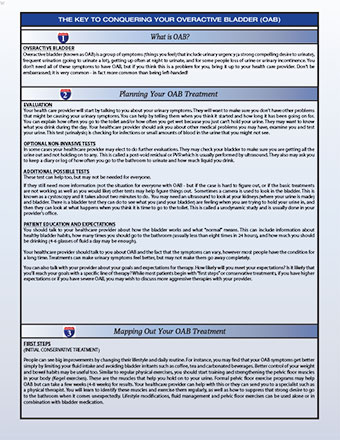
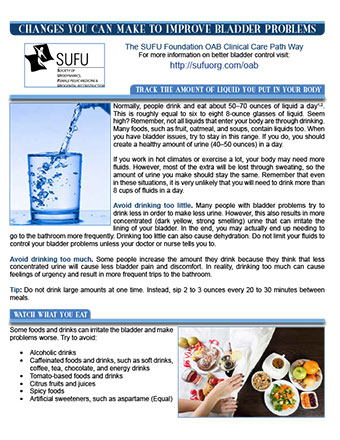
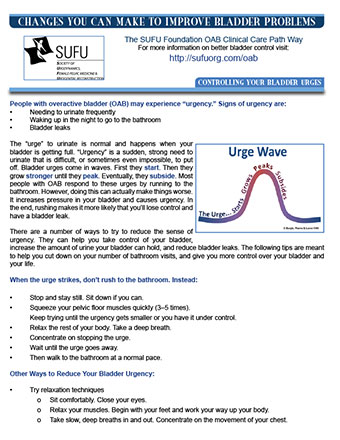
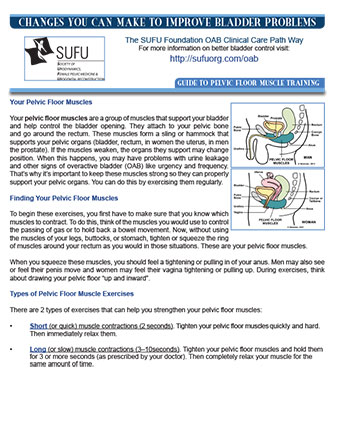
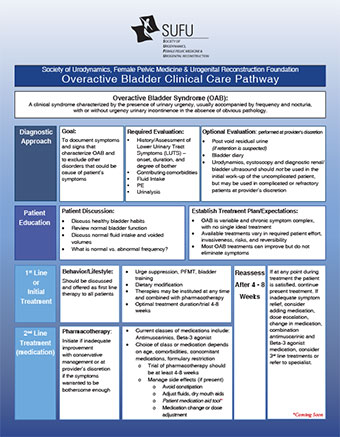
SUFU offers the Overactive Bladder Clinical Care Pathway for use by providers and patients
Audio Education Resources
June 6, 2023
(MP3 Audio – Duration: 8:29)
  • All about bladder urgency and incontinence
  • Doing urge suppression for bladder urgency
  • Session of 10-second long muscle squeezes (muscle contractions)

Listen Now
June 6, 2023
(MP3 Audio – Duration: 4:43)
  • Session of 10-second long muscle contractions

Listen Now
June 6, 2023
(MP3 Audio – Duration: 8:49)
  • Overview on how to use the pelvic muscles to prevent urine leakage
  • Session of ten 2-second fast muscle squeezes
  • Session of ten 10-second slow muscle squeezes

Listen Now
June 6, 2023
(MP3 Audio – Duration: 4:02)
  • How to use the pelvic muscles to prevent urine leakage
  • Session of 2-second fast muscle squeezes

Listen Now
June 6, 2023
(MP3 Audio – Duration: 10:11)
  • Pelvic muscle training doing 10-second muscle squeezes

Listen Now
June 6, 2023
(MP3 Audio – Duration: 4:26)
  • Pelvic muscle training doing 2-second muscle squeezes

Listen Now
June 6, 2023
(MP3 Audio – Duration: 14:16)
  • Doing training sessions of 20 “quick flicks” 2-sec and 20 “slow” 10-sec slow squeezes

Listen Now
Physician-Scientist Commentaries
Peer-reviewed Abstract Supplemental Commentaries
Written by Alan J. Wein, MD, PhD (hon.)
Desai Sethi Institute of Urology, University of Miami Miller School of Medicine.
A recent online publication in the British Journal of Urology International highlighted a systemic review of randomized controlled trials evaluating bleeding related outcomes in patients undergoing transurethral resection of the prostate (TURP) for benign prostatic hyperplasia (BPH) who were treated preoperatively with 5-alpha reductase (f5 ARI) inhibitors, either finasteride or dutasteride, compared to placebo or nothing.
Written by Alan J. Wein, MD, PhD (hon.)
Desai Sethi Institute of Urology, University of Miami Miller School of Medicine.
Lee et al, comprising authors from a number of institutions, published a retrospective observational study conducted on 147 consecutive patients who underwent endoscopic enucleation of the prostate (HoLEP) for benign prostatic obstruction between 2018 and 2024, assessing whether membranous urethral length (MUL), as measured on preoperative magnetic resonance imaging (MRI), is a predictor for postoperative stress urinary incontinence (SUI).
Written by Alan J. Wein, MD, PhD (hon.)
Desai Sethi Institute of Urology, University of Miami Miller School of Medicine.
In the online version of JAMA, published February 20, 2026, reports under the headings of “News and Analysis”1 and “Medical News in Brief”2 highlighted the persistent discrepancy in life expectancy between men and women. The original articles on which these reports are based3,4 merit close attention, as their data may refine how we frame this issue.
Written by Alan J. Wein, MD, PhD (hon.)
Desai Sethi Institute of Urology, University of Miami Miller School of Medicine.
A recent article by Kudlata et al from the Medical College of Georgia1 brings to mind the established but not very frequently discussed association of obstructive sleep apnea (OSA) with nocturia. In this report, the issue was looked at by conducting a retrospective chart review of 37 patients with nocturia
Written by Alan J. Wein, MD, PhD (hon.)
Desai Sethi Institute of Urology, University of Miami Miller School of Medicine.
LiSWT has emerged as a safe non-invasive treatment option for erectile dysfunction. Reports regarding efficacy are heterogeneous at best, and both the AUA (American Urological Association) and the SMSNA (Sexual Medicine Society of North America) have in the past considered the therapy
Written by Alan J. Wein, MD, PhD (hon.)
Desai Sethi Institute of Urology, University of Miami Miller School of Medicine.
Over recent decades, the mid-urethral sling has become the gold standard surgical treatment for stress urinary incontinence (SUI) in women. Despite a high efficacy rate, complications and adverse events have been reported in up to 20% of cases.
Written by Alan J. Wein, MD, PhD (hon.)
Desai Sethi Institute of Urology, University of Miami Miller School of Medicine.
A team of urologists and engineers from the Cleveland Clinic and Case Western Reserve recently published1 their experience with a device which they developed, a novel, wireless, catheter-free urodynamics monitor (UM) for the detection of intravesical pressure.
Written by Alan J. Wein, MD, PhD (hon.)
Desai Sethi Institute of Urology, University of Miami Miller School of Medicine.
Over recent decades. The mid-urethral sling has become the gold standard surgical treatment for stress urinary incontinence (SUI) in women. Despite a high efficacy rate, complications and adverse events have been reported in up to 20% of cases. With the advent of true shared decision making
Written by Alan J. Wein, MD, PhD (hon.)
Desai Sethi Institute of Urology, University of Miami Miller School of Medicine.
Is the era within which a TURP was performed associated with differences in reoperation rates, specific surgical side effects, or the requirement for BPH medication 5 years afterwards? This question was explored by a group primarily from the University of California, San Diego, and recently published in the World Journal of Urology.
Written by Alan J. Wein, MD, PhD (hon.)
Desai Sethi Institute of Urology, University of Miami Miller School of Medicine.
Low-Intensity Shockwave Therapy (LiSWT) has emerged as a safe, non-invasive treatment option for erectile dysfunction. Reports regarding efficacy are heterogeneous at best, and both the AUA (American Urological Association) and the SMSNA
Written by Alan J. Wein, MD, PhD (hon.)
Desai Sethi Institute of Urology, University of Miami Miller School of Medicine.
This subject, which has lately become a more frequent topic of discussion, was reviewed by a committee at the International Consultation on Incontinence-Research Society (ICI-RS), and a summary of pertinent discussion points published in 2024. Controversies regarding the utility of invasive urodynamic studies in men with lower urinary tract symptoms
Patient Education Resources
State of the Evidence Review Articles
June 6, 2023
The “Knack” is a trick or a clever body skill of squeezing your pelvic muscles at the right time; before and during a bladder leak (urinary incontinence). If you learn the Knack, you can stop urine leaking from your bladder.
Physician-Scientist Review Articles
State of the Evidence Review Articles
Bladder Health
January 27, 2026
The January 2026 issue of Neurourology and Urodynamics (45: 9-76) contains the individual committee reports. from a global consensus meeting on Interstitial Cystitis /Bladder Pain Syndrome (IC/BPS), which was held in April 2025 in Winston-Salem, NC, just prior to the annual meeting of the American Urological Association. The impetus to hold this meeting was initiated with NIDDK program officers
May 25, 2025

Pelvic floor muscle training (PFMT) is a first-line conservative treatment for urinary incontinence (UI), often involving invasive devices such as vaginal or anal biofeedback. However, these devices can cause discomfort, negatively impacting PFMT engagement.

March 24, 2024

Pelvic health issues after treatment for gynecological cancer are common. Due to challenges in accessing physiotherapy services, exploring virtual pelvic healthcare is essential. This study aims to understand needs, preferences, barriers, and facilitators for a virtual pelvic healthcare program for gynecological cancer survivors.

September 8, 2021
Summary
A 59 year old gentleman presented to the urology outpatient department, having been referred by his general practitioner (GP) with lower urinary tract symptoms (LUTS). On review of his medications, he was taking a calcium channel blocker for control of his mild hypertension. This was subsequently swapped and his symptoms improved and he was discharged from the urology clinic. It is shown in the literature that there is a clinically significant correlation between use of calcium channel blockers and worsening of LUTS.
Written by Grace Bennett & Richard Stephenson
September 8, 2021
Conference Coverage
Conference Highlights Written by Physician Scientists
Presented by Nima Nassiri, MD
At the morning plenary session on the final day of the 2026 American Urological Association Annual Meeting, Nima Nassiri presented the groundbreaking world’s first human bladder transplantation, marking a potentially historic milestone in urology.
Presented by Abraham Morgentaler, MD
A Survivor Debate explored one of the most debated topics in men’s health and sexual medicine: the optimal approach to testosterone replacement therapy (TRT) for men with hypogonadism. Moderated by Abraham Morgentaler, the session featured four renowned experts who each defended a different testosterone delivery modality, including oral therapy, topical gels, injectable testosterone, and pellet therapy.
Presented by Sarah M. Lenherr, MD, MS, URPS
During a plenary session at the American Urological Association Annual Meeting 2026, Dr. Sara M. Lenherr delivered a State-of-the-Art lecture highlighting multiple available catheter technologies and emerging innovations in urinary drainage.
Presented by Neeti Gandhi, PhD
At the 2026 American Urological Association (AUA) Annual Meeting, Dr. Neeti Gandhi from the University of Chicago presented promising preclinical data evaluating ReBLAST, a novel small-molecule which has been previously shown to stimulate stem and progenitor cell proliferation, as a possible avenue for functional bladder tissue regeneration and reconstruction.
Presented by David Sheyn, MD
The 2024 American Urological Association (AUA) annual meeting featured a session on overactive bladder, and a presentation by Dr. David Sheyn discussing long-term dementia risk with the use of anticholinergic versus beta-3-agonist pharmacotherapy for overactive bladder.
Presented by Emmanuel Chariter-Kastler, MD, PhD
The 2024 American Urological Association (AUA) annual meeting featured a male incontinence session, and a presentation by Dr. Emmanuel Chariter-Kastler discussing the first results of the SOPHIA study using the new artificial urinary sphincter UroActive™.
Presented by Patrick Campbell
This was a UK prospective study of the compliance at 12 months of the use of a vaginal device, the Uresta bladder support, for management of stress urinary incontinence (SUI). Interestingly, study recruitment was through advertisements on social media, running clubs, and gyms. Outcomes were assessed using the PUQ, ICIQ-FLUTS, UDI-6, IIQ-7, QUID, and PGI-I questionnaires.
Presented by Piotr Radziszewski
An incontinence absorbent product is changed several times per day, but changing too early leads to unutilized products being discarded, and changing too late implies a risk of urine leakages, as well as, risk of moisture-associated skin damage. Caregivers must check the product for saturation status many times a day, which can be a burdensome manual process. This presentation was on the TENA SmartCare Change Indicator
Presented by Lily Arya
This study reported on the results of an evidence-based digital platform that remotely delivers treatments including self-management strategies to female patients with Interstitial Cystitis/Bladder Pain Syndrome (IC/BPS). The aims were 1) to develop a conceptual framework for the self-management of IC/BPS, 2) to develop a digital platform that remotely delivers first- and second-line AUA treatments of IC/BPS, and 3) to test its feasibility in this population.
Presented by Ruth Maher
Proprioception is fundamental to motor learning, and sensorimotor afferents may facilitate changes in motor control. Neuromuscular electrical stimulation (NMES) is used clinically as an adjuvant intervention to facilitate pelvic floor muscle (PFM) contractions. Neural imaging shows that NMES contractions activate similar cortical and subcortical structures to volitional ones. Consequently, these NMES elicited contractions may enhance proprioception and PFM function.
Presented by Blayne Welk
Research suggests that OAB anticholinergic medications may lead to cognitive dysfunction and an increased risk of dementia, but few studies have evaluated the effect of these medications in those with pre-existing cognitive dysfunction and few have followed patients long term.  APOE-e4 allele is a genetic risk factor for Alzheimer's, and may lead to increased sensitivity to anticholinergic-mediated cognitive decline, but has not been evaluated in the context of OAB anticholinergics.
Presented by Frank Martens
This presentation reported on data from the initial 500 patients from 20 centers who reached one-year follow-up in the EAU Research Foundation prospective registry SATURN (Surgery for mAle incontinence with artificial Urinary sphincters and slings) which was established to assess the efficacy of male stress urinary incontinence (SUI) surgery in daily practice. SATURN’s overall goal is to analyze 1000 patients undergoing male SUI surgery with 10-year follow-up from 29 implanting centers in 9 European countries. The group has defined “cured” as the absence of pad use or only 1 security pad.
Presented by Madeline Moureau
Mind Over Matter: Healthy Bowels, Healthy Bladder is a small-group behavior change intervention for women aged 50 or older who want to prevent or improve urinary incontinence (UI) or anal incontinence (AI). This is a community-based program that consists of three 2-hour sessions delivered over one month and results of this in-person program have been previously and showed a 9-fold improvement in bladder symptoms and a 4-fold improvement in bowel symptoms compared to controls.
Presented by Laura Pedofsky
The perineometer, a balloon pressure-type type device, was first described by Dr. Arnold Kegel in the 1940s and since then has been used extensively to determine ‘the strength’ and ‘function’ of the pelvic floor muscles (PFMs). However, due to the design of these devices, the pressure changes reflect global pressure change within the vagina, making it impossible to discriminate between an increase in abdominal pressure and that induced by the PFMs.
Presented by Sarah Dean
This study aimed to develop a comprehensive training package for midwives and resources for pregnant women, to support the teaching of an antenatal pelvic floor muscle exercise (PFME). The presentation was on the feasibility of such training tested in a pilot randomized controlled trial. The study comprised four iterative phases of intervention development, including a stakeholder event and multiple patients and public involvement and engagement (PPIE) activities. The PPIE advisory group included women with young children, with meetings held in the community.
Presented by Suzanne Hagen
A parallel two-arm, superiority, multicentre randomized controlled trial study aim was to determine the effectiveness and cost-effectiveness of self-management of a vaginal pessary on prolapse-specific quality of life (at 18 months) for women with pelvic organ prolapse (POP) when compared to pessary clinic-based care. Inclusion criteria were women age ≥18 years, pessary use of any type/material (excluded: Shelf, Gellhorn, or Cube pessaries), and retention of a pessary for at least two weeks.
Presented by Kenneth M. Peters
URO-902 is an intradetrusor injection investigational gene therapy for overactive bladder (OAB). It consists of a plasmid vector that expresses the α subunit of the large-conductance Ca2+-activated K+ channel in the detrusor to reduce bladder hypercontractility. This presentation reported on results from a 12-week interim analysis of a 48-week multicenter, randomized, double-blind, placebo-controlled, dose-escalation phase 2a trial assessing the safety and efficacy.
Presented by Towe Wadensten
Delivering behavioral interventions, specifically pelvic floor muscle training (PFMT), via a mobile app has exploded over the past few years. The Tät®II,  a popular mobile app includes PFMT, bladder training, psycho-education, lifestyle advice, an exercise log, reminders, reinforcement messages, and tailored advice. In a 15-week randomized controlled trial (RCT), this app was shown to be effective for the self-management of urgency urinary incontinence (UUI), and mixed urinary incontinence (MUI).
Presented by Claire S. Burton, Amy Zhang, Alayne Markland, Ekene Enemchukwu
(UroToday.com) Evidence-based treatments are available for overactive bladder (OAB) with published guidelines and treatment pathways created for clinicians to optimize treatment and provide a clinical framework for diagnosis and treatment. The impact of these efforts remains unclear and medical treatment pathways are poorly understood.
Presented by Madeline J. Epsten, Jennifer Ferraro, Fareesa Khan, Cynthia Brincat, Kristin M. Jacobs
(UroToday.com) The effects of the COVID-19 pandemic and telemedicine on urinary tract infection (UTI) treatment are largely unknown. This study evaluated the impact of COVID-19 and telemedicine on empiric UTI treatment in women, hypothesizing that increased use of telemedicine during the pandemic would increase the rate of empiric UTI treatment.
Presented by Grant Gruenspan, Jian Wang, Laureen Hachem, Michael Fehlings, Paul Yoo
(UroToday.com) Peripheral nerve stimulation techniques are emerging as an effective alternative to existing therapies for overactive bladder (OAB). As a novel approach, saphenous nerve (SAFN) stimulation is being investigated as a method of electrically modulating bladder function. Published work showed that SAFN stimulation in urethane-anesthetized rats
Presented by Natalia Hernandez, Lia Miceli, Julie N. Stewart, Ricardo R. Gonzalez, Rose Khavari
(UroToday.com) The AUA guidelines recommend oral anticholinergics/antimuscarinics and beta-3 adrenergic agonists as second line therapy. There is increasing understanding that oral anticholinergics/antimuscarinics may have been negative cognitive effects and one of the beta-3 adrenergic agonists (mirabegron) may negatively affect the blood pressure in older adults.
Presented by Zhenyue Huang, Rosen Jeong, Edwin Lee, Heng Ruan, Tal Meir Cohen, Jason Kim
(UroToday.com) The rising presence of social media has offered a wide array of publicly available medical information for women suffering from recurrent urinary tract infections (rUTIs). This study sought to investigate the quality of information for UTI on YouTube.
Presented by Anjali Kapur, MD, Tal Cohen, MD, Colin Dabrowski, MD, Rebecca Andersen, MD, Kuemin Hwang, BS, Edwin Lee, BS, Heng Ruan, BA, Steven Weissbart, MD, Jason Kim, MD
(UroToday.com) Third-line therapies, including intradetrusor onabotulinumtoxinA (Botox), percutaneous tibial nerve stimulation (PTNS), and sacral neuromodulation (SNM), are indicated for patients with overactive bladder (OAB) who are refractory to first- and second-line therapies. This study sought to investigate specific reasons for patient preference of each third-line OAB therapy.
Presented by Juliann Chavez, Jacqueline Chavez, Ethan Fan, Alana Christie, Philippe Zimmern
(UroToday.com) D-mannose is a bioactive monosaccharide frequently recommended by clinicians to prevent recurrent urinary tract infections (rUTIs) in women. It is unknown if this protective effect against RUTIs results from urinary pH changes. This study analyzed the effect of D-mannose on urinary pH.
Presented by Parker Kenee, Alana Christie, Philippe Zimmern
(UroToday.com) In women with antibiotic-recalcitrant recurrent urinary tract infections (RUTI), electrofulguration (EF) to destroy of areas of chronic cystitis can provide durable cure or improvement. However, some women will fail while others will experience some UTI recurrences over time and are interested in non-antibiotic therapies to combat these UTI episodes.
Presented by Zara Khan, Parker R.M. Kenee, Shanee Abouzaglo, Jennifer Foster, Jordan McCoy, Naeemul Hassan, PhD, Philippe E. Zimmern, MD, Rena D. Malik, MD
(UroToday.com) The aim of this qualitative study was to qualitatively analyze rUTI discourse on the website Reddit and identify areas that healthcare professionals may better address to improve care for women with rUTI. The authors queried public subreddits r/TwoXChromosomes, r/Askwomen, r/WomensHealth, and r/CUTI for combinations of the search terms “recurrent” or “chronic”
Presented by Michael Peng, Paul Yoo, Anne Agur
(UroToday.com) Saphenous nerve (SAFN) stimulation is an emerging treatment for overactive bladder (OAB) syndrome, but precise knowledge of the subcutaneous distribution of nerve branches is lacking. This study volumetrically documented and modeled in 3D the course of branches of the SAFN relative to bony/soft tissue landmarks.
Presented by Meghana Reddy, Philippe Zimmern
(UroToday.com) Intravesical antimicrobials (IVA) can provide a localized modality of treatment for uncomplicated recurrent urinary tract infections (rUTIs). This was a systematic review on the efficacy of IVA in the management of rUTIs. The review included articles from inception to April 2021, utilizing the Cochrane and PRISMA standards with the following databases:
Presented by Raveen Syan, Jennifer Miles-Thomas, Diane K. Newman, Nitya Abraham, Keely Madaj, Krystal Anson Spenta, Amin Boroujerdi, Zhanying Bai, Lei Luo, Ekene Enemchukwu
(UroToday.com) Only 10% of patients with OAB progress to third line options (onabotulinumtoxinA [onabotA] and neuromodulation). Reasons include a lack of understanding of options, fear of side effects, or desire to avoid invasive treatments. Using a navigator, defined as a healthcare professional focused on patient-centered care),
Presented by Alixandra Ryan, Hayden Hill, MD, Anastasia Couvaras, MD, Colin Goudelocke, MD
(UroToday.com) Current guidelines recommend antibiotic treatment, and in some cases, antibiotic prophylaxis. The possible adverse effects, cost, and increased bacterial resistance to prophylactic antibiotics have led to the study of alternative prevention, such as cranberry, probiotics, and D-mannose. D-mannose is a monosaccharide isomer of glucose rapidly absorbed when given orally and
Presented by Elisabeth Sebesta, Stephanie Gleicher, Melissa Kaufman, Roger Dmochowski, W. Stuart Reynolds
(UroToday.com) This study sought to assess the proportion of patients who sought out medical care and received treatment for bladder symptoms, in addition to any predictive factors for doing so. A sample of 3,396 adults was recruited electronically to complete a questionnaire on clinical and demographic information, social needs, and urinary symptoms (LURN SI-10, ICIQ-UI SF, and PPBC).
Presented by Blayne Welk, Holly Fisher, Thomas Chadwick, Chris Harding
(UroToday.com) This study was a secondary analysis of community dwelling participants to assess the relative reduction in UTIs among people with different neurologic diseases and intermittent catheter use and to determine if UTIs impacted renal function. Analyzed were those individuals who participated in a 12-month randomized trial (AnTIC, a multicentered
Presented by Blayne Welk, Sara Lenherr, Yasir Santiago-Lastra, Melanie Goodman Keiser, Holly Norman, Christopher Elliott
(UroToday.com) This study compares UTI incidence and severity among intermittent catheter (IC) users with neurogenic (NLUTD) and non-neurogenic diagnoses. Analysis of health insurance claims data from the IBM MarketScan Database (commercial Preferred-Provider Organization and Medicare supplemental claims) between January 1, 2015 – December 31, 2019
Presented by Sirpi Nackeeran
The study’s aim was to show how frailty affects perioperative complications in women undergoing pelvic organ prolapse (POP) surgery. They sought to determine (1) the role of frailty on postoperative complications and (2) the association of racial and socioeconomic differences between frailty and postoperative complications among women undergoing apical prolapse repair.
Presented by Duane Hickling, MD
Dr. Duane Hickling presented the evidence behind many common urinary tract infections (UTI) treatments: water, methenamine salts, D-Mannose, and lactobacillus. He noted that UTIs are common as 20% of college-aged women had at least one culture-confirmed UTI recurrence within 6 months.
Presented by A Lenore Ackerman, MD Ph.D.
A urinary tract infection (UTI) is defined as microbial infiltration of the normally sterile urinary tract. But there are no accepted definitions of UTI-associated symptoms, cut-offs for culture result, or definitively accepted uropathogens that can guide clinicians in the objective management of a UTI.
Presented by Eric Rovner, MD
Dr Rovner moderated a symposium on Bulkamid, a periurethral injection which was approved by the FDA in 2020 for the treatment of stress urinary incontinence (SUI) due to intrinsic sphincter deficiency (ISD) or in women who have SUI or stress predominant mixed urinary incontinence (UI).
Dr Tamara Bavendam was given the SUFU Lifetime Achievement award in recognition of an outstanding career in urology.  She had previously received SUFU’s Distinguished Service award. In accepting the reward, Dr. Bavendam reflected on what she termed “my unusual career”.
Presented by Jeffrey P. Weiss, MD
Miami, FL (UroToday.com) Dr. Jeffrey Weiss provided an update of the management of nocturia. Patients are oftentimes asked to fill out a 24-hour voiding diary but compliance in completing them is sometimes very difficult to obtain.
Presented by Harris Emilio Foster, MD
Miami, FL (UroToday.com) Dr. Foster leads the audience through the AUA BPH Guidelines briefly emphasizing the new changes /updates that will be seen in the new updated BPH guidelines.
Presented by Alison P Downey, MD
Philadelphia, PA (UroToday.com) Dr. Chapple from Royal Hallamshire Hospital, Sheffield, and his colleagues presented their experience and outcome of surgical intervention in the management of bladder pain syndrome in a tertiary center.
Presented by Mikel Gray, Ph.D., RN
Philadelphia, PA (UroToday.com) Mikel Gray, Ph.D., RN provided an overview of urodynamic procedures, which were defined as a set of tests created to estimate storage and evacuation of urine from the lower urinary tract (LUT).
Presented by Shannon Novosad, MD, MPH
Philadelphia, PA (UroToday.com) Shannon Novosad, MD, medical officer at the Centers for Disease Control and Prevention (CDC) has opened Educational Course on Clinical Directions in Continence care by providing an overview