

(UroToday.com) The 2025 GU ASCO annual meeting featured a prostate cancer session and a discussant presentation by Dr. Tanya Dorff discussing two abstracts: “Final overall survival with talazoparib + enzalutamide as first-line treatment in unselected patients with metastatic castration-resistant prostate cancer (mCRPC) in the phase 3 TALAPRO-2 trial” by Dr. Neeraj Agarwal, and “Which patients with metastatic hormone-sensitive prostate cancer (mHSPC) benefit more from androgen receptor pathway inhibitors? STOPCAP meta-analyses of individual participant data” by David Fisher. Dr. Dorff emphasized that TALAPRO-2 showed that an androgen receptor pathway inhibitor + PARP inhibitor have synergy that extends utility to a broader population, but molecular selection informs the magnitude of benefit (germline and somatic testing are very important). For the STOPCAP meta-analyses she notes that clinical features remain the major source of treatment selection in mHSPC.
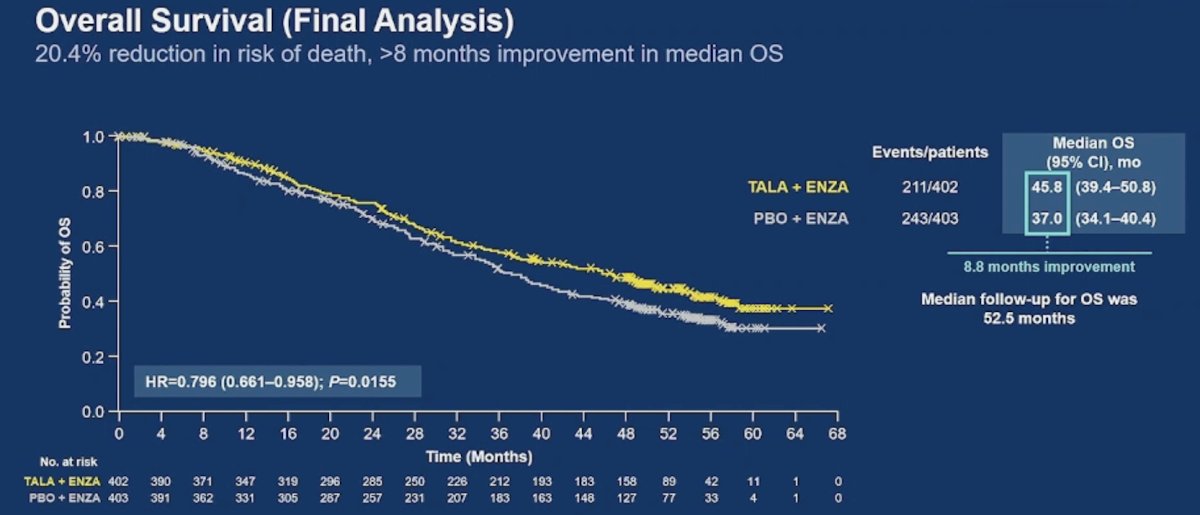
Starting with TALAPRO-2, Dr. Dorff highlighted that PARP inhibitors are more than just creating synthetic lethality, given that androgen receptor inhibition decreases HRR gene expression and PARP inhibitors decrease androgen receptor regulatory gene expression. In this updated analysis of TALAPRO-2, the hazard ratio for overall survival with talazoparib + enzalutamide versus placebo + enzalutamide was 0.796 (95% CI, 0.661–0.958; 2-sided p = 0.0155), with a median overall survival of 45.8 months (95% CI 39.4–50.8) versus 37.0 months (95% CI 34.1–40.4 months), respectively:
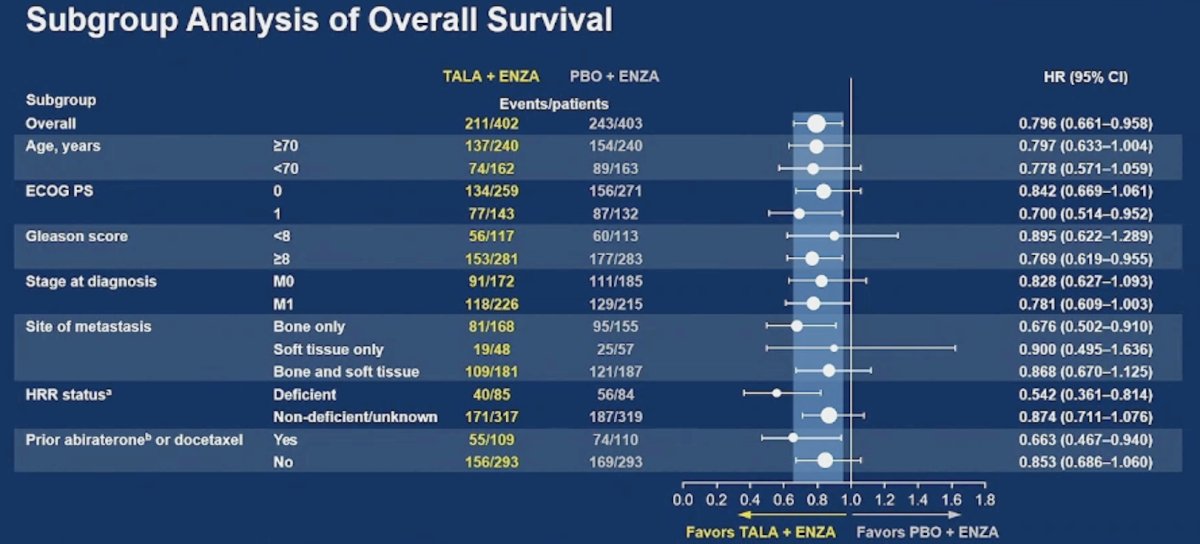
Although this is in all comers, Dr. Dorff notes that we cannot ignore genomics, given that greatest benefit is still in patients with HRR deficient tumors (HR 0.542, 95% CI 0.361-0.814) versus non-HRR deficient (HR 0.874, 95% CI 0.711-1.076):
An FDA pooled analysis from 2024 assessed what the impact of PARP inhibitors are for patients with non-BRCA HRR alterations [1], noting that the benefit from PARP inhibitors appeared greatest for patients with BRCA1, BRCA2, CDK12, and PALB2 mutations:

Furthermore, there is synergy suggested from the BRCAaway trial, and safety does not appear to be significantly impacted by the use of combination versus single agent therapy:
- PROPEL: pulmonary embolism rate was 7.3% for abiraterone + olaparib versus 2.3% for abiraterone + placebo
- TALAPRO-2: pulmonary embolism rate was 3% for enzalutamide + talazoparib versus <1% for enzalutamide + placebo
- MAGNITUDE: arrhythmia/hypertension rate was 44% for abiraterone + niraparib versus 28% for abiraterone + placebo
Dr. Dorff’s overall conclusions from TALAPRO-2 are as follows:
- Combination therapy is beneficial (radiographic progression free survival > overall survival) in unselected patients
- Supports synergy and the findings are similar to PROPEL
- However, the effect is markedly strong in BRCA2 and HRR mutation patients
- There are important considerations:
- Cost and access
- Anemia and transfusions
- We must continue to watch for MDS and AML
- mCRPC “first line” (without intensification) is perhaps a vanishing population
- There is excitement for PARP inhibitors + androgen receptor pathway inhibitors in the mHSPC disease space
Dr. Dorff then discussed the STOPCAP analysis of individual participant data of 7 trials showing benefit of intensified treatment of mHSPC with androgen receptor pathway inhibitors. Among these trials, 4 trials used androgen biosynthesis inhibitors (4,685 patients; STAMPEDE-Abi, LATITUDE, PEACE-1, SWOG 1216), and 3 trials used “amides” +/- abiraterone (3,093 patients; ENZAMET, TITAN, STAMPEDE-Abi + Enza). Dr. Dorff noted several important points regarding these trials:
- Metastasis was based on conventional imaging
- There were differences in high versus low volume proportion - the median overall survival in the control was 3-6 years
- ENZAMET and S1216 allowed older generation androgen antagonists (ie. bicalutamide) in the control arm
- Many of the trials had poor diversity
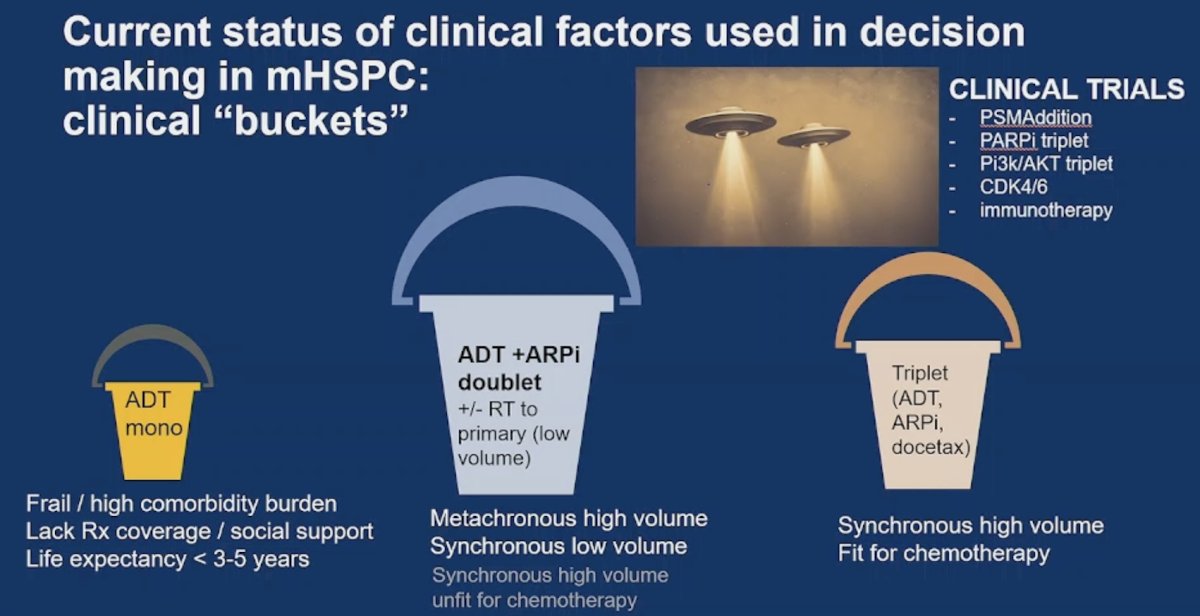
The current status of clinical factors used in decision making in mHSPC based on clinical “buckets” is highlighted by Dr. Dorff as follows:
The future state of mHSPC with the STOPCAP analysis emphasizes that clinical characteristics remain highly prognostic:
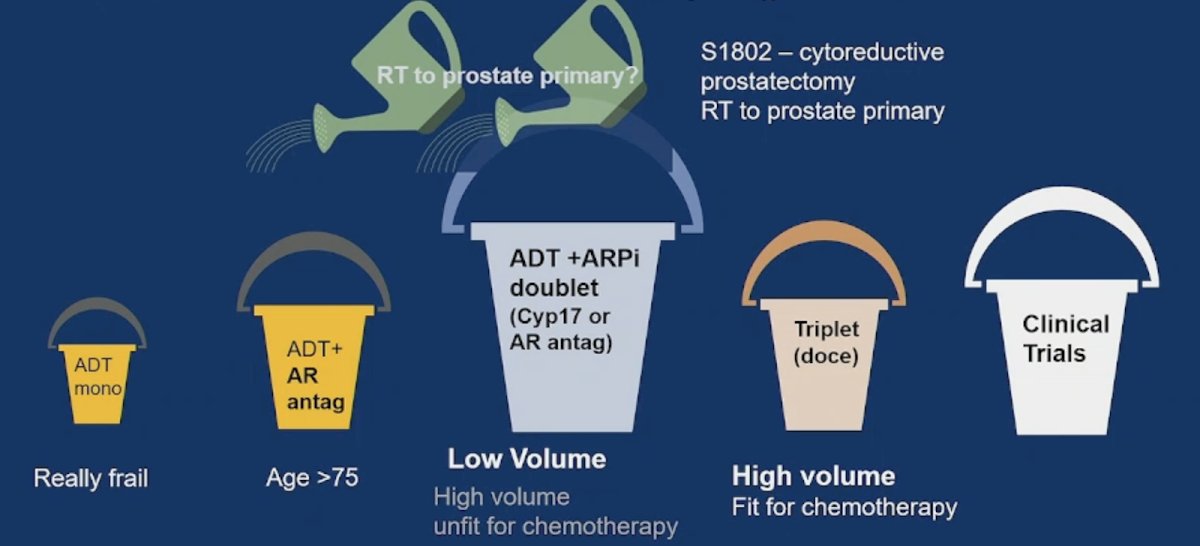
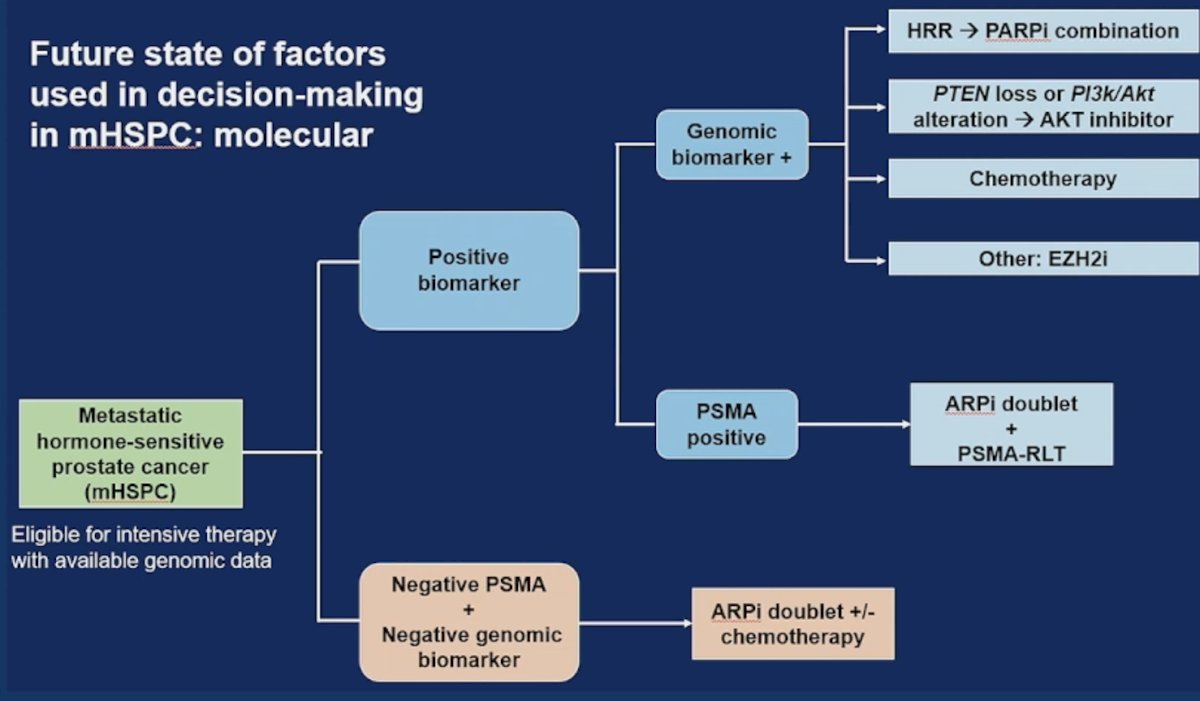
Ideally, according to Dr. Dorff, the future state of factors used in decision making in mHSPC will be based on molecular characteristics:
Dr. Dorff concluded her discussant presentation by emphasizing that the patient is at the center:
- PARP inhibitors + androgen receptor pathway inhibitors (talazoparib + enzalutamide) improves overall survival in first line mCRPC
- This combination has synergy that extends utility to a broader population, but molecular selection informs the magnitude of benefit
- mHSPC data favor intensification for most, with clinical characteristics currently guiding monotherapy, doublet, and triplet therapy decision making
- We must examine our prescribing habits in the context of emerging data
- We need to continue supporting clinical trials
- We must enhance diversity and inclusiveness as part of our clinical trials
Presented by: Tanya B. Dorff, MD, City of Hope Comprehensive Cancer Center, Duarte, CA
Written by: Zachary Klaassen, MD, MSc – Urologic Oncologist, Associate Professor of Urology, Georgia Cancer Center, Wellstar MCG Health, @zklaassen_md on Twitter during the 2025 Genitourinary (GU) American Society of Clinical Oncology (ASCO) Annual Meeting, San Francisco, CA, Thurs, Feb 13 – Sat, Feb 15, 2025.
References:
Related Content:
ASCO GU 2025: Final Overall Survival with Talazoparib + Enzalutamide as First-Line Treatment in Unselected Patients with mCRPC in the Phase 3 TALAPRO-2 Trial
ASCO GU 2025: Which Patients with mHSPC Benefit More from Androgen Receptor Pathway Inhibitors? STOPCAP Meta-Analyses of Individual Participant Data