

(UroToday.com) The 2026 SESAUA annual meeting featured a bladder cancer session and presentation by Dr. Timothy Lyon discussing a qualitative assessment of physician experiences using TAR-200 among investigators in the SunRISe trial. The gemcitabine intravesical system is a novel intravesical gemcitabine-releasing device under investigation for the treatment of patients with high-risk non-muscle invasive bladder cancer and muscle-invasive bladder cancer.
SunRISe-1 results demonstrate a favorable safety profile and durable complete responses with gemcitabine intravesical system monotherapy, addressing a significant unmet need for patients who are ineligible or who decline radical cystectomy. This study aims to understand the treatment experiences of principal investigators, inform future clinical practice, and enhance the management of patients with high-risk non-muscle invasive bladder cancer treated with the gemcitabine intravesical system.
Healthcare providers specializing in urology who were principal investigators of SunRISe-1 or SunRISe-3 trials in the United States were invited to participate in virtual, 60-minute, open-ended, 1-on-1 qualitative interviews (April – June 2025). Interviews elicited physicians’ practices in gemcitabine intravesical system preparation, insertion, removal, monitoring, management of adverse events, care model designs, and perceived future practice patterns with gemcitabine intravesical system in a real-world setting. The study sponsor was blinded to the identities of the participants. Interviews were audio-recorded, and transcripts were coded for qualitative data analysis software to identify key themes.
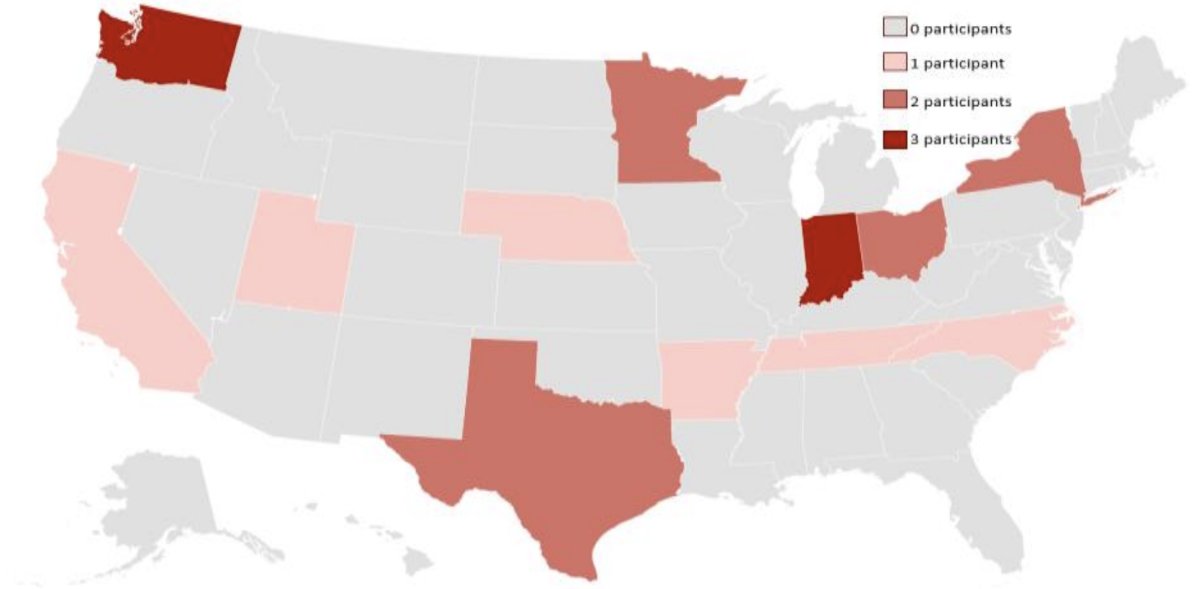
Eighteen participants representing unique trial sites from 13 states completed interviews. Additionally, there were 6 allied health care providers representing 5 practices, some from the same practice sites as the healthcare providers, across 5 states that completed interviews:
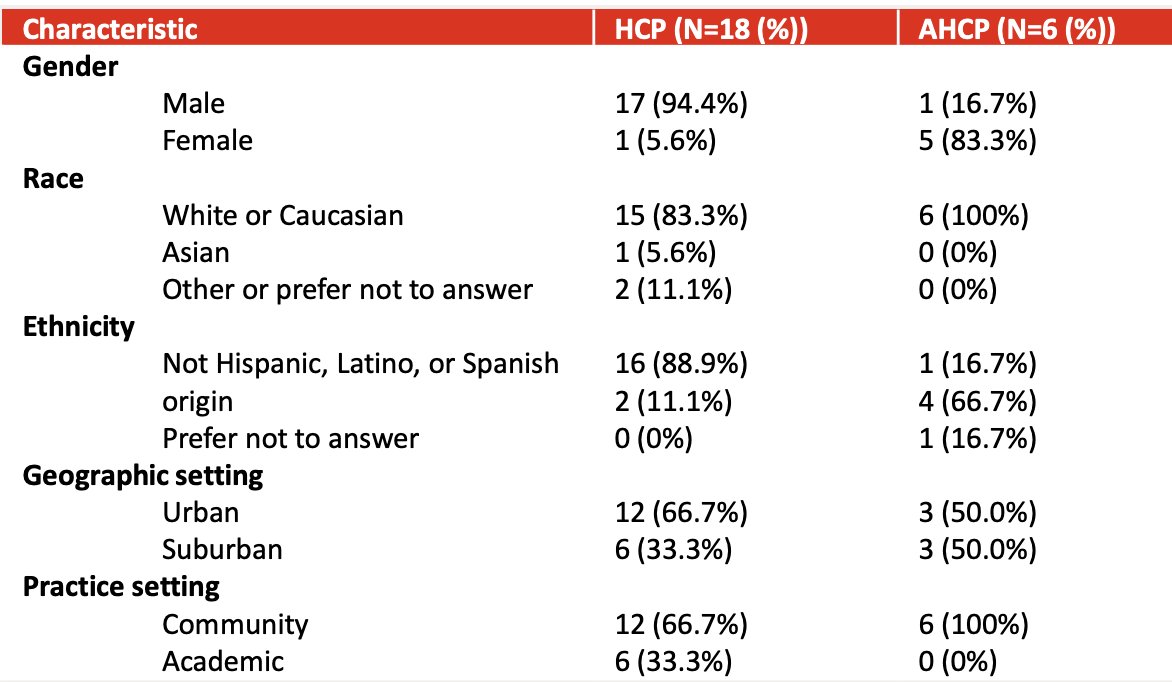
The majority of healthcare providers (33.3%) were in practice more than 20 years, with most (56%) having treated 11-50 patients with the gemcitabine intravesical system:

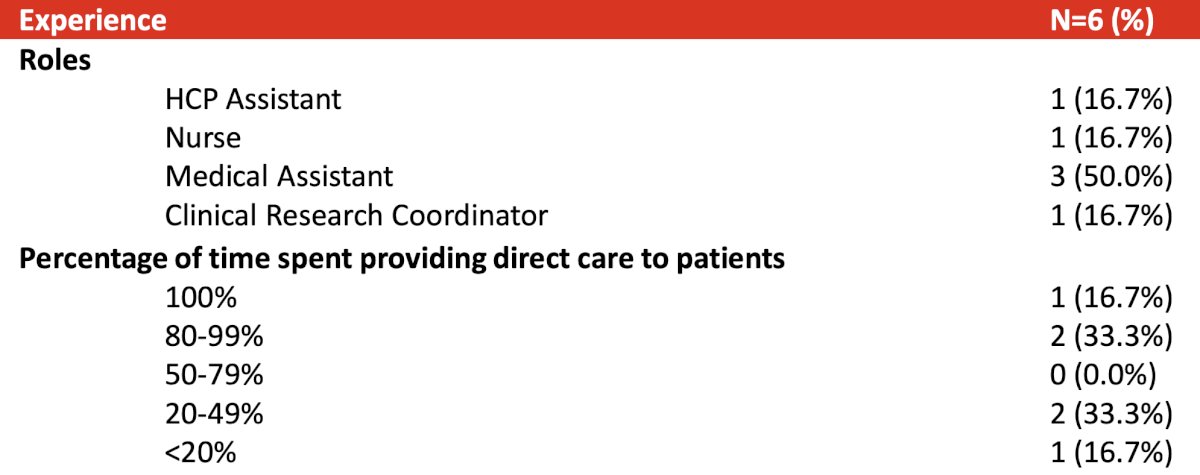
Most allied healthcare providers were MAs (50.0%), with 50% spending 80%-100% of their time in direct patient care:
For preparation, insertion, and removal, health care providers and allied healthcare providers considered gemcitabine intravesical system insertions and removals to be quick and “straightforward”, with the majority <5 minutes and could be performed in various non-surgical settings. Health care providers indicated ~5-10% of their cases were complex, mostly among men and often due to prostatic enlargement, urethral stricture, or prolapsed anatomy in women, adding 1-2 minutes. Removals and subsequent insertions were often performed during the same visit. Allied healthcare providers reported that preparation and cleanup took no longer than 30 minutes in total. The gemcitabine intravesical system was found to be generally easy to store and manage in practice.
For adverse event management, lidocaine jelly was often utilized before procedures for comfort, and video instructions were described as the most utilized manufacturer materials. Allied healthcare providers reported patient education took approximately 30 minutes in total and described the process as explaining the gemcitabine intravesical system and procedure, using manufacturers’ educational materials as needed, and discussing side effects and mitigation strategies. Health care providers considered the gemcitabine intravesical system to be better tolerated, with local and mild adverse events, and less time-consuming than other intravesical treatments, including BCG and chemotherapy.
With regards to care evolution, over half of the health care providers reported anticipating that insertion and removal could be transitioned to advanced practice providers (ie, nurse practitioners or physician assistants) in real-world settings. Allied healthcare providers reported an interest in having advanced practice providers trained to perform insertions and removals once the gemcitabine intravesical system is commercially available.
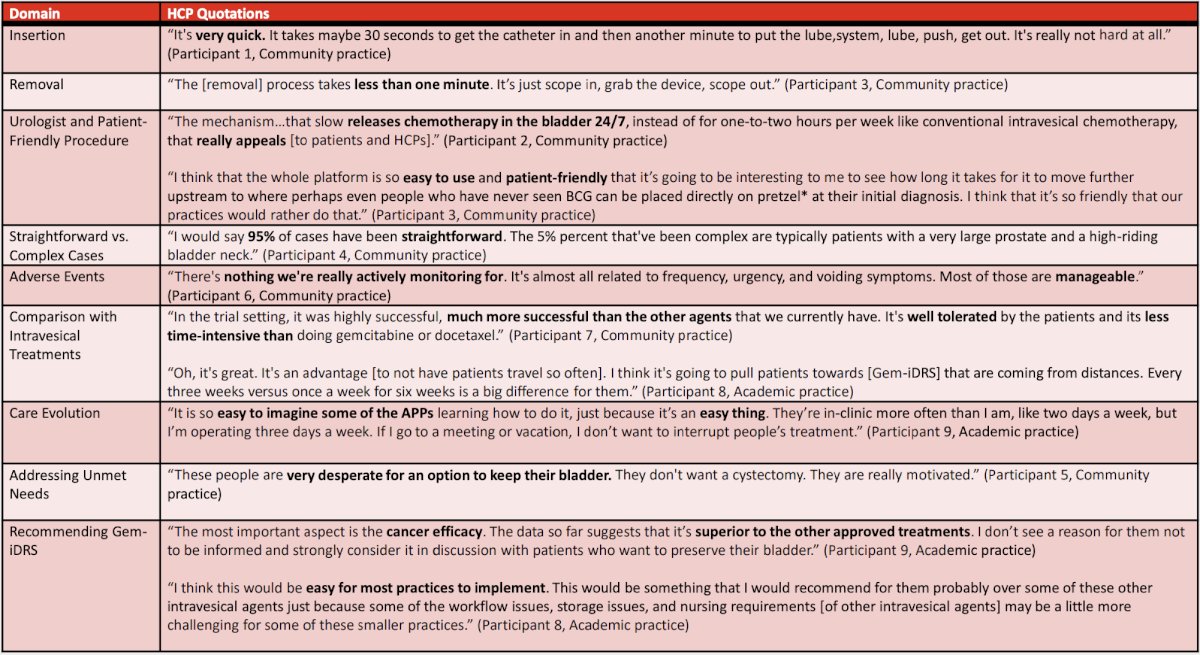
The following table summarizes select health care provider participant quotations for key domains:
Dr. Lyon concluded his presentation discussing a qualitative assessment of physician experiences using the gemcitabine intravesical system among investigators in the SunRISe trial with the following take-home points:
- These findings indicate that the insertions and removals of the gemcitabine intravesical system are generally perceived as straightforward, efficient, and feasible across various clinical settings, as reported by the health care providers and allied healthcare providers participating in the trial
- Trial investigators considered the gemcitabine intravesical system to be better tolerated, with local and mild adverse events, and less time-consuming than other intravesical treatments, including BCG and chemotherapy
- These findings complement the previously reported clinical trial data and suggest that the gemcitabine intravesical system could offer a treatment approach that is both patient- and provider-friendly
- This is the first study exploring healthcare provider and allied healthcare provider experiences of the gemcitabine intravesical system for non-muscle invasive bladder cancer
- Alongside clinical trial data, results from this qualitative study support that the gemcitabine intravesical system could address unmet needs in non-muscle invasive bladder cancer by providing a novel therapeutic option that improves the experience of health care providers and patients
Presented by: Timothy Lyon, MD, Urologist, Associate Professor of Urology, Urology Residency Program Director, Mayo Clinic, Jacksonville, Florida
Written by: Zachary Klaassen, MD, MSc – Urologic Oncologist, Associate Professor of Urology, Georgia Cancer Center, Wellstar MCG Health, @zklaassen_md on Twitter during the 2026 Southeastern Section of the American Urological Association (SESAUA) Annual Meeting, San Juan, PR, Wed, Mar 18 – Sat, Mar 21, 2026.Related Content:
SES AUA 2026: Gemcitabine Intravesical System (TAR-200) Monotherapy in BCG-Unresponsive High-Risk NMIBC: Characterization of Recurrence, Progression, and Time to Radical Cystectomy
Phase III SunRISe-2 Trial Compares Gem-iDRS and Cetrelimab to Chemoradiation for MIBC Bladder Preservation - Andrea Necchi