

(UroToday.com) The 2026 SESAUA annual meeting featured a bladder cancer session and presentation by Dr. Shreyas Joshi discussing the first results from CORE-008 cohort A assessing intravesical cretostimogene grenadenorepvec in patients with high risk BCG-naïve non muscle invasive bladder cancer. Standard of care treatment for high risk non muscle invasive bladder cancer includes TURBT followed by intravesical BCG. However, high recurrence rates and the persistent BCG shortage highlight the need for effective, well-tolerated, and readily available treatment options. While BCG demonstrates strong initial efficacy, durability remains a challenge: historical data report >50% of patients recur, and 20-40% are at risk of progression. Contemporary outcomes demonstrate improved durability with a 3-year event free survival/disease specific survival of >= 75%. However, 70% of patients experience side effects, leading to treatment discontinuation. Cretostimogene is an oncolytic immunotherapy designed to replicate in bladder cancer cells with Rb-E2F pathway alterations. In addition, cretostimogene expresses GM-CSF, adding to local and systemic cancer control:
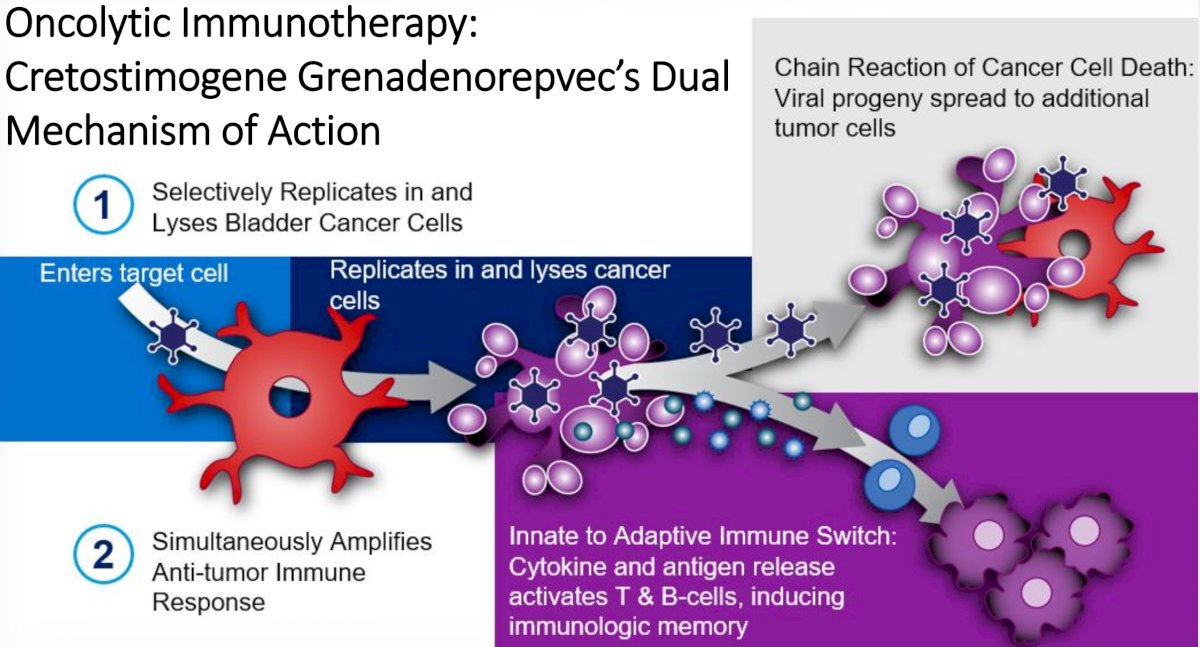
CORE-008 is a phase 2, multi-arm, multi-cohort trial evaluating the efficacy and safety of intravesical cretostimogene in patients with high risk non muscle invasive bladder cancer.
Cohort A includes patients with pathologically confirmed high risk non muscle invasive bladder cancer with CIS and who are BCG-naïve (no prior BCG, BCG administered >24 months ago, or receipt of 1-2 BCG doses within the past 24 months). Patients receive intravesical cretostimogene for six weekly doses during the induction phase, followed by three weekly maintenance cycles quarterly through month 12, then every six months through month 36. Re-induction is permitted at month 3 if persistent HG Ta or CIS is noted at biopsy:
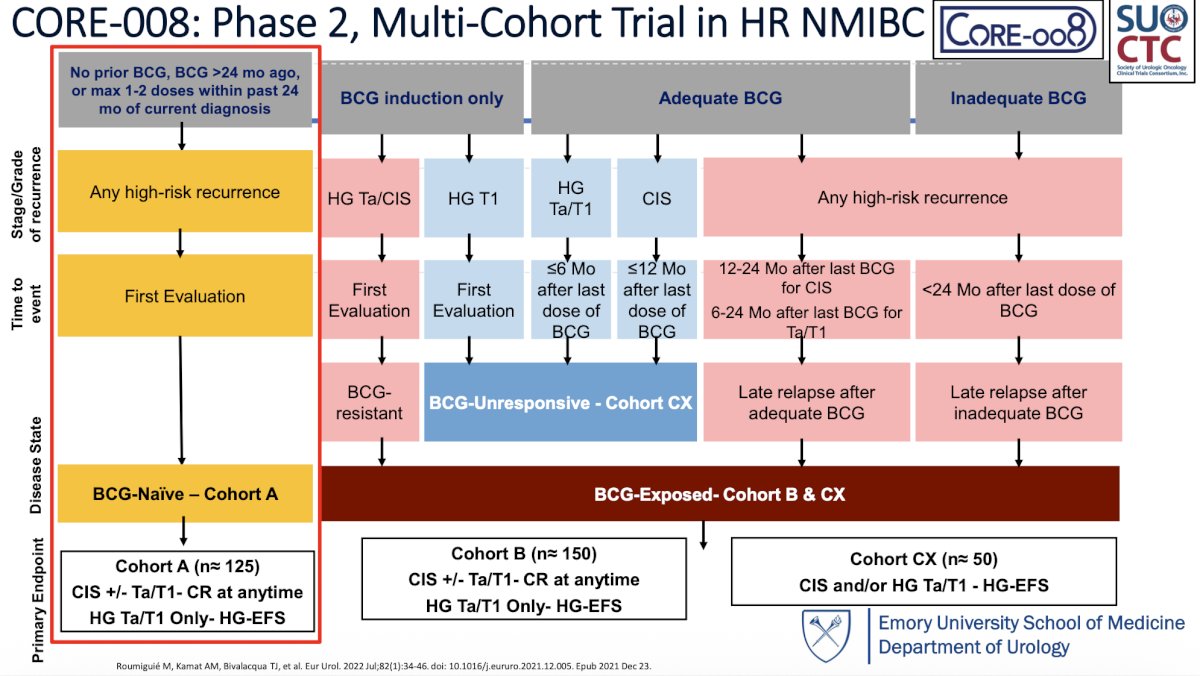
Response assessments included serial cystoscopy with directed biopsy (as indicated), urine cytology, and axial imaging. The primary endpoint is complete response at any time. Enrollment for CORE-008 cohort A is complete.
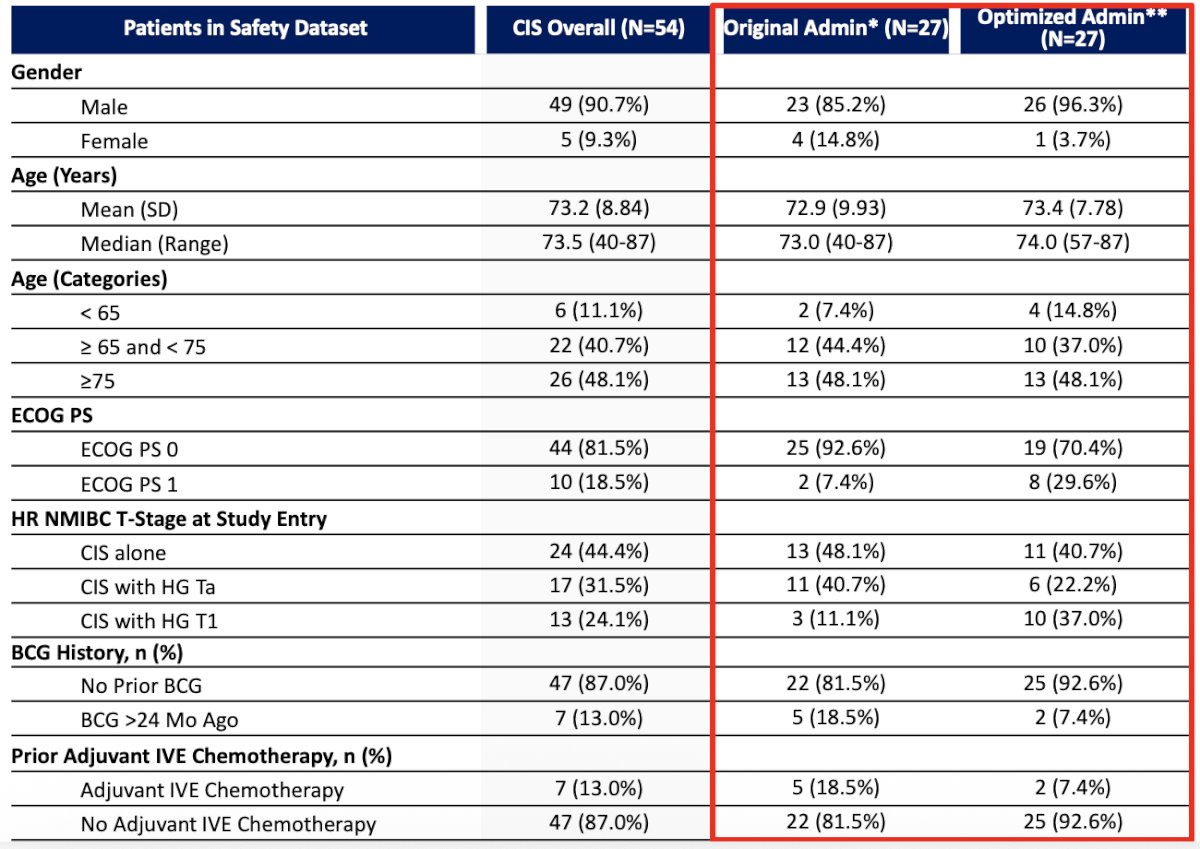
As of the September 1, 2025 data cut off, 54 patients in cohort A received treatment with intravesical cretostimogene. Overall, 88.8% of participants were 65 years of age or older, 9.3% are female, and 92.6% are White. Baseline disease characteristics demonstrate CIS alone in 44.4%, CIS + HG Ta in 31.5%, and CIS + T1 in 24.1%. These patients represented a well balanced cohort of high risk non muscle invasive bladder cancer in the original versus the optimized administration approaches:
The median exposure of the cohort is 12.7 weeks (range: 1.1 to 30.3 weeks), with a complete response rate at any time in evaluable patients of 83.7% (41/49) (95% CI 70.3-92.7%):

There were no progression events to muscle invasive bladder cancer or metastatic disease. Notably, there was a consistent treatment effect across patient subgroups:

The safety and tolerability profile of cretostimogene is consistent with prior clinical trials of cretostimogene. The most common adverse events are low grade and localized to the bladder. There was no related grade 3 or higher adverse events and no treatment related discontinuations:

There were 98.1% of patients (53/54) who completed all protocol defined treatments.
Dr. Joshi concluded his presentation discussing the first results from CORE-008 cohort A with the following take-home points:
- Cretostimogene monotherapy demonstrates consistent efficacy, safety, and tolerability in high risk, BCG-naïve non muscle invasive bladder cancer with CIS
- Cretostimogene aligns with the current urology workflow: intravesical, bladder-sparing, with no systemic toxicities
- These findings support continued development of cretostimogene across non muscle invasive disease states
- Additional treatment arms are planned for high risk BCG-naïve non muscle invasive bladder cancer
Presented by: Shreyas Joshi, MD, MPH, Emory University, Atlanta, GA
Written by: Zachary Klaassen, MD, MSc – Urologic Oncologist, Associate Professor of Urology, Georgia Cancer Center, Wellstar MCG Health, @zklaassen_md on Twitter during the 2026 Southeastern Section of the American Urological Association (SESAUA) Annual Meeting, San Juan, PR, Wed, Mar 18 – Sat, Mar 21, 2026.
Related Content:
EAU 2026: Translational Insights from CORE-008 Cohort A– Phase 2 Study of Intravesical Cretostimogene Grenadenorepvec in Patients with High-risk BCG-naïve Non-muscle Invasive Bladder Cancer.
ASCO GU 2026: First Results from CORE-008 Cohort A: Phase 2 Study of Intravesical Cretostimogene Grenadenorepvec in Patients with HR BCG-Naïve NMIBC
CORE-008 Cohort A First Results on Cretostimogene Grenadenorepvec for BCG-Naive Bladder Cancer - Shane Pearce (Video)