

(UroToday.com) The 2026 SESAUA annual meeting featured a bladder cancer session and presentation by Dr. Vikram Narayan discussing topline results from BOND-003 cohort P assessing intravesical cretostimogene grenadenorepvec for treatment of high-risk, papillary only, BCG-unresponsive non-muscle invasive bladder cancer. Patients with high-risk BCG-unresponsive non-muscle invasive bladder cancer have limited treatment options.
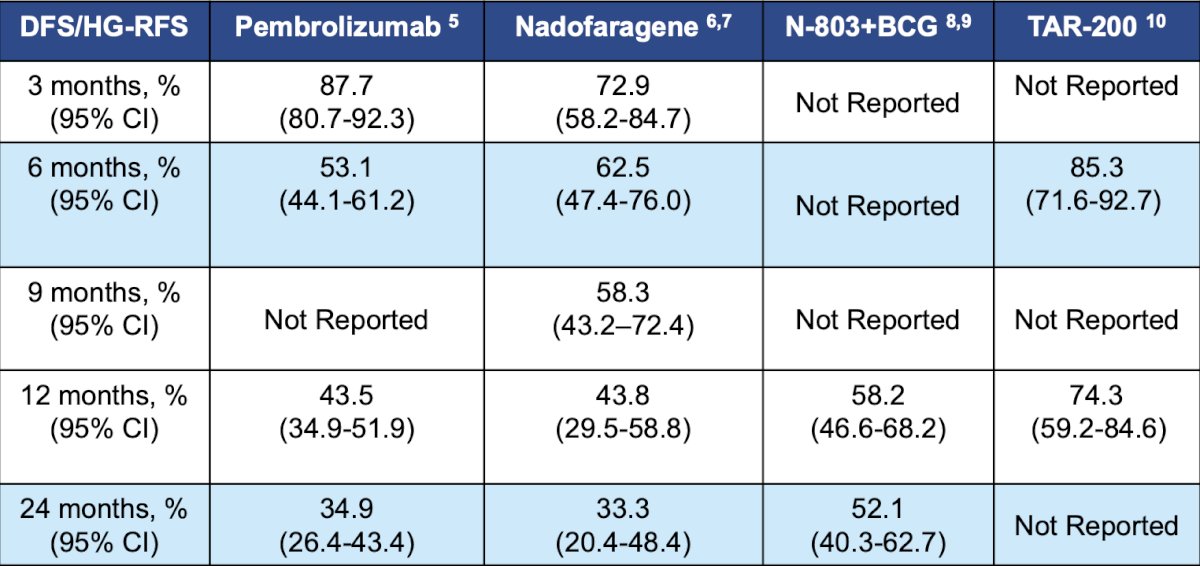
The US FDA has approved treatments for BCG-unresponsive patients with CIS, but additional bladder-sparing therapies are needed, especially for the BCG-unresponsive papillary-only population. The following table represents the current approved treatment options for patients with CIS +/- Ta/T1:
Cretostimogene grenadenorepvec is an oncolytic immunotherapy designed to replicate in bladder cancer cells with Rb-E2F pathway alterations:
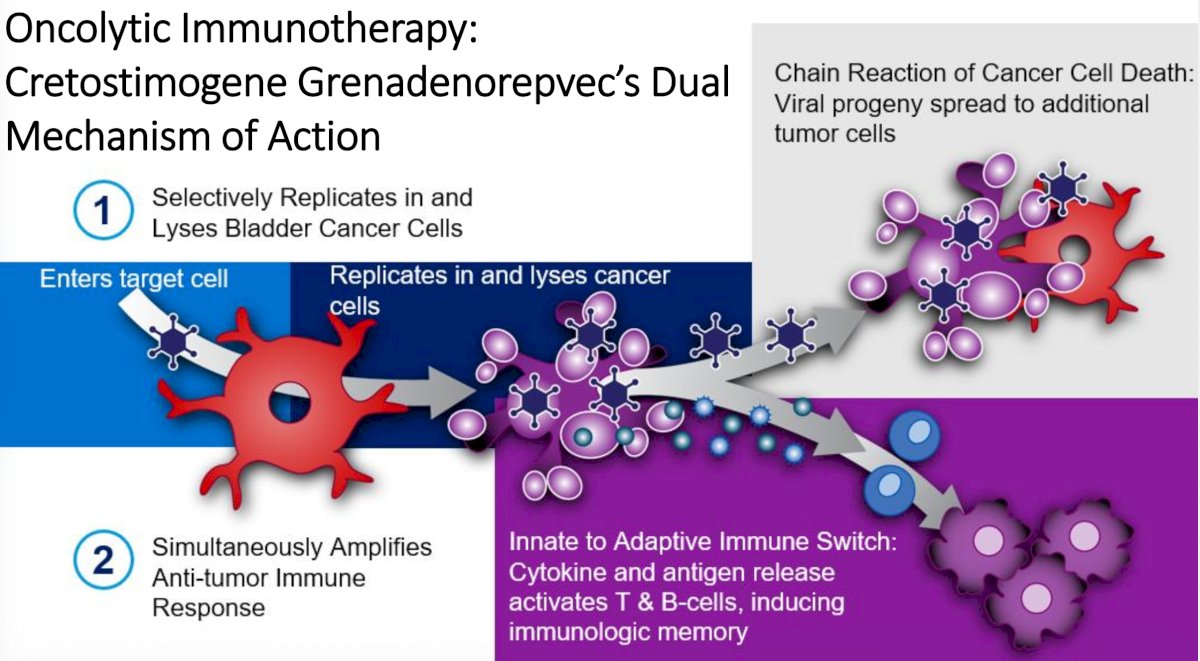
In addition, cretostimogene expresses GM-CSF, adding to local and systemic cancer control. The BOND-003 Cohort P study is a multi-national, single-arm clinical trial assessing the efficacy and safety of intravesical cretostimogene in high-risk, papillary-only, BCG-unresponsive non-muscle invasive bladder cancer patients.
Eligibility criteria include age ≥18 years, ECOG performance status of 0-2, and histologically confirmed BCG-unresponsive HG Ta/T1 papillary disease without CIS within 90 days of study enrollment as verified per central review. Patients had no visible evidence of residual bladder cancer before treatment. Intravesical cretostimogene is instilled for six weekly doses during the induction phase, followed by three weekly maintenance cycles quarterly through month 12, then every six months through month 36. Re-induction is permitted at 3 months for patients with persistent HG Ta and/or CIS:
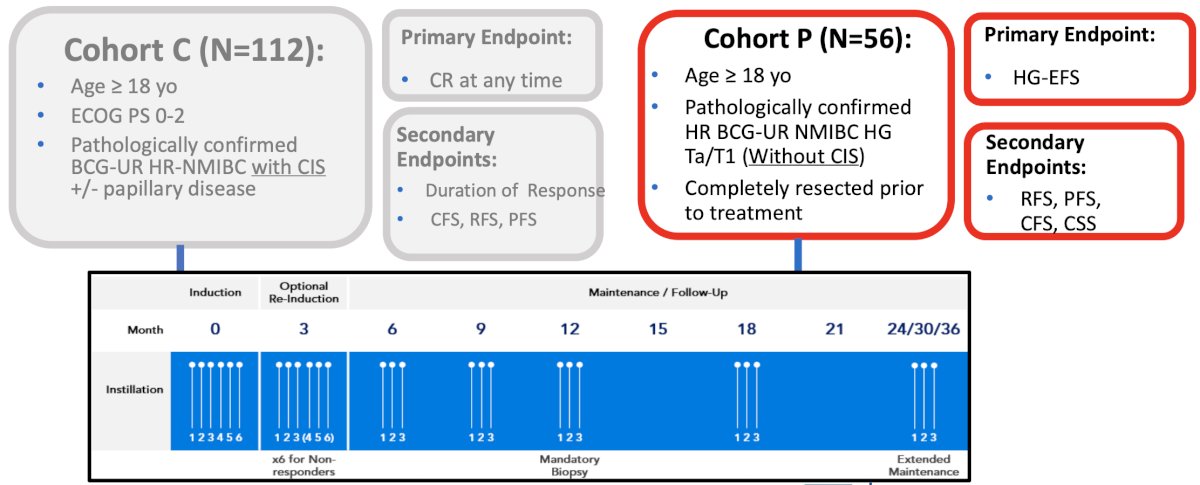
Primary disease assessments include serial cystoscopy, urine cytology, axial imaging, and mandatory biopsy directed at prior tumor locations at month 12, with centralized review of pathologic samples. Endpoints include high-grade recurrence-free survival, progression-free survival, and safety. The study has completed enrollment.
A total of 56 patients who received treatment with cretostimogene were evaluated for high-grade recurrence-free survival and safety. As of September 1, 2025, the data cut-off, 76.7% of patients were 65 or older, and 21.4% were female. Overall, 58.9% of participants had HG Ta papillary non-muscle invasive bladder cancer at baseline, and 96.4% of patients were from the United States:

Over a median follow-up of 6.0 months, 8 patients were re-induced at 3 months. There was a consistently high grade event-free survival:
- HG Ta:
- 92.8% (3 months)
- 75.9% (6 months)
- 75.9% (9 months)
- HT T1:
- 100% (3 months)
- 100% (6 months)
- 87.5% (9 months)

There were no progression events to muscle-invasive bladder cancer or metastatic disease. Additionally, there were no patients who underwent radical cystectomy. Cretostimogene demonstrated a favorable safety profile, with most adverse events localized to low-grade (grade 1-2) bladder symptoms:
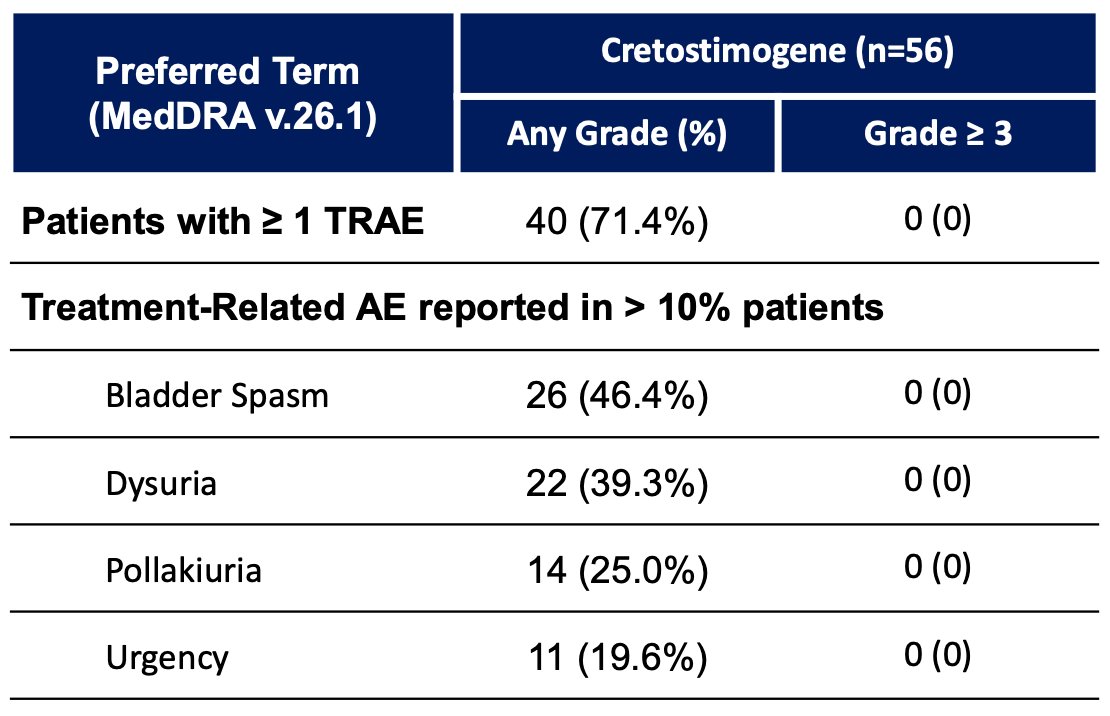
There were no serious treatment-related adverse events, no discontinuations related to cretostimogene, and no treatment-related discontinuations.
Dr. Narayan concluded his presentation discussing the topline results from the BOND-003 cohort P with the following take-home points:
- Topline results with cretostimogene in the BOND-003 cohort P consistently demonstrate:
- Strong high-grade event-free survival at 3, 6, and 9 months
- Responses maintained across HG Ta and higher risk, HG T1 populations
- Well-tolerated safety profile
- Longer-term treatment and follow-up is ongoing
Presented by: Vikram Narayan, MD, Assistant Professor, Department of Urology, Emory University School of Medicine, Grady Memorial Hospital, Atlanta, GA
Written by: Zachary Klaassen, MD, MSc – Urologic Oncologist, Associate Professor of Urology, Georgia Cancer Center, Wellstar MCG Health, @zklaassen_md on Twitter during the 2026 Southeastern Section of the American Urological Association (SESAUA) Annual Meeting, San Juan, PR, Wed, Mar 18 – Sat, Mar 21, 2026.
Related Content:
ASCO GU 2026: Topline Results from BOND-003 Cohort P: A Multi-National, Single-Arm Study of Intravesical Cretostimogene Grenadenorepvec for Treatment of High-Risk, Papillary Only, BCG-Unresponsive NMIBC
Cohort P Data from the BOND-003 Study in BCG-Unresponsive Papillary Bladder Cancer - Mark Tyson (Video)
BOND-003 Cohort P Examines Gene Therapy for Papillary-Only BCG-Unresponsive Bladder Cancer - Vikram Narayan