

(UroToday.com) The 2026 GU ASCO annual meeting featured a urothelial carcinoma session and a presentation by Dr. Sia Daneshmand discussing topline results from BOND-003 cohort P assessing intravesical cretostimogene grenadenorepvec for treatment of high risk, papillary only, BCG-unresponsive non muscle invasive bladder cancer. Patients with high risk BCG-unresponsive non muscle invasive bladder cancer have limited treatment options. The US FDA approved treatments for BCG-unresponsive patients with CIS, but additional bladder-sparing therapies are needed, especially for the BCG-unresponsive papillary-only population. Cretostimogene is an oncolytic immunotherapy with dual mechanisms of action. It replicates in and lyses cancer cells with Rb-E2F pathway alterations. This releases tumor-specific antigens, initiating an anti-tumor immune response, further amplified by the GM-CSF transgene. The BOND-003 Cohort P study is a single-arm clinical trial assessing the efficacy and safety of intravesical cretostimogene in high risk, papillary-only, BCG-unresponsive non muscle invasive bladder cancer patients.
Eligibility criteria include age ≥18 years, ECOG performance status of 0-2, and histologically confirmed BCG-unresponsive HG Ta/T1 papillary disease without CIS within 90 days of study enrollment as verified per central pathology review. Patients had no visible evidence of residual bladder cancer before treatment. Intravesical cretostimogene is instilled for six weekly doses during the induction phase, followed by three weekly maintenance cycles quarterly through month 12, then every six months through month 36:
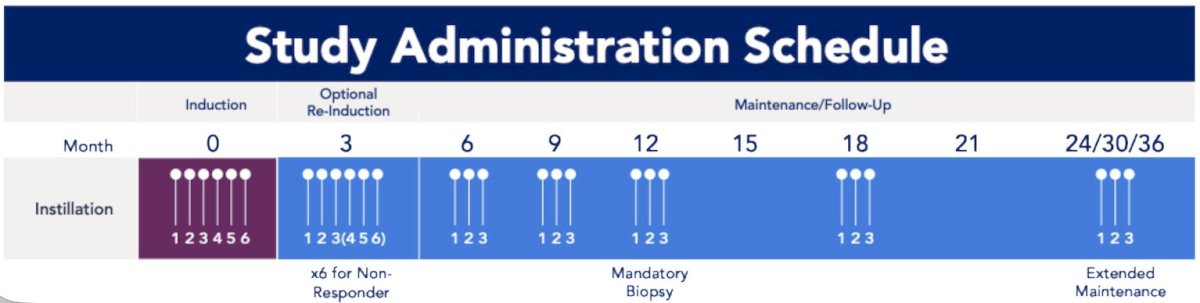
Re-induction is permitted at 3 months for patients with HG Ta or CIS. Primary disease assessments include serial cystoscopy, urine cytology, axial imaging, and mandatory biopsy directed at prior tumor locations at month 12, with centralized review of pathologic samples. Endpoints include high grade recurrence free survival, high grade event free survival, progression free survival, and safety. The study has completed enrollment.
A total of 56 patients who received treatment with cretostimogene are evaluated based on data from the September 1, 2025, cutoff. At baseline, 76.7% of patients are 65 years or older, 21.4% are female, 58.9% have HG Ta, and 41.1% have HG T1 papillary non muscle invasive bladder cancer:

At a median follow-up of 6 months, 51 patients are efficacy evaluable. Kaplan-Meier estimates of high grade event free survival at 3-, 6-, and 9-months are 95.7% (95% CI 83.8 – 98.9), 84.6% (95% CI 68.6 - 92.9%), and 80.4% (95% CI 62.3 -90.4%), respectively:
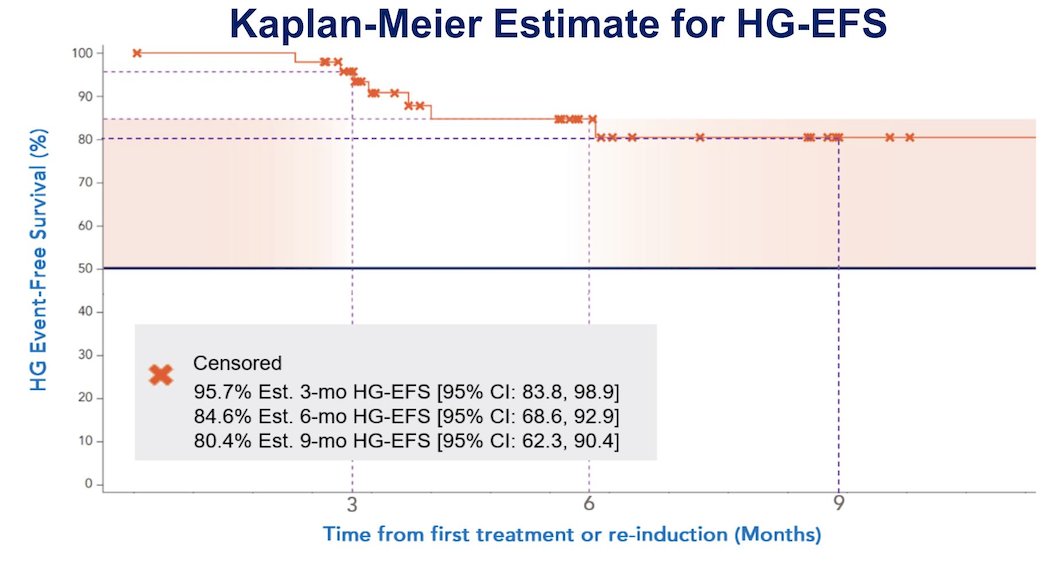
The results of high grade event free survival are consistent in HG Ta and HG T1. A total of 8 patients have received re-induction therapy, and no patients have undergone a radical cystectomy nor progressed to muscle invasive bladder cancer. One patient progressed to metastatic disease despite a clinical complete response in the bladder.
Cretostimogene demonstrates a favorable safety profile, with most adverse events localized to low grade bladder symptoms. There are no serious treatment-related adverse events and no discontinuations related to cretostimogene. To date, there have been no dose delays, missed doses, or discontinuations due to treatment related adverse events. Overall, 98.2% of patients have received protocol defined treatments.
Dr. Daneshmand concluded his presentation discussing topline results from BOND-003 cohort P with the following take-home points:
- These results demonstrate consistent efficacy and a well-tolerated safety profile
- Mature data with longer term follow-up will build upon these promising findings and will inform future treatment approaches with cretostimogene
Presented by: Sia Daneshmand, MD, University of Southern California, Los Angeles, CA
Written by: Zachary Klaassen, MD, MSc – Urologic Oncologist, Associate Professor of Urology, Georgia Cancer Center, Wellstar MCG Health, @zklaassen_md on Twitter during the 2026 American Society of Clinical Oncology Genitourinary (ASCO GU) cancers symposium held in San Francisco, CA, between February 26th and 28th, 2026.