

(UroToday.com) The 2025 European Society for Medical Oncology (ESMO) Annual Congress, held in Berlin, Germany, between October 17th and 21st, 2025, was host to a renal and urothelial carcinoma proffered paper session. Dr. Andrew Hahn presented LenCabo, a randomized phase II multicenter trial of lenvatinib plus everolimus versus cabozantinib in patients with metastatic clear cell RCC (ccRCC) that progressed on PD-1 immune checkpoint inhibition.
The current 1st line standard of care therapy for metastatic ccRCC consists of an anti-PD-1 immune checkpoint inhibitor plus either a CTLA-4 immune checkpoint inhibitor or an angiogenesis-targeted agent. In the 2nd line setting, available options include the following:
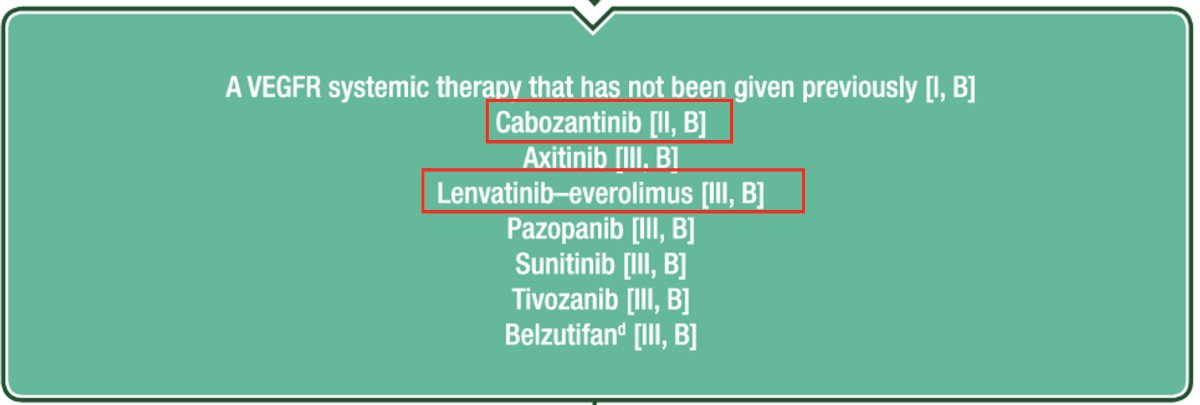
This trial compares two available options – cabozantinib and lenvatinib + everolimus in the 2nd line setting following disease progression with a PD-1 immune checkpoint inhibitor.
Study 205, the registrational phase II trial for lenvatinib + everolimus, produced a median progression-free survival (PFS) of 12.8 months, an objective response rate (ORR) of 35%, and a median overall survival (OS) of 25 months.1 The combination of lenvatinib + everolimus has not been compared against contemporary ≥2nd line treatments after progression on a PD-1 immune checkpoint inhibitor.
Lenvatinib + everolimus is distinct among ≥2nd line treatment options as it combines agents with distinct mechanisms of action (i.e., angiogenesis and mTOR inhibitors). Dr. Hahn and colleagues hypothesized that the combination of lenvatinib + everolimus may yield a longer PFS interval compared to cabozantinib following progression on a PD-1 immune checkpoint inhibitor.
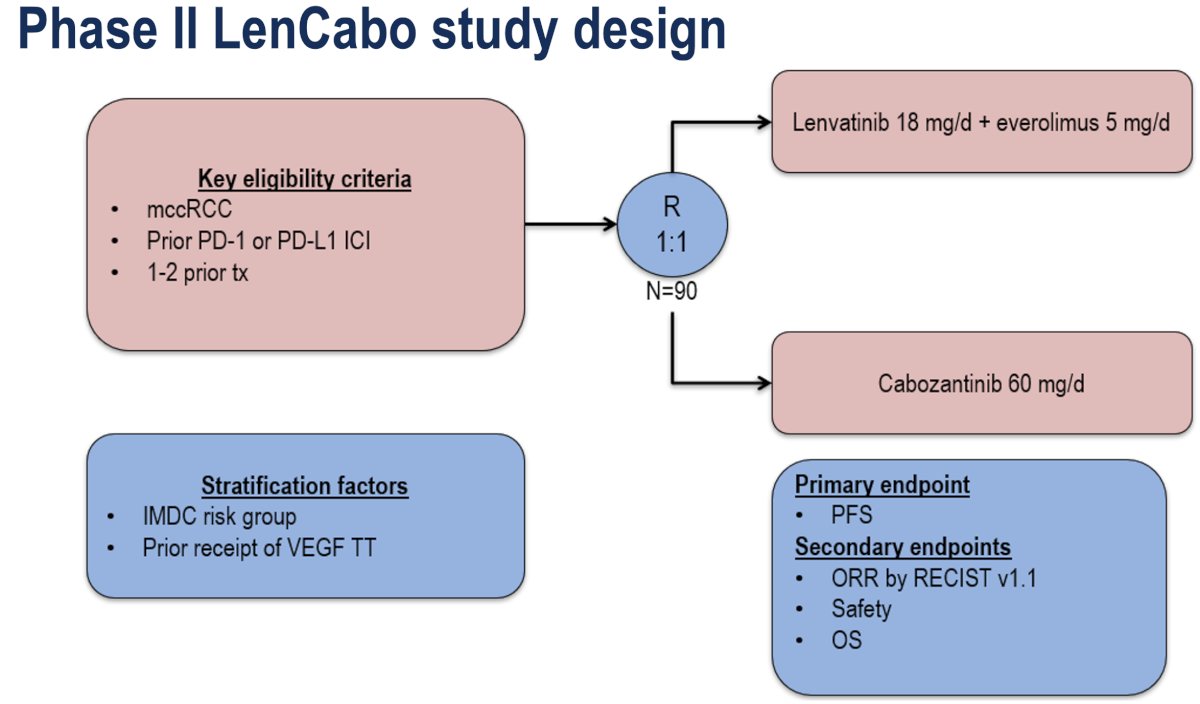
The study design of LenCabo is illustrated below. Patients with metastatic ccRCC who have received 1–2 prior lines of therapy, including an anti-PD-1 or PD-L1 immune checkpoint inhibitor, were randomized 1:1 to:
- Lenvatinib 18 mg daily + everolimus 5 mg daily
- Cabozantinib 60 mg daily
The primary endpoint was PFS, with key secondary endpoints of ORR, safety, and OS.
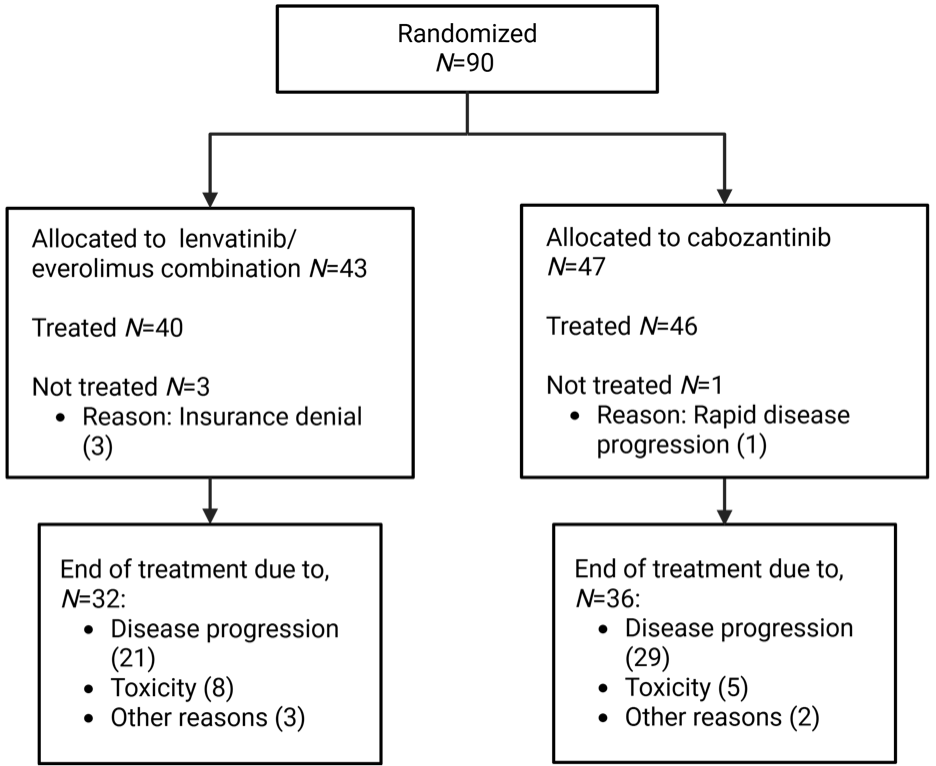
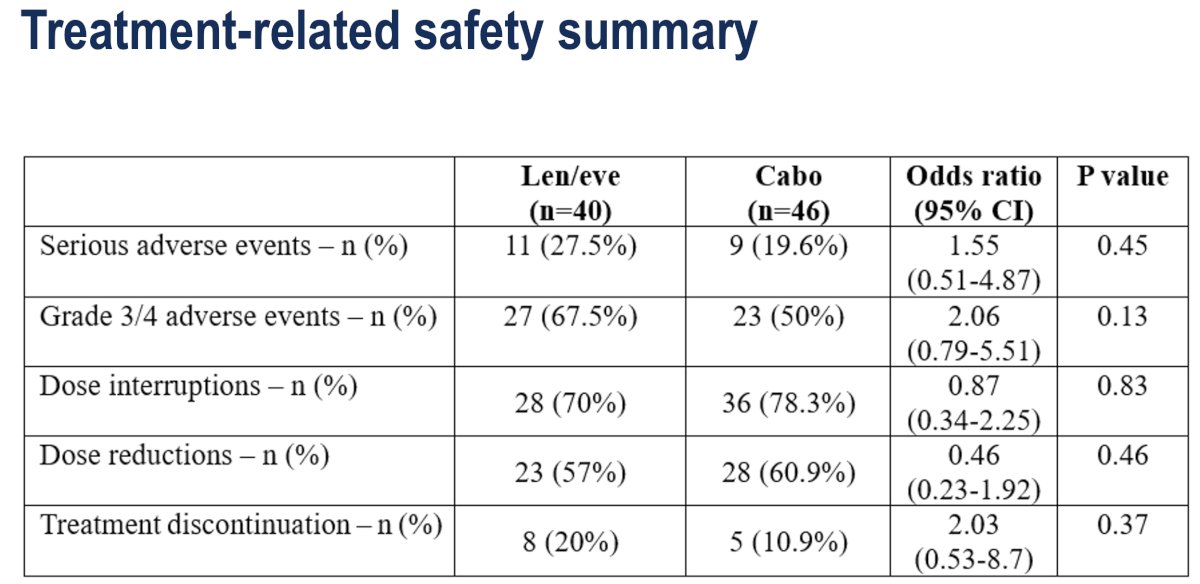
The CONSORT diagram is illustrated below. Ninety patients were randomized to either treatment arm. The most common cause for study treatment discontinuation was disease progression. 8/40 and 5/46 patients discontinued study treatment due to toxicity in the lenvatinib + everolimus and cabozantinib groups, respectively.
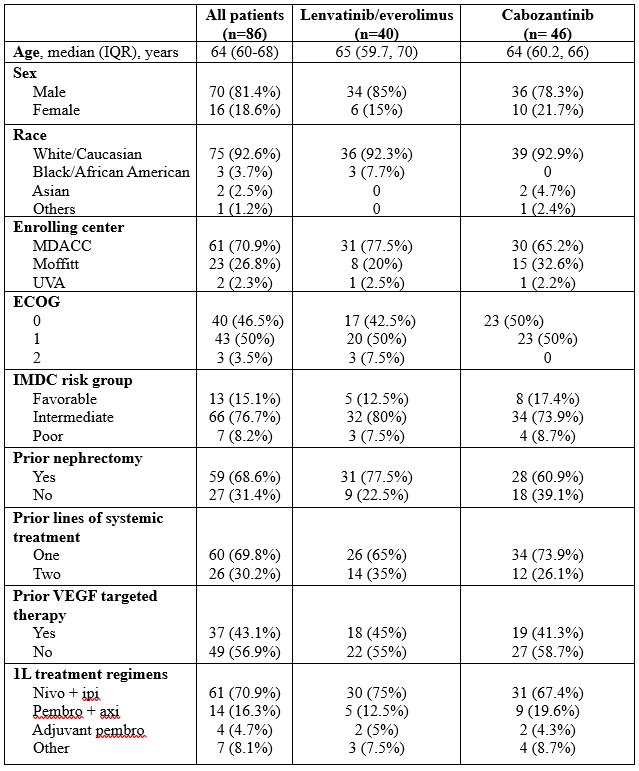
The baseline study cohort characteristics are summarized below. The median patient age was 64 years. The majority (77%) had IMDC intermediate risk disease, with an additional 8% having IMDC poor risk disease. 69% of patients had a prior radical nephrectomy. 70% had received one prior line of therapy, and 30% two prior lines. The most common 1st line treatment regimen previously administered was nivolumab + ipilimumab (71%), followed by pembrolizumab + axitinib (16%), and adjuvant pembrolizumab (4.7%).
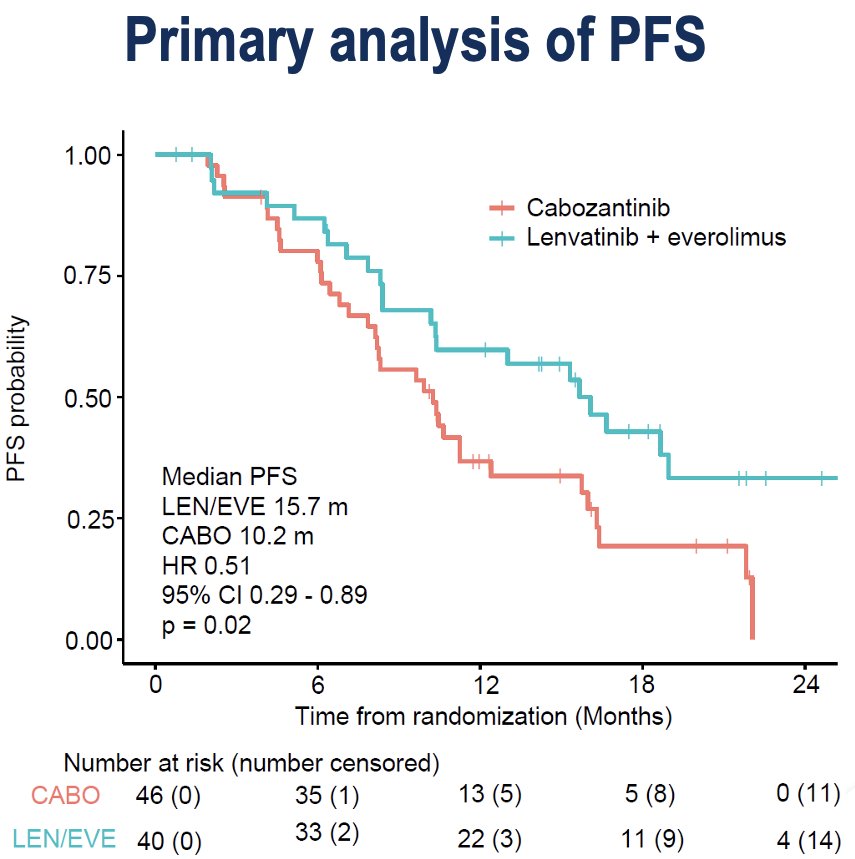
Disease progression was observed in 63% of patients in the lenvatinib + everolimus arm, compared to 76% of those in the cabozantinib arm (HR: 0.51, 95% CI: 0.29–0.89, p=0.02):
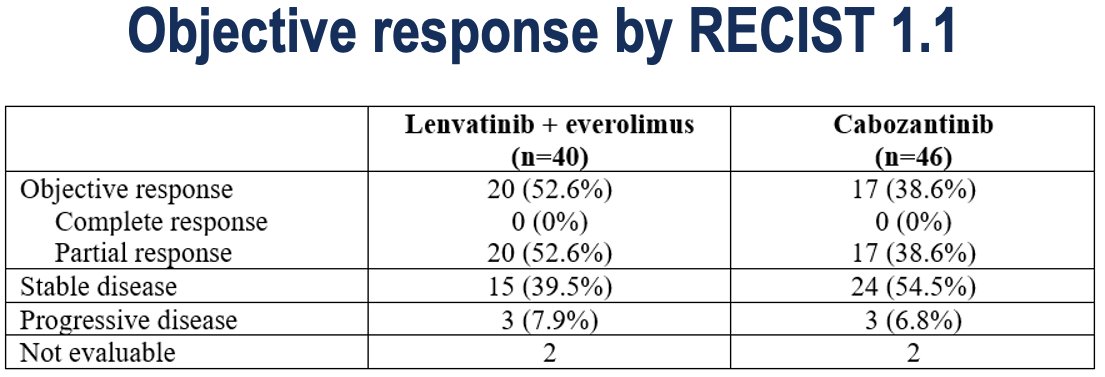
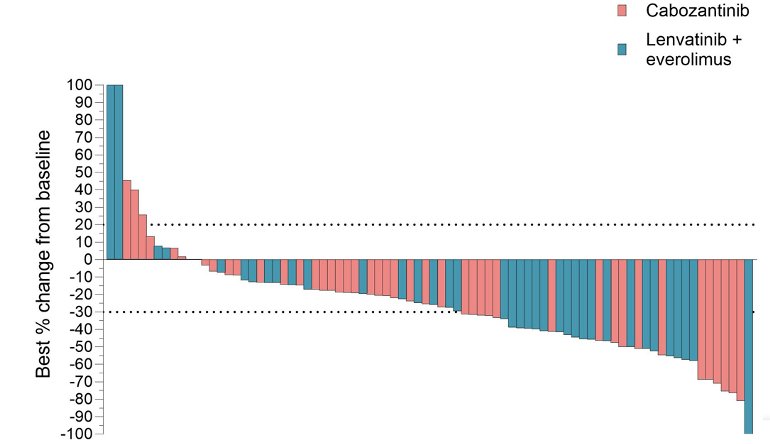
Similarly, the ORR was superior in the lenvatinib + everolimus arm (53% versus 39%; OR: 1.87, 95% CI: 0.75–4.6, p=0.17). No complete responses were observed.
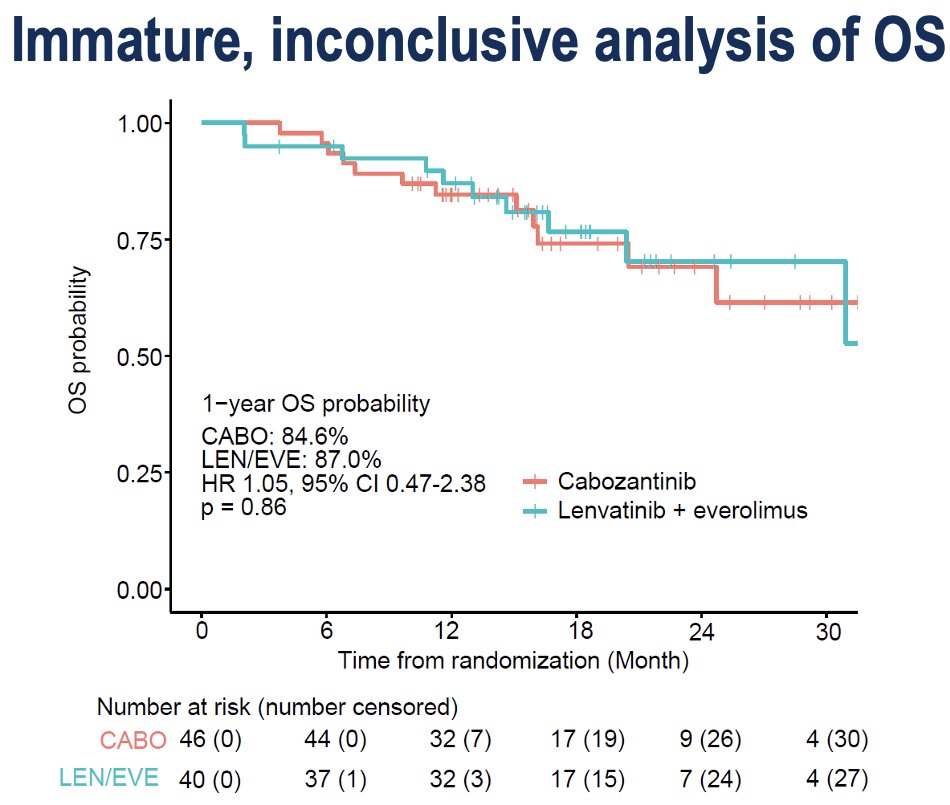
At a median follow-up of 20 months, with 28% of the study patients having experienced mortality, there was no significant difference in OS between the two arms (HR: 1.05. 95% CI: 0.47–2.38, p=0.86).
Serious (28% versus 20%), and grade 3-4 (68% versus 50%) adverse events were more common with lenvatinib + everolimus:
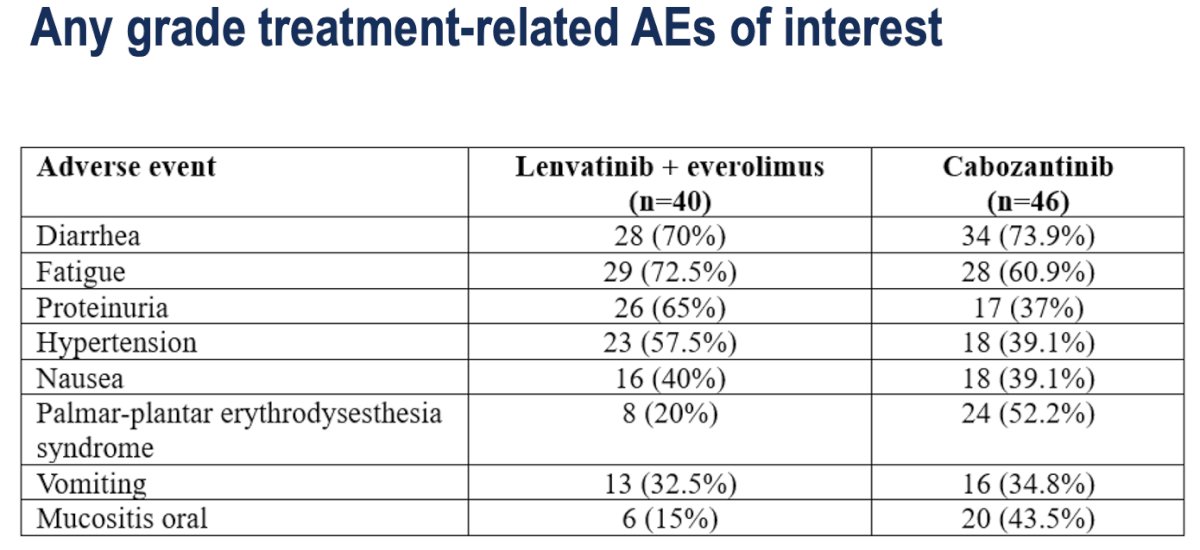
Any grade treatment-related adverse events of interest are summarized below:
Dr. Hahn concluded as follows:
- Among patients with metastatic ccRCC who progressed on prior PD-1 immune checkpoint inhibitor, lenvatinib + everolimus significantly prolonged progression-free survival, compared to cabozantinib.
- As the first head-to-head randomized comparison of contemporary ≥2nd line treatments after immune checkpoint inhibitors, these results are relevant to treatment sequencing and inform oncology practice.
Presented by: Andrew Hahn, MD, Assistant Professor, Department of Genitourinary Medical Oncology, Division of Cancer Medicine, The University of Texas MD Anderson Cancer Center, Houston, TX
Written by: Rashid K. Sayyid, MD, MSc, Assistant Professor, Urologic Oncologist, Department of Urology at The University of Arizona and Banner University Medical Center – Tucson, AZ, @rksayyid on X during the 2025 European Society for Medical Oncology (ESMO) Annual Congress, Berlin, Germany, October 17–21, 2025
- Motzer RJ, Alekseev B, Rha SY, et al. Independent assessment of lenvatinib plus everolimus in patients with metastatic renal cell carcinoma. Lancet Oncol. 2016;17:44–55.
LenCabo Phase II Trial Investigates Lenvatinib-Everolimus vs Cabozantinib in Relapsed Kidney Cancer - Andrew Hahn
A Multicenter Randomized Phase II Trial of Lenvatinib plus Everolimus Versus Cabozantinib in Patients with Metastatic Clear Cell RCC That Progressed on PD-1 Immune Checkpoint Inhibition (LenCabo).
ESMO 2025: Invited Discussant: KEYMAKER-UO3 Substudy 03A, LenCabo, & OPTIC RCC