
The “Knack” is a trick or a clever body skill of squeezing your pelvic muscles at the right time; before and during a bladder leak (urinary incontinence). If you learn the Knack, you can stop urine leaking from your bladder.


Timing Your Pelvic Muscle Squeezes

The Knack is all about squeezing your pelvic muscles at the right time, when a bladder leak is most likely to occur. You squeeze the pelvic muscles right before and during any activity that increases pressure in your stomach as this puts more pressure on your bladder, leading to leakage. A muscle squeeze will close the valve (sphincter) in your urethra, keep it tight so you will not leak urine.
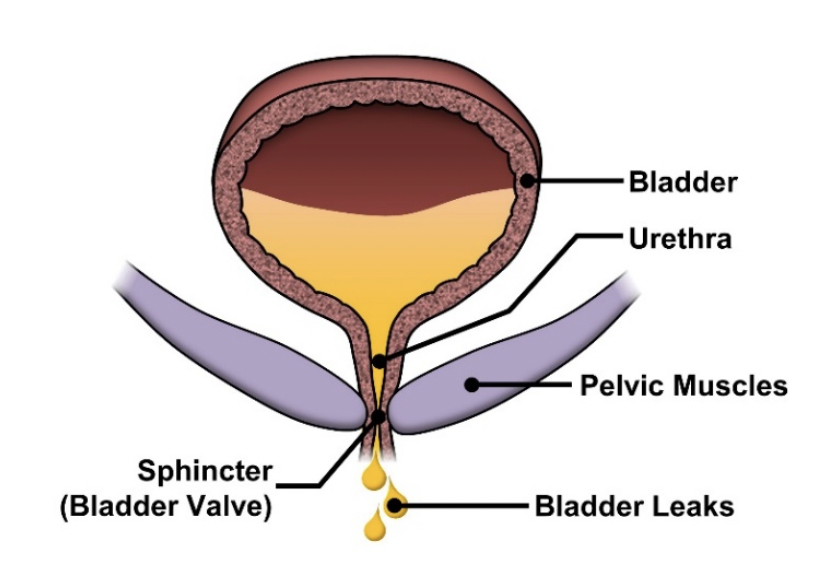
Stop_Bladder_Leaks.png

When to Do the “Knack”

You should figure out those times or events that may trigger urine leakage. This may be any activity that increases pressure in your stomach which in turn, increases the pressure on your bladder, causing urine leakage. Like when you leak urine with a cough, sneeze, laugh, when you bend down or lift, or carry something heavy. You may have a bladder leak when you stand up, or climb up stairs. These activities put pressure on your bladder and push the urine out.

So do a gentle pelvic muscle squeeze -

• Right before a cough and holding the muscle squeeze throughout the cough
• As you get up out of a chair, squeeze your pelvic muscles and hold them as you stand up.
• As you get out of bed, squeeze your muscles before you move to sit on the side of the bed and then squeeze again as you stand up.
• As you start to bend down to pick up something, squeeze your muscles and hold the squeeze as you stand back up.
• If you have bladder leaks when jogging or when exercising, it may be difficult to do the knack at those times. You may want to stop the exercise, do a few muscle squeezes and then continue on.

But if you forget to squeeze your muscles and pee does leak out, go ahead and squeeze your muscles anyway. There’s no reason to feel discouraged. This will not prevent you from leaking pee at that time, but it will help teach your muscles to squeeze with that activity, and may stop your bladder from leaking next time. In time, it will become automatic.

Make the “Knack” Part of Your Daily Life

Remember, do your pelvic muscle squeezes often, make them a habit. Do your squeezes when you are:
• Standing at the sink and brushing your teeth
• Sitting in the car at a red light or stop sign
• Reading a book in bed
• Going for a walk
• Talking on the phone


It may take some time for the KNACK 
to become part of your daily life.

SO PRACTICE THE KNACK UNTIL IT BECOMES A HABIT. SO IT BECOMES AUTOMATIC !


© 2009/2020 Diane Newman PATIENT EDUCATION – THE KNACK

Patient Education Resources
State of the Evidence Review Articles
June 6, 2023
The “Knack” is a trick or a clever body skill of squeezing your pelvic muscles at the right time; before and during a bladder leak (urinary incontinence). If you learn the Knack, you can stop urine leaking from your bladder.
Audio Education Resources
June 6, 2023
(MP3 Audio – Duration: 4:43)
  • Session of 10-second long muscle contractions

Listen Now
June 6, 2023
(MP3 Audio – Duration: 8:49)
  • Overview on how to use the pelvic muscles to prevent urine leakage
  • Session of ten 2-second fast muscle squeezes
  • Session of ten 10-second slow muscle squeezes

Listen Now
June 6, 2023
(MP3 Audio – Duration: 4:02)
  • How to use the pelvic muscles to prevent urine leakage
  • Session of 2-second fast muscle squeezes

Listen Now
June 6, 2023
(MP3 Audio – Duration: 10:11)
  • Pelvic muscle training doing 10-second muscle squeezes

Listen Now
June 6, 2023
(MP3 Audio – Duration: 4:26)
  • Pelvic muscle training doing 2-second muscle squeezes

Listen Now
June 6, 2023
(MP3 Audio – Duration: 14:16)
  • Doing training sessions of 20 “quick flicks” 2-sec and 20 “slow” 10-sec slow squeezes

Listen Now
Bladder Control Strategies

No articles available at this time.

Conference Coverage
Conference Highlights Written by Physician Scientists
Reno, Nevada (UroToday.com) --  Would women suffering from pelvic floor disorder experience health benefits from a vibrator? Does the personal cost of incontinence products lead to additional health or socioeconomic issues? Can women with breast cancer benefit from vaginal estrogen?
Presented by Bruce D. Naliboff, James W. Griffith, Robert Moldwin, Kenneth Locke, Jr, Andrew D. Schrepf, Catherine S. Bradley, Siobhan Sutcliffe, David Williams, H. Henry Lai, John N. Krieger, J. Quentin Clemens, Michel A. Pontari, Larissa V. Rodriguez, Bayley J. Taple, J. Richard Landis, G.
(UroToday.com) Baseline data in the Multidisciplinary Approach to the Study of Chronic Pelvic Pain (MAPP) Research Network Symptom Patterns Study (SPS) were used to corroborate the use of two related, but separate primary symptom components of the Urologic Chronic Pelvic Pain Syndrome (UCPPS) using items from the Genitourinary Pain Index (GUPI) 
San Francisco, CA (UroToday.com) – Female pelvic health can impact a woman’s overall wellness, and conditions such as voiding dysfunction and sexual pain can have significant impacts on quality of life. Three new studies being presented during the American Urological Association (AUA) 2019 Annual Meeting in Chicago bring light to a need for a comprehensive approach to pelvic floor care, attention to symptoms and patients’ adherence to treatment. These abstracts will be presented to the media during a special session for media on Saturday, May 4 at 11 a.m. Dr. Brian Stork, Assistant Clinical Professor of Urology at the University of Michigan, will moderate the session.
Presented by Lisa K Low, PhD, CNM, FACNM, FAAN
Philadelphia, PA (UroToday.com) Lisa K. Low, PhD has presented current studies related to childbirth and pelvic floor injuries, which can lead to urinary incontinence. The PERL randomized clinical trial investigated if pre-delivery bladder health class would decrease urge incontinence (UI) episodes postpartum compared to women who received a usual care.
Boston, MA, May 14, 2017 (UroToday.com) Four studies examining female pelvic and sexual health, show promising results for women with hypoactive sexual desire disorder (HSDD), an association between low testosterone levels and incontinence and refutes theories linking synthetic mesh and autoimmune disease and cancer. All four studies will be presented at the 112th Annual Scientific Meeting of the American Urological Association (AUA) during a joint press conference at the Boston Convention and Exhibition Center, Boston, MA on Sunday, May 14 at 7:30 a.m.
Publications
Articles and Abstracts

Urinary incontinence seriously affects the daily ability of older males. This study compared the effect of different postures of Pilates combined with Kegel training on pelvic floor muscle strength in post-prostatectomy incontinence.

Urinary incontinence (UI) is one of the main complications of radical prostatectomy. Electrical pudendal nerve stimulation (EPNS) has been used to treat stress UI based on its mechanism of passive pelvic floor muscle contraction reported in the previous research.

Women frequently suffer from urinary incontinence due to atrophic changes in the urogenital tract. Recommended conservative treatment includes evaluation of pelvic-floor strength and the functional use of pelvic-floor-muscle (PFM) training.

To investigate the effectiveness of supervised remote rehabilitation programs comprising novel methods of pelvic floor muscle (PFM) training for women with urinary incontinence (UI).

A systematic review and meta-analysis including randomized controlled trials (RCTs), involving novel supervised PFM rehabilitation programs as intervention groups (e.

Excessive pelvic floor muscle activity has been suggested as a source of pain in chronic prostatitis/chronic pelvic pain syndrome (CP/CPPS). Our objective was to determine whether men with CP/CPPS have changes in neural drive that impair their ability to relax pelvic floor muscles.