

(UroToday.com) The 2025 South Central AUA annual meeting included a session on bladder cancer, featuring a trials in progress presentation from Dr. Robert Svatek discussing the PIVOT-006 trial. AUA guidelines recommend adjuvant intravesical therapy or surveillance for patients diagnosed with intermediate risk non muscle invasive bladder cancer. Despite this, up to 60% of patients will recur, and there is a general lack of level-1 evidence in the management of intermediate risk non muscle invasive bladder cancer disease. As a result, there is both a knowledge gap and an unmet medical need for improved therapies for intermediate risk non muscle invasive bladder cancer patients.
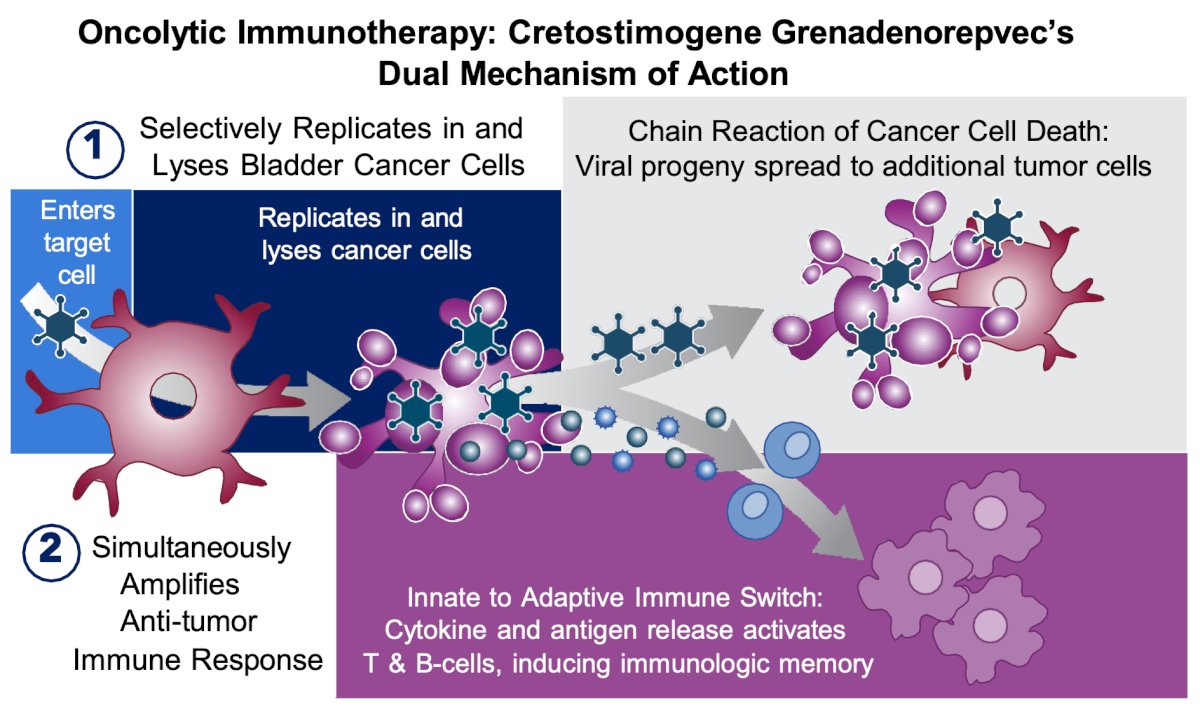
Cretostimogene grenadenorepvec is an oncolytic immunotherapy with a dual mechanism of action. It selectively replicates in and lyses bladder cancer cells with Rb-E2F pathway alterations. The subsequent release of virus- and tumor-specific antigens initiates antitumor immune activation, which is further amplified by the transgene for GM-CSF, a potent cytokine:
Cretostimogene has received both US FDA Fast Track and Breakthrough Designations in the high risk, BCG-unresponsive non muscle invasive bladder cancer with CIS indication and has demonstrated a consistently favorable tolerability and safety profile. Based on the strength of those data, PIVOT-006 (NCT06111235) has been designed as a multi-national, randomized phase 3 study to assess the efficacy and safety of adjuvant cretostimogene versus surveillance in patients with intermediate risk non muscle invasive bladder cancer.
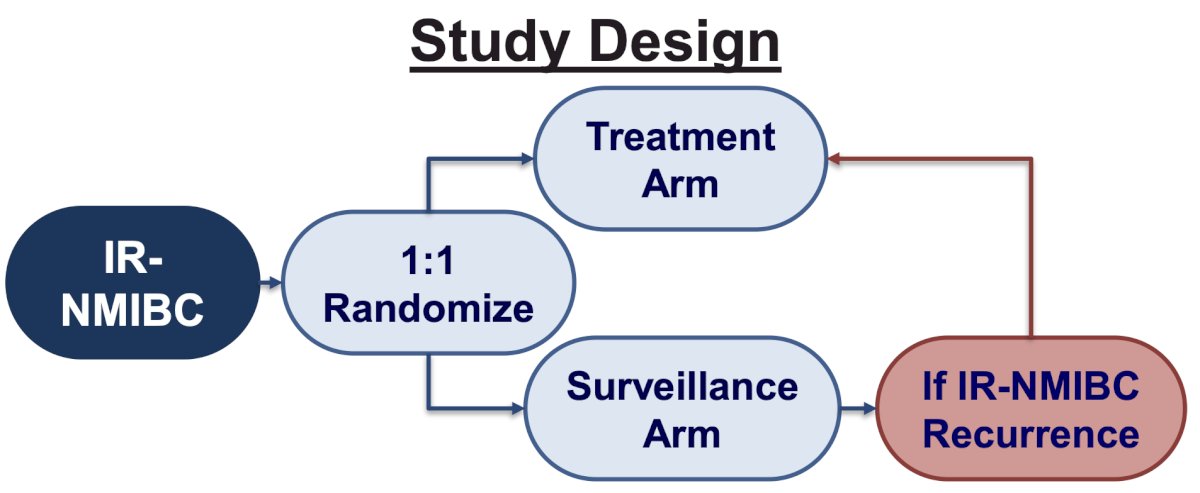
Eligibility criteria include histologically confirmed intermediate risk non muscle invasive bladder cancer diagnosis within 90 days of randomization, as defined by AUA/SUO guidelines. Stratification factors include receipt of single-dose perioperative chemotherapy and tumor grade. Patients (n ~364) will be randomized 1:1 to undergo surveillance or to receive intravesical cretostimogene following TURBT. If intermediate risk non muscle invasive bladder cancer recurrence is noted in the surveillance arm, patients will be eligible to receive intravesical cretostimogene:
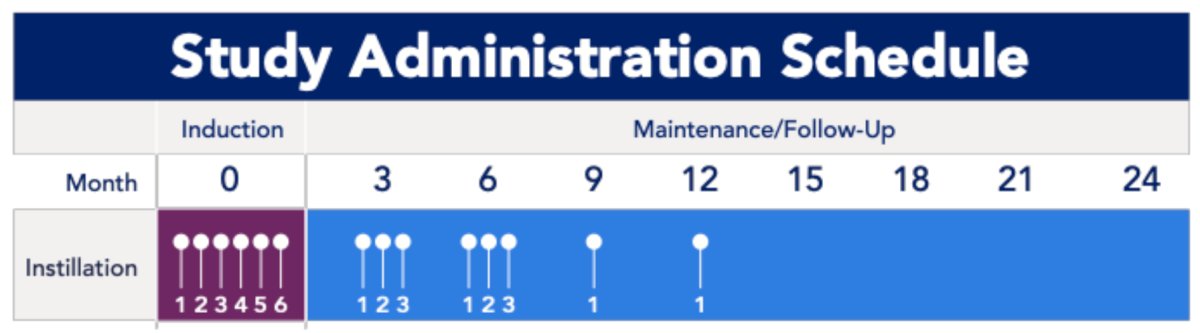
Intravesical cretostimogene is administered in combination with n-dodecyl-β-D-maltoside (DDM), an excipient that enhances adenoviral delivery, for 6 weekly doses during the induction phase, followed by 3 weekly maintenance cycles at months 3 and 6, and culminating in a single intravesical dose at months 9 and 12:
Primary disease assessments include serial cystoscopy, urine cytology, axial imaging, and centralized review of pathologic samples. The primary outcome measure is recurrence free survival. Secondary outcomes include safety, tolerability, progression free survival, and time to next intervention. Exploratory outcome measures include health-related quality of life and biomarker analyses. PIVOT-006 has received SUO-Clinical Trials Consortium (SUO-CTC) and Bladder Cancer Advocacy Network (BCAN) support, and 90+ clinical sites were selected. Enrollment for PIVOT-006 is now complete.
Presented by: Robert Svatek, MD, University of Texas Health San Antonio, San Antonio, TX
Written by: Zachary Klaassen, MD, MSc – Urologic Oncologist, Associate Professor of Urology, Georgia Cancer Center, Wellstar MCG Health, @zklaassen_md on Twitter during the 2025 South Central American Urological Association (AUA) Annual Meeting, Orlando, FL, Wed, Sept 10 – Sat, Sept 13, 2025.