

(UroToday.com) The 2025 Society of Urologic Oncology (SUO) annual meeting, held in Phoenix between December 2 and December 5, 2025, was host to the Poster Session. Dr. Gerald Andriole presented poster #175: Effective resolution of bone metastases in patients with metastatic prostate cancer using SYNC-T therapy SV-102.
Dr Andriole opened by emphasizing the limitations of conventional systemically administered immunotherapies for metastatic prostate cancer, which have shown modest efficacy and carry substantial rates of severe immune-related adverse events, particularly when multiple agents are combined. Bone metastases, occurring in more than 80 percent of advanced cases, remain a major therapeutic challenge with few durable responses.
SYNC-T Therapy is a minimally invasive, image-guided outpatient approach that begins with partial oncolysis of a target lesion to release patient-specific antigens, followed by intratumoral locoregional infusion of SV-102 to initiate immune education and systemic T-cell activation. The platform is designed to synchronize tumor-derived antigens, the fixed-dose SV-102 combination, and immune cells within the tumor microenvironment and regional lymph nodes. SV-102 includes four active components: a PD-1 inhibitor (abazistobart), a CTLA-4 inhibitor (futermestotug), a CD40 agonist (ciltistotug), and a TLR9 agonist (sitmutolimod). He presented findings from the first 15 treated subjects, with particular focus on radiographic resolution of bone metastases.
This single-arm phase 1 study (NCT05544227) enrolled 15 men with metastatic prostate cancer, most of whom had progressed on prior hormone therapy, while a smaller subset had declined further hormonal treatment. The primary objectives were safety and tolerability, with secondary assessments of efficacy, radiographic bone resolution, pharmacokinetics, and pharmacodynamics. All evaluable patients received SV-102 every four weeks for up to 12 cycles, with a median of six. Each cycle targeted a single tumor site using a proprietary partial oncolysis freeze–thaw technique followed by intratumoral infusion of SV-102 at a fixed dose of 15 mL; the prostate tumor was included as a treatment site in all participants. Baseline imaging with bone scan, PET/CT, or MRI was obtained, with assessments every eight weeks, and durability of response was measured every 12 weeks after therapy completion. Key inclusion criteria required histologically confirmed metastatic prostate cancer, progression after at least one second-generation ARPI with or without prior chemotherapy, or refusal of hormone therapy, and measurable disease by RECIST 1.1. Key exclusions included other active malignancies, recent major surgery or local prostate intervention, obstructed urinary system requiring stenting, or need for active treatment within the previous three years. A schematic of the imaging and treatment schedule is shown in the figure below.

Dr Andriole highlighted that SYNC-T Therapy is delivered through a minimally invasive, image-guided outpatient procedure that combines partial oncolysis with intratumoral infusion of SV-102 using a single needle-based delivery system. Either the primary tumor or a metastatic lesion can be targeted. The approach begins with a controlled freeze–thaw cycle that induces immunogenic cell death and releases patient-specific antigens while preserving surrounding vasculature and lymphatics. Immediately afterward, the fixed 15 mL dose of SV-102 is infused directly into the oncolytic zone at a constant rate. This synchronized exposure of tumor antigens, the SV-102 multi-target biologic, and immune cells within the tumor microenvironment and draining lymphatics is intended to activate a coordinated antitumor immune response while limiting systemic toxicity.

All 15 enrolled patients had previously received ADT or a second-generation androgen-receptor pathway inhibitor or had declined further hormonal therapy. Prior chemotherapy, radiation, and immunotherapy were documented in smaller proportions. The median age was 61 years, with most patients having good performance status (PS 0 or 1). Thirteen of the fifteen patients had bone metastases, reflecting the advanced disease burden of this cohort. Demographically, the population was predominantly White, with Hispanic and Black patients also represented.
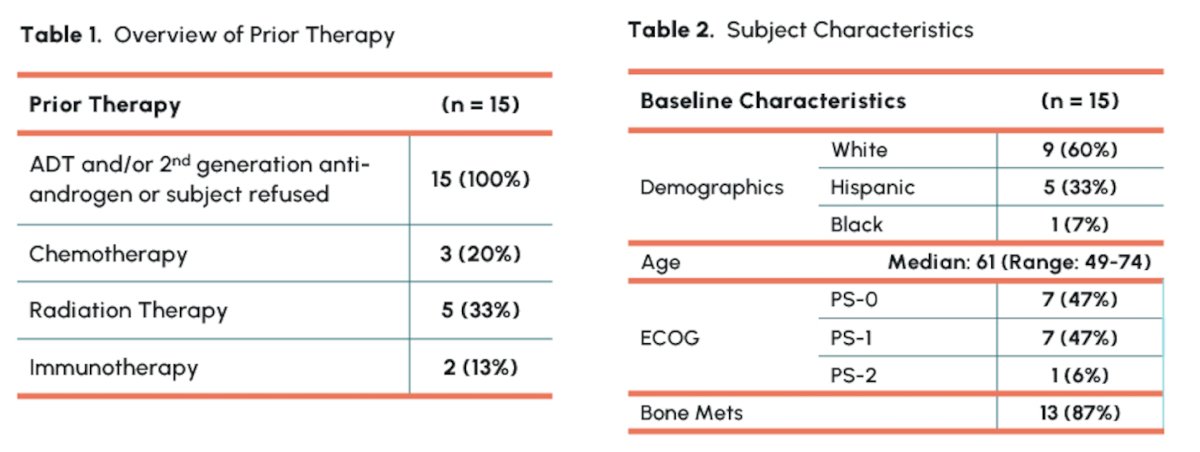
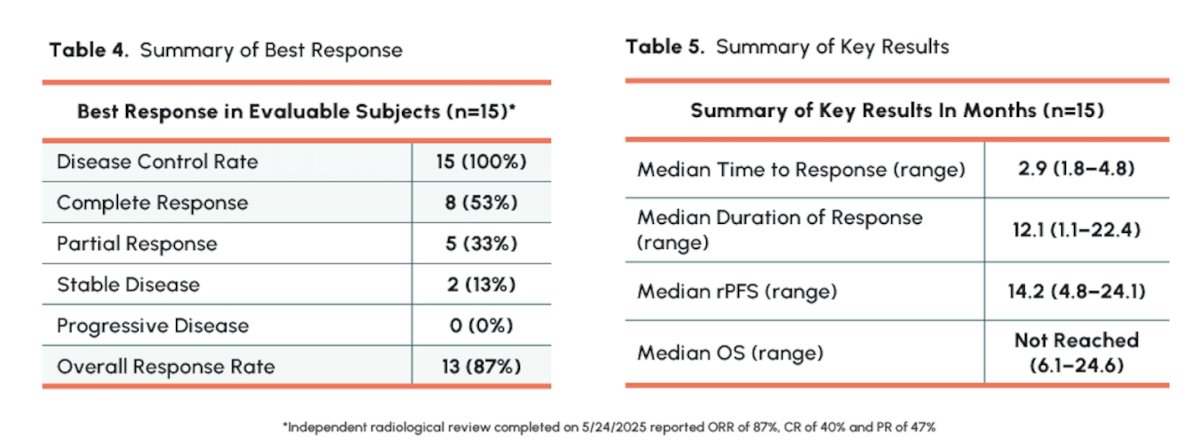
Among the 15 evaluable subjects, SYNC-T Therapy produced a complete response in eight patients and a partial response in five, yielding an overall response rate of 87 percent and a disease control rate of 100 percent. Most patients had skeletal metastases at baseline, including a substantial subset with a high metastatic burden. The median time to response was 2.9 months, and responses were durable, with a median duration of 12.1 months. At a median follow-up of 17 months, three deaths had occurred, corresponding to an estimated 80 percent overall survival.
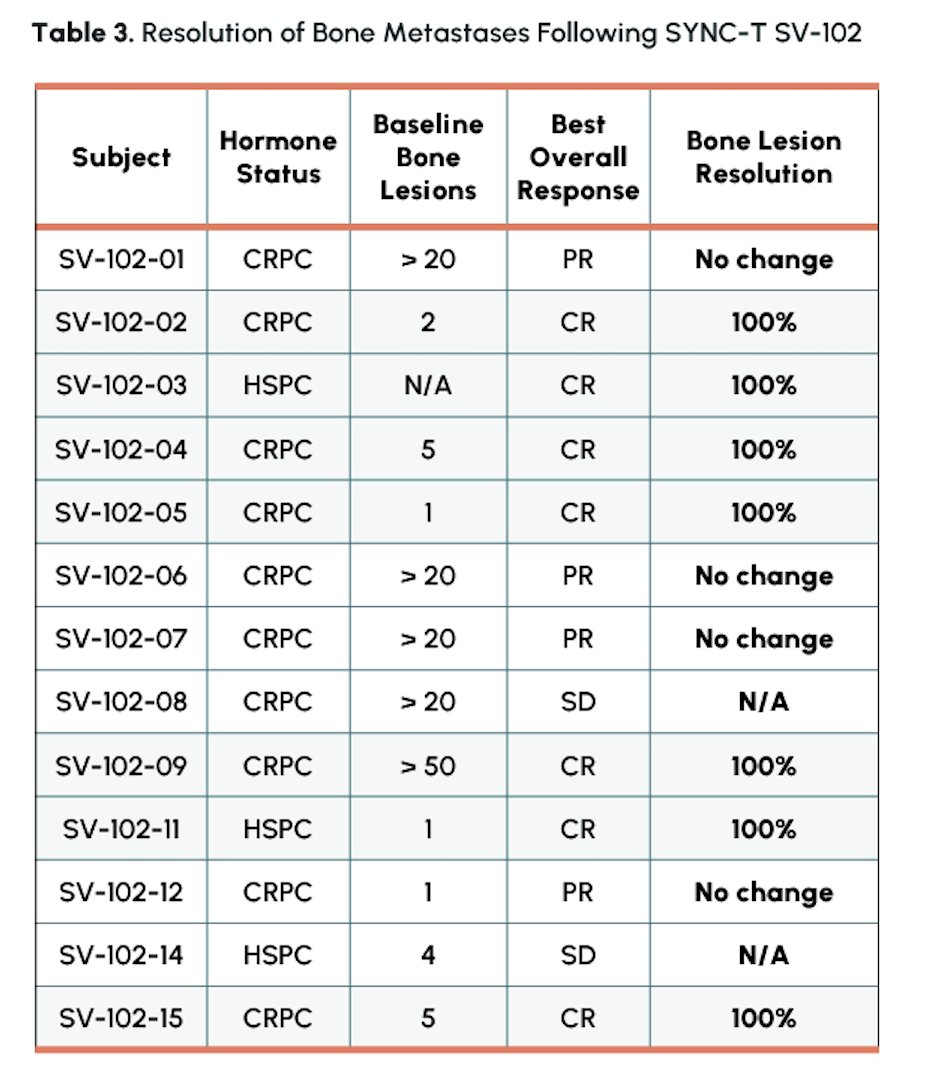
Among the 13 patients (shown below) with baseline bone metastases, seven achieved complete resolution of all lesions following SYNC-T Therapy, confirmed on bone scan or PSMA PET imaging. These complete bone responses were observed across both CRPC and HSPC cases and occurred in patients with a wide range of metastatic burden, including those with more than 50 lesions at baseline. The remaining patients demonstrated either stable findings or no radiographic change in bone disease, consistent with their overall response classifications.
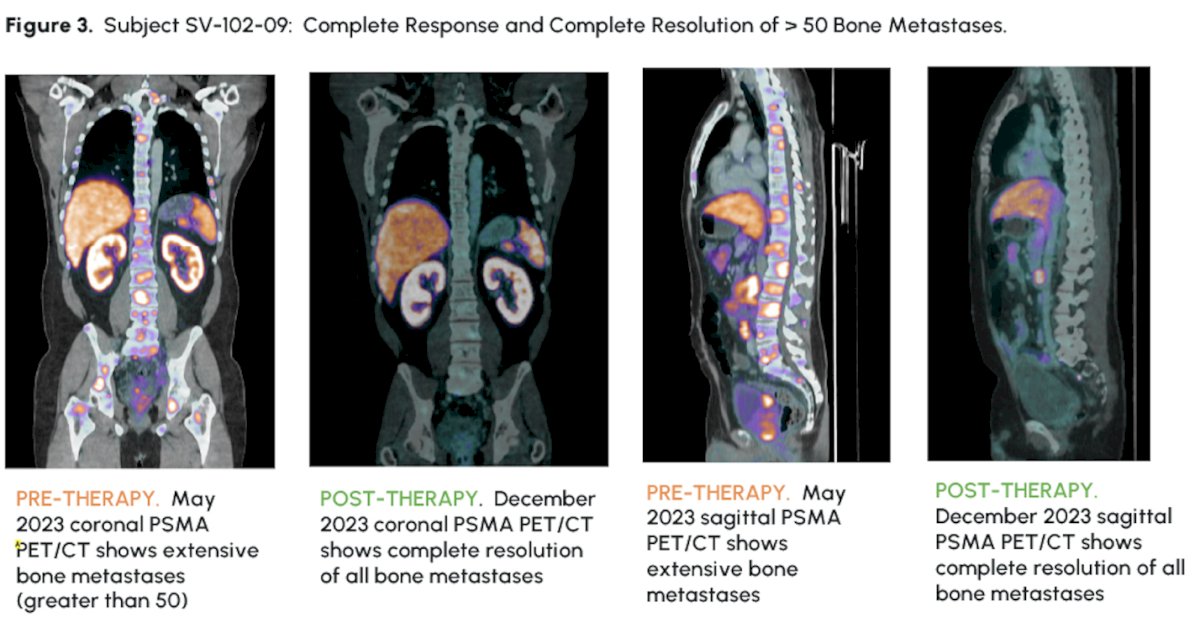
Dr Andriole highlighted the case of subject SV-102-09, a patient with more than 50 baseline bone metastases on PSMA PET/CT. Pre-therapy coronal and sagittal images demonstrated extensive skeletal involvement. By December 2023, follow-up PSMA PET/CT showed complete resolution of all bone metastases, illustrating the depth of response achievable with SYNC-T Therapy in heavily burdened metastatic disease.
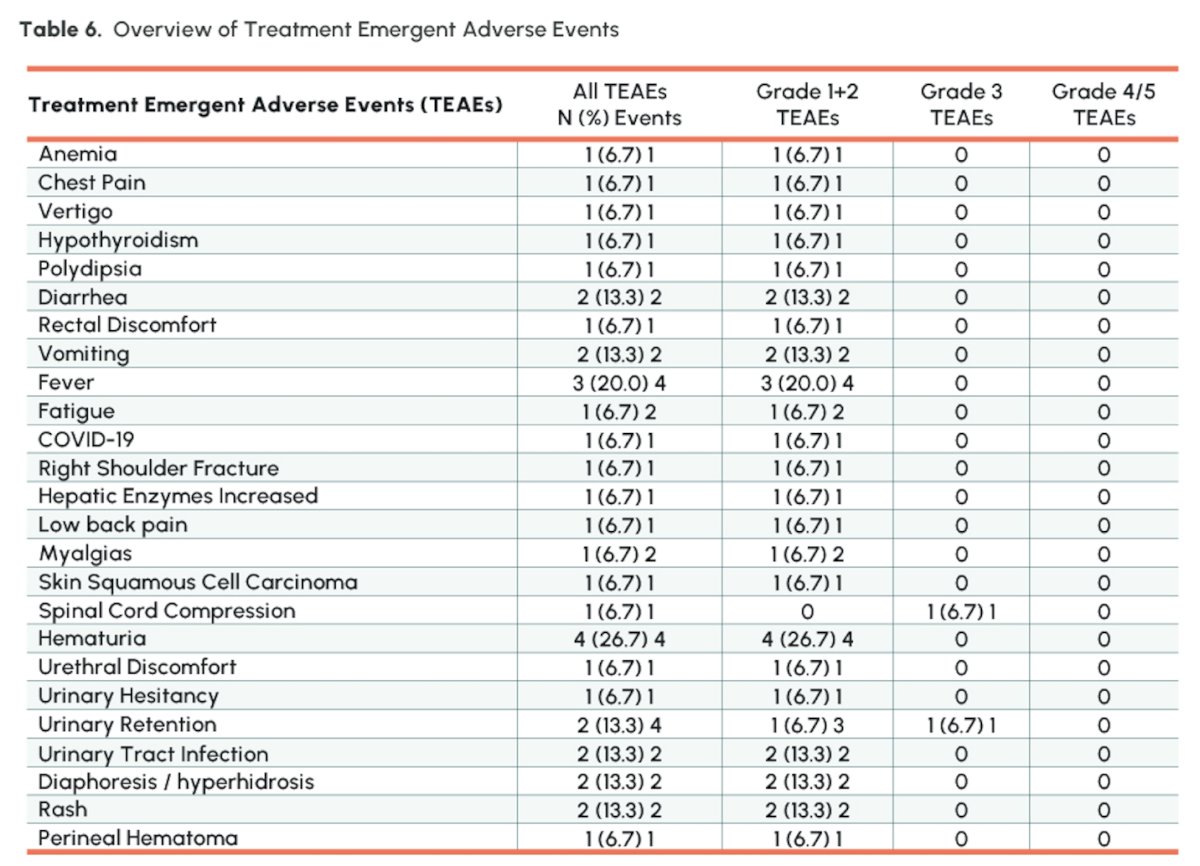
In terms of safety and tolerability, SYNC-T Therapy was generally well tolerated, with treatment-emergent adverse events reported in 13 patients. Most events were Grade 1 or 2, and the majority consisted of low-grade fever and hematuria. Immune-related toxicities were uncommon, limited to two Grade 2 events of hepatitis and hypothyroidism, and two Grade 3 events related to urinary retention and spinal cord compression. No Grade 4 or 5 treatment-related events occurred, supporting a favorable early safety profile for this intratumoral multi-target approach.
Dr Andriole concluded by noting that:
- SYNC-T SV-102 successfully demonstrated its proof of concept, showing that partial oncolysis paired with multi-target intratumoral immunotherapy can generate a systemic anti-tumor immune response in metastatic prostate cancer.
- The therapy produced impressive early activity, with an 87% overall response rate and more than half of patients achieving a complete response.
- Bone disease responses were striking, with complete resolution of metastases in 54% of patients who had skeletal involvement at baseline.
- Safety was favorable, with 95 percent of adverse events limited to Grade 1 or 2, reflecting low systemic exposure despite local delivery of four immune-activating agents.
Presented by: Gerald L. Andriole, Jr., MD, Royce Distinguished Professor, Chief of Urologic Surgery, Washington University, St. Louis, MO
Written by: Julian Chavarriaga, MD, Urologic Oncologist at Penn State Health, @chavarriagaj on Twitter during the 2025 Society of Urologic Oncology (SUO) annual meeting held in Phoenix, AZ, between the 2nd and 5th of December 2025.
Related content: Phase 1 Study Evaluates Bone Metastasis Resolution with SYNC-T Therapy SV-102 - Gerald Andriole