

(UroToday.com) The 2025 ESMO annual meeting featured a prostate cancer session and a presentation by Dr. Ken Herrmann discussing the association between quantitative baseline 68Ga-PSMA-11 PET parameters and 177Lu-PSMA-617 efficacy in the PSMAfore study. In the phase 3 VISION study,1 baseline quantitative PET parameters were associated with efficacy outcomes. Specifically, whole-body SUVmean was the best predictor of 177Lu-PSMA-617 efficacy. In the phase 3 PSMAfore study, 177Lu-PSMA-617 prolonged radiographic progression free survival versus change of androgen receptor pathway inhibitor in taxane-naive adults with PSMA-positive mCRPC and disease progression on prior androgen receptor pathway inhibitor.2 Overall survival did not differ between arms at the final overall survival analysis (HR 0.91, 95% CI 0.72-1.14), and was confounded by high crossover to the 177Lu-PSMA-617 arm (60.3% of 234 patients assigned to the androgen receptor pathway inhibitor change arm). At ESMO 2025, Dr. Herrmann and colleagues assessed associations between baseline quantitative PSMA PET parameters and efficacy outcomes.
PSMA-positive mCRPC was defined as ≥1 PSMA-positive lesion and no exclusionary PSMA-negative lesions on centrally read baseline 68Ga-PSMA-11 PET/CT scans. Extracted quantitative parameters included whole-body mean standardized uptake value (SUVmean) and PSMA-positive tumor volume. Efficacy outcome associations were assessed post hoc at the third interim analysis (data cut off February 27, 2024).
Baseline PET/CT scans met quality requirements for this analysis in 455/468 randomized patients, and quantitative parameters were balanced between the study arms. Elevated whole-body SUVmean was associated with improved radiographic progression survival only in the 177Lu-PSMA-617 arm:
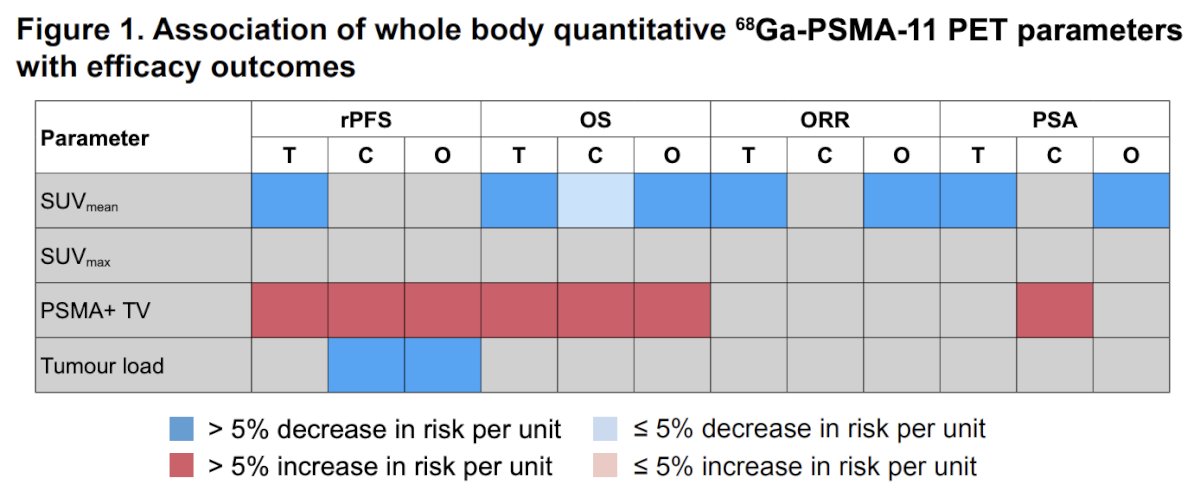
Elevated whole-body SUVmean was also associated with improved overall survival in both study arms, and overall, and with objective response rate and PSA response in the 177Lu-PSMA-617 arm and overall. Increased whole-body PSMA positive tumor volume was associated with worsened radiographic progression free survival and overall survival in both study arms and overall. There was no optimal SUVmean cutpoint for better versus worse radiographic progression free survival or overall survival.
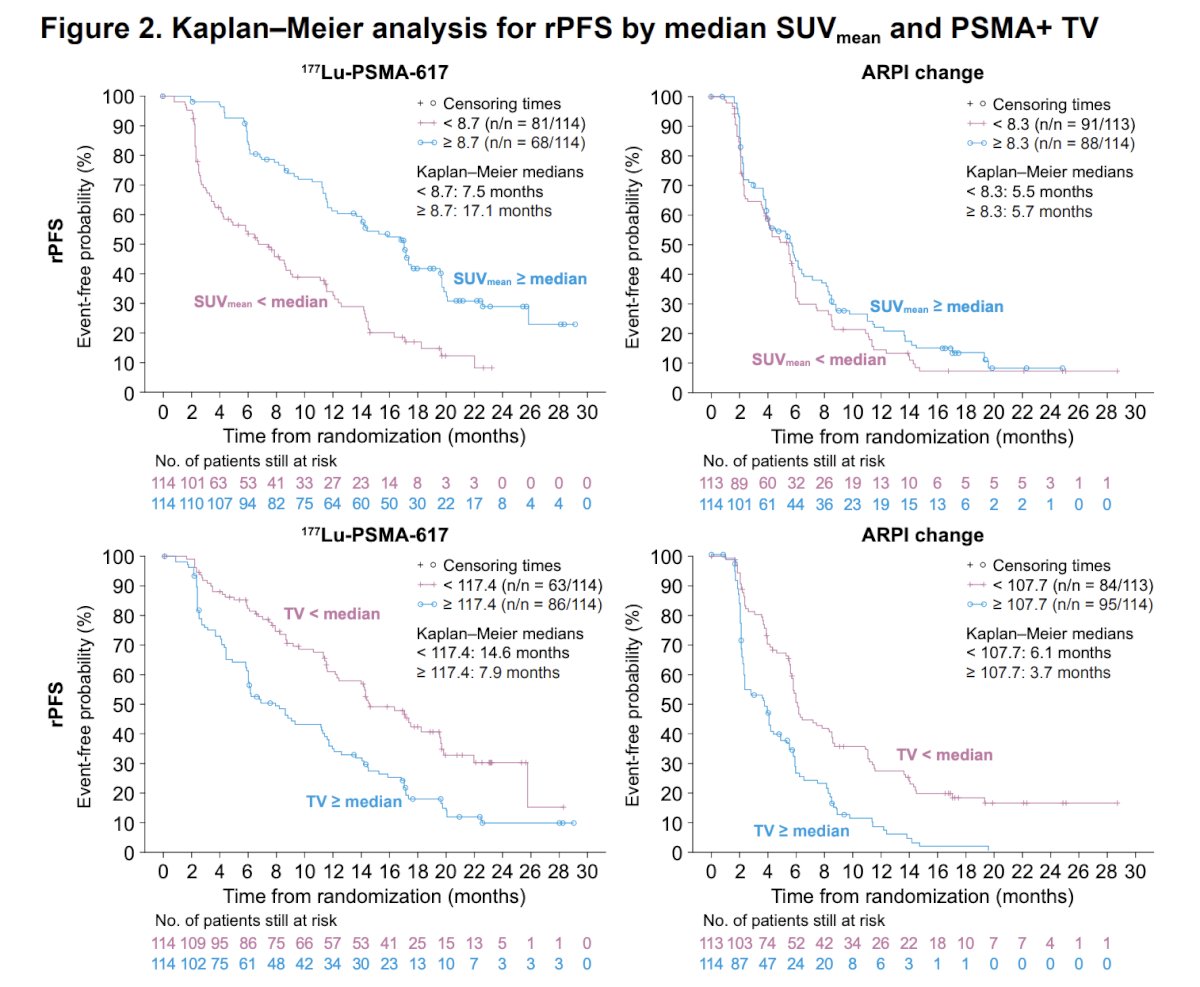
In Kaplan-Meier analyses, patients in the 177Lu-PSMA-617 arm with SUVmean ≥ median had longer radiographic progression free survival than those with SUVmean < median, but not in the androgen receptor pathway inhibitor change arm. Radiographic progression free survival was shorter in the tumor volume >= the median versus < median subgroup across both treatment arms:
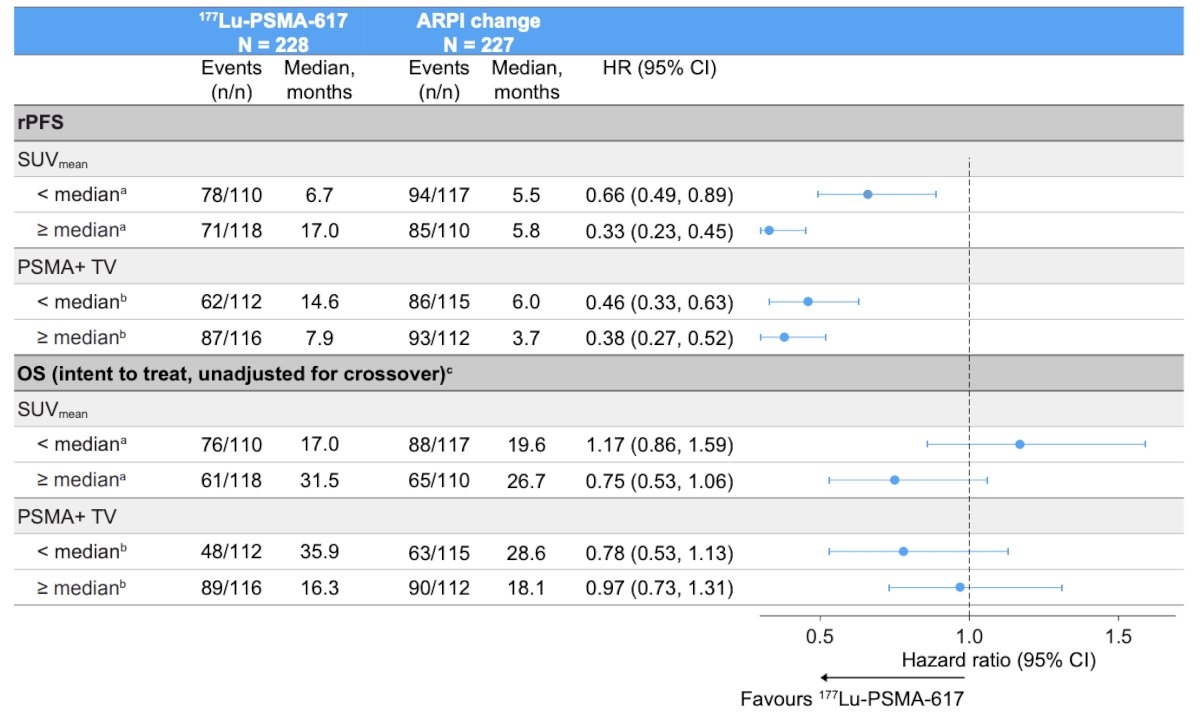
177Lu-PSMA-617 improved radiographic progression free survival versus androgen receptor pathway inhibitor change in both subgroups, but the benefit was more pronounced in the SUVmean <= median subgroup than in the SUVmean < median subgroup. Additionally, 177Lu-PSMA-617 improved radiographic progression free survival versus androgen receptor pathway inhibitor change in both subgroups, with similar benefits:
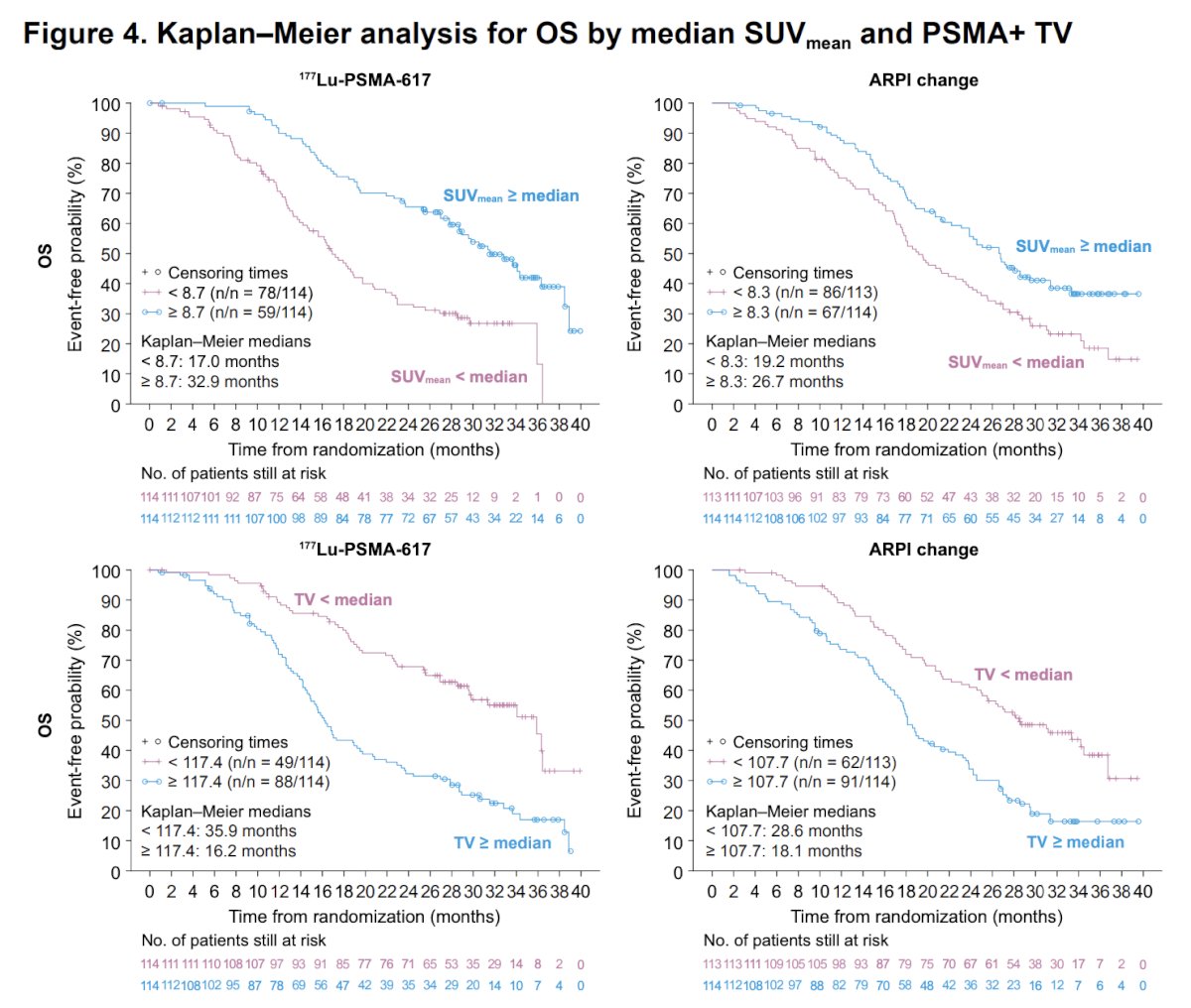
Overall survival was longer in the SUVmean >= median versus SUVmean < median subgroups in both treatment arms. Similarly, overall survival was shorter in the tumor volume >= median versus tumor volume < median subgroups in both treatment arms:
The benefits of 177Lu-PSMA-617 versus androgen receptor pathway inhibitor change were more pronounced in the subgroup of patients with soft tissue-only mCRPC than in those with bone-only disease. Patients with soft tissue-only disease had a higher baseline SUVmean (9.7 versus 7.8) and a lower PSMA+ tumor volume (40 versus 84 mL) than those with bone-only disease:
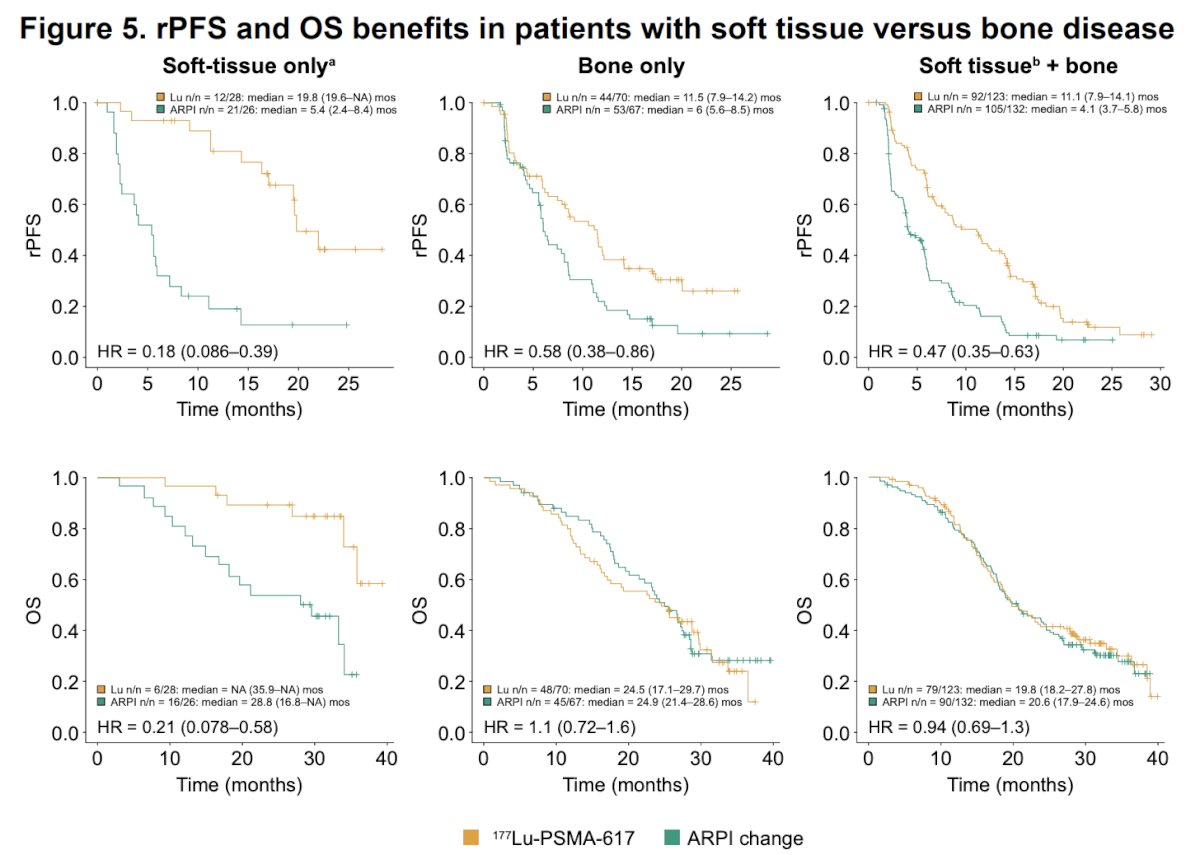
Dr. Herrmann concluded his presentation discussing the association between quantitative baseline 68Ga-PSMA-11 PET parameters and 177Lu-PSMA-617 efficacy in the PSMAfore study with the following take home points:
- In PSMAfore, radiographic progression free survival benefit of 177Lu-PSMA-617 versus androgen receptor pathway inhibitor change was observed regardless of SUVmean in patients with PSMA positive mCRPC
- Higher whole-body SUVmean was associated with better outcomes, with no optimal cut points
- 177Lu-PSMA-617 improved radiographic progression free survival in both SUVmean ≥ median and SUVmean < median subgroups, but the benefit was more pronounced in the SUVmean ≥ median subgroup
- SUVmean was predictive of radiographic progression free survival improvement with 177Lu-PSMA-617 versus androgen receptor pathway inhibitor change
- Similar trends were observed in overall survival but results were likely confounded by the high rate of crossover
- Higher PSMA positive tumor volume was associated with worse outcomes both in patients receiving 177Lu-PSMA-617 and in those receiving androgen receptor pathway inhibitor change
- PSMA positive tumor volume was prognostic of radiographic progression free survival regardless of treatment.
- Patients with soft tissue–only disease receiving 177Lu-PSMA-617 appeared to have longer radiographic progression free survival and overall survival than those with bone disease, and this was probably related to their higher SUVmean and lower PSMA positive tumor volume
- These results are consistent with quantitative PSMA-PET analysis findings in VISION
Presented by: Ken Herrmann, MD, German Cancer Consortium-University Hospital Essen, Essen, Germany
Written by: Zachary Klaassen, MD, MSc – Urologic Oncologist, Associate Professor of Urology, Georgia Cancer Center, Wellstar MCG Health, @zklaassen_md on Twitter during the 2025 European Society for Medical Oncology (ESMO) Annual Congress, Berlin, Germany, October 17–21, 2025
References:
- Sartor O, de Bono J, Chi KN et al. Lutetium-177-PSMA-617 for Metastatic Castration-Resistant Prostate Cancer. N Engl J Med. 2021 Sep 16;385(12):1091-1103.
- Morris MJ, Castellano D, Herrmann K, et al. 177Lu-PSMA-617 versus a change of androgen receptor pathway inhibitor therapy for taxane-naïve patients with progressive metastatic castration-resistant prostate cancer (PSMAfore): A phase 3, randomized, controlled trial. Lancet 2024 Sep 28;404(10459):1227-1239.