

(UroToday.com) The 2025 PSMA and Beyond annual meeting featured a LuPSMA therapy session and a presentation by Dr. Emmanuel Antonarakis discussing the pre-chemotherapy trials, PSMAfore, SPLASH, and ECLIPSE. Dr. Antonarakis started his presentation highlighting that based on the 2025 NCCN guidelines, the treatment of mCRPC has become quite busy:
To date, there are 3 clinical trials in the pre-chemotherapy space for PSMA radioligand therapy: PSMAfore,1 SPLASH, and ECLIPSE:

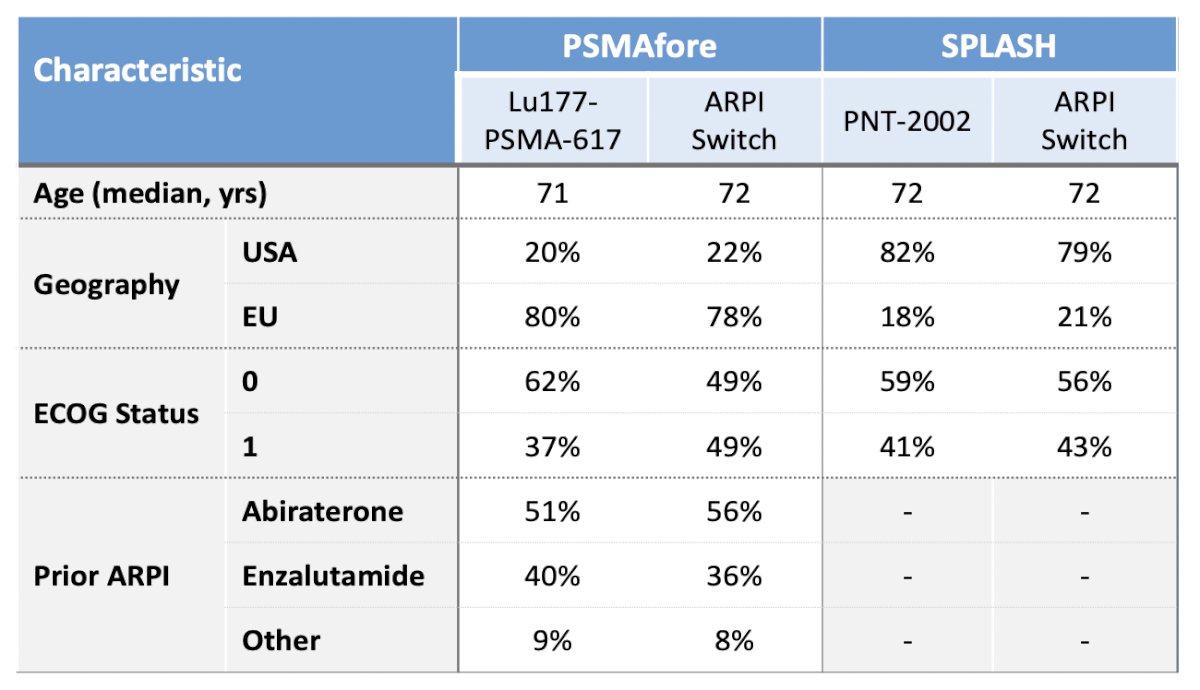
Looking closer at the baseline characteristics of PSMAfore and SPLASH, the majority of patients in SPLASH were recruited in the United States, and the majority of patients in both trials were ECOG performance status 0:
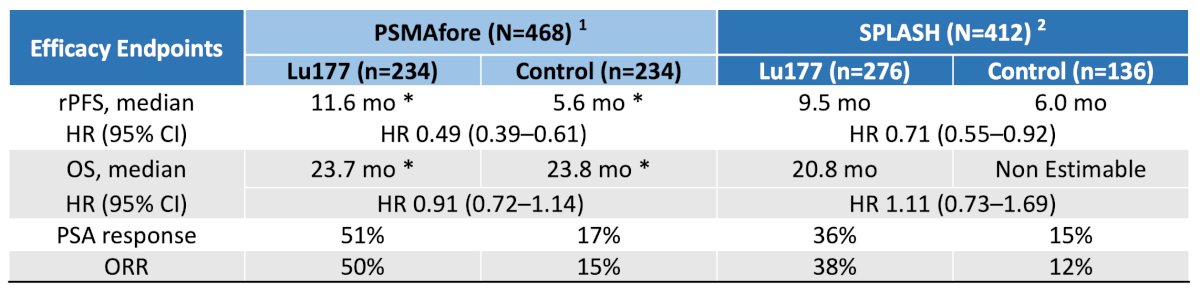
Regarding efficacy, both trials had an improvement in radiographic progression free survival, and both trials (secondary to significant crossover in the control group) did not have an overall survival benefit. PSA response and objective response rates were higher in the experimental group of PSMAfore compared to SPLASH:
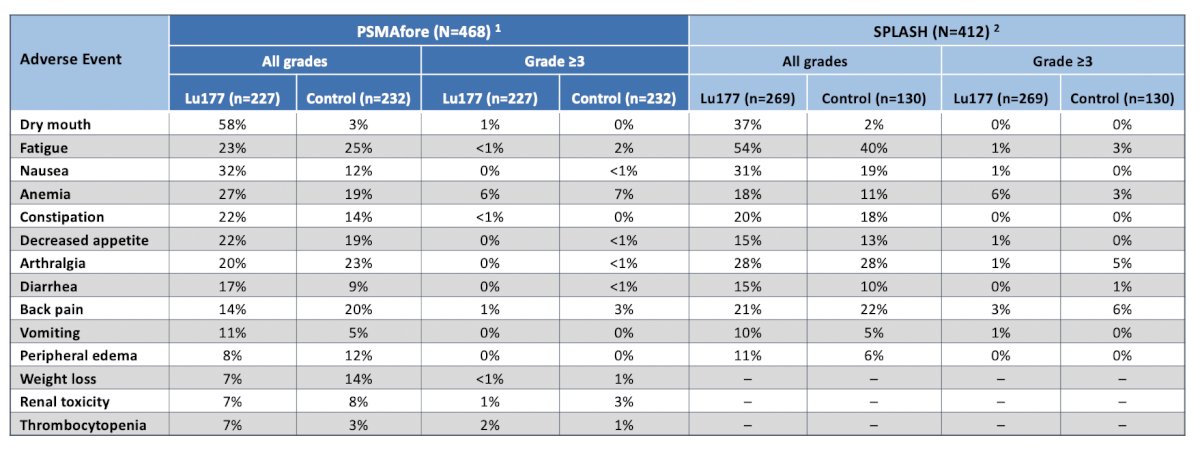
Discontinuation secondary to treatment emergent adverse events were higher in the SPLASH LuPSMA arm compared to the PSMAfore LuPSMA arm, however dose adjustment secondary to treatment emergent adverse events was higher in the PSMAfore trial:

Specific adverse events included 58% of patients having all grade dry mouth in the LuPSMA arm of PSMAfore versus 37% in the LuPSMA arm of SPLASH. All grade fatigue was higher in the LuPSMA arm of SPLASH (54%) compared to 23% in the LuPSMA arm of PSMAfore:
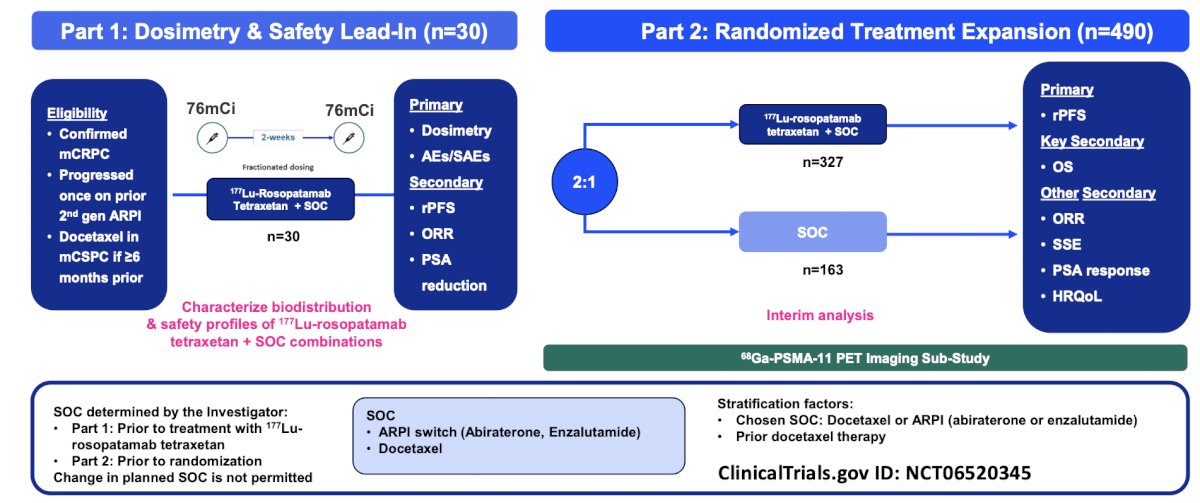
Dr. Antonarakis also discussed ProstACT GLOBAL, a phase 3 trial evaluating 177Lu-rosopatamab tetraxetan. Part 1 will include a dosimetry and safety lead in of 30 patients, followed by part 2, which will include randomized treatment expansion in 490 patients. The eligibility criteria for ProstACT GLOBAL will be (i) confirmed mCRPC, (ii) progressed once on a prior second generation androgen receptor pathway, and (iii) docetaxel being allowed in the mHSPC setting if >= 6 months earlier. Patients in the intervention arm will receive 177Lu-rosopatamab tetraxetan every two weeks for two cycles. The primary outcome is radiographic progression free survival and a key secondary endpoint is overall survival:
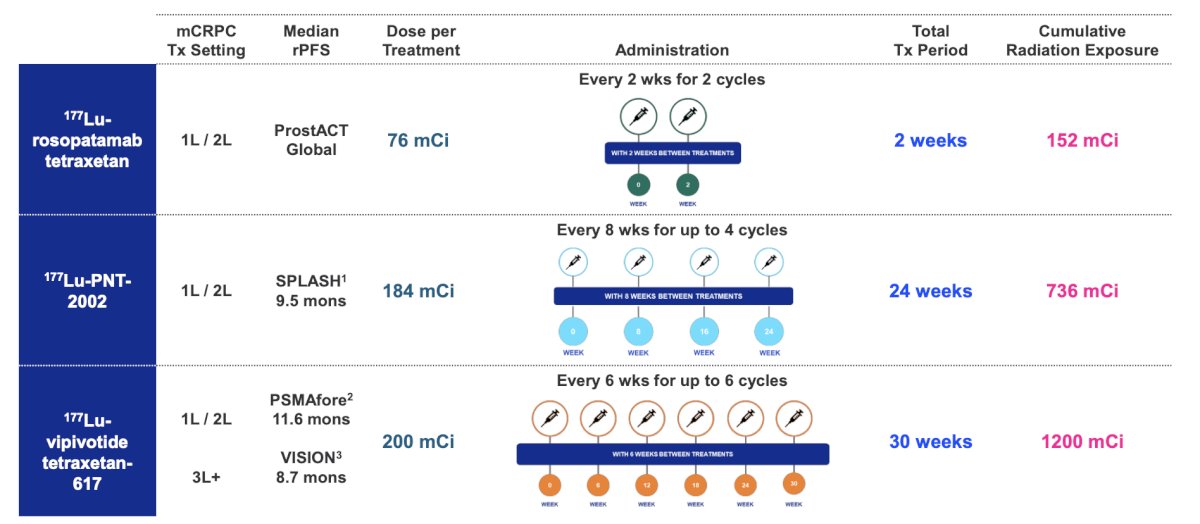
Dr. Antonarakis concluded his presentation by discussing the pre-chemotherapy trials, PSMAfore, SPLASH, and ECLIPSE by comparing the dose per treatment, administration, total treatment period, and cumulative radiation exposure between 177Lu-rosopatamab tetraxetan, 177Lu-PNT-2002, and 177Lu-vipivotide tetraxetan-617:
Presented by: Emmanuel Antonarakis, MD, University of Minnesota, Minneapolis, MN
Written by: Zachary Klaassen, MD, MSc – Urologic Oncologist, Associate Professor of Urology, Georgia Cancer Center, Wellstar MCG Health, @zklaassen_md on Twitter during the 2025 PSMA and Beyond Annual Meeting, Los Angeles, CA, Fri, Mar 28 – Sat, Mar 29, 2025.
References: