

(UroToday.com) The 2025 AUA annual meeting featured a bladder cancer session and a presentation by Dr. Alireza Ghoreifi discussing results from a prospective registry assessing upstaging and risk migration with blue light cystoscopy for non muscle invasive bladder cancer. Blue light cystoscopy is an established procedure for use in the diagnosis and surveillance of patients with non muscle invasive bladder cancer. It is associated with improved detection rates compared to white light cystoscopy, however, limited data are available regarding its role in upstaging and/or upgrading when used alongside white light cystoscopy. The aim of this study presented at the AUA 2025 annual meeting, was to assess the incidence and features of patients undergoing upstaging and/or risk-group migration with the implementation of blue light cystoscopy.
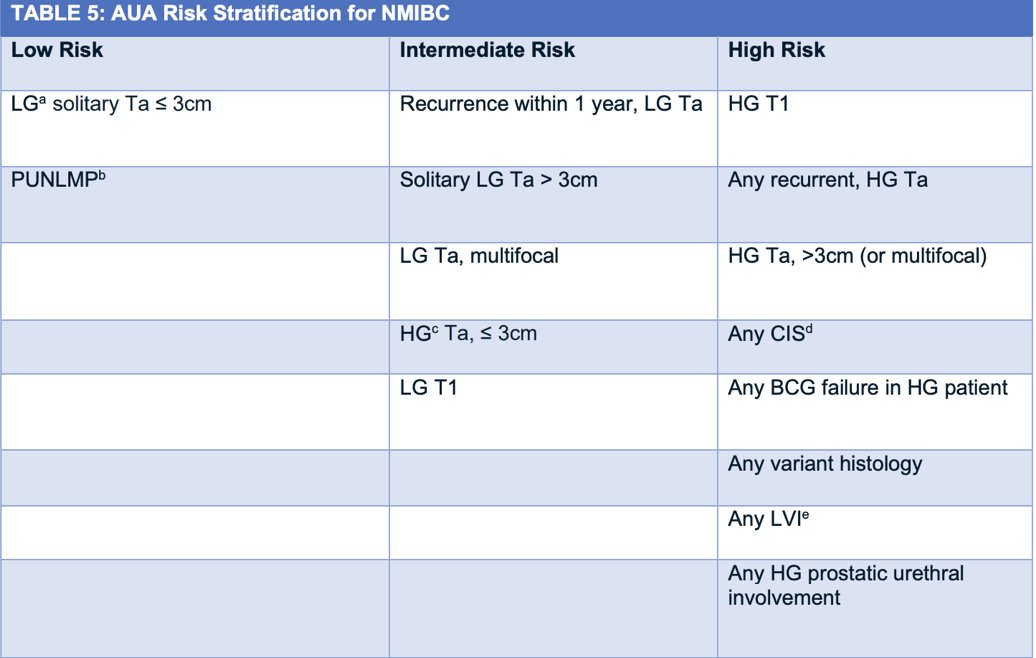
Using data from the prospective multi-institutional Cysview Registry (2014-2024), patients with non muscle invasive bladder cancer who underwent transurethral resection or biopsy of bladder tumors were identified. The patients in whom malignant lesions were exclusively detected by blue light cystoscopy, as well as those experiencing an upward change in risk category (as defined by the American Urological Association classification) based on blue light cystoscopy findings, were documented:
The clinical features of these patients were subsequently reviewed.
In this study, 2,854 patients were enrolled, who collectively underwent 4,158 resections and provided 6,432 separate pathology samples. A total of 201 (7%) patients had at least one malignant lesion detected exclusively by blue light cystoscopy while having negative white light cystoscopy. These lesions (total 335) included CIS in 145 (43%), low grade Ta in 53 (16%), high grade Ta in 95 (28%), high grade T1 in 37 (11%), and high grade T2 in 5 (1%). In patients with multifocal disease, blue light cystoscopy resulted in AUA risk-group upward migration in 66 (2.3%) patients. The clinical features of these two groups are highlighted as follows:
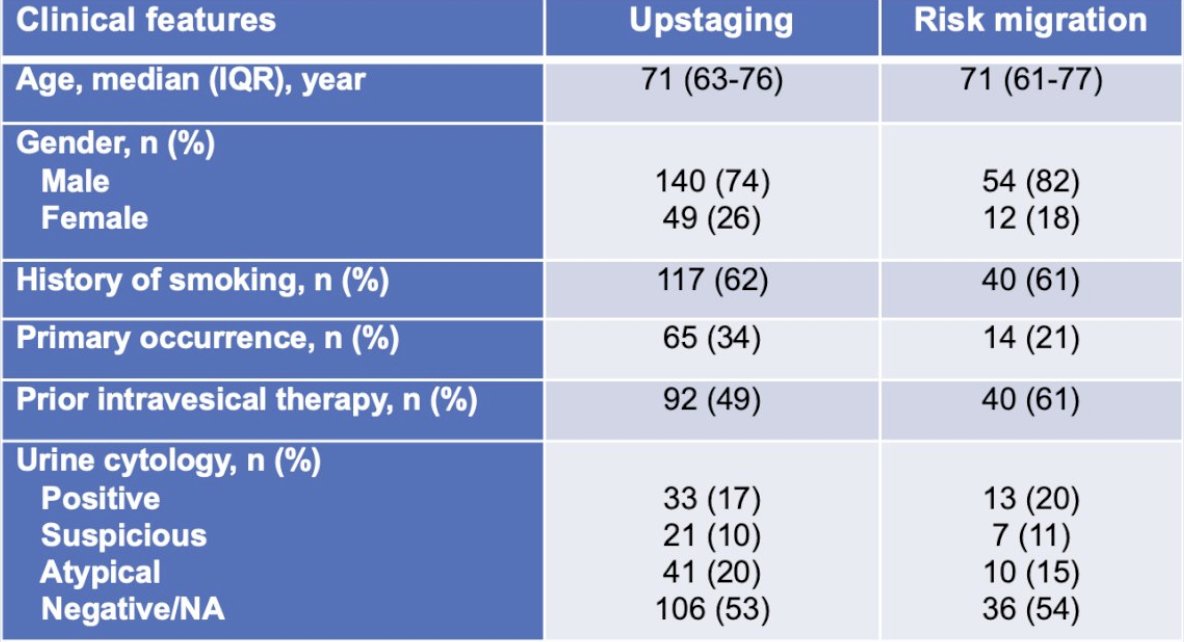
Thus, the total rate of upgrading or upstaging using blue light cystoscopy was 9.3%, including migration to low-risk in 1.2%, intermediate-risk in 2.1%, and high-risk in 6%.
Dr. Ghoreifi concluded his presentation discussing results from a prospective registry assessing upstaging and risk migration with blue light cystoscopy for non muscle invasive bladder cancer with the following take home points:
- Using blue light cystoscopy during transurethral resection or biopsy of bladder tumors results in risk group migration in over 9% of patients with non muscle invasive bladder cancer
- This impacts patient management, including the administration of intravesical therapy when it was not initially planned, an extension in the duration of therapy, or the decision to proceed with radical cystectomy
Presented by: Alireza Ghoreifi, MD, Duke University Medical Center, Durham, NC
Written by: Zachary Klaassen, MD, MSc – Urologic Oncologist, Associate Professor of Urology, Georgia Cancer Center, Wellstar MCG Health, @zklaassen_md on Twitter during the 2025 American Urological Association (AUA) annual meeting held in Las Vegas, NV, Saturday, April 26 - Tuesday, April 29, 2025