

Journal
Journal
Getting the Word Out
- Details
The mission of PCF is to reduce the death and suffering from prostate cancer. I often wonder about what would be a good analogy for the mission. As one travels through the world of medical research organizations, patient groups, and even the general media we hear words like “war on cancer” “moonshot” “Manhattan project” to describe a problem to be conquered or a battle to be won.

Post-Operative Radiotherapy in Prostate Cancer – The State of the Data
- Details
- Published in Everyday Urology - Oncology Insights: Volume 5, Issue 4
Contemporary treatment options for patients with clinically localized prostate cancer include radical prostatectomy, radiotherapy, and active surveillance. Surgery can be curative for approximately two-thirds of patients choosing radical prostatectomy.1 However, men with adverse pathologic findings at the time of radical prostatectomy, such as the presence of positive surgical margins, extraprostatic extension, or seminal vesicle invasion,2,3 experience up to a 60% risk of recurrence at 10 years and may require subsequent radiation therapy.2

The Evolving Landscape of First-Line Therapy for Metastatic Clear Cell Renal Cell Carcinoma
- Details
- Published in Everyday Urology - Oncology Insights: Volume 5, Issue 4
When examined at a national level in the United States, cancers of the kidney and renal pelvis (despite different histology) are considered in aggregate and represent the sixth most common newly diagnosed tumors in men and eighth most common in women in the United States in 2020,1 representing an estimated 73,750 new diagnoses and 14,830 deaths. The vast majority of these cancers will be renal parenchymal tumors with renal cell carcinoma (RCC) comprising the preponderance of these lesions.

Everyday Urology: Volume 5, Issue 4
- Details
In this issue
- The Evolving Landscape of First-Line Therapy for Metastatic Clear Cell Renal Cell Carcinoma
- Post-Operative Radiotherapy in Prostate Cancer – The State of the Data
- Spotlight: International Bladder Cancer Network (IBCN) 2020 and Société Internationale d'Urologie (SIU) Virtual Conference 2020

From the Desk of the Editor: Volume 5, Issue 4
- Details
While safeguarding both patients and the healthcare team from unnecessary risk of SARS-CoV-2, telehealth technology and its widespread adoption among healthcare practitioners and patients have allowed for innovative patient care strategies. Virtual education has also persevered and improved during this year of in-person and travel adversity.
From the Desk of the Editor: Volume 5, Issue 3
- Details
This issue's cover story is written by Patrick J. Hensley, MD, Urological Oncology Fellow, and world-renowned urologist, Ashish M. Kamat from the University of Texas MD Anderson Cancer Center, Houston, Texas, entitled: “Overcoming Diagnostic and Therapeutic Challenges in Non-muscle Invasive Bladder Cancer (NMIBC)”. In 2020, approximately 81,000 cases of urothelial carcinoma of the bladder will be diagnosed in the United States, with nearly 18,000 associated deaths.¹ In their review article, Drs. Kamat and Hensley discuss current challenges in NMIBC, emerging diagnostic approaches, and advances in both intravesical and systemic therapy.
Sam S. Chang, MD, MBA, provides a concise and well-balanced update on low-grade upper tract urothelial carcinoma in the expert perspective article. Upper tract urothelial carcinomas (UTUCs) are a heterogeneous group of malignancies arising from the urothelium within the renal pelvis or upper ureter.
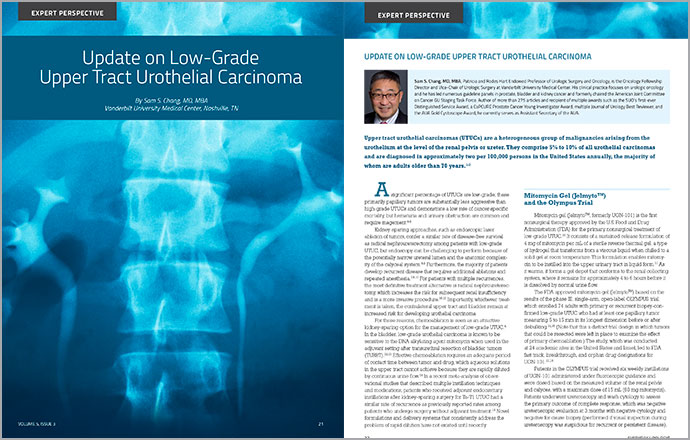
Update on Low-Grade Upper Tract Urothelial Carcinoma
- Details
- Published in Everyday Urology - Oncology Insights: Volume 5, Issue 3
Published Date: October 2020
Upper tract urothelial carcinomas (UTUCs) are a heterogeneous group of malignancies arising from the urothelium at the level of the renal pelvis or ureter. They comprise 5% to 10% of all urothelial carcinomas and are diagnosed in approximately two per 100,000 persons in the United States annually, the majority of whom are adults older than 70 years.1-3 A significant percentage of UTUCs are low-grade; these primarily papillary tumors are substantially less aggressive than high-grade UTUCs and demonstrate a low rate of cancer-specific mortality, but hematuria and urinary obstruction are common and require management.4-6

Non-muscle Invasive Bladder Cancer: Overcoming Diagnostic and Therapeutic Challenges
- Details
- Published in Everyday Urology - Oncology Insights: Volume 5, Issue 3
In 2020, approximately 81,000 cases of urothelial carcinoma of the bladder will be diagnosed in the United States, with nearly 18,000 associated deaths.1 Bladder cancer disproportionally affects men and is associated with well-defined environmental risk factors—tobacco use underlies approximately 50% of cases.2 Nonmuscle-invasive bladder cancer (NMIBC) is primarily managed by transurethral resection, risk-stratified use of intravesical chemotherapeutic or immunotherapeutic agents, and close surveillance.
Everyday Urology: Volume 5, Issue 3
- Details
In this issue
- Non-muscle Invasive Bladder Cancer: Overcoming Diagnostic and Therapeutic Challenges
- Update on Low-Grade Upper Tract Urothelial Carcinoma
- Spotlight: ASCO 2020 Virtual Education Program, EAU 2020 Virtual Annual Meeting, and SUO - AUA 2020 Summer Webcast
From the Desk of the Editor: Volume 5, Issue 2
- Details
Dear Colleagues,
Welcome to the second issue of Everyday Urology – Oncology Insights of 2020, published by Digital Science Press. Throughout the year, UroToday.com has provided information and expert perspectives on the evolving state of urology and GU oncology, as well as the impact COVID-19 has had on the healthcare environment, featuring video discussions amongst physicians at the frontlines of care and research. These videos, along with discussions of conference updates, journal clubs and the cancer patient journey series are featured on the UroToday.com website. This issue focuses on advances in the management of prostate cancer, as well as the ASCO 2020 virtual meeting held May 29-31, 2020.
In their article, “What is Changing in Advanced Prostate Cancer?” Christopher J.D. Wallis, MD, Ph.D., and Zachary Klaassen, MD, profile the ways in which advanced prostate cancer treatment has been revolutionized over the last 15 years, as no less than nine novel agents have been introduced with proven overall survival benefits. Reviewing the evidence that has defined these changes, Dr. Wallis and Dr. Klaassen detail the pivotal trials and FDA approvals that have demonstrated survival benefits across metastatic castration-resistant prostate cancer (mCRPC), metastatic castration sensitive prostate cancer (mCSPC) and nonmetastatic castration-resistant prostate cancer (nmCRPC), beginning with the introduction of docetaxel for men with castration-resistant prostate cancer in 2004, and continuing through recent phase 3 trials as well as reviewing novel treatment strategies.

What is Changing in Advanced Prostate Cancer?
- Details
- Published in Everyday Urology - Oncology Insights: Volume 5, Issue 2
Introduction
Prostate cancer, while commonly diagnosed in early forms, remains the second leading cause of cancer mortality in the United States and Europe.1 For patients who die of prostate cancer, some will be initially diagnosed and treated for metastatic castration-sensitive disease (mCSPC) while others will progress through non-metastatic castration-resistant disease (nmCPRC) following initial local therapy followed by androgen deprivation therapy (ADT) for biochemical recurrence. In either case, nearly all men who die of prostate cancer will have metastatic castration-resistant disease (mCRPC) prior to death.

ARAMIS: Favorable Overall Survival and Safety Findings for Darolutamide in Nonmetastatic Castration-Resistant Prostate Cancer
- Details
- Published in Everyday Urology - Oncology Insights: Volume 5, Issue 2
From the Desk of the Editor: Volume 5, Issue 1
- Details
Welcome back to another issue of Everyday Urology - Oncology Insights, the first issue of 2020 brought to you by UroToday. In the featured articles of this issue, we highlight the work of Edward Schaeffer, MD, PhD, and Ashley Baker, MD, presentations as well as work from Noah Hahn, MD, in a presentation I stepped in and gave at the 2019 Large Urology Group Practice Association (LUGPA) Continued Medical Education (CME) Program. This meeting’s agenda collectively focused on Leveraging Disruptive Technology: Pragmatic and Productive Advances for your Practice, which included a variety of presentations in prostate, bladder, and renal cancers as well as bladder health, minimally invasive procedures and preparing your clinics for the evolving future.
At the 2019 LUGPA CME, Dr. Edward Schaeffer presented on the relevancy of traditional culture testing in urinary tract infections (UTIs). Given the varying degree of complication associated with UTIs, Dr. Schaeffer highlights the available options for testing and treatment. He concludes by dissecting the benefits and pitfalls of a few of his most recommended tests and points out that clinical outcomes will ultimately depend on the nuances of symptoms that result from a host’s response to bacteria.

Percutaneous Renal Biopsy in the Ambulatory Surgery Center: A Primer
- Details
- Published in Everyday Urology - Oncology Insights: Volume 5, Issue 1
The earliest renal biopsies were obtained by open surgical techniques performed by urologists or transplant surgeons, or by pathologists at the time of autopsy. In 1951, physicians in Copenhagen published the first clinical report of percutaneous renal biopsy.1 They placed patients in a seated position and used intravenous pyelogram (IVP) as the imaging guide. Not surprisingly, both the yield and quality of biopsy tissue samples were low by contemporary standards, with only about half to two-thirds of specimens permitting histologic examination.
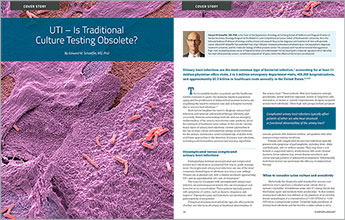
UTI – Is Traditional Culture Testing Obsolete?
- Details
- Published in Everyday Urology - Oncology Insights: Volume 5, Issue 1
Urinary tract infections are the most common type of bacterial infection,1 accounting for at least 11 million physician office visits, 2 to 3 million emergency department visits, 400,000 hospitalizations, and approximately $2.3 billion in healthcare costs annually in the United States.2,3,4,5

Everyday Urology: Volume 5, Issue 1
- Details
In this issue
- The Advanced Bladder Clinic: Are You Ready?
- Percutaneous Renal Biopsy in the Ambulatory Surgery Center: A Primer
- UTI – Is Traditional Culture Testing Obsolete?
- Spotlight American Society of Clinical Oncology 2020 GU Symposium

Everyday Urology: Volume 5, Issue 2
- Details
In this issue
- What is Changing in Advanced Prostate Cancer?
- ARAMIS: Favorable Overall Survival and Safety Findings for Darolutamide in Nonmetastatic Castration-Resistant Prostate Cancer
- Spotlight American Society of Clinical Oncology 2020 Virtual Scientific Meeting

From the Desk of the Editor: Volume 4, Issue 4
- Details

Choosing First-Line Treatment for Metastatic Castration-Resistant Prostate Cancer: APCCC Highlights
- Details
- Published in Everyday Urology - Oncology Insights: Volume 4, Issue 4
Published Date: December 2019
The choice of initial treatment for newly diagnosed metastatic castration-resistant prostate cancer (mCRPC) is far more complex than it was even a decade ago. Today, many patients with mCRPC have already received intensive upfront therapies during the hormone-sensitive stage— a “leftward” shift in treatment (based on the clinical states model we so frequently employ) which can spur a “rightward” shift in disease biology due to the earlier emergence of treatment-resistant clones.

Choosing First-Line Systemic Therapy for Newly Diagnosed Metastatic Hormone Sensitive Prostate Cancer
- Details
- Published in Everyday Urology - Oncology Insights: Volume 4, Issue 4
Published Date: December 2019
Metastatic hormone-sensitive prostate cancer (mHSPC) has become increasingly prevalent in the United States. Between 2009 and 2020, experts have projected a nearly 17% increase in the number of newly diagnosed mHSPC cases and a more than 18% increase in cases of mHSPC occurring after failure of local (curative-intent) treatment.1 This increase is likely multifactorial, reflecting changes in prostate-specific antigen (PSA) screening practices, the increased use of more sensitive imaging modalities, and other factors.2, 3