

However, teaching this procedure comes with its own challenges. Vaginal surgeries, by nature, are difficult for trainees to observe and practice due to the confined space and the complexity of the techniques involved. To address this, we developed a straightforward, affordable training model designed to help trainees learn and practice the steps of SSHP. While it’s not meant to replace real-world surgical experience, the model provides a practical way to understand the sequence of steps involved and practice handling the necessary instruments.
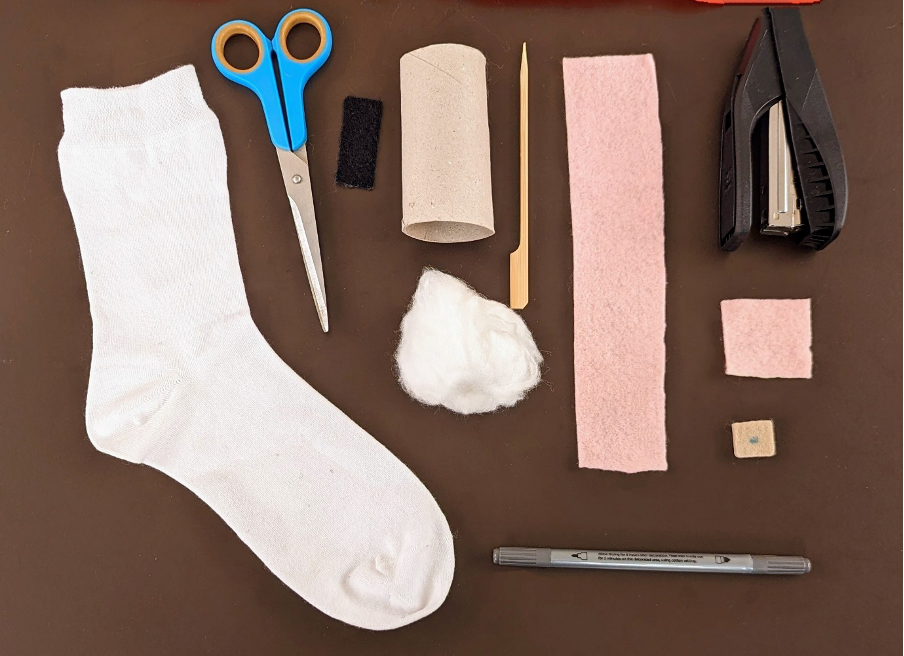
The ingenuity of this model lies in its simplicity. It uses materials like socks, cardboard rolls, and wooden skewers — items that are inexpensive and easy to find — making it accessible even for institutions with limited resources. The model is quick to assemble and intuitive to use, with a step-by-step video guide that ensures anyone can replicate and use it effectively. Its design focuses on isolating specific parts of the procedure, allowing trainees to practice in a low-pressure environment until they feel comfortable with the sequence, the tools, and their hand movements. While it doesn’t replicate the real-life tissue response or variability encountered in live surgeries, it fills a critical gap in training by letting learners focus on technique and procedural flow without the stress of an operating room.

This model has already been put to use in training courses across Austria and even in Nepal, where it was part of a sacrospinous hysteropexy workshop in Dhulikhel. The feedback from trainees has been overwhelmingly positive, with many appreciating how the model simplifies a complex procedure and gives them the chance to practice as many times as they need. Its reception at international conferences has been similarly encouraging, showing that the medical community values this practical solution to a widespread educational challenge.
The low cost and portability of the model make it especially useful in areas where access to advanced simulation tools is limited, ensuring that more trainees can benefit from hands-on learning opportunities.
Of course, no model can fully replicate the nuances of performing surgery on live patients. What this model does well, however, is prepare trainees for that next step by giving them the confidence and familiarity they need to approach the operating room. It’s not just about learning the steps — it’s about internalizing the process so that the focus in real surgeries can shift toward adapting to the patient’s unique anatomy and conditions. This kind of preparation is valuable, especially for trainees who might not otherwise have access to adequate practice opportunities.
The development of this model is an example of how simple solutions can be. It shows that innovation in medical education doesn’t always require expensive technology or complex systems — sometimes, it’s about finding practical ways to address problems. By making this model widely available, we hope to provide a tool that enhances surgical training but also has the potential to improve outcomes for patients as better-prepared surgeons enter the field.
Written by: Greta Lisa Carlin,1 Sören Lange2,3
- Department of Obstetrics and Gynecology, Medical University of Vienna, Austria
- Department of Obstetrics and Gynecology, University Hospital Zurich, Switzerland
- Medical University of Zurich, Switzerland