

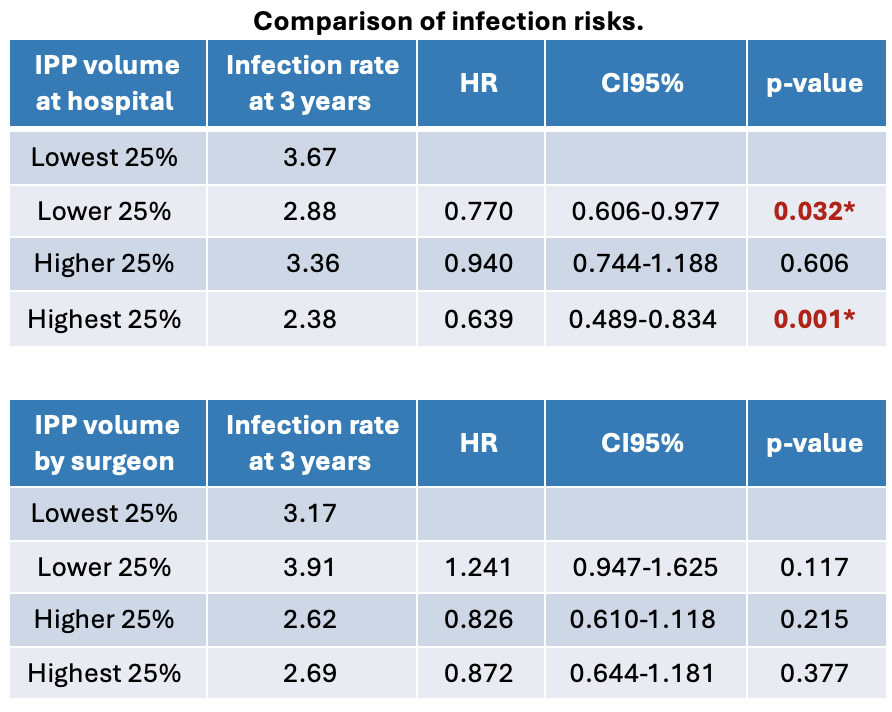
Thus, the objective of our study was to leverage electronic health record data at the national level to compare infection rates by hospital and surgeon volumes and to examine patient risk factor differences across volume quartiles.
The study design is summarized as below.
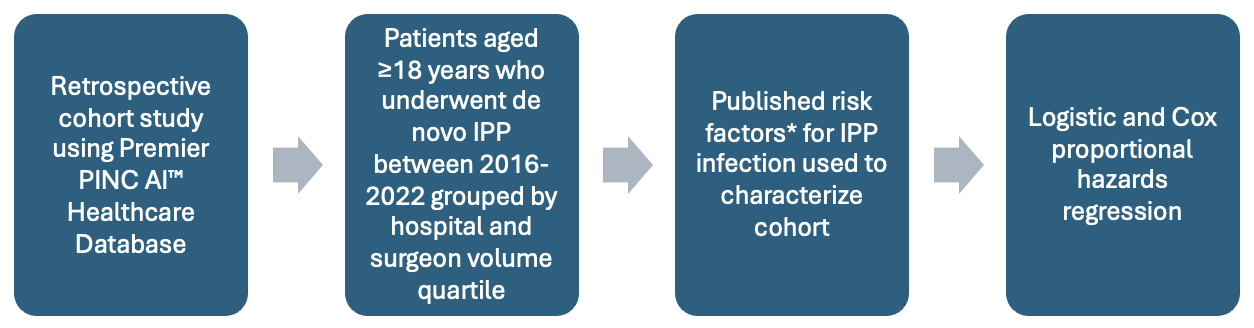
The Premier PINC AI Healthcare Database is a national all-payer database consisting of billing, hospital cost, and coding histories from 293 million patients receiving care at over 1,263 facilities in the U.S from 2012 to 2022. Hospitals were identified by facility ID, and surgeons were identified by their NPI. Risk factors for postoperative infection included older age >75 years, smoking, HIV, diabetes, pelvic radiation, urinary diversion, spinal cord injury, obesity, concomitant circumcision, and Peyronie’s disease.
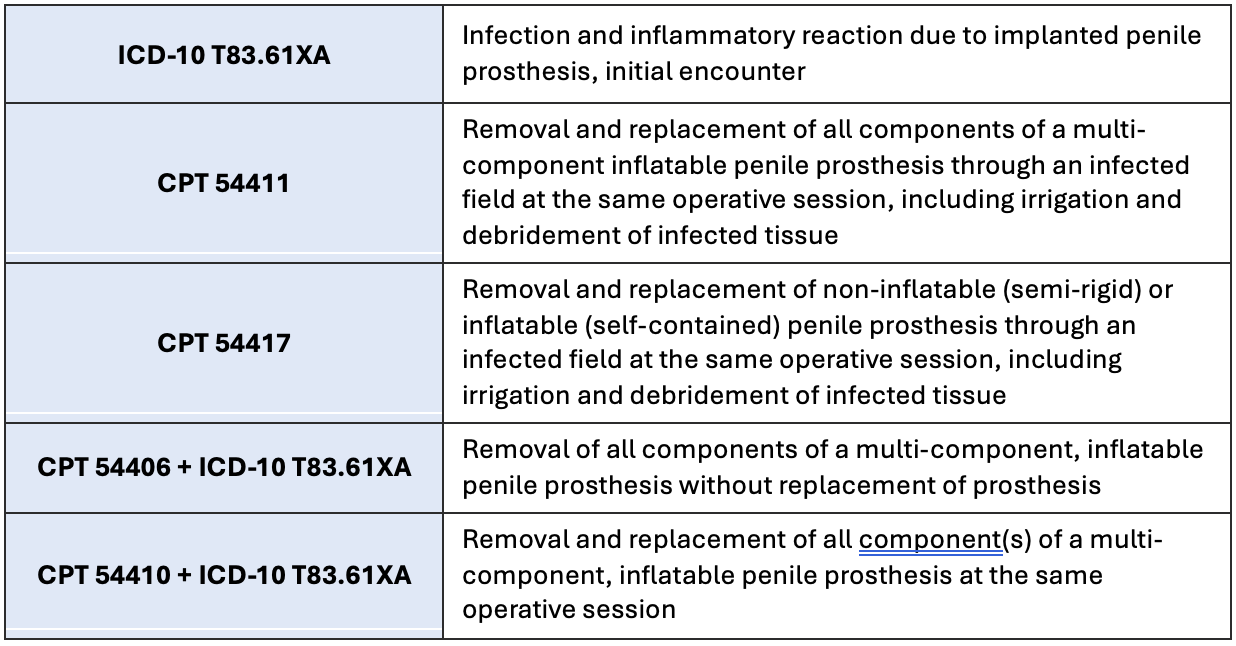
Identification of IPP postoperative was as below.
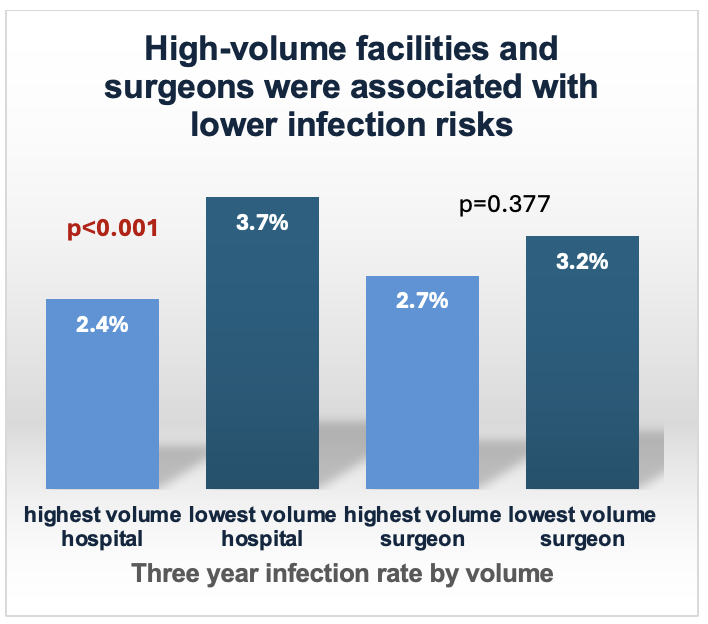
Our major findings are summarized below. We identified 18,475 patients with median follow up of 3 years from date of IPP procedure.


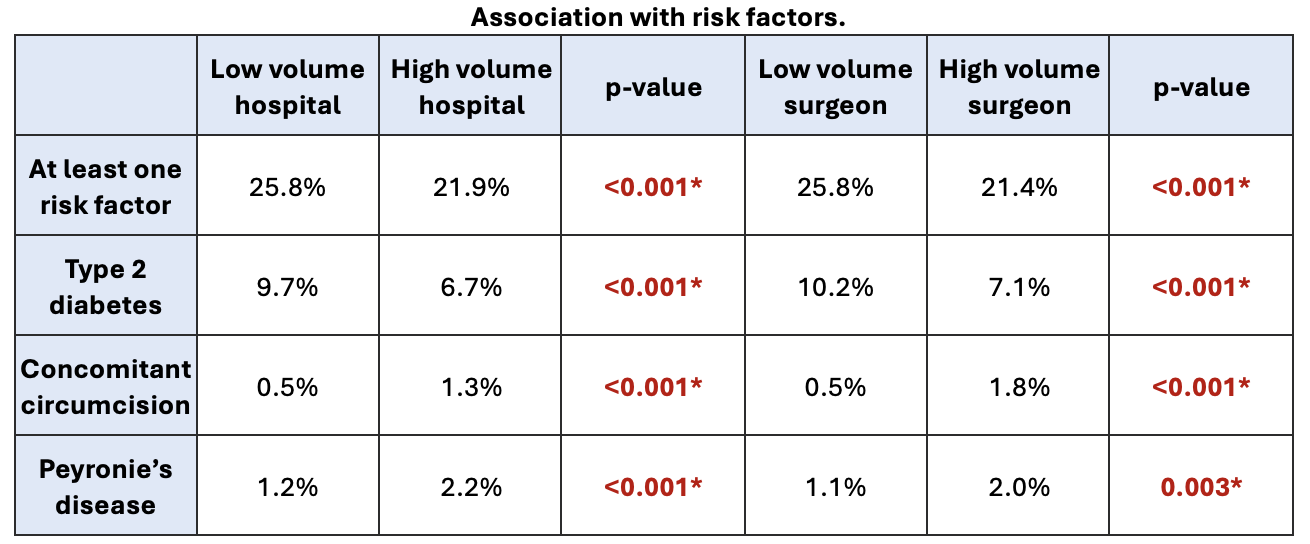
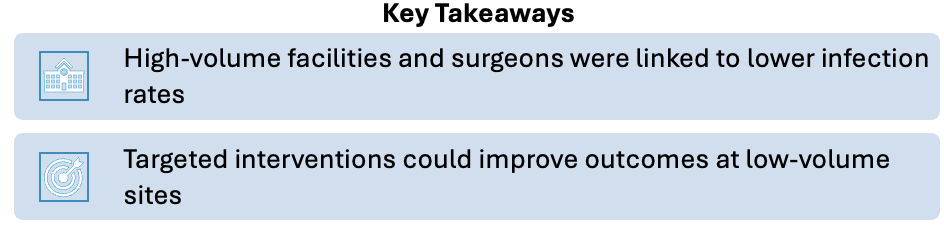
This is the first population-based analysis using a large-scale, national level sample to compare risk of IPP infection by hospital and surgeon volume in the US. Strengths of our study include robust sample size and a broad, real-world population. We acknowledge several limitations, including a lack of granularity regarding perioperative antibiotic use, surgical technique, operative time, and drain placement. Large claims databases are also prone to coding errors. We would also not capture patients who followed outside the network.
Written by: Vi Nguyen MD,1 Ryoko Sato PhD,2 Jeffrey Loh-Doyle,3 William Brant,4 Sirikan Rojanasarot PhD,2 Santosh Telang MS,2 Tung-Chin Hsieh MD, MBA,1
- UC San Diego Health, San Diego, CA, USA
- Boston Scientific, Marlborough, MA, USA
- University of Southern California, Los Angeles, CA, USA
- Veterans Affairs, Salt Lake City, UT, USA