

Stone retropulsion during laser lithotripsy is a well-known phenomenon that can negatively impact effective stone–laser interaction by displacing the stone away from the laser fibre. In this study, we present the first experimental evaluation of stone retropulsion using a new Ho:YAG laser generator equipped with a very–low peak power pulse-modulation mode, known as Magneto Technology™, developed by the Italian company Quanta System. A direct comparison was performed with the Thulium Fibre Laser (TFL), which is currently considered the benchmark for low retropulsion performance.
Methodology
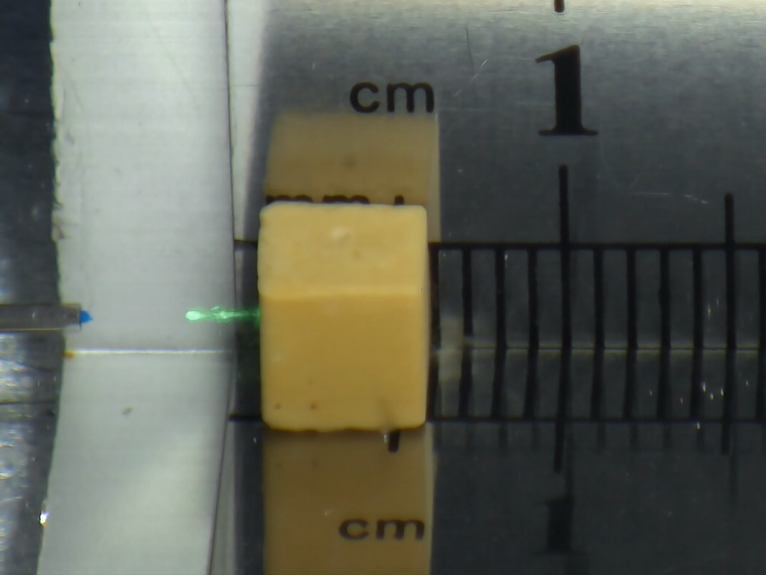
An in-vitro model was used to reproduce urinary stone lithotripsy conditions. Artificial stones were positioned on a custom-designed support and immersed in saline solution to simulate intrarenal conditions. Different laser settings delivering comparable overall power (~10 W) were applied during continuous activation for a few seconds. Stone displacement and retropulsion speed were recorded and analysed using video-tracking software.
Key Findings
Comparable Retropulsion between Magneto and TFL
- At medium-to-high energy settings, both lasers showed comparable retropulsion behaviour, with no significant differences in stone displacement. Notably, at low-energy settings (0.2–0.4 J), Magneto exhibited significantly lower retropulsion than TFL.
- During the first second of laser activation, which is considered the most critical phase for fibre repositioning, at low-energy settings, Magneto demonstrated lower retropulsion speed and reduced stone displacement, suggesting a potential advantage in procedural control and operative efficiency.
With Magneto Technology™, the Ho:YAG laser showed a retropulsion profile comparable to that of TFL. The very-low peak power of Magneto may lead to gentler cavitation bubble dynamics, potentially explaining the observed reduction in retropulsion, which appears even more pronounced at low-energy settings. To date, however, no dedicated studies have directly investigated bubble dynamics using Magneto.
Conclusions
Although conventional Ho:YAG lasers have historically been associated with greater stone retropulsion than TFL, Magneto demonstrated a retropulsion profile comparable to TFL under the tested conditions. These findings suggest that advanced pulse-modulation technology may progressively narrow the retropulsion performance gap between Ho:YAG and TFL systems. Further clinical studies are warranted to determine whether these in-vitro advantages translate into improved surgical outcomes.
Written by: Andrea Folcia,1,2 Davide Perri,3,8 Giorgio Bozzini,3,8 Ioannis Kartalas Goumas,4,8 Olivier Traxer,5,7,8 Eugenio Ventimiglia,6,7,8,9
- Division of Experimental Oncology/Unit of Urology, Urological Research Institute, IRCCS Ospedale San Raffaele, Milan, Italy
- Vita-Salute San Raffaele University, Milan, Italy
- Sant'Anna Hospital, San Fermo Della Battaglia, Italy
- Istituto Clinico Beato Matteo, Vigevano, Italy
- Sorbonne Universite, 27063, GRC#20 Lithiase Urinaire, Hôpital Tenon, Paris, France
- Dept. of Surgical Sciences, Uppsala University, Uppsala, Sweden
- Progressive Endourological Association for Research and Leading Solutions (PEARLS), Paris, France
- EAU Endourology, European Association of Urology (EAU), Arnhem, The Netherlands
- Endourology and Urolithiasis Working Group, Young Academic Urologists (YAU), Arnhem, The Netherlands