

(UroToday.com) The 2025 Western Section AUA annual meeting featured a urothelial carcinoma session and a presentation by Dr. Jennifer Linehan discussing baseline characteristics from the uTRACT registry evaluating the real-world use of UGN-101 in participants with upper tract urothelial carcinoma in the United States. Upper tract urothelial carcinoma affects 1-2 in 100,000 people in the United States annually.
Endoscopically guided ablation is often used to treat low-grade upper tract urothelial carcinoma; however, recurrence is common, and long-term surveillance is often associated with complications. UGN-101 is a reverse thermal hydrogel formulation of mitomycin for pyelocalyceal solution, FDA approved (April 2020), for chemoablative treatment of low-grade upper tract urothelial carcinoma. In UroGen’s phase 3 Olympus trial,1 UGN-101 was used as the primary treatment of low-grade upper tract urothelial carcinoma and resulted in clinically significant disease eradication, and is associated with favorable long-term durability. The ongoing uTRACT registry is evaluating the real-world use of UGN-101. At the 2025 Western Section AUA annual meeting, Dr. Linehan presented baseline characteristics of the currently enrolled participants.
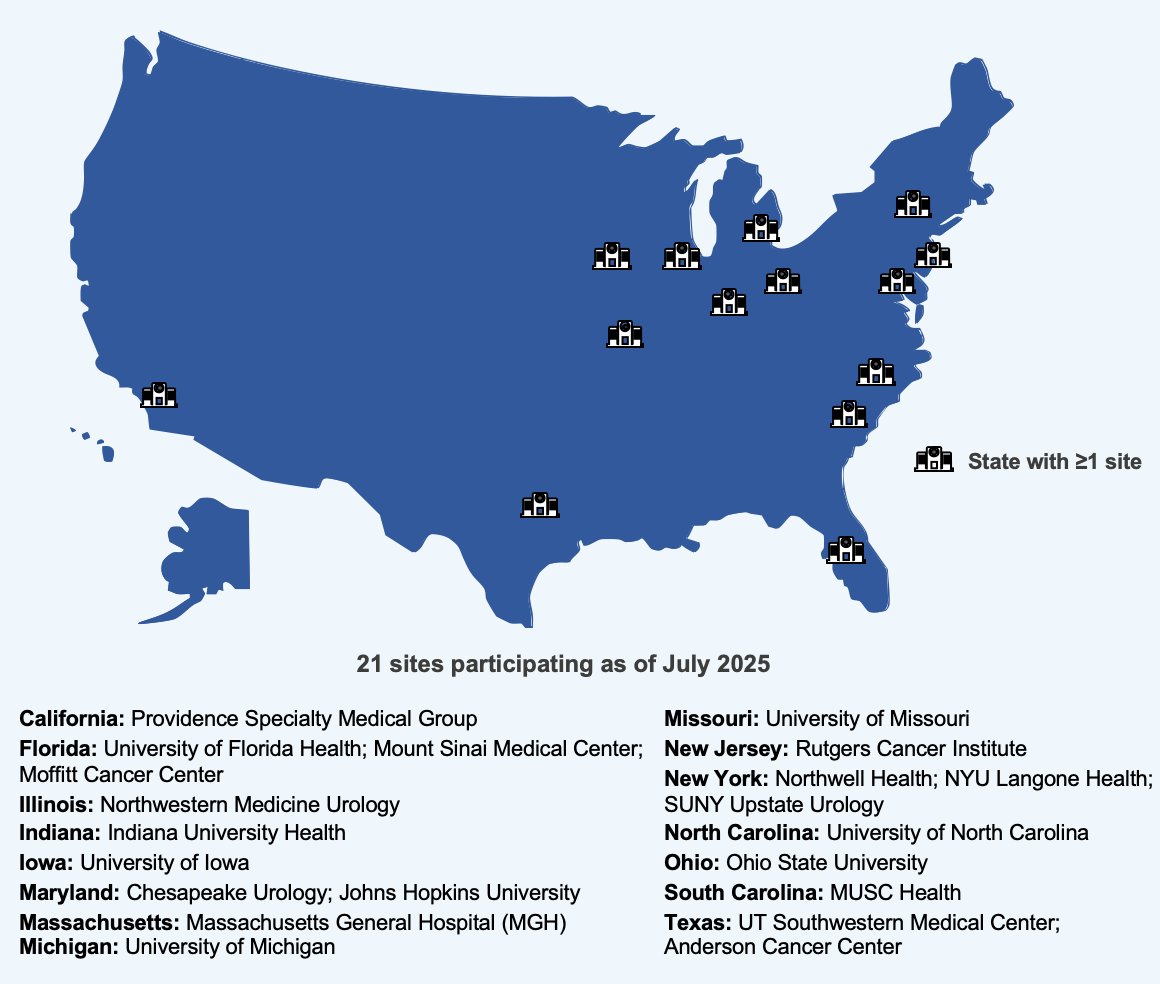
The uTRACT registry (NCT05874921) is a single-arm, multicenter study, with retrospective and prospective data capture. Approximately 400 participants age >18 years with upper tract urothelial carcinoma who received UGN-101 post-FDA approval (April 15, 2020), will be enrolled. As of July 2025, 21 sites across the United States are participating in uTRACT:
UGN-101 is administered as 6 once-weekly pyelocalyceal instillations (not exceeding 15 mL [60 mg mitomycin]) retrograde via ureteral catheter or antegrade via a nephrostomy tube. Participants with a complete response 3 months post-first dose may receive once-monthly maintenance instillations (maximum 11 additional doses). Participant history and disease status were collected, and an endoscopic evaluation was performed at baseline (prior to UGN-101 dosing). Additionally, participants are followed up at 3, 6, 12, 24, and 36 months after the first UGN-101 instillation for status update and disease surveillance. The primary objective is to evaluate the tumor ablative effect of UGN-101, and secondary objectives include (i) assessing the safety of and evaluating the response to UGN-101, and (ii) evaluating the effectiveness and safety of UGN-101 in subgroups of clinical interest. An exploratory objective is to assess the impact of UGN-101 on long-term outcomes and on bladder cancer.
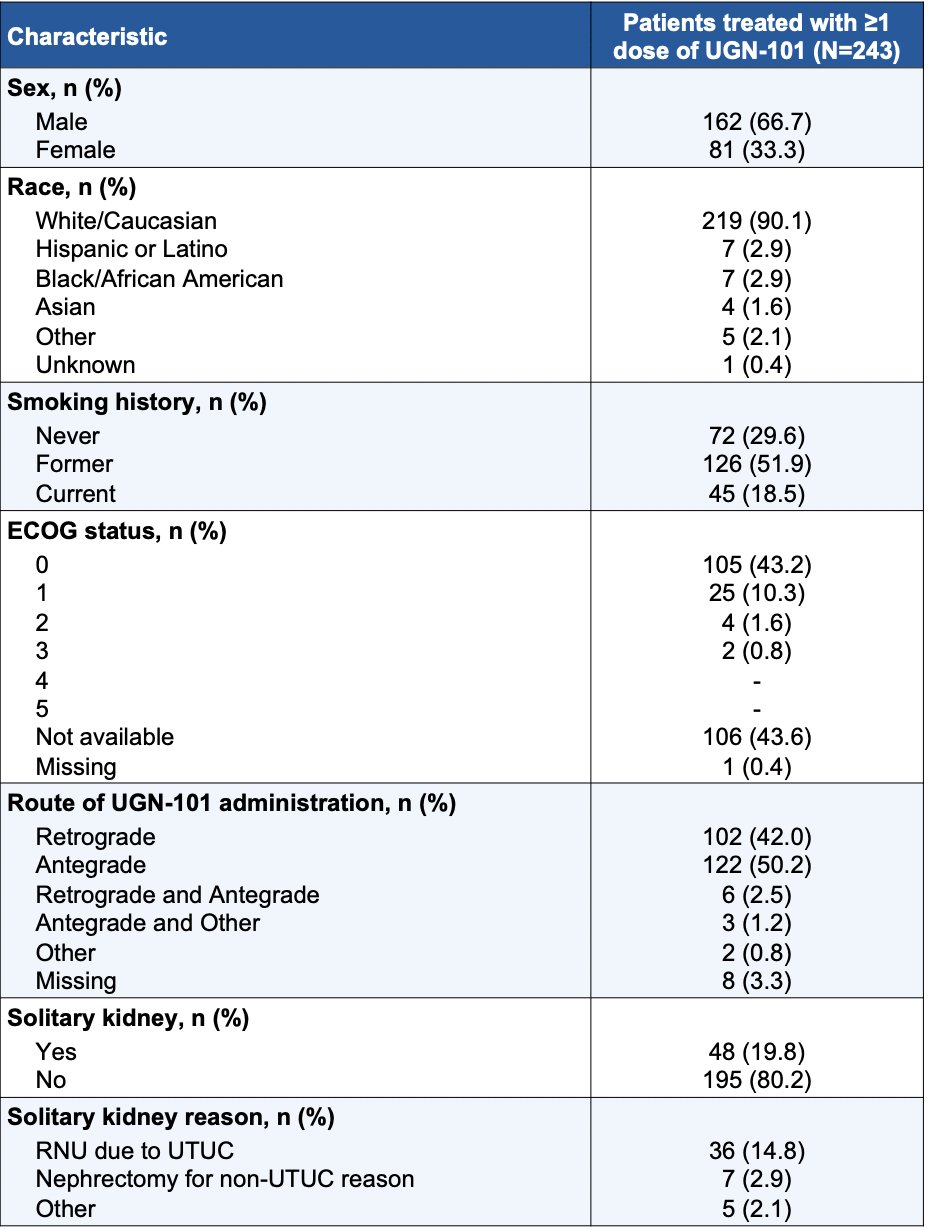
As of July 17, 2025, 243 participants were treated with at least 1 dose of UGN-101. Most treated participants were male (66.7%), White/Caucasian (90.1%), and most treated participants (43.2%) had an ECOG performance status of 0. UGN-101 was administered retrograde in 42.0% and antegrade in 50.2% of participants:
As of July 17, 2025, 261 renal units were treated, including 49.0% with unifocal tumors and 46.7% with multifocal tumors (including superficial carpeting). Upper tract urothelial carcinoma was primarily located in the renal pelvis (47.1%). Low-grade and high-grade disease were present in 65.1% and 14.7% of collected biopsies, respectively. Before UGN-101 treatment, 64.8% of participants received debulking ablation of any location:
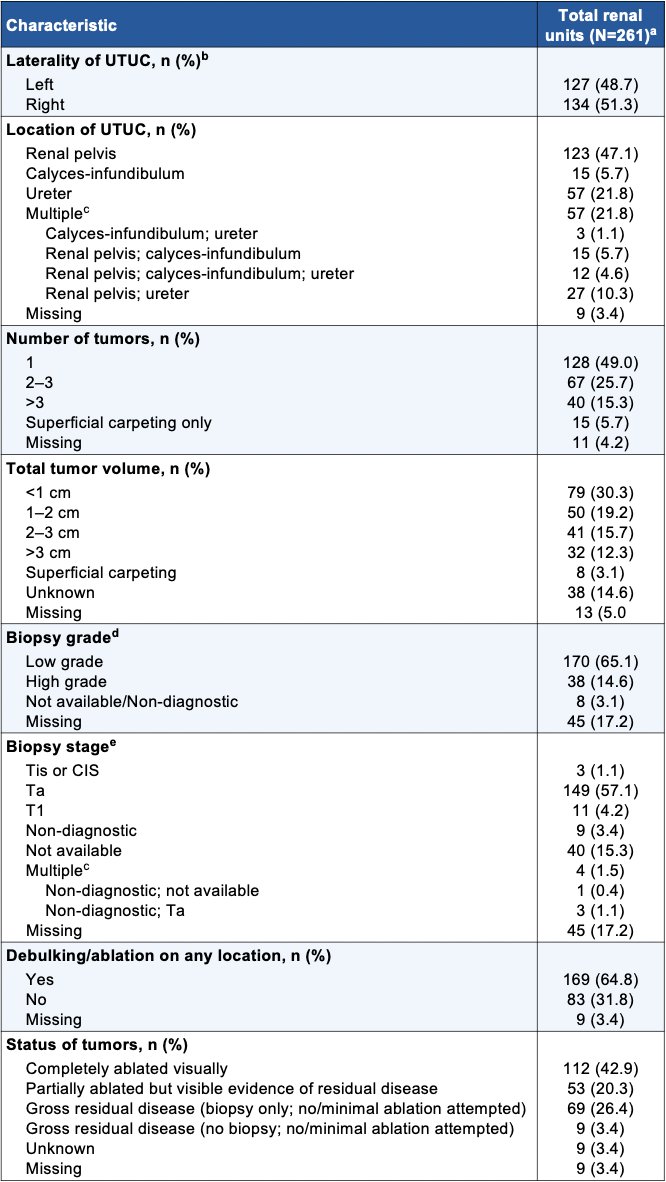
Tumors were completely ablated visually in 45.1% of participants, whereas partial ablation with residual disease was present in 21.1%; gross residual disease, where no/minimal ablation was attempted, was present in 31.7%.
Dr. Linehan concluded her presentation discussing baseline characteristics from the uTRACT registry evaluating the real-world use of UGN-101 in participants with upper tract urothelial carcinoma in the United States, with the following take-home points:
- The uTRACT registry includes a more heterogeneous population with different disease criteria than the OLYMPUS phase 3 trial [1]
- In addition, the registry requirements of ablation and residual tumor size and location are less restrictive than the Olympus phase 3 trial
- Specifically, the uTRACT registry includes patients with high-grade disease and antegrade administration of UGN-101
- Data from the uTRACT registry will provide insights into the real-world effectiveness of UGN-101
Presented by: Jennifer Linehan, MD, Providence Specialty Medical Group, Santa Monica, CA
Written by: Zachary Klaassen, MD, MSc – Urologic Oncologist, Associate Professor of Urology, Georgia Cancer Center, Wellstar MCG Health, @zklaassen_md on Twitter during the 2025 Western Section American Urological Association (AUA) Annual Meeting, Napa Valley, CA, Sun, Nov 2 – Thurs, Nov 6, 2025.
Reference: