

(UroToday.com) The 2025 Western Section AUA annual meeting featured a prostate cancer session and a presentation by Dr. Jack Andrews discussing the impact of ultra-low PSA response (<0.02 ng/ml) with darolutamide + ADT in ARANOTE. In ARANOTE, darolutamide + androgen deprivation therapy (ADT) significantly reduced the risk of radiological progression or death by 46% versus placebo + ADT in patients with metastatic hormone-sensitive prostate cancer (mHSPC).1
Additionally, time to PSA progression was longer for patients receiving darolutamide versus placebo (HR 0.31; 95% CI 0.23–0.41), and three times as many patients receiving darolutamide achieved undetectable PSA <0.2 ng/mL at any time (62.6%) versus patients on placebo (18.5%). At the 2025 Western Section AUA annual meeting, Dr. Andrews and colleagues reported post hoc analyses of ultra-low PSA responses (<0.02 ng/mL) and their correlation with outcomes in ARANOTE.
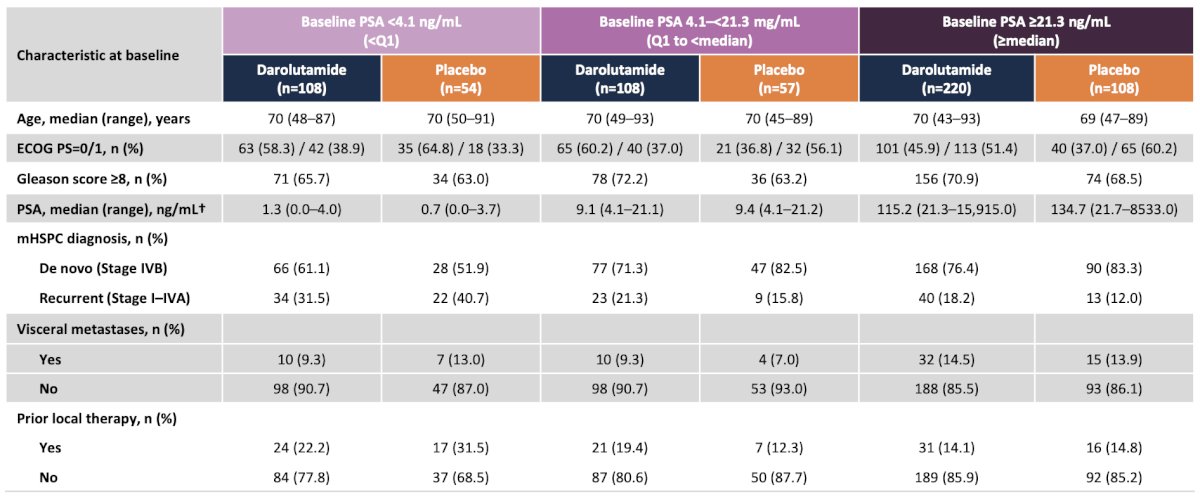
The rates of PSA <0.02 ng/mL were evaluated at 24, 36, and 48 weeks and at any time. Ultra-low PSA responses were also assessed by baseline PSA group, defined as <first quartile (< Q1: < 4.1 ng/mL), between Q1 and median (4.1 to <21.3 ng/mL), and ≥median (≥21.3 ng/mL). Relevant clinical outcomes (radiological progression-free survival, time to metastatic castration resistant prostate cancer, and time to PSA progression) were correlated with PSA responses (PSA <0.02 ng/mL; PSA ≥0.02 to <0.2 ng/mL, and PSA ≥0.2 ng/mL) in patients receiving darolutamide.
Of 669 randomized patients, 434 receiving darolutamide and 218 receiving placebo had baseline PSA ≥0.02 ng/mL. At baseline, disease characteristics of patients by baseline PSA subgroups were generally similar, except fewer patients with PSA <4.1 ng/mL had de novo disease compared with groups with PSA ≥4.1 ng/mL:
Patients treated with darolutamide who reached ultra-low PSA <0.02 ng/mL at any time had a lower risk of radiological progression or death versus those with PSA ≥0.2 ng/mL, with a risk reduction of 91%, as did patients who reached PSA between 0.02 and 0.2 ng/mL versus those with PSA ≥0.2 ng/mL, with a risk reduction of 59%:
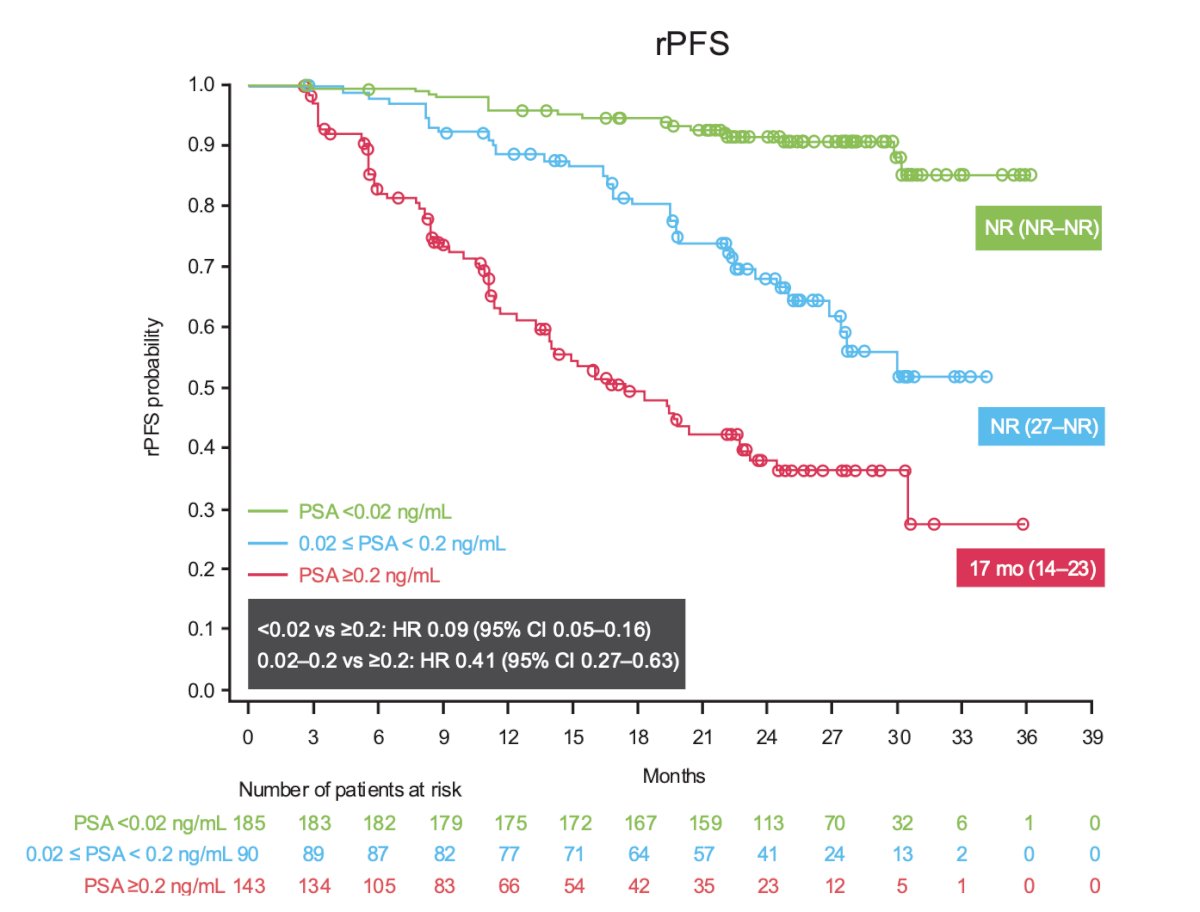
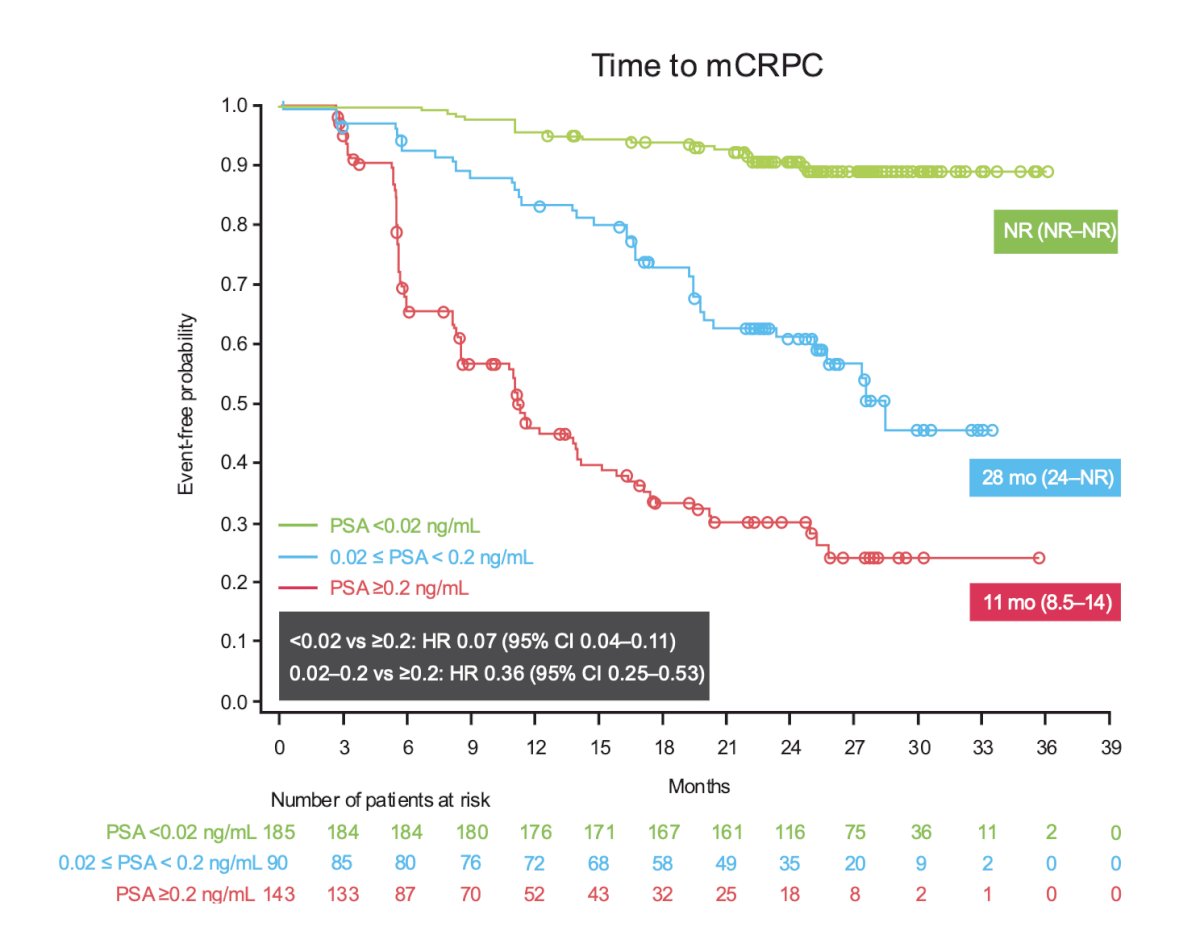
This association was supported in a landmark analysis of the effect between PSA response levels at 36 weeks and subsequent time-to-event outcomes for darolutamide-treated patients (PSA <0.02 ng/mL versus PSA >0.2 ng/mL: radiological progression-free survival, HR 0.20; 95% CI 0.10–0.40). Patients treated with darolutamide who reached ultra-low PSA <0.02 ng/mL had a longer time to mCRPC versus those with PSA ≥0.2 ng/mL, with a risk reduction of 93%, as did patients who reached PSA between 0.02 and 0.2 ng/mL versus those with PSA ≥0.2 ng/mL, with a risk reduction of 64%:
Patients treated with darolutamide who reached ultra-low PSA <0.02 ng/mL had a longer time to PSA progression versus those with PSA ≥0.2 ng/mL, with a risk reduction of 98%, as did patients who reached PSA between 0.02 and 0.2 ng/mL versus those with PSA ≥0.2 ng/mL, with a risk reduction of 79%:
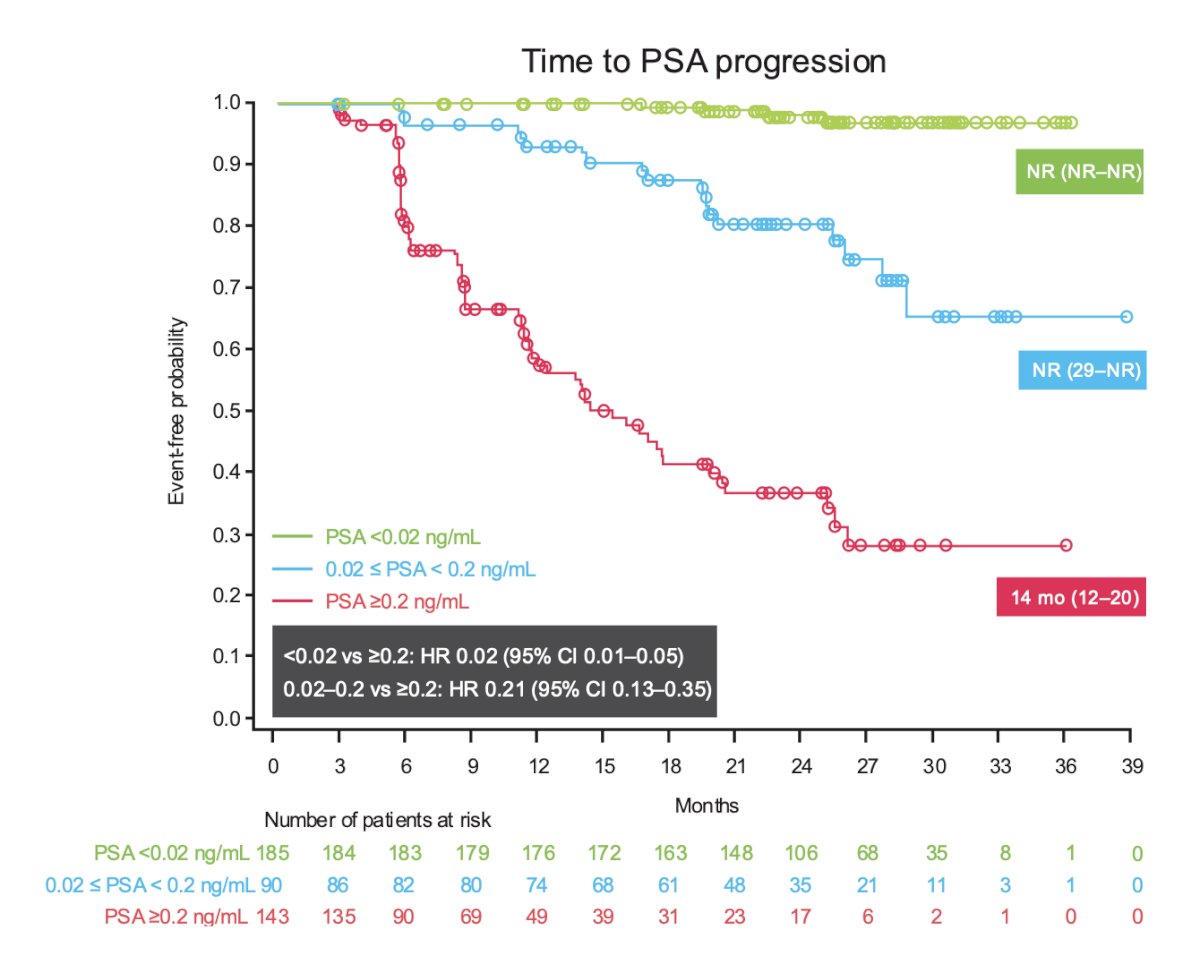
This association was supported in a landmark analysis of the effect between PSA response levels at 36 weeks and subsequent time-to-event outcomes for darolutamide-treated patients (PSA <0.02 ng/mL vs PSA >0.2 ng/mL: time to PSA progression, HR 0.10; 95% CI 0.04–0.29). Ultra-low PSA response rates increased with time, regardless of baseline PSA level
- <2% of patients with baseline PSA ≥4.1 ng/mL and treated with ADT alone reached PSA <0.02 ng/mL at any time
- 30.5% of patients treated with darolutamide + ADT and baseline PSA ≥21.3 ng/mL reached PSA levels <0.02 ng/mL at any time
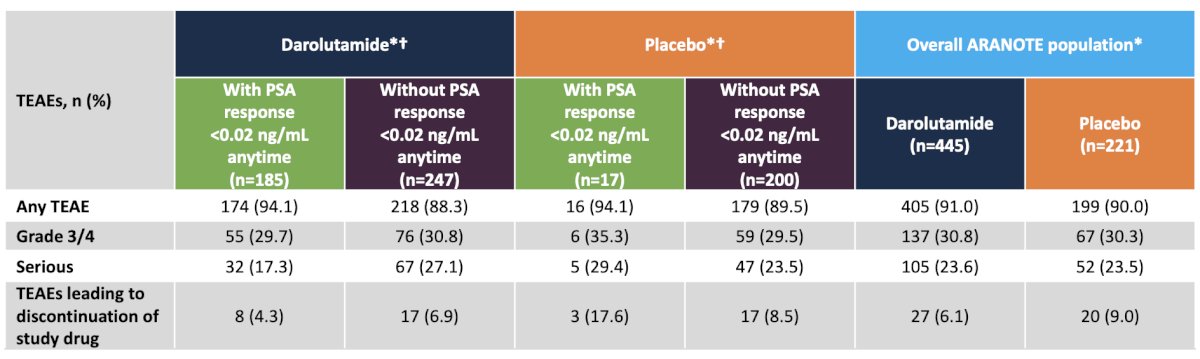
The safety profile of darolutamide was independent of PSA response, and treatment discontinuation rates due to treatment-emergent adverse events were lower with darolutamide compared with placebo, consistent with the overall population:
Dr. Andrews concluded his presentation discussing the impact of ultra-low PSA response (<0.02 ng/ml) with darolutamide + ADT in ARANOTE with the following take-home points:
- Regardless of baseline PSA, the proportion of patients reaching ultra-low PSA responses of <0.02 ng/mL was higher with darolutamide treatment versus placebo, and ultra-low PSA response rates increased with time
- Ultra-low PSA responses were associated with greatly improved clinical outcomes for patients treated with darolutamide, prolonging radiological progression-free survival and delaying times to metastatic castration resistant prostate cancer and PSA progression
- Darolutamide was well tolerated across PSA response subgroups, with lower treatment discontinuation rates due to treatment-emergent adverse events versus placebo
Presented by: Jack Andrews, MD, Urologic Oncologist, Senior Associate Consultant, Department of Urology, Mayo Clinic Arizona, Scottsdale, AZ
Written by: Zachary Klaassen, MD, MSc – Urologic Oncologist, Associate Professor of Urology, Georgia Cancer Center, Wellstar MCG Health, @zklaassen_md on Twitter during the 2025 Western Section American Urological Association (AUA) Annual Meeting, Napa Valley, CA, Sun, Nov 2 – Thurs, Nov 6, 2025.
Reference: