

(UroToday.com) The 2025 Western Section AUA annual meeting featured a urothelial carcinoma session and a presentation by Dr. Meera Chappidi discussing erdafitinib use in eligible patients with metastatic urothelial carcinoma in the Veterans Health Administration. Next-generation sequencing of tumors from patients with metastatic urothelial carcinoma can identify genomic alterations that may help guide treatment selection.
An example of this precision medicine approach is erdafitinib, a pan fibroblast growth factor receptor (FGFR) inhibitor, which has been FDA-approved since 2019 for patients with metastatic urothelial carcinoma and susceptible FGFR2 or FGFR3 mutations who progressed on platinum-based chemotherapy.1 While FDA-approved, information regarding the uptake of erdafitinib in real-world clinical practice is limited. Therefore, the objective of this study was to determine the rates of actionable FGFR2/3 mutations and erdafitinib use in a large, national cohort of patients with metastatic urothelial carcinoma who underwent somatic tumor sequencing:
This retrospective cohort included patients in the Veterans Affairs health system with metastatic urothelial carcinoma based upon ICD9/10 coding who underwent next-generation sequencing of their tumor from 2019-2024 through the Department of Veterans Affairs National Precision Oncology Program. Patients with tumors harboring FGFR2/3 mutations were identified, and the percentage of these patients who received erdafitinib according to Veterans Affairs pharmacy records was determined.
Dr. Chappidi and colleagues identified 467 Veterans Affairs patients who underwent next-generation sequencing for presumed metastatic urothelial carcinoma:
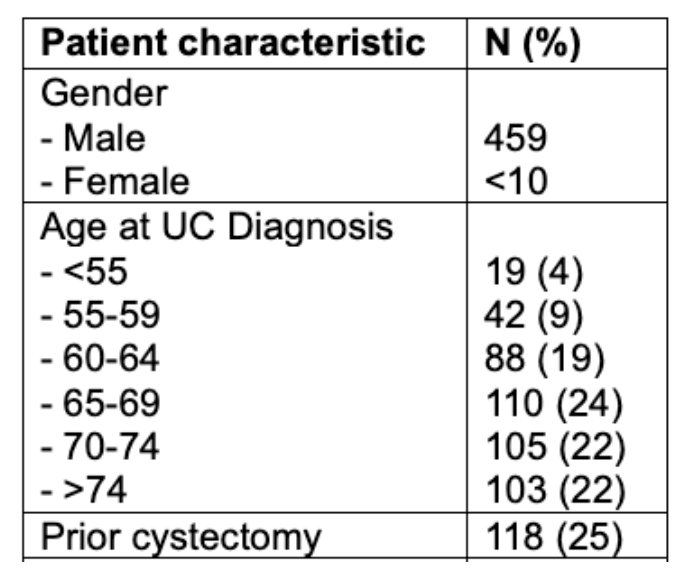
Among these patients, 18% (n = 84) of patients had actionable FGFR2/3 mutations identified, which is consistent with prior studies of metastatic urothelial carcinoma. Of these erdafitinib-eligible cases, approximately 12% (n = 10) received erdafitinib treatment.
Dr. Chappidi concluded her presentation discussing erdafitinib use in eligible patients with metastatic urothelial carcinoma in the Veterans Health Administration with the following take-home points:
- In this large, nationwide cohort of Veterans Affairs patients with metastatic urothelial carcinoma who underwent next-generation sequencing testing, approximately 1 in 6 patients had a susceptible FGFR2/3 mutation
- However, only 1 in 8 eligible patients received erdafitinib within the Veterans Affairs, which suggests there may be opportunities to increase the rates of erdafitinib use of targeted therapy in clinical practice within the Veterans Affairs system
- Future work is needed to understand potential barriers to erdafitinib utilization in Veterans Affairs patients and to inform how to increase next-generation sequencing testing for potential precision therapy applications in eligible veterans
Presented by: Meera R. Chappidi, MD, MPH, Assistant Professor, UCSF, San Francisco, CA
Written by: Zachary Klaassen, MD, MSc – Urologic Oncologist, Associate Professor of Urology, Georgia Cancer Center, Wellstar MCG Health, @zklaassen_md on Twitter during the 2025 Western Section American Urological Association (AUA) Annual Meeting, Napa Valley, CA, Sun, Nov 2 – Thurs, Nov 6, 2025.
Reference:
- Loriot Y, Necchi A, Park SH, et al. Erdafitinib in Locally Advanced or Metastatic Urothelial Carcinoma. N Engl J Med 2019 Jul 25;381(4):338-348.