

(Urotoday.com) The 2025 Western Section AUA annual meeting featured a urothelial carcinoma session and a presentation by Alex Zhu, DO, discussing a bladder cancer qualitative study assessing attitudes towards physical activity and digital health technologies. Patients undergoing neoadjuvant chemotherapy and radical cystectomy are often older, frail, and deconditioned, leaving them with limited functional reserve to withstand treatment. As a result, optimizing physical fitness before and after surgery has become a priority in urologic care. Two promising strategies include structured exercise programs (ie. (p)rehabilitation), and the use of digital health technologies (ie. Fitbit, exercise apps) to promote activity. However, little is known about what motivates neoadjuvant chemotherapy/radical cystectomy patients to stay active or their perceptions towards digital health technologies.
Between June 2023 – July 2023, Dr. Zhu and colleagues conducted semi-structured interviews with bladder cancer survivors who had completed neoadjuvant chemotherapy/radical cystectomy. Participants were asked to reflect upon their experiences regarding (i) barriers and facilitators of physical activity, and (ii) the perceived role of digital health technologies in supporting activity. Common themes were identified, and based on these themes, they developed a practical guide for providers to increase patient participation in physical activity. These findings informed the design of the ongoing Phase II prehabilitation trial (GetMoving, NCT06040762):

Overall, 9 patients were interviewed, the median age was 72 years old, and 7 were men. The cohort was representative of typical neoadjuvant chemotherapy/radical cystectomy patients, with high comorbidity burden but good functional status. Four underwent open radical cystectomy, five underwent robotic radical cystectomy, and seven received ileal conduits. Within 90 days post-surgery, seven experienced complications, including six with grade 3 adverse events. The median time from radical cystectomy to interview was 148 days (IQR 112–184). At the time of interview, seven had no evidence of disease; one had stage III; and one had stage IV disease. The 8 actionable items for providers to increase physical activity in patients undergoing neoadjuvant chemotherapy and radical cystectomy are highlighted in the following table:
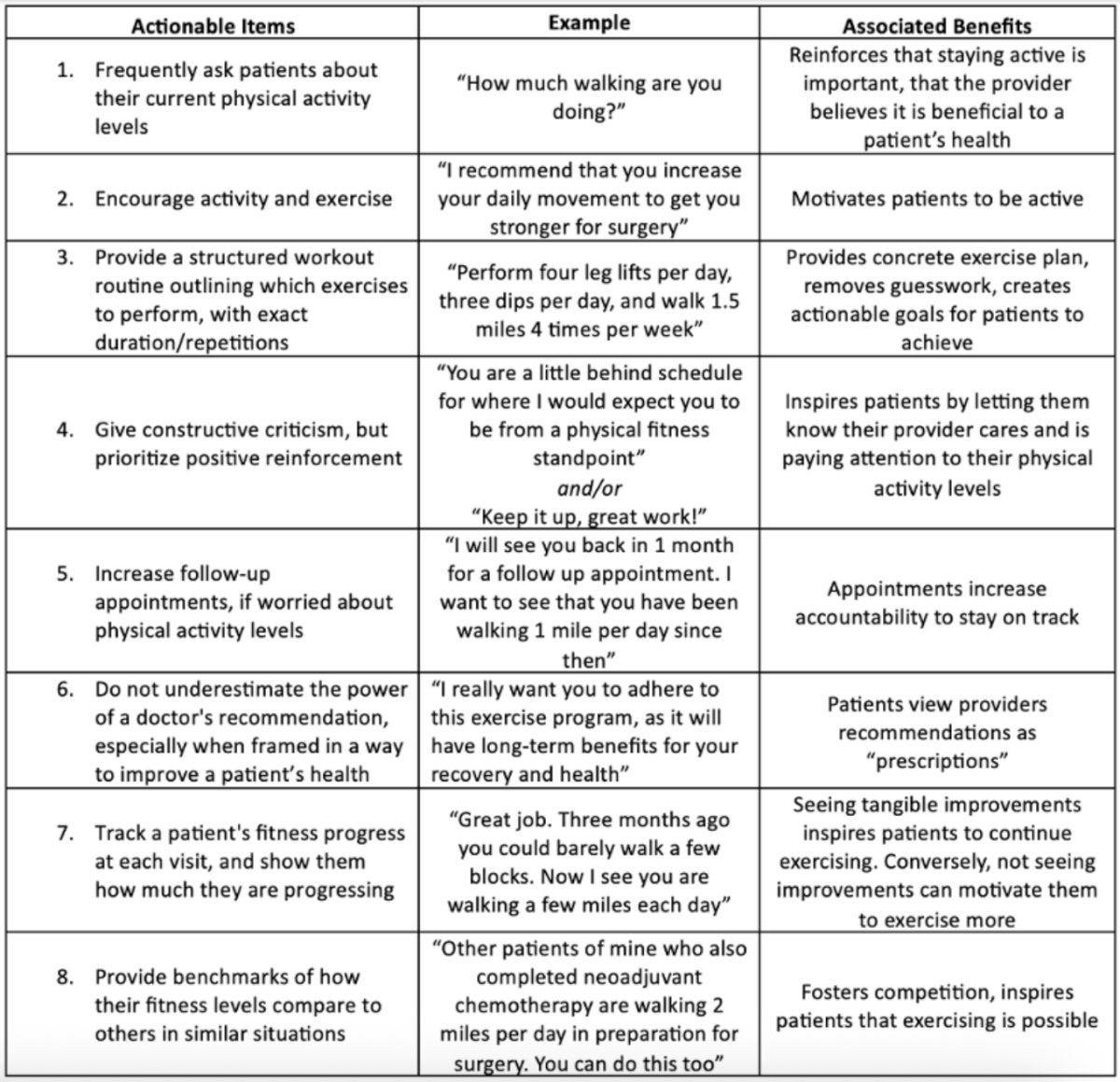
Dr. Zhu concluded this presentation discussing a bladder cancer qualitative study assessing attitudes towards physical activity and digital health technologies with the following take-home points:
- This qualitative study provides new insights into how bladder cancer survivors perceive physical activity and digital health tools during treatment
- This study found 8 actionable strategies that clinicians can immediately implement into their clinics to encourage physical activity for those undergoing neoadjuvant chemotherapy/radical cystectomy
Presented by: Alex Zhu, DO, University of Washington, Seattle, WA
Written by: Zachary Klaassen, MD, MSc – Urologic Oncologist, Associate Professor of Urology, Georgia Cancer Center, Wellstar MCG Health, @zklaassen_md on Twitter during the 2025 Western Section American Urological Association (AUA) Annual Meeting, Napa Valley, CA, Sat, Nov 2 – Thurs, Nov 6, 2025.