

(UroToday.com) Day 4 of WCET 2025 began with one of the most anticipated plenary sessions, dedicated to stone disease, a cornerstone of endourology. Importantly, the program included the 2025 Arthur Smith Award Lecture, a highlight that honors the legacy of Dr. Arthur Smith, one of the fathers of Endourology. This prestigious award recognizes a young urologist within 10 years of completing training who has already made significant contributions to research and education in endourology.
This year’s awardee, Dr. Steeve Doizi, Professor of Urology and Head of the Men’s Health Unit at Tenon University Hospital, Sorbonne University (Paris, France), delivered an extraordinary and highly practical lecture on one of the endourologist’s most indispensable tools: the laser. His talk, “Laser in Lithotripsy; Which Laser and Why?”, provided an evidence-based overview of laser technologies currently used in urological practice and clear recommendations for their optimal application in different surgical scenarios.
Dr. Doizi began by classifying lasers according to their mode of energy delivery:
- Pulsed lasers: Holmium:YAG (Ho:YAG), Thulium Fiber Laser (TFL), and Pulsed Thulium:YAG (Tm:YAG).
- Continuous lasers: Potassium Titanyl Phosphate (KTP), Lithium Triborate (LBO), and continuous Tm:YAG.
- Diode lasers may function as either pulsed or continuous.
Of these, only the pulsed lasers are suitable for lithotripsy (Figure 1).1
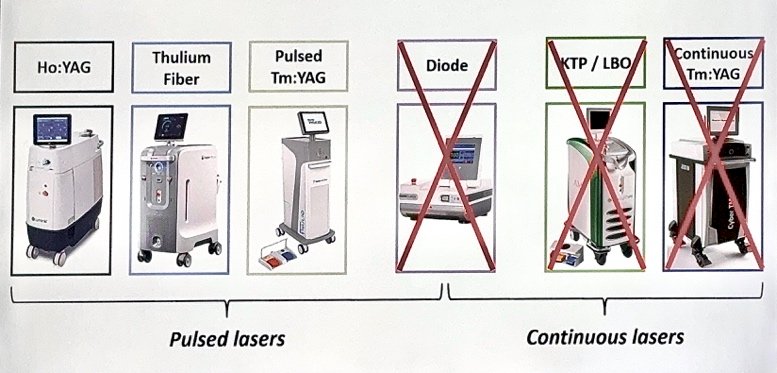
Figure 1. Types of lasers used in urology.
He took a couple of minutes to emphasize some features of the Ho:YAG laser, which remains widely used. It is available in low-power (<35 W) and high-power (120-150 W) versions. Both deliver the same total energy, but high-power systems allow higher frequencies (50-80 Hz), improving efficiency without altering fragmentation capacity. Key technological innovations include Moses technology (2017, upgraded 2020), which uses the “Moses effect” to improve efficiency and reduce retropulsion through optimized bubble dynamics; and Magneto technology, developed to approximate the 500 W output of TFL, aiming to enhance dusting efficiency.
So, which laser is best for lithotripsy? Dr. Doizi structured his evidence-based discussion around three clinical questions:
- Which laser provides the best efficacy for ureteroscopy (URS), percutaneous nephrolithotomy (PCNL), and cystolithotripsy?
- Which laser is best for dusting and/or fragmentation?
- Which laser has the lowest retropulsion?
Overall, in in vitro studies, TFL and Pulsed Tm:YAG showed equivalent efficacy, both superior to Ho:YAG. But looking at specific procedures, there are some nuances.
- URS In a systematic review/meta-analysis, TFL outperformed Ho:YAG for kidney stones in terms of stone-free rates (SFR) and zero residual fragments. However, TFL and Ho:YAG with Moses technology performed equivalently. For ureteral stones, no significant difference was found between TFL and Ho:YAG, but TFL reduced operative time compared to Ho:YAG (Figure 2).2
In another study comparing TFL vs. Pulsed Tm:YAG, both lasers were equivalent for SFR, but TFL was superior in achieving zero residual fragments.

Figure 2. Forest plots of stone-free rates of retrograde approach (A) for renal stones, (B) for ureteral stones (C) according to the definition of no residual fragments, and (D) according to the definition of residual fragments <2–3 mm comparing TFL and Ho:YAG lasers.
- PCNL The aforementioned systematic review/meta-analysis showed that TFL and Ho:YAG were equivalent for SFR.
- Cystolithotripsy An in vitro study comparing TFL with Ho:YAG Moses showed that Ho:YAG Moses was far more efficient, with procedure times of 68.3 minutes vs. 261.4 minutes for a 4 cm stone.
- Dusting In vitro studies consistently demonstrated TFL’s superiority, producing up to 4 times more dust than Ho:YAG Moses, and it remained more efficient than Ho:YAG both with and without Moses technology. Also, TFL proved effective across all stone compositions, producing mean fragment sizes of 254 µm. In addition, pulsed Tm:YAG also achieved dust <250 µm regardless of composition.
- Fragmentation: For PCNL, large impacted ureteral stones, and bladder stones where fine dust is unnecessary and fragment evacuation is easier, high-power Ho:YAG might be the preferred choice due to greater efficiency and reduced operative times.
In in vitro studies, TFL demonstrated the lowest retropulsion. Additionally, pulsed Tm:YAG also outperformed Ho:YAG in this regard. Of note, no direct comparisons between TFL and pulsed Tm:YAG are yet available.
With all these facts, Dr. Doizi concluded his lecture with a concise, evidence-based summary (Figure 3)1:
- Ho:YAG Best for fragmentation, PCNL, and bladder stones.
- TFL Best for overall lithotripsy efficacy, dusting, and lowest retropulsion.
- Pulsed Tm:YAG Intermediate performance between Ho:YAG and TFL, but further clinical evidence is required.
This lecture provided a clear and practical overview of key laser characteristics, and audience members agreed it served as an excellent guide for selecting the appropriate laser during surgical planning.
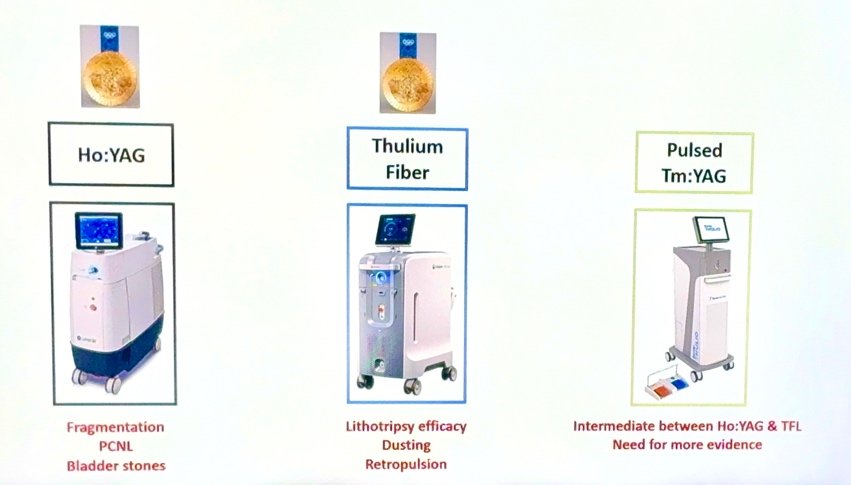
Figure 3. Key points on laser selection.
Presented by: Steeve Doizi, MD, PhD. Professor of Urology and Head of Men’s Health unit. Tenon University Hospital, University of Sorbonne. Paris, France.
Written by: Jonathan Badin-Castro, MD. Endourology and Minimally Invasive Surgery Fellow, University of California, Irvine. @JonBadin on Twitter during the 2025 World Congress of Endourology and Uro-Technology: September 8 – 12, 2025. Phoenix, Arizona.
References:- 1. Doizi S. 2025 Arthur Smith Award Lecture: Laser in Lithotripsy; Which Laser and Why? Presented at 2025 World Congress of Endourology and Uro-Technology: September 8 – 12, 2025.
2. Uleri A, Faré A, et al. Thulium Fiber Laser Versus Holmium:Yttrium Aluminum Garnet for Lithotripsy: A Systematic Review and Meta-analysis. Eur Urol. 2024 Jun;85(6):529-540. doi:10.1016/j.eururo.2024.01.011.