

(UroToday.com) During the Education and Simulation moderated poster session at the World Congress of Endourology and Uro-Technology, Dr. Catalina Solano, a urologist from Tenon Hospital in Sorbonne University presented findings from a global survey examining the integration of generative artificial intelligence (AI) in urology education and practice. She states that as generative AI tools continue to evolve and improve, understanding adoption patterns, training needs, and practitioner concerns is essential to ensure responsible and effective use in clinical settings.
The UroGenAI Survey was a prospective, cross-sectional study created by an expert panel from the EAU Section of Endourology and PEARLS. A total of 243 urologists and trainees from Europe (44.8%), Latin America (39.5%), and Asia (9.5%) completed the survey between 2024-2025. Most respondents were board-certified urologists (81%), with 15.2% residents and 51% reporting over 10 years of clinical experience. The majority practiced in private settings (33.3%), university hospitals (20.2%), or held mixed academic roles (29.2%). Subspecialties included uro-oncology (29.2%) and endourology (23.8%).
According to their survey, baseline digital competence was high, with 52.6% of respondents self-reporting as advanced or expert-level users of generative AI, 40.7% reporting intermediate competence, and 53.5% having prior experience with traditional (non-generative) AI tools.
Dr. Solano states that the use of generative AI in urology education is heterogeneous: 20% of respondents reported using AI to support their patient interactions, 18.6% reported using AI for the purpose of research and data analysis, 18.1% to support clinical decision-making, and finally 17.8% for knowledge acquisition and learning. A more specific breakdown of AI use by task can be found in Figure 1.
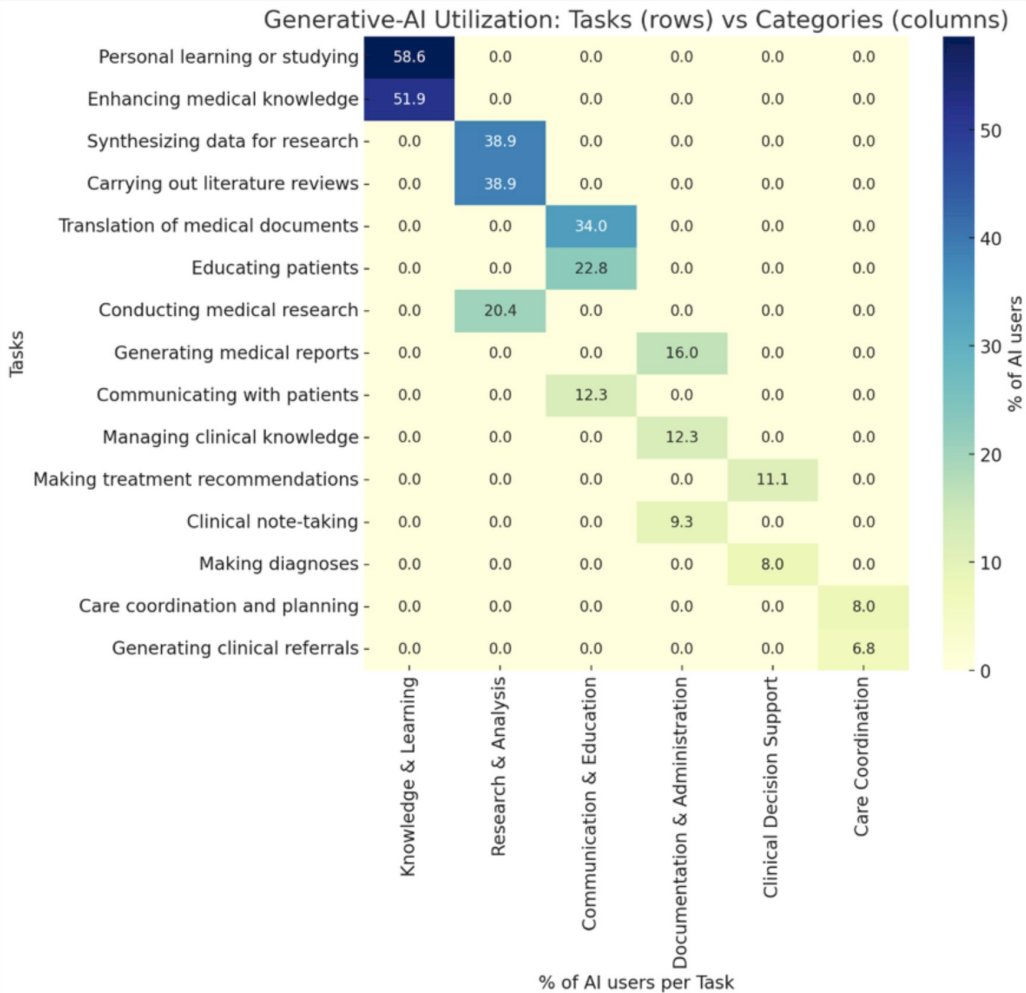
Figure 1
Additionally, Dr. Solano reports that the most common barriers to AI use are insufficient specialized training, technical constraints, and a lack of a reliable and robust evidence base (Figure 2).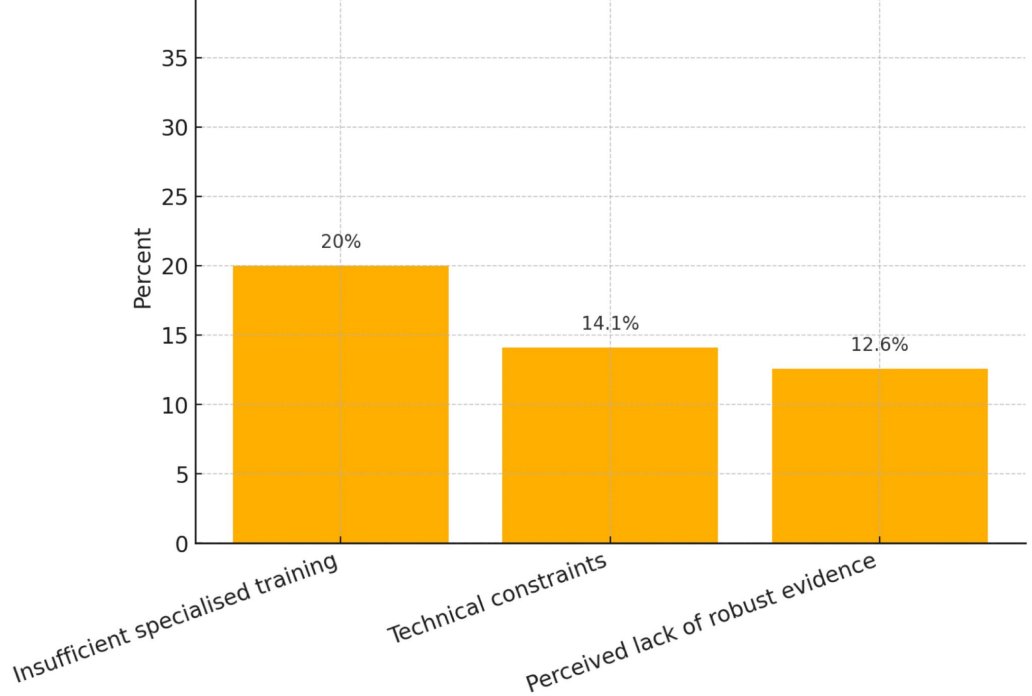
Figure 2
During her concluding remarks, Dr. Solano reiterates that while AI can improve education, research productivity, and clinical workflow, many improvements and concerns remain to be addressed. She suggests that efforts toward bridging this gap will require validity studies, robust ethical guidelines, and structured AI training across pre- and postgraduate education. She concludes her presentation with the assertion that minimizing the risks and maximizing the benefits of adopting generative AI will require both human oversight and regular auditing of AI systems.
During the Question and Answers session, a member of the audience commented that it is critical for these skills to be properly taught and asked what their plans are to ensure this education becomes available. As Dr. Solano has been teaching courses on AI use in clinical practice, including at the WCET, she states that just as surgical skills have courses and workshops, the same must become true for the use of AI tools; however, she also mentions that doing so will require more clinical research and validation to prevent erroneous and detrimental use.
Dr. Robert Sweets, one of two moderators of the session, comments that Dr. Solano’s data will be of great value to those who are developing AI tools and accordingly asks if the study’s demographics are generalizable to the broader community. Dr. Solano states that, unfortunately, because most of their study respondents were from Europe or Latin America, this is not the case. To address these concerns, however, she suggests that those from countries and demographics not well represented in their study should participate in similar studies and surveys to provide a more holistic understanding of the current state of clinical AI use.
Finally, Dr. Yasser Noureldin, the second moderator of the session, asks Dr. Solano if she intends to provide the sort of structured AI training that was previously discussed. She states that in addition to the courses she has been teaching already, she is working in collaboration with the EAU to expand the reach and availability of this education.
Presented by: Catalina Solano, MD; Tenon Hospital, Sorbonne University, Paris, France
Written by: Tom No BA, Department of Urology, University of California Irvine, during the World Congress of Endourology and Uro-Technology (WCET) Annual Meeting, September 8 – September 12, 2025, Phoenix, Arizona.