

(UroToday.com) The Wednesday morning program featured Plenary Session V: Evolving Techniques and Technology, chaired by Monica Farcas, MD, and Kenneth Pace, MD (St. Michael’s Hospital, University of Toronto, Canada), and Bradley Schwartz, DO (Southern Illinois University). This session highlighted topics at the cutting edge of urologic practice, with a particularly compelling lecture delivered by Edwin M. Posadas, MD, FACP, KM.
Dr. Posadas, a board-certified medical oncologist with a dedicated focus on urologic cancers, is co-director of the Cancer Therapeutics Program and Medical Director of the Center for Uro-Oncology Research Excellence at Cedars-Sinai Cancer Center in Los Angeles. His talk, “Current Advances in Liquid Biopsies for Prostate Cancer”, explored how novel biomarkers are reshaping the way advanced prostate cancer is diagnosed, monitored, and potentially treated.
He began by outlining the clinical challenges of advanced prostate cancer. Unlike many other solid tumors, prostate cancer commonly metastasizes to bone, making histopathologic confirmation both difficult and invasive. Serum biomarkers such as PSA remain valuable for diagnosis, but they fall short in reliably tracking disease activity, especially in advanced settings. This creates a need for less invasive, more informative tools, an area where liquid biopsies hold tremendous promise.
To illustrate the concept, Dr. Posadas presented an image showing how metastatic precursors and mediators circulate in the blood, including circulating tumor cells (CTCs), extracellular vesicles (EVs), and circulating tumor DNA (ctDNA) (Figure 1).1

Figure 1. Metastasis precursors and mediators can be found in the circulation.1
Each of these provides a unique window into tumor biology, with ctDNA in particular having gained momentum across urologic oncology, particularly in bladder cancer. Interestingly, in prostate cancer has been a little less useful. However, the American Society of Clinical Oncology (ASCO) recommends its use in metastatic prostate cancer when tissue biopsies are not feasible (Figure 2)2. He also highlighted the PROfound trial (Olaparib vs. control in advanced prostate cancer), which incorporated ctDNA analysis to identify patients with DNA repair gene mutations.3

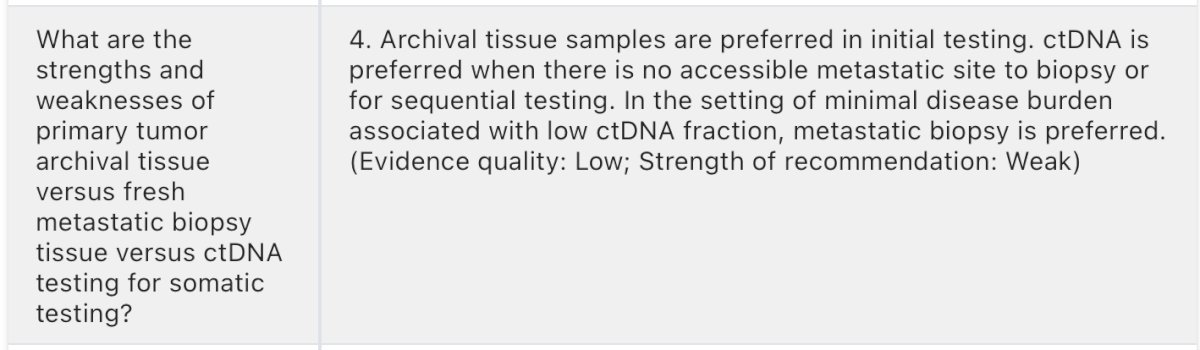
Figure 2. Recommendation for ctDNA testing on metastatic prostate cancer. Extracted from: Germline and Somatic Genomic Testing for Metastatic Prostate Cancer: ASCO Guideline.2
The lecture then turned to novel detection technologies. Dr. Posadas described a nanotechnology platform for isolating CTCs, developed by Dr. Hsian-Rong Tseng (UCLA). This “nanochip” captures CTCs through cell-surface components, enabling downstream molecular analysis. To demonstrate its clinical utility, he shared the case of a patient with localized Gleason 3+4 prostate cancer who progressed to castration-resistant disease with liver metastases. Analysis of CTCs revealed molecular alterations consistent with both the primary prostate tumor and the biopsied metastasis. Such concordance underscores the potential of CTC analysis to serve as a surrogate for tissue sampling. Building on this, the platform has been incorporated into phase III trials (NRG-GU006 and NRG-GU008) to stratify patients and guide treatment allocation.
Despite this progress, CTCs are technically challenging; their rarity and fragility limit widespread application. Dr. Posadas explained that for these reasons, his team is now focusing more heavily on EVs. Compared to CTCs, EVs are more abundant, stable, and detectable even in low-volume disease, making them especially valuable for early disease detection. His group has developed a platform for EV isolation, again using surface proteins, followed by RNA analysis to generate a quantifiable digital scoring assay. These scores vary according to disease stage and change over time, allowing clinicians to monitor progression and treatment response. He shared graphs showing how EV signatures tracked closely with patient outcomes, offering more dynamic information than PSA alone.
The talk then explored the therapeutic potential of liquid biopsy targets. In an era where radioligand therapies, antibody-drug conjugates, and T-cell engagers are expanding prostate cancer treatment, EV-based liquid biopsies may help identify new therapeutic pathways. His team has developed a rapid assay to isolate B7-H3–expressing EVs (Figure 3), showing significantly higher scores in metastatic compared to healthy donors, and higher still in castration-resistant disease compared to castration-sensitive. Importantly, elevated B7-H3 EV scores were associated with worse overall survival (HR 2.19, p=0.01) and outperformed PSA as a marker of disease burden and therapeutic response.4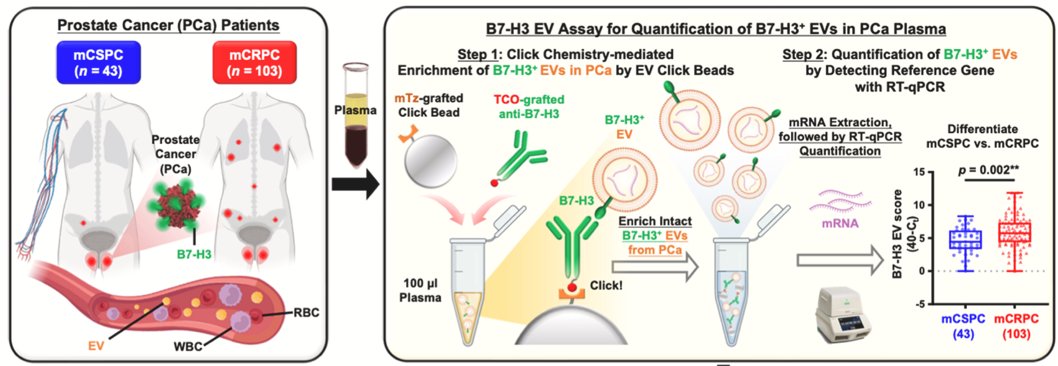
Figure 3. Liquid biopsy: B7-H3 assay for quantification of B7-H3+ EVs in prostate cancer plasma.
Another promising liquid biopsy target is STEAP1 (Six-Transmembrane Epithelial Antigen of Prostate 1), a surface protein upregulated in castration-resistant disease and associated with tumor progression. EV-based STEAP1 assays add another layer to liquid biopsy–guided disease stratification.
In concluding his lecture, Dr. Posadas offered four key principles:
- Patient-centered translational research remains essential to guide discovery and the development of clinically relevant technologies.
- Liquid biopsies provide unique opportunities to study dynamic tumor biology in real time.
- EV-based assays can serve as a powerful adjunct to molecular imaging and other technologies, helping to further personalize prostate cancer management.
- Multidisciplinary collaboration bringing together clinicians, engineers, computational biologists, and basic scientists is crucial to moving closer to curing prostate cancer.
This lecture highlighted the extraordinary complexity and rapid evolution of prostate cancer research. With liquid biopsies now moving from concept to clinic, they are poised to transform not only how prostate cancer is diagnosed and monitored, but also how patients are treated in a truly personalized manner.
Presented by: Edwin M. Posadas, MD, FACP, KM. Co-director of the Cancer Therapeutics Program and the Medical Director of the Center for Uro-Oncology Research Excellence at Cedars Sinai Cancer Center. Los Angeles, California.
Written by: Jonathan Badin-Castro, MD. Endourology and Minimally Invasive Surgery Fellow, University of California, Irvine. @JonBadin on Twitter during the 2025 World Congress of Endourology and Uro-Technology: September 8 – 12, 2025. Phoenix, Arizona.
References:- Posadas EM. Current Advances in Liquid Biopsies for Prostate Cancer. Presented at 2025 World Congress of Endourology and Uro-Technology: September 8 – 12, 2025. Phoenix, Arizona.
- Evan Y. Yu et al. Germline and Somatic Genomic Testing for Metastatic Prostate Cancer: ASCO Guideline. JCO 43, 748-758(2025). DOI:10.1200/JCO-24-02608.
- De Bonno J, Mateo J, et al. Olaparib for Metastatic Castration-Resistant Prostate Cancer. N Engl J Med 2020;382:2091-2102. DOI: 10.1056/NEJMoa1911440.
- Ju Y, Watson J, et al. B7-H3-liquid biopsy for the characterization and monitoring of the dynamic biology of prostate cancer. Drug Resistance Updates 79 (2025) 101207. https://doi.org/10.1016/j.drup.2025.101207.