

(UroToday.com) Among the highlights of Day 2 of WCET 2025 was the Plenary session “Exploring New Frontiers in Urology”, which opened with the state-of-the-art lecture from Dr. Kait F. Al, microbiology and immunology postdoctoral research fellow at the Lawson Research Institute and the Canadian Centre for Human Microbiome and Probiotic Research, under the leadership of Dr. Jeremy Burton (Western University, Canada). Her lecture “The Evolving World of the Microbiome” explored an amazing world that has gained importance in urology, showing the potential benefits of microorganisms in the urinary tract, which was historically believed to be sterile for many decades.
She started the lecture by giving an important statement about the definition of “microbiome”. This is not only the harmless bacteria that inhabit within our system but is the conjunction of all the microbes present (bacteria, viruses, fungi, etc.), their genomic material, and their products and components that are present in a niche. She mentioned that, thanks to the Human Microbiome Project (HMP), we were able to recognize the presence of microbes in every anatomical area within the human body. However, the historical misconception that the urinary tract was sterile dates back to 1881 (Figure 1), where an article showed the absence of microorganisms in urine. Nevertheless, more than a century later, in 2010, the first publications of sequencing studies demonstrating the presence of microbiome within the urinary tract came to light and revived the interest in it. This opened the doors to thinking about the angular role that the urinary microbiome could have on numerous health and disease conditions. Dr. Al presented evidence linking the urinary microbiome to several conditions: urinary incontinence, neurogenic bladder, bladder cancer, recurrent urinary tract infections, chronic kidney disease, bacterial vaginosis, kidney transplant rejection, and nephrolithiasis.

Figure 1.1
After this introduction, she examined what constitutes a healthy or normal urinary microbiome, noting its smaller biomass and lower diversity compared to the gut. Importantly, microbial populations differ significantly between sexes: in women, the urinary microbiome reflects the vaginal community, dominated by lactobacilli, bifidobacteria, Gardnerella, and Streptococcus; in men, it resembles skin flora, with Corynebacterium, Staphylococcus, and Streptococcus predominating. Unlike the gut microbiome, where diet and social interaction shape similarities, the urinary microbiome shows striking interindividual variability (Figure 2).
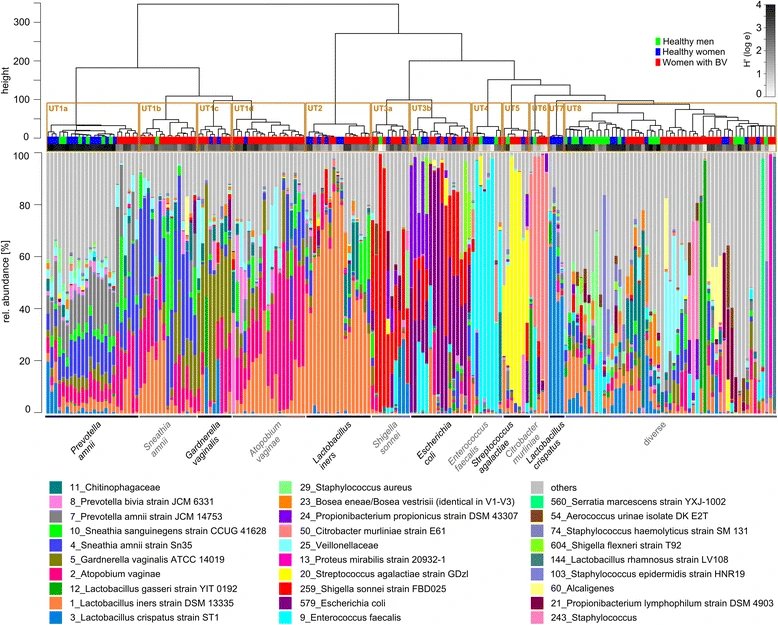
Figure 2.2
Despite this variability, lactobacilli appear broadly beneficial, particularly in women. Low levels of Lactobacillus crispatus are associated with increased risk of bacterial vaginosis, urinary tract infections, incontinence, and bladder pain syndrome. Dr. Al emphasized the “vagina–bladder axis”, whereby microbial communities can be shared between the two niches. This connection has fueled research into lactobacilli-based probiotics. While promising, results vary depending on bacterial strain, formulation, and delivery method.
Turning to stone disease, Dr. Al revisited the long-recognized role of Oxalobacter formigenes, which reduces calcium oxalate stone risk by promoting oxalate secretion and lowering serum and urinary oxalate. However, she noted that stone risk is shaped by a broader gut microbial network, with metabolites such as butyrate (maintaining gut barrier integrity) and vitamins B and K playing critical roles in oxalate and calcium metabolism. Within the urinary tract, lactobacilli appear protective, while pathogens such as E. coli promote calcium oxalate crystal growth and aggregation. She also highlighted that disruptions of the microbiome, caused by antibiotics, xenobiotics, heavy metals, or pesticides, are linked to higher stone risk.
Next, she addressed the microbiome in urologic oncology, one of the hottest areas of investigation. Here, she described two distinct relevant microbiomes: the local microbiome that is present within the tumor environment, and the distant microbiome, such as the oral and gut communities. These are known to interact and influence tumor biology by producing bioactive metabolites, enhancing the immune response, and modifying the treatment response through the interaction between the drugs and the microbes.
To wrap up the talk, she discussed preventive and therapeutic strategies. One option is utilizing probiotics (live microbes), prebiotics (food for the microbes), and postbiotics (products they produce). She reiterated that the evidence has been heterogeneous, but some recent studies have shown great results, increasing the hope for it. Another therapeutic option is phage therapy, which has been around for several decades but was not considered until recent years, where it has been revisited as a targeted therapy for urinary tract infections. The last therapeutic option is the fecal microbe transplant delivered through odorless capsules, which has shown success in restoring gut communities. She noted the emerging concept of urinary microbiome transplantation, already tested in animal studies, inspired by the success of vaginal microbiome transplants in fertility.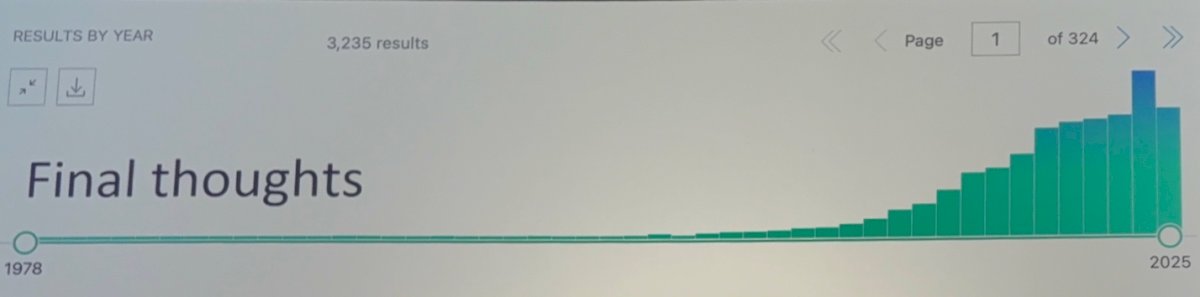
Figure 3.
To conclude, Dr. Al displayed an impressive graph illustrating the exponential rise in publications on the urinary microbiome (Figure 3). The field has rapidly moved from descriptive characterization to studies on mechanisms of action, now opening the door to interventional trials, microbiome modulation, and novel therapies.=
Her take-home message was clear: maintaining a healthy urinary microbiome requires a microbiome-friendly diet (rich in fermented foods, fiber, and polyphenols) and responsible antibiotic stewardship.
Presented by: Kait F. Al, PhD, Microbiology and Immunology postdoctoral research fellow at the Lawson Research Institute and the Canadian Centre for Human Microbiome and Probiotic Research. Western University, Canada.
Written by: Jonathan Badin-Castro, MD. Endourology and Minimally Invasive Surgery Fellow, University of California, Irvine. @JonBadin on Twitter during the 2025 World Congress of Endourology and Uro-Technology: September 8 – 12, 2025. Phoenix, Arizona.
References:- Roberts W. On the Occurrence of Micro-Organisms in Fresh Urine. Br Med J. 1881 Oct 15;2(1085):623-5. doi: 10.1136/bmj.2.1085.623. PMID: 20750001; PMCID: PMC2263882.
- Gottschick, C., Deng, ZL., Vital, M. et al. The urinary microbiota of men and women and its changes in women during bacterial vaginosis and antibiotic treatment. Microbiome 5, 99 (2017). https://doi.org/10.1186/s40168-017-0305-3