

(UroToday.com) The 2026 SNMMI annual meeting featured a genitourinary radiotherapeutics session and a presentation by Dr. Kwan Kit Wu discussing baseline PSMA PET tumor volume predicting overall survival with 177Lu-PSMA-I&T in metastatic castration resistant prostate cancer (mCRPC) patients. Large-scale clinical trial data on 177Lu-PSMA have proven value in improving overall survival in mCRPC. Moving beyond population-level statistics to the core of clinical precision medicine, although "individualized survival" is not a standard endpoint in clinical trials, it is a conceptual goal of multi-parameter models such as nomograms and predictive scores of individual centers to predict survival benefit for individual patients. Previously, Dr. Wu and colleagues established that baseline tumor volume independently predicted treatment outcome after 177Lu-PSMA therapy. The selected threshold of baseline tumor volume was <196 mL, which predicted complete response, partial response, and stable disease, with an AUC of 0.989 (p < 0.001). In the current study, Dr. Wu specifically evaluated the value of baseline PSMA PET tumor volume in predicting long-term overall survival in mCRPC patients after 177Lu-PSMA-I&T treatment.
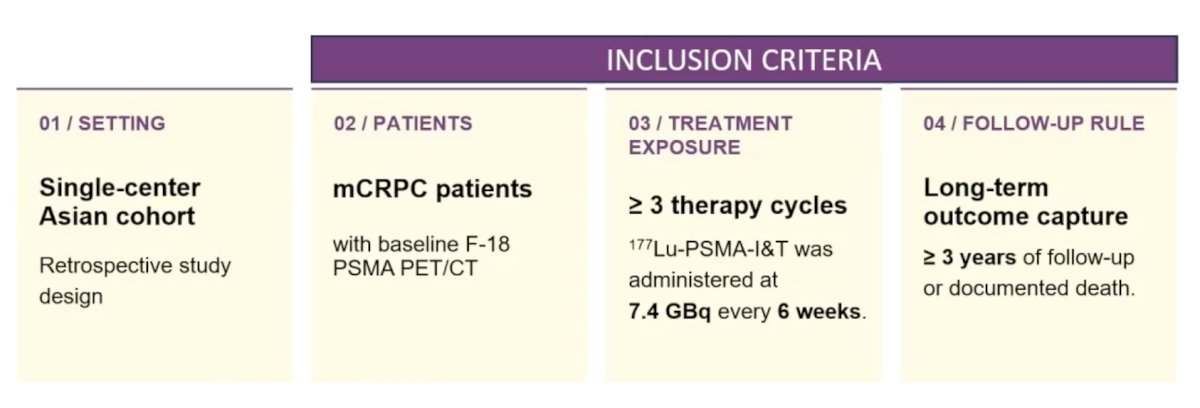
This single-center Asian retrospective study included mCRPC patients receiving ≥3 cycles of 177Lu-PSMA-I&T (7.4 GBq every 6 weeks) with baseline 18F-PSMA PET/CT and ≥3 years of follow-up or death. Overall survival was measured from baseline PSMA PET/CT. PSMA-avid lesions were identified, and dedicated software quantified whole-body baseline PSMA PET tumor volume automatically:
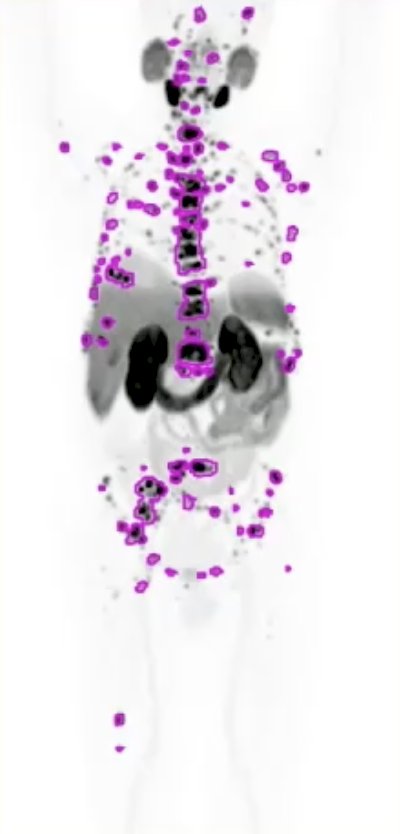
Kaplan–Meier and Cox models assessed associations between baseline PSMA PET tumor volume and overall survival. ROC analysis explored optimal baseline PSMA PET tumor volume cut-offs for 2- and 3-year overall survival.
There were 55 patients (mean age: 71.0 ± 8.8 years) who were enrolled. In the overall cohort, 2- and 3-year overall survival rates were 60% (33/55) and 45% (25/55). There were 36 patients with baseline PSMA PET tumor volume <196 mL and 19 patients with baseline PSMA PET tumor volume ≥196 mL:
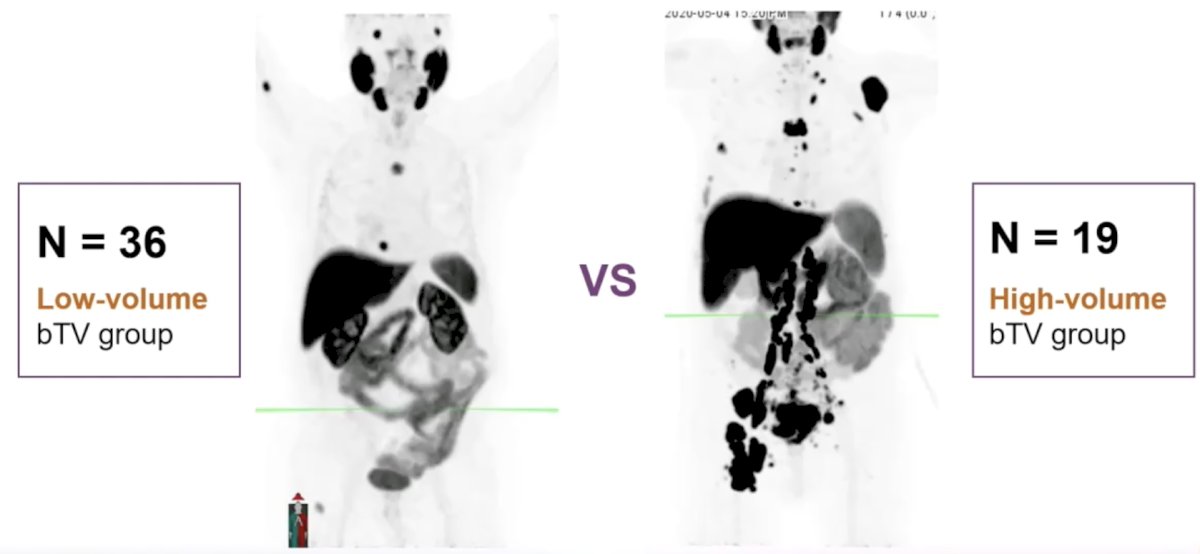
For the low-volume tumor group, the 2-year overall survival rate was 86% and 3-year overall survival rate was 69%; for the high tumor volume group, the 2-year overall survival rate was 10.5% and the 3-year overall survival rate was 0%:
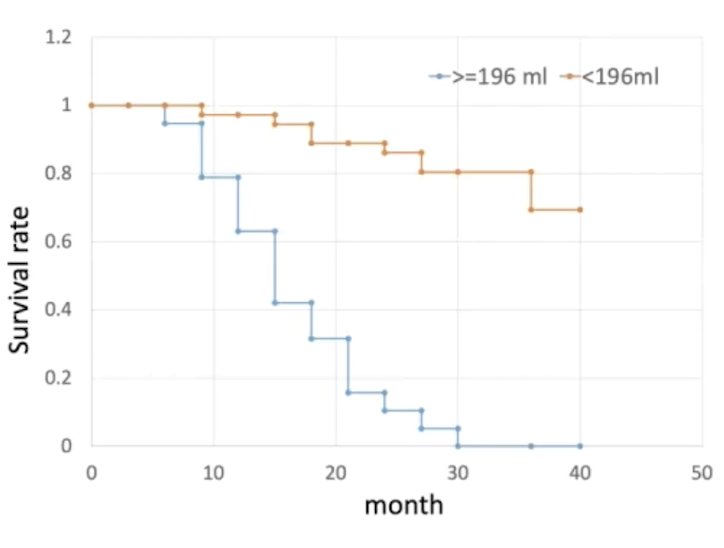
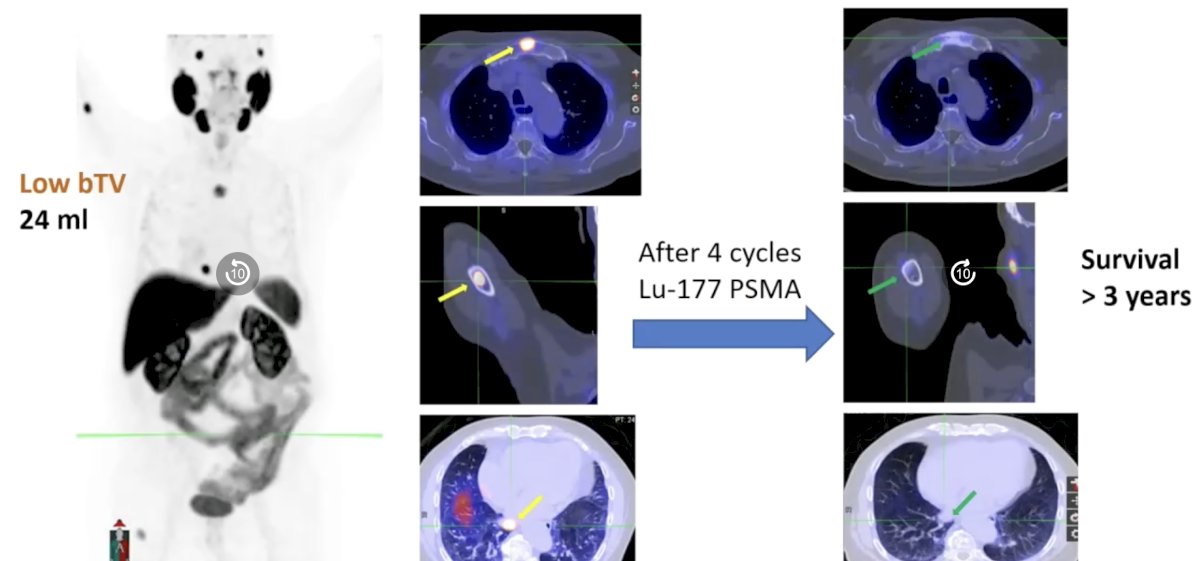
On multivariable Cox analysis, only baseline PSMA PET tumor volume remained independently associated with overall survival; SUVmean and metastatic distribution were not significant. The original 196 mL threshold separated survival groups, while ROC analysis identified baseline PSMA PET tumor volume <165 mL and <116 mL as optimal cut-offs for predicting 2- and 3-year overall survival (AUC 0.96 and 0.95). Dr. Wu presented a case of low baseline tumor volume predicting good treatment response and survival: the patient had a baseline tumor volume of 24 mL, received 4 cycles of 177Lu-PSMA-I&T, and the patient lived for > 3 years:
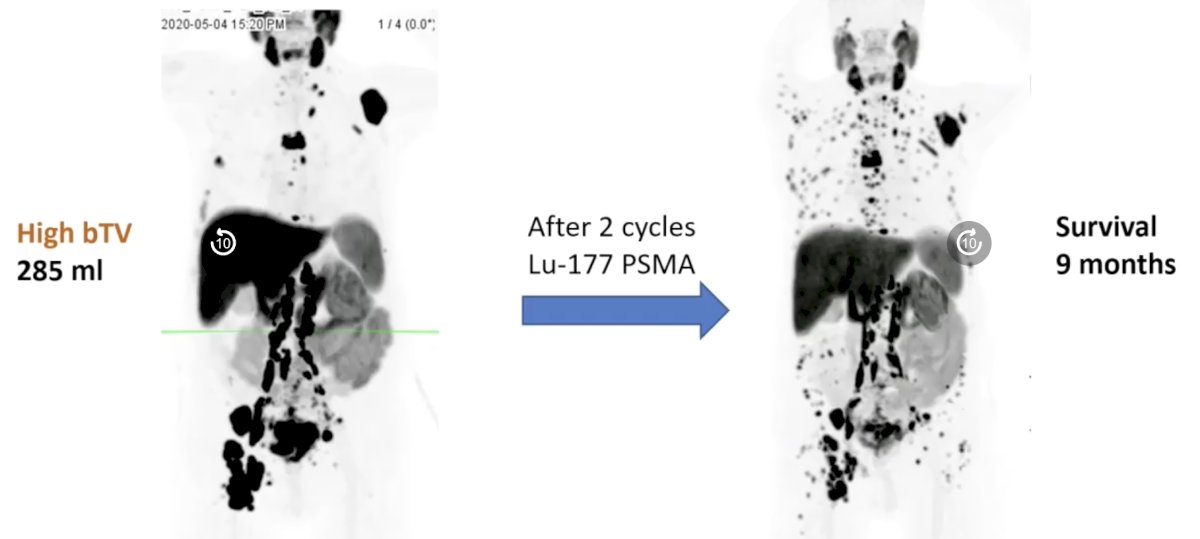
A second case of a patient with high baseline tumor volume (285 mL) had 2 cycles of 177Lu-PSMA-I&T and only survived 9 months:
Dr. Wu concluded this presentation discussing baseline PSMA PET tumor volume predicting overall survival with 177Lu-PSMA-I&T in mCRPC patients with the following take-home points:
- Baseline PSMA PET tumor volume is a robust, independent predictor of long-term overall survival in individual mCRPC patients receiving ≥3 cycles of 177Lu-PSMA-I&T
- Integrating baseline PSMA PET tumor volume as a rigorous selection criterion with baseline PSMA PET tumor volume <165 mL may potentially improve therapeutic efficacy and optimize personalized overall survival benefit
- This may represent a paradigm shift from SUV to tumor volume, given that selection criteria are heavily focused on PSMA uptake intensity
- The high tumor burden group may be offered a more aggressive combination of treatment or an alternative treatment
Presented by: Kwan Kit Wu, MBChB (CUHK), FHKCR, FHKAM (Radiology), Hong Kong Sanatorium & Hospital, Hong Kong
Written by: Zachary Klaassen, MD, MSc – Urologic Oncologist, Associate Professor of Urology, Georgia Cancer Center, Wellstar MCG Health, @zklaassen_md on Twitter during the Society of Nuclear Medicine and Molecular Imaging (SNMMI) 2026 Annual Meeting, Los Angeles, CA, Sat, May 30 – Tues, Jun 2, 2026.