

(UroToday.com) The 2026 SNMMI annual meeting featured a clinical diagnosis and therapy session and a presentation by Dr. Bryce Tan discussing a study assessing the efficacy of immunological priming of 177Lu-PSMA-617 in metastatic castration resistant prostate cancer (mCRPC). Preclinical evidence suggests that radiopharmaceutical therapy may elicit anti-tumor immune responses, and there may be synergistic benefits from combination of radiopharmaceutical therapy and immune therapies. However, the clinical relevance of these effects on patients treated with 177Lu-PSMA-617 in the mCRPC setting remains unclear. While a prior study has explored combining immune checkpoint inhibitors with 177Lu-PSMA-617, little is known about immunological priming before 177Lu-PSMA-617 therapy. As such, Dr. Tan and colleagues hypothesized that mCRPC patients previously vaccinated against prostate cancer-specific antigens may exhibit improved clinical responses to 177Lu-PSMA-617.
This was a retrospective cohort study of 109 mCRPC patients treated with standard of care 177Lu-PSMA-617 from January 1, 2022 to January 23, 2025 at the University of Wisconsin Carbone Cancer Center. An additional 17 mCRPC patients who received at least one line of ADT and one line of taxane-based chemotherapy, had PSMA-avid disease on PSMA PET/CT imaging, and received another line of therapy as standard of care, were included as controls. Subjects were followed up through June 1, 2025, with a median follow-up time of 11.6 (95% CI 10.2 to 15.2) months.
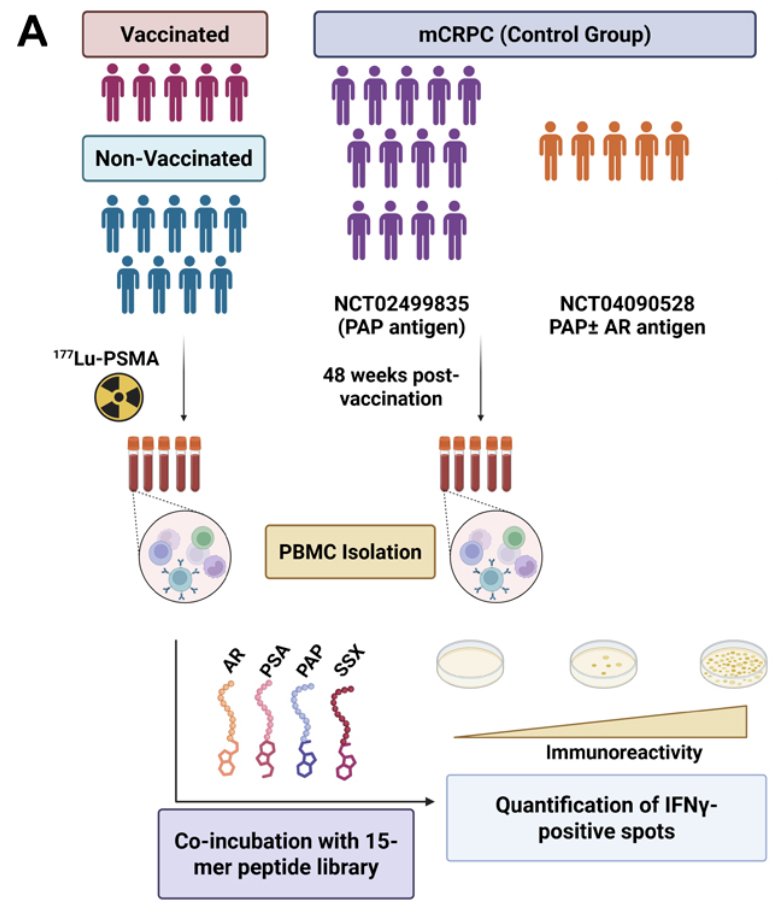
Among the 177Lu-PSMA-617 group, 19 patients received prior vaccination in clinical trials targeting prostatic acid phosphatase (NCT00582140, NCT01341652, NCT02499835, NCT03600350), or in combination with the antigen (NCT04090528). Clinical outcomes after 177Lu-PSMA-617 therapy included PSA50 response (≥50% decline in PSA) and overall survival. Survival differences among vaccinated 177Lu-PSMA-617 patients, non-vaccinated 177Lu-PSMA-617 patients, and standard of care patients were assessed using log-rank tests and multivariable Cox regression. To understand the effect of 177Lu-PSMA-617 and vaccination on peripheral T cell antigen immunoreactivity towards common prostate cancer antigens (androgen receptor, prostatic acid phosphatase, PSA, and synovial sarcoma X breakpoint 2), a functional immunological exploratory analysis was performed using IFNγ ELISPOT on peripheral blood T cells from 5 mCRPC patients with prior vaccination and 9 non-vaccinated patients following 177Lu-PSMA-617. Peripheral blood T cells obtained from 18 mCRPC patients at 48 weeks post-vaccination against prostatic acid phosphatase or androgen receptor antigens (NCT04090528, NCT02499835) were used as controls:
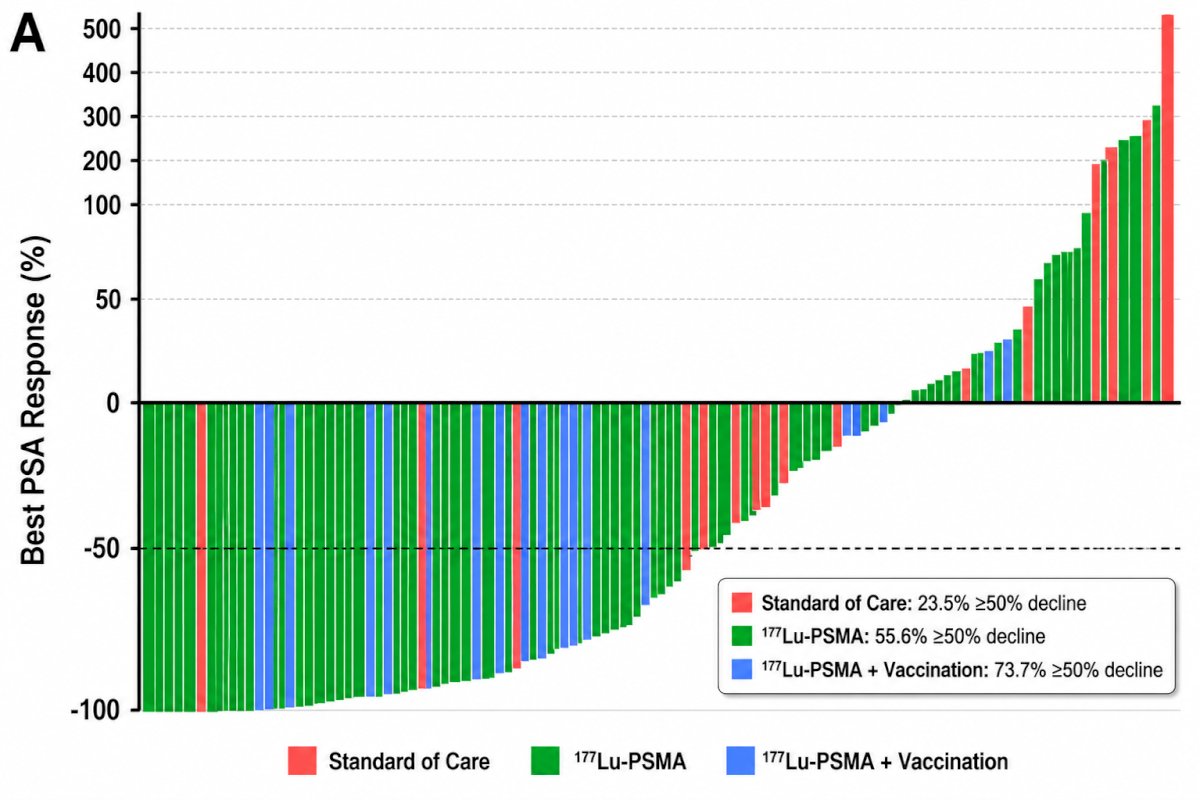
Both vaccinated and non-vaccinated mCRPC patients received a median of 4 cycles of 177Lu-PSMA-617, with no difference in cumulative dose between vaccinated patients (804 ± 356 mCi) and non-vaccinated patients (863 ± 370 mCi, p = 0.530). Vaccinated patients receiving 177Lu-PSMA-617 achieved higher PSA50 rates (73.7%) compared to non-vaccinated patients (55.6%) and standard of care patients (23.5%):
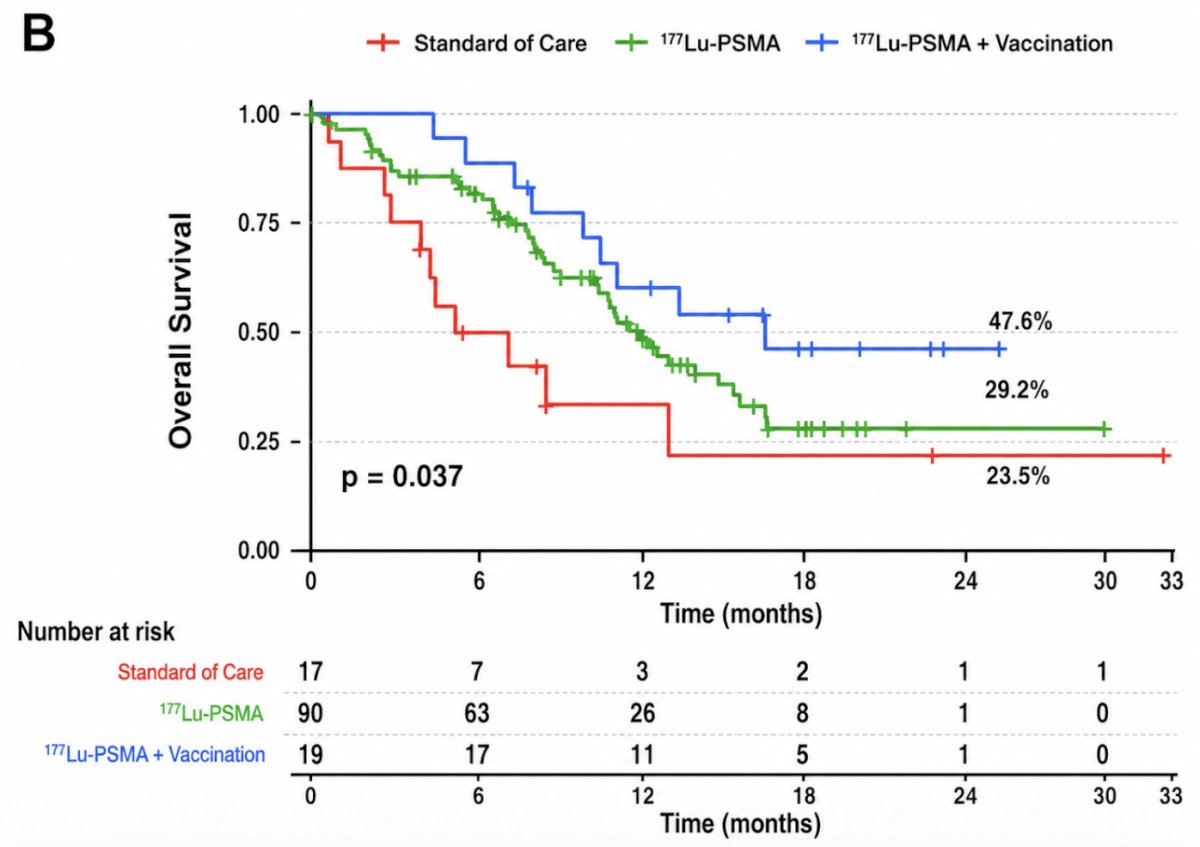
Two-year overall survival was significantly greater in vaccinated patients (47.6%; log-rank p = 0.037) versus non-vaccinated patients receiving 177Lu-PSMA-617 (29.2%) and patients who received standard of care (23.5%):
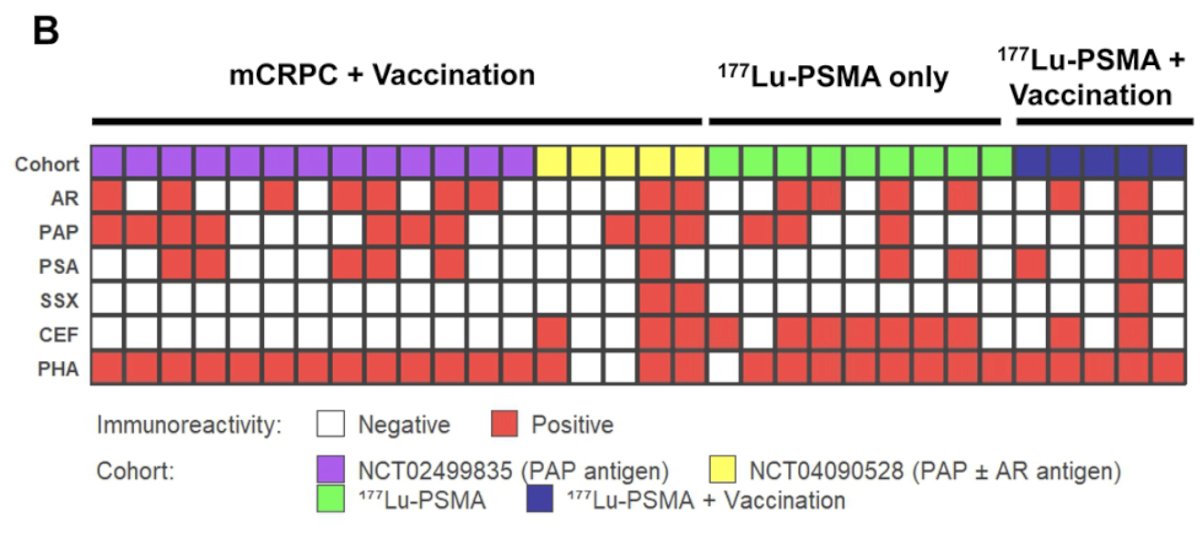
After adjustment for age, M1 disease stage at diagnosis, chemotherapy and ADT lines prior to 177Lu-PSMA-617, prior radiotherapy, and time to castration resistance, prior vaccination was associated with higher PSA50 (OR 7.4, 95% CI 1.5–42.5, p = 0.010) and improved overall survival (HR 0.3, 95% CI 0.1–0.8, p = 0.013). In the immunological exploratory analysis, a majority of vaccinated (4/5) and non-vaccinated (5/9) patients who received 177Lu-PSMA-617, and mCRPC patients who received prior vaccination only (13/18), had peripheral blood T cell response to prostate cancer antigens:
Dr. Tan concluded his presentation discussing a study assessing the efficacy of immunological priming of 177Lu-PSMA-617 in mCRPC with the following take home points:
- Prior vaccination against prostate cancer antigens may enhance the clinical efficacy of 177Lu-PSMA-617 therapy in mCRPC, without impairing prostate antigen-specific T cell response
- Prospective studies on the combination therapy of vaccinations and 177Lu-PSMA-617 are warranted
Presented by: Bryce Tan, Singapore General Hospital, Singapore
Written by: Zachary Klaassen, MD, MSc – Urologic Oncologist, Associate Professor of Urology, Georgia Cancer Center, Wellstar MCG Health, @zklaassen_md on Twitter during the Society of Nuclear Medicine and Molecular Imaging (SNMMI) 2026 Annual Meeting, Los Angeles, CA, Sat, May 30 – Tues, Jun 2, 2026.