

(UroToday.com) The 2026 SESAUA annual meeting featured an upper tract urothelial carcinoma session and presentation by Dr. Marc Bjurlin discussing baseline characteristics of patients from the uTRACT registry of UGN-101 treatment. Upper tract urothelial carcinoma affects 1-2 in 100,000 people in the United States annually. Endoscopically guided ablation is often used to treat low grade upper tract urothelial carcinoma; however, recurrence is common and long term surveillance is often associated with complications. UGN-101 is a reverse thermal hydrogel formulation of mitomycin for pyelocalyceal solution, FDA approved (April 2020), for chemoablative treatment of low grade upper tract urothelial carcinoma. In the phase 3 Olympus trial,1 UGN-101 was used as primary treatment of low grade upper tract urothelial carcinoma and resulted in clinically significant disease eradication and is associated with favorable long-term durability. The ongoing uTRACT registry is evaluating the real-world use of UGN-101. At the 2026 SESAUA annual meeting, Dr. Bjurlin presented baseline characteristics of the currently enrolled participants.
The uTRACT registry (NCT05874921) is a single-arm, multicenter study, with retrospective and prospective data capture. Approximately 400 participants age >18 years with upper tract urothelial carcinoma who received UGN-101 post-FDA approval (April 15, 2020), will be enrolled:
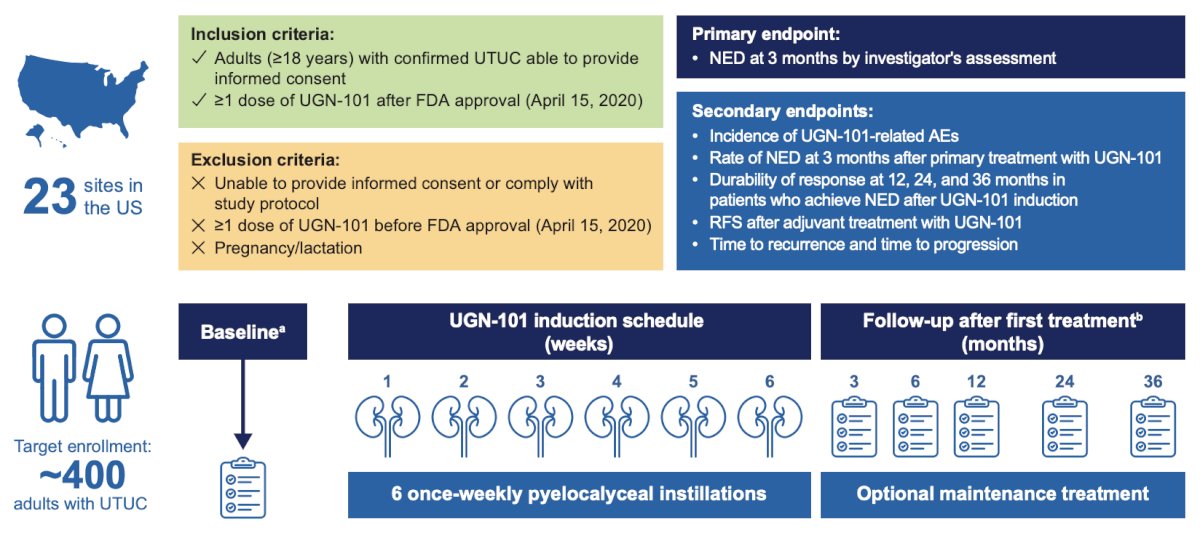
UGN-101 is administered as 6 once-weekly pyelocalyceal instillations (not exceeding 15 mL [60 mg mitomycin]) retrograde via ureteral catheter or antegrade via a nephrostomy tube. Participants with a complete response 3 months post-first dose may receive once-monthly maintenance instillations (maximum 11 additional doses). Participant history and disease status were collected, and an endoscopic evaluation was performed, at baseline (prior to UGN-101 dosing). Additionally, participants are followed up at 3, 6, 12, 24, and 36 months after the first UGN-101 instillation for status update and disease surveillance. The primary objective is to evaluate the tumor ablative effect of UGN-101, and secondary objectives include (i) assessing the safety of and evaluate the response to UGN-101, and (ii) evaluating the effectiveness and safety of UGN-101 in subgroups of clinical interest. An exploratory objective is to assess the impact of UGN-101 on long term outcomes and on bladder cancer.
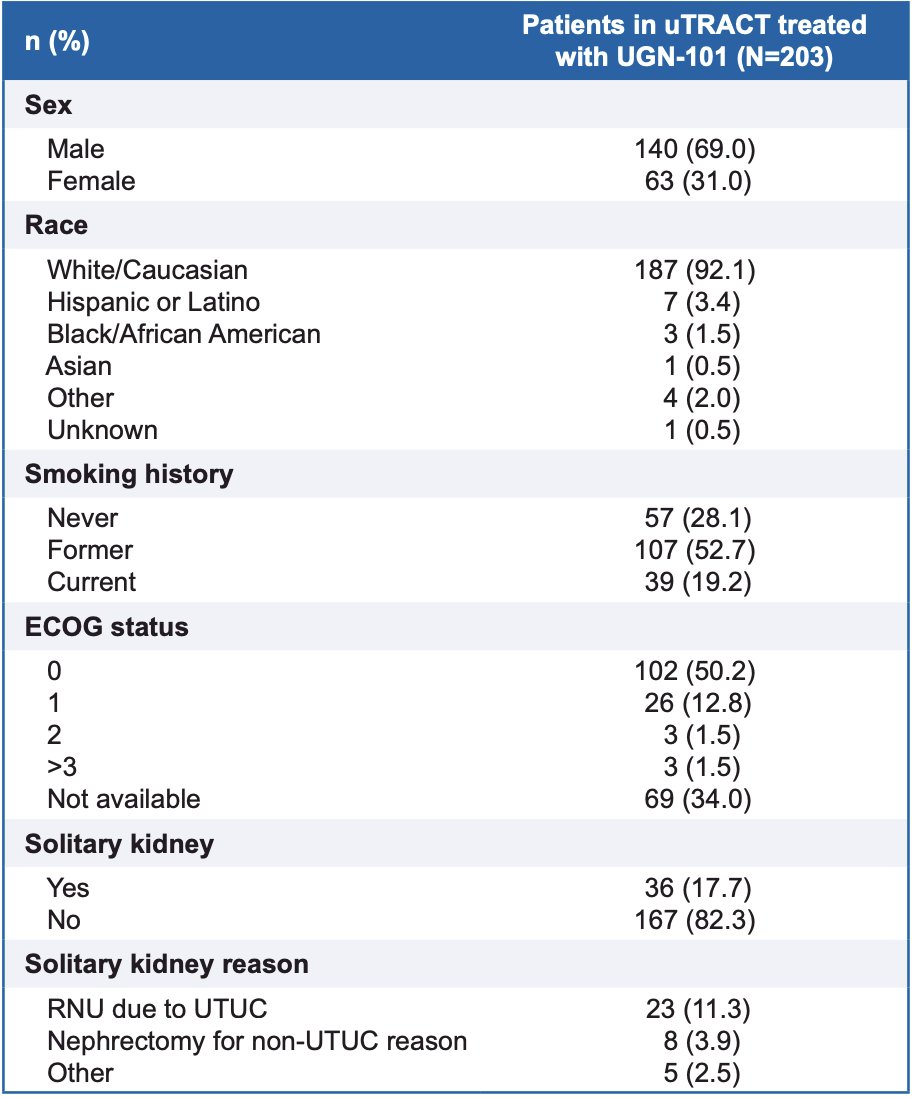
As of December 9, 2025, 203 participants (211 treated renal units) from 20 sites in the uTRACT registry analysis that received at least 1 dose of UGN-101. Most treated participants were male (69.0%), White/Caucasian (92.1%), and most treated participants (50.2%) had an ECOG performance status of 0:
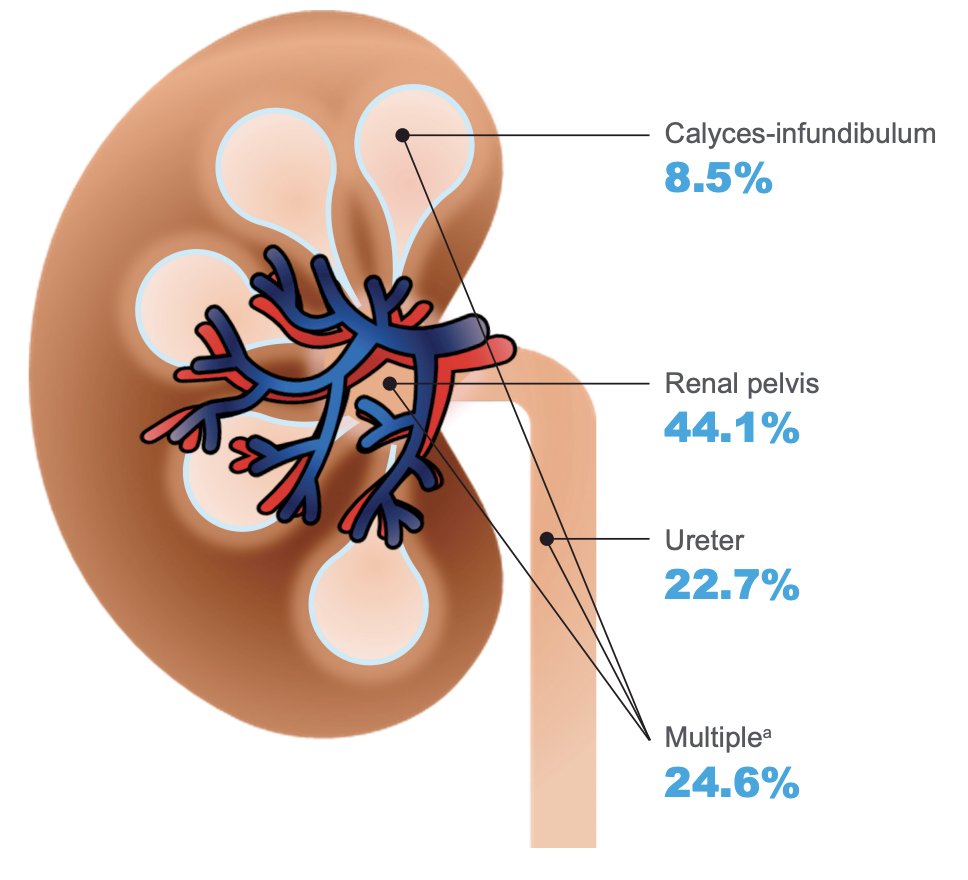
UGN-101 was administered retrograde in 43.6% and antegrade in 54.0% of participants. Left and right sided treated renal units were evenly distributed (50.2% versus 49.8%, respectively). The renal pelvis was the most frequent tumor location (44.1%):
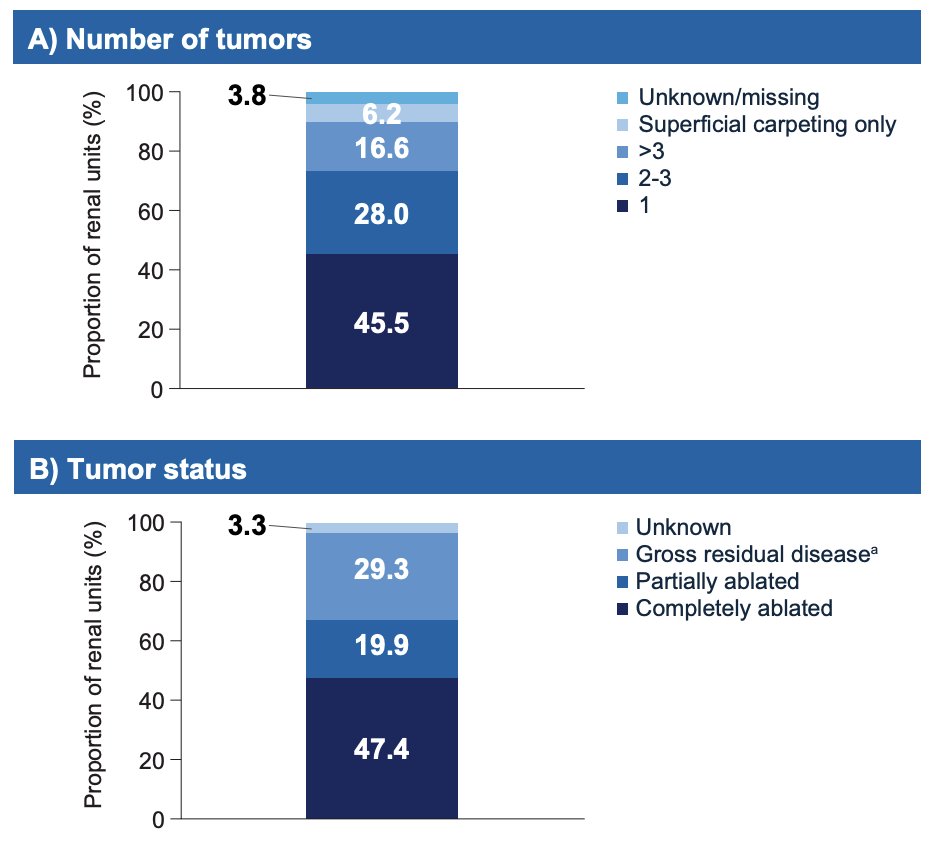
Overall, 49.0% of tumors were unifocal tumor at baseline, with most patients (67.3%) having either complete or partial ablation ahead of UGN-101 induction:
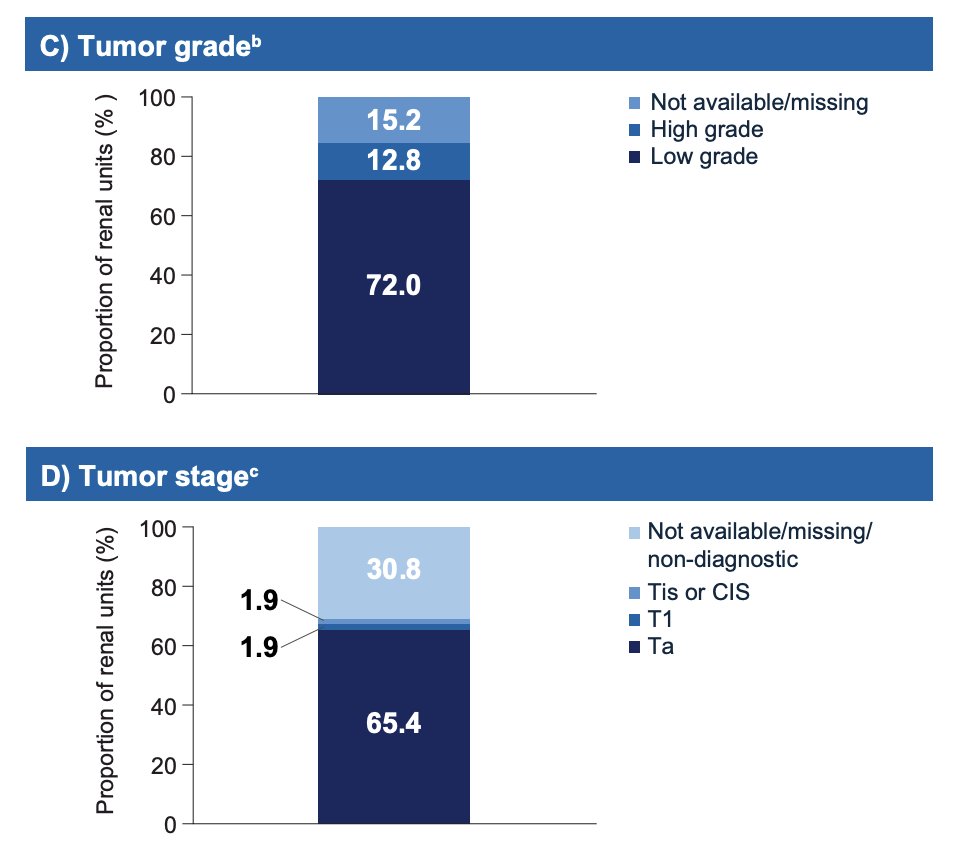
Low-grade and high-grade disease was present in 72.0% and 12.8% of collected biopsies, respectively. With regards to tumor stage, 65.4% were Ta, 1.9% were T1, and 1.9% were CIS:
Dr. Bjurlin concluded his presentation discussing baseline characteristics of patients from the uTRACT registry of UGN-101 treatment with the following take-home points:
- The uTRACT registry includes a more heterogeneous population with different disease criteria than the OLYMPUS phase 3 trial [1]
- In addition, the registry requirements of ablation and residual tumor size, and location are less restrictive than the Olympus phase 3 trial
- Specifically, the uTRACT registry includes patients with high grade disease and antegrade administration of UGN-101
- Data from the uTRACT registry will provide insights into the real world effectiveness of UGN-101
Presented by: Marc A. Bjurlin, DO, MSc, FACOS, University of North Carolina, Chapel Hill, NC
Written by: Zachary Klaassen, MD, MSc – Urologic Oncologist, Associate Professor of Urology, Georgia Cancer Center, Wellstar MCG Health, @zklaassen_md on Twitter during the 2026 Southeastern Section of the American Urological Association (SESAUA) Annual Meeting, San Juan, PR, Wed, Mar 18 – Sat, Mar 21, 2026.
References: