

(UroToday.com) The 2026 SESAUA annual meeting featured a bladder cancer session and presentation by Dr. Veerain Gupta discussing patient time toxicity from management options for non-muscle invasive bladder cancer. Bladder cancer is the most expensive malignancy in the US on a per-patient basis, and these costs tend to be higher for patients with non-muscle invasive bladder cancer.
Frequent healthcare interactions contribute to this economic burden, yet little is known about the financial harm to patients, and even less is known about the time spent interacting with the healthcare system. Time toxicity is an emerging patient-centered measure that captures indirect costs from cancer treatments. At the SESAUA 2026 annual meeting, Dr. Gupta and colleagues evaluated the time toxicity associated with common non-muscle invasive bladder cancer treatments.
The investigators queried the SEER-Medicare linked database from January 2010 - December 2019 to identify beneficiaries aged 65 and older diagnosed with non-muscle invasive bladder cancer. The primary outcome was healthcare contact days, defined as the number of days spent interacting with the healthcare system during the 365 days after initial diagnosis. Patients were stratified by first-line treatment for non-muscle invasive bladder cancer. Adjustments included for age, sex, race, income, region, tumor stage, and tumor grade.
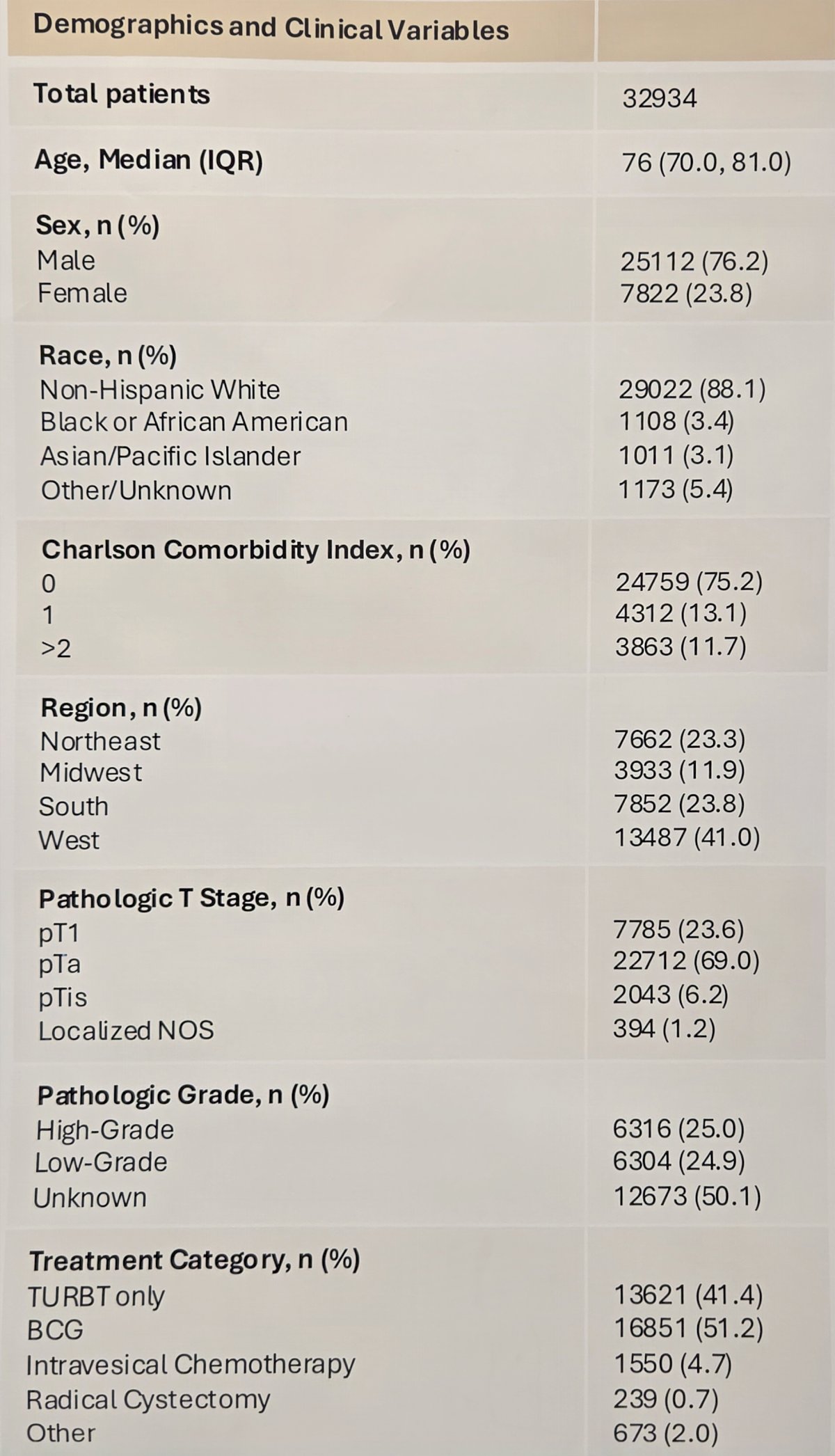
This study identified 32,934 patients for inclusion, of which 16,851 (51.2%) received BCG, 1,550 (4.7%) intravesical chemotherapy, 239 (0.7%) received radical cystectomy with urinary diversion, and 13,621 (41.4%) received no further treatment after TURBT:
The median healthcare contact days were 16 (IQR 10, 26). By treatment, the median healthcare contact days were 15 (IQR 9, 24) for TURBT alone, 17 (IQR 10, 26) for BCG, 19 (IQR 10, 33) for intravesical chemotherapy, and 34 (IQR 24, 51) for radical cystectomy: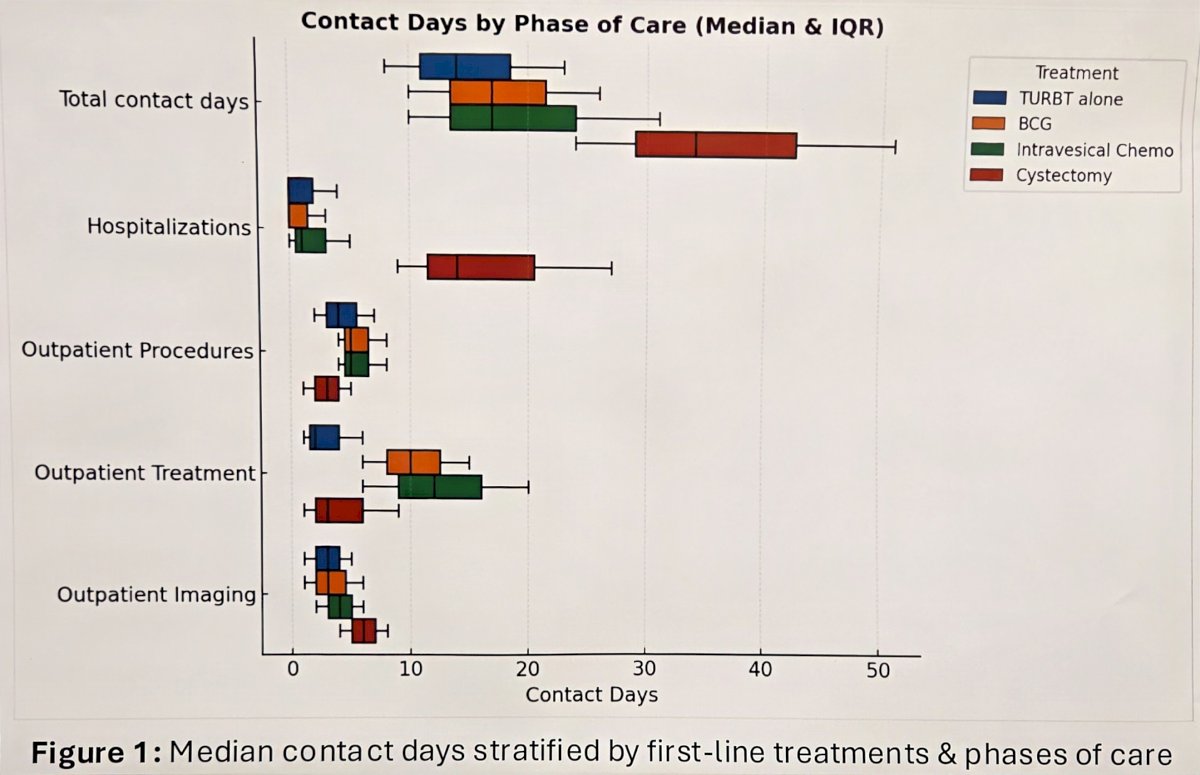
On multivariable regression, BCG treatment, cystectomy, and intravesical chemotherapy were associated with an additional increase of 0.52 (p = 0.026), 20.3 (p < 0.001), and 4.6 contact days (p < 0.001) compared to TURBT alone, respectively. Across treatments, low-income subsidy recipients were associated with 5.5 additional contact days (p < 0.001) relative to the reference category.
Dr. Gupta concluded his presentation discussing patient time toxicity from management options for non-muscle invasive bladder cancer with the following take-home points:
- Among Medicare beneficiaries with non-muscle invasive bladder cancer, time toxicity was highest for patients receiving cystectomy and intravesical treatments when compared to TURBT alone
- Overall, cystectomy had higher time toxicity than intravesical treatments
- Intravesical chemotherapy also had more toxicity than BCG treatments
- This study is novel in exploring time toxicity as a marker of indirect burden on patients with non-muscle invasive bladder cancer, and these findings could help inform shared decision-making in areas where clinical equipoise exists
Presented by: Veerain Gupta, MD, Vanderbilt University Medical Center, Nashville, TN