

(UroToday.com) The 2025 SESAUA annual meeting featured a prostate cancer session and a presentation by Dr. Jamie Thomas discussing results from the MAST trial assessing the validation of PAM50 for predicting progression in active surveillance. Active surveillance is now a prevalent approach for managing men with low to favorable intermediate-risk prostate cancer. While prostate cancer-related mortality and metastasis are generally low in this group, some patients may experience progression that requires intervention.
Enhancing tools for predicting cancer progression could facilitate more personalized and timely treatment decisions. In this study, Dr. Thomas and colleagues evaluated the PAM50 molecular classification profile to improve the prediction of cancer progression in men undergoing active surveillance for prostate cancer. PAM50 is a molecular classifier originally developed for breast cancer and is used in breast cancer risk stratification. Due to the similar epithelial origins, this can be adapted to prostate cancer cells by removing the her2nu group.
A total of 205 patients enrolled in the Miami MAST trial and underwent a rigorous follow-up protocol involving serial multiparametric MRI and biopsies, including both MRI-targeted and systematic biopsies: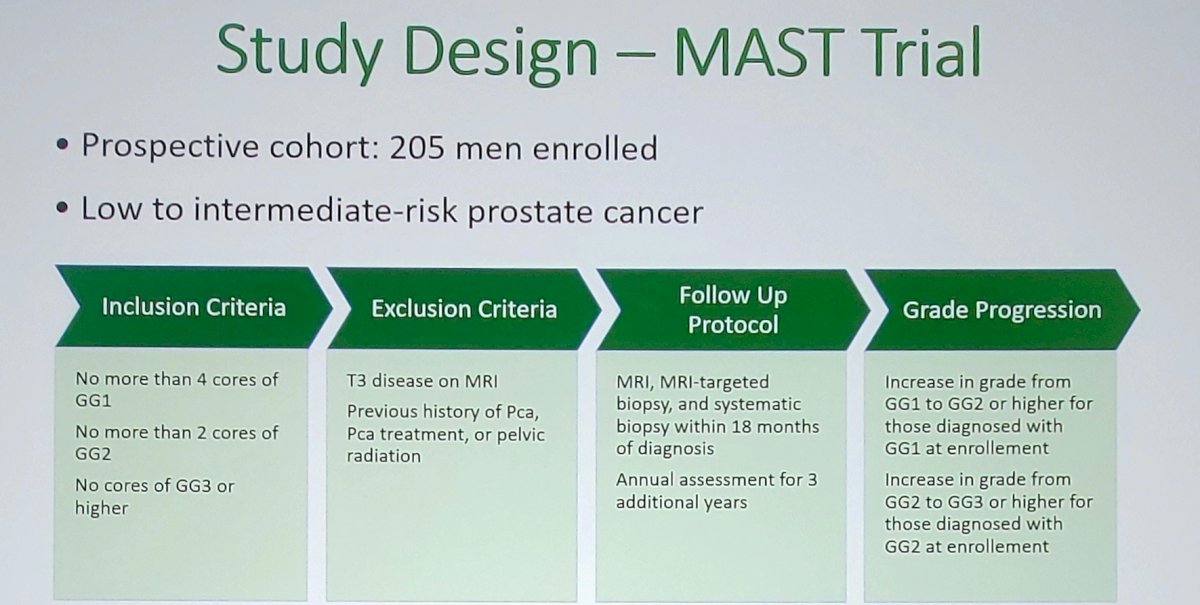
The highest-grade and volume core from each targeted and systematic biopsy were sent to Veracyte™ for genomic profiling. Patients were categorized into three groups based on the PAM50 genomic classifier available on the Decipher GRID. Time to progression, mutation analysis, and other prognostic signatures and pathways available on the Decipher GRID were compared across the three PAM50 classifier groups.
Among the 205 patients enrolled in the trial, 128 men had successful genomic profiling available at baseline for PAM50 classification. Among these men, 46 were found to have Luminal A, 26 as Luminal B, and 56 as Basal subtypes. The Luminal B subtype demonstrated the highest risk of progression (77%), while the Basal subtype showed a 45% risk: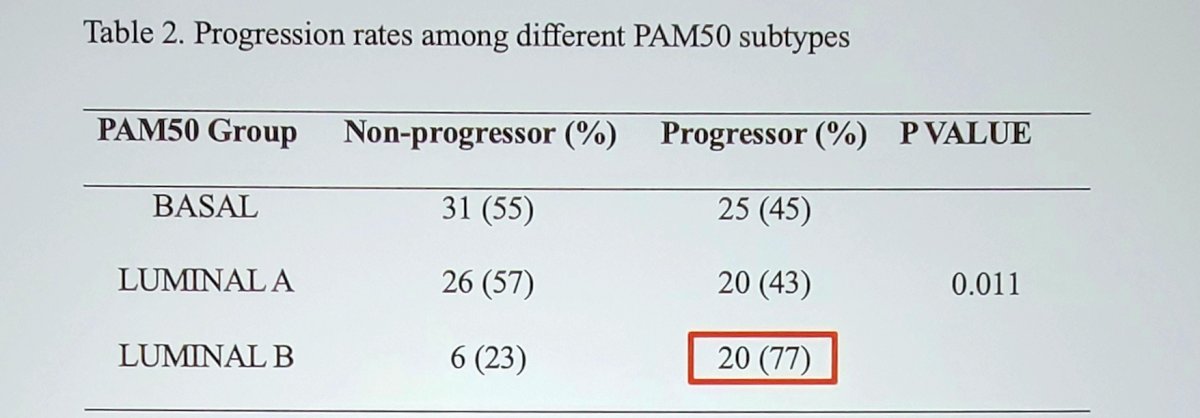
Decipher scores were lowest in the Luminal A group, followed by the Basal group, and highest in the Luminal B group. Intra-patient variability based on subtyping of different cores within the same biopsy was observed in 37.1% of cases. Transcriptome analysis revealed distinct enrichment profiles for each PAM50 subtype, and mutation pattern analysis highlighted differences in mutation associations, with the Luminal B subtype showing a stronger association with SPOP and PTEN mutations: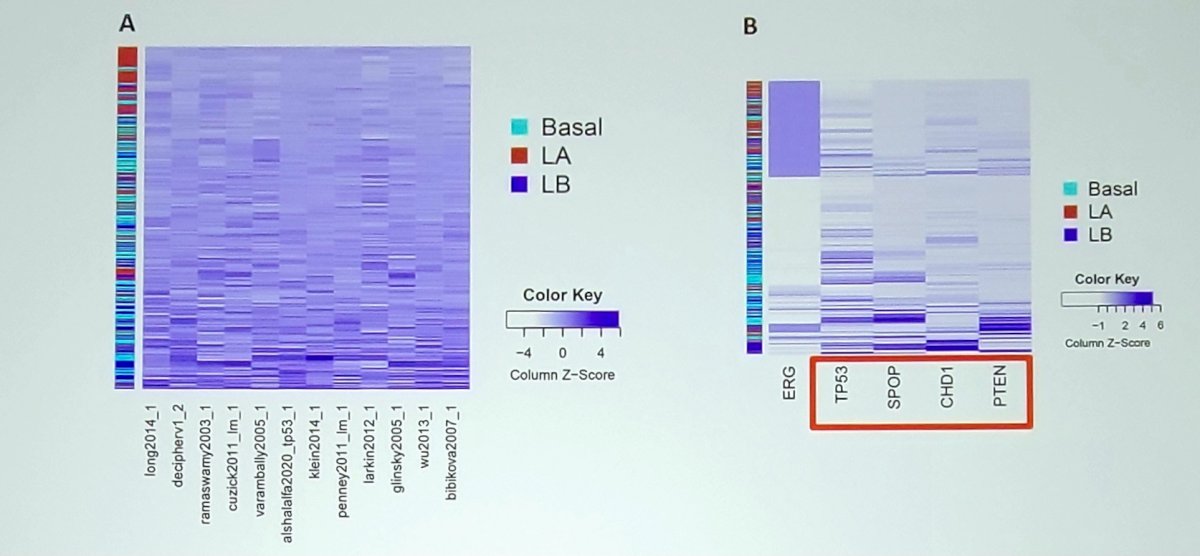
PAM50 was a predictor of predictor of progression. In a multivariable logistic regression analysis, PAM50 Luminal B versus Luminal A was associated with an OR of 3.69 (95% CI 1.25-12.14, p = 0.02) for grade progression. This was also assessed and confirmed in a Kaplan-Meier analysis for time to grade progression: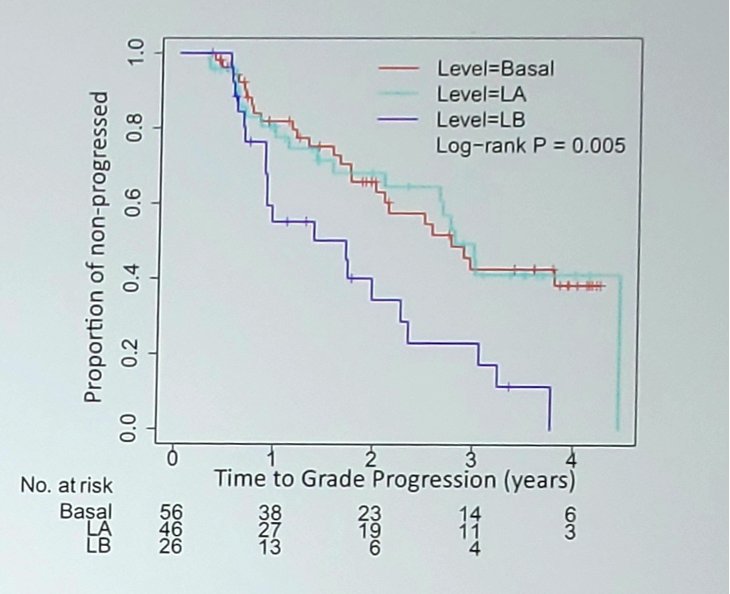
Dr. Thomas noted several limitations of this study, including the single institution analysis, small sample size, and some variability in PAM50 subtyping within patients.
Dr. Thomas concluded his presentation discussing results from the MAST trial assessing validation of PAM50 for predicting progression in active surveillance the following take-home points:
- This is the first study to validate PAM50 for predicting cancer progression in a prospective cohort of men undergoing active surveillance for prostate cancer
- Luminal B subtype was associated with worse outcomes
- Implications for risk stratification and treatment decisions need to be further assessed
Written by: Zachary Klaassen, MD, MSc – Urologic Oncologist, Associate Professor of Urology, Georgia Cancer Center, Wellstar MCG Health, @zklaassen_md on Twitter during the Southeastern Section of the American Urological Association (SESAUA) 2025 Annual Meeting, Nashville, TN, Wed, Mar 12 – Sat, Mar 15, 2025.