

(UroToday.com) The 2025 SESAUA annual meeting featured a health services research session and a presentation by Sydney Strup discussing the American Urological Association’s annual census data assessing coping mechanisms for burnout and stress. In the United States, there is a physician workforce shortage that is likely a cause of physician burnout, which can lead to worse patient outcomes, lower retention, and decreased clinical hours.
The American Urological Association (AUA) has identified the ongoing urologic workforce shortage as an advocacy priority, with burnout as a threat to a healthy urologic workforce. The goal is to initiate policy changes and provide accessible professional health. The aim of this study is to further evaluate aspects of burnout rates by examining coping mechanisms and willingness to seek professional help using the 2023 AUA annual census.
There were 1,918 urologists that completed the 2023 AUA Census, with a 14% response rate. Post-stratification weighting was performed to adjust for non-response bias based on gender, primary practice, certification status, and years since initial certification. The survey collected demographics, practice patterns, and experiences with burnout, coping mechanisms, willingness to seek professional help, and reasons/ barriers for seeking help. Coping mechanisms were grouped as unhealthy (isolation, eating junk food, drinking alcohol, binge eating, smoking cigarettes, or using marijuana products) and healthy (exercise, talking with family/friends, sleep, meditation, and play/listen to music):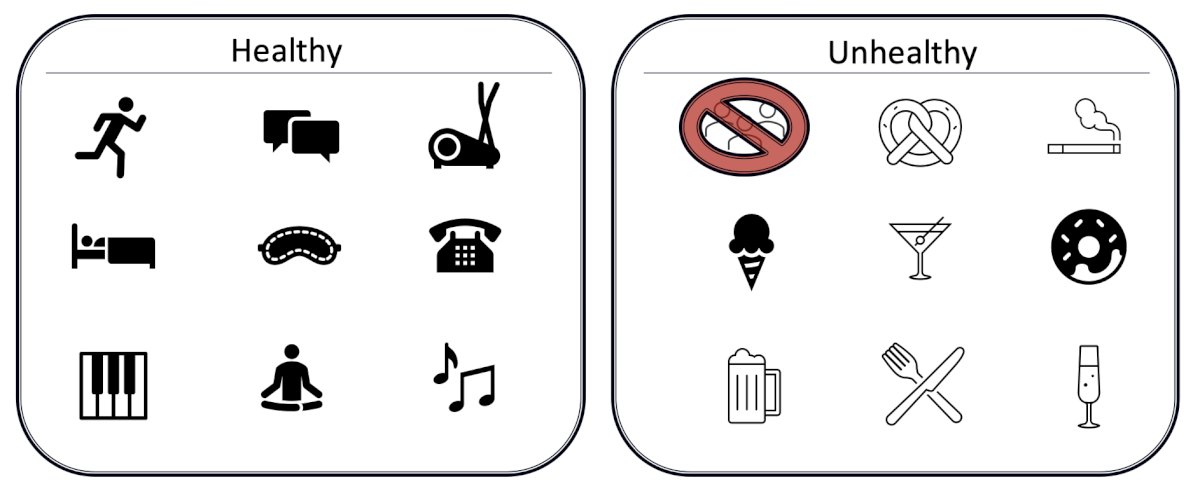
Of the respondents, 70% of urologists reported experiencing burnout or stress. Of practicing urologists, 39% report using unhealthy coping mechanisms for burnout. Age was significantly associated with unhealthy coping mechanisms, with those 34-44 years having the highest percentage (53.7%, p = 0.02):
Only 17% of practicing urologists have sought professional help for burnout. Younger urologists, <34 years old, were more likely to seek professional help (43.4%; p = 0.02):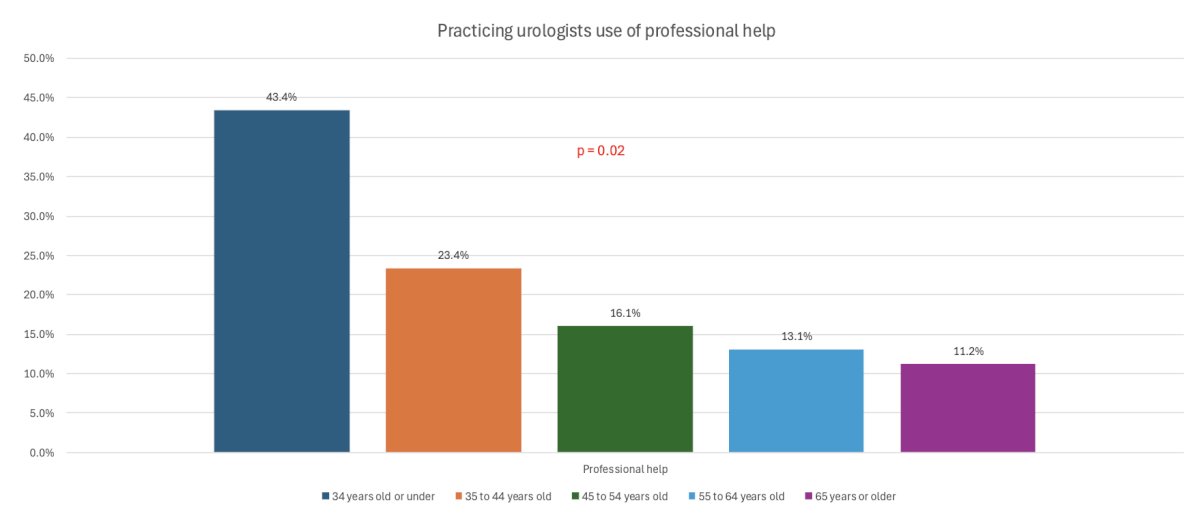
One-third of respondents reported external factors as a deterrent for seeking professional help, with 35 to 44 year olds citing external factors as the highest rate at 47.5% (p = 0.01):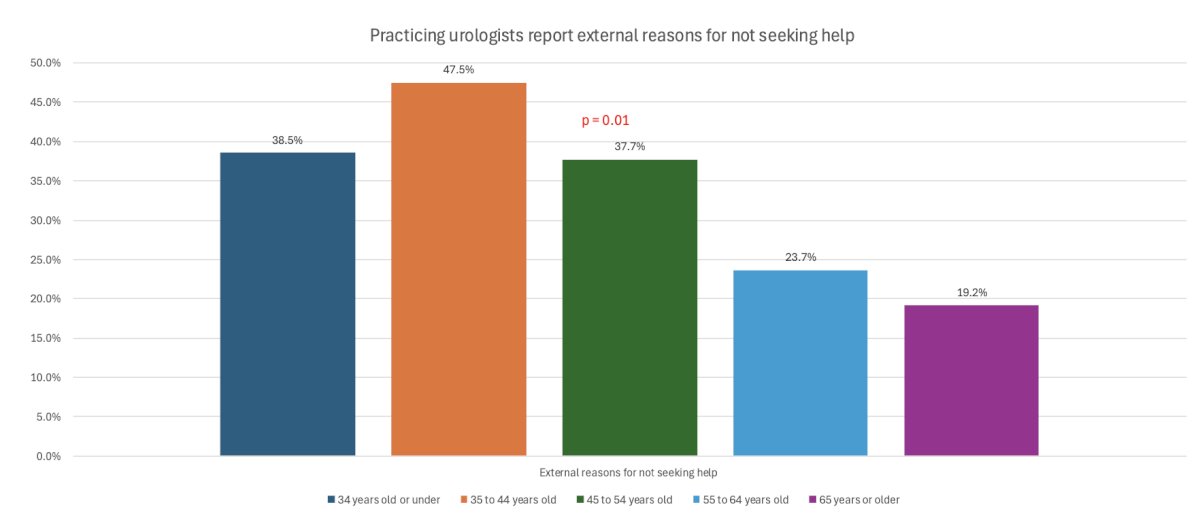
Finally, 43% of respondents reported they would seek help if those services were not included in the records for state licensure. Age was significantly associated with reporting they would be more likely to seek help if services were not included in their state licensure board records, with those <34 years having the highest percentage (64.7%, p = 0.01):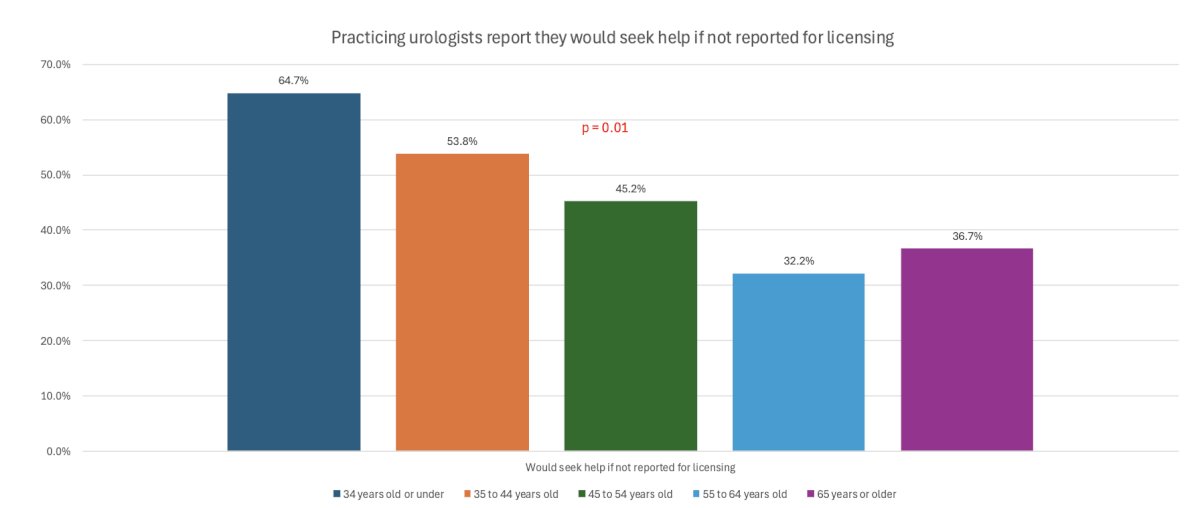
Overall, 21 out of 50 states include intrusive mental health questions as part of licensing and credentialing, which may deter physicians from seeking professional mental health services in the face of burnout and stress: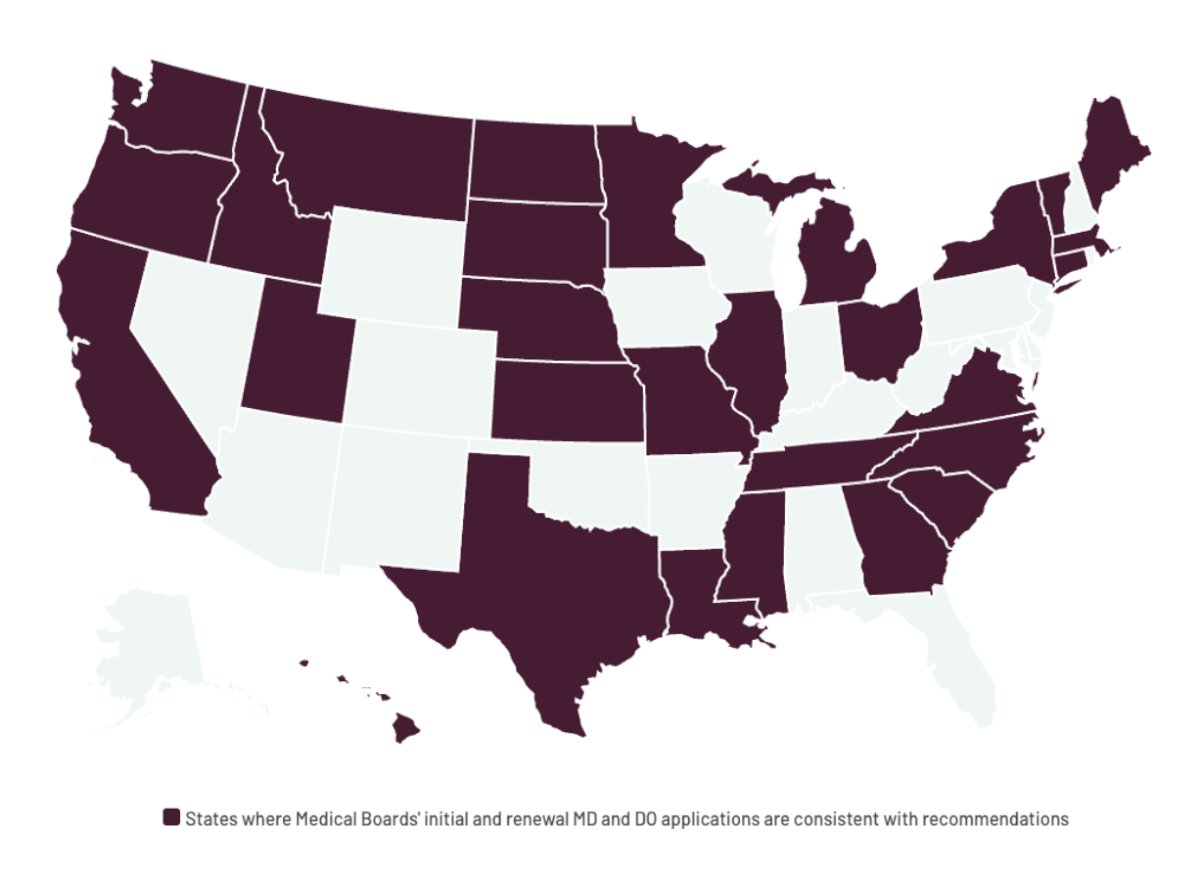
Sydney Strup concluded her presentation discussing the American Urological Association’s annual census data assessing coping mechanisms for burnout and stress with the following take-home points:
- Two in five urologists utilize unhealthy coping mechanisms in response to burnout or stress
- Urologists have also identified state licensure boards as a factor deterring them from seeking professional help for burnout
- Next steps include:
Written by: Zachary Klaassen, MD, MSc – Urologic Oncologist, Associate Professor of Urology, Georgia Cancer Center, Wellstar MCG Health, @zklaassen_md on Twitter during the Southeastern Section of the American Urological Association (SESAUA) 2025 Annual Meeting, Nashville, TN, Wed, Mar 12 – Sat, Mar 15, 2025.