

(UroToday.com) The 2025 SESAUA annual meeting featured a kidney cancer session and a presentation by Dr. Robert Smith discussing how age and tumor characteristics affect pathogenic variants in germline testing for renal cancers. Dr. Smith started by highlighting that germline mutations are (i) hereditary, (ii) affect every cell in the body, (iii) are inherited or mutated early in the germinal phase of development, and (iv) can increase a patient’s likelihood of developing a future cancer. Current NCCN guidelines have many criteria for germline testing of individuals with renal tumors including family history, age, and tumor characteristics. When recommending germline testing to patients, we are often asked about the frequency of pathogenic variants, and how these variants affect care. Prior studies have suggested that 3-16% of renal tumors have a pathogenic germline mutation, with common variants including CHEK2, VHL, ATM, BRCA1/2, and PTEN. Dr. Smith and colleagues sought to explore how each of these guideline recommendations affects the rate of return of pathogenic variants among patients undergoing germline testing for renal cancers.
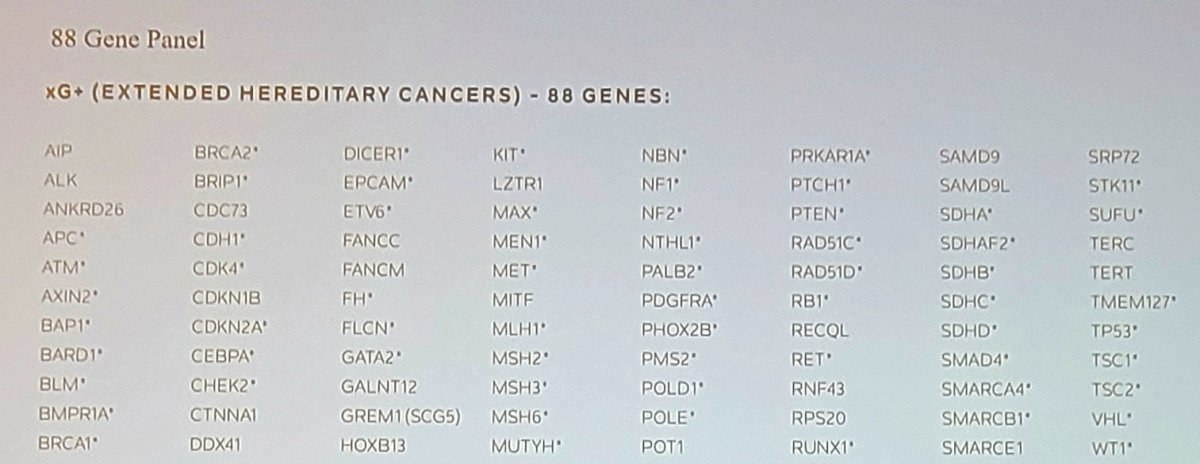
A retrospective chart review was conducted of all patients undergoing genetic testing within the urology department at a single institution (March 2022 to September 2024). This data was maintained in a secure RedCap database. Data included age, race, cancer type, family history of cancers, tumor characteristics, and genetic test results. This data was sorted for patients with renal tumors and categorized by age less than 46, tumor cell type, tumor grade, and tumor stage. An 88 gene germline testing panel was used:
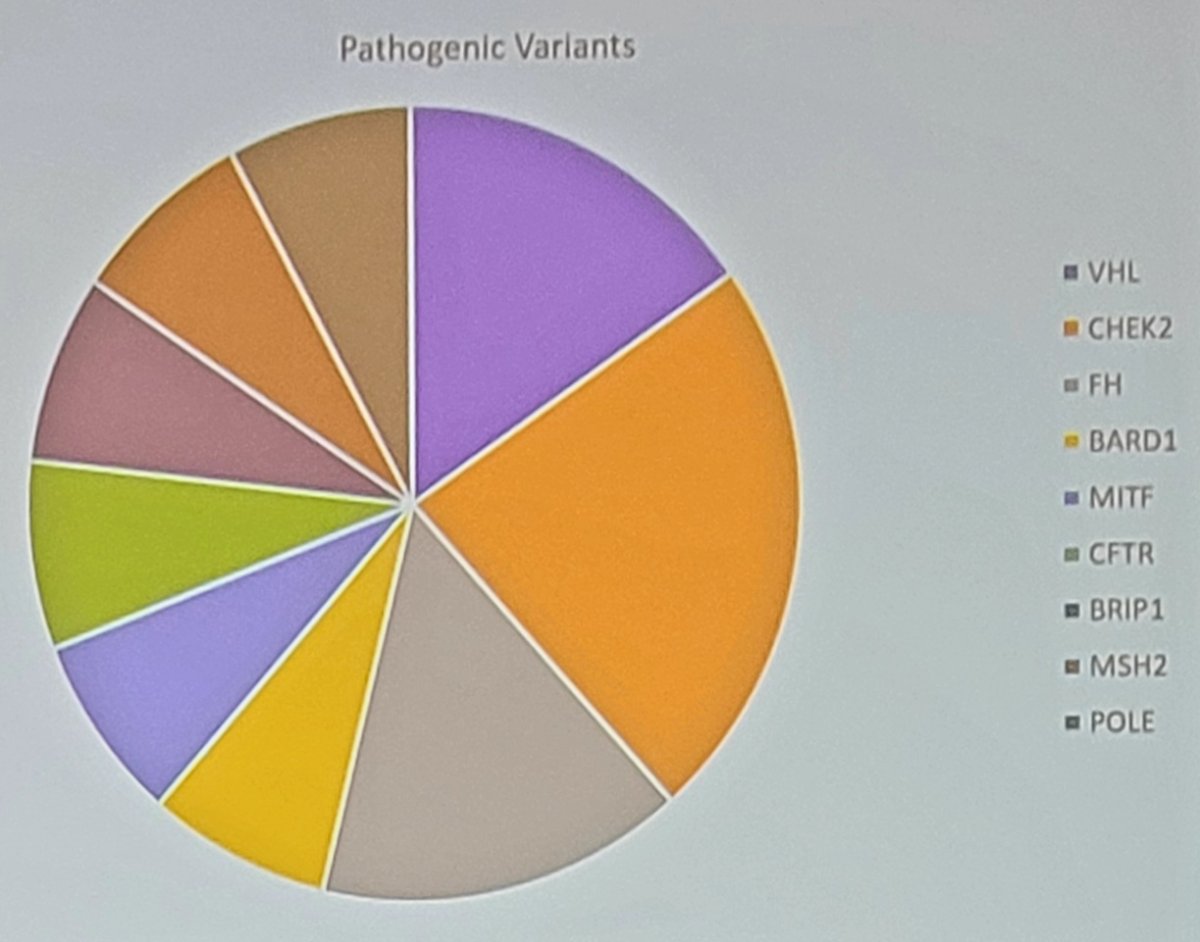
There were 79 patients within this database that completed germline testing for renal tumors, of which 16.5% of patients tested positive for pathogenic variants. There were 33 patients younger than 46 years of age, with 18% testing positive. Across all groups, there were no statistically significant differences. The most common pathogenic variants were CHEK2 (n = 3), FH (n = 2) and VHL (n = 2):
Pathologic variants were found in 13% of clear cell, 14% of papillary, 20% of oncocytic, and 21% of other cell types. Low grade tumors had 13% pathogenic variants, grade 3 had 29%, and grade 4 had 25%. Localized disease had 17% with pathogenic variants and advanced disease had 19%. Multifocal tumors had 22% pathogenic variants versus 16% in focal tumors.
Dr. Smith concluded this presentation by discussing how age and tumor characteristics affect pathogenic variants in germline testing for renal cancers with the following take-home points:
- With germline genetics in urology oncology growing rapidly, data collection and analysis will help to drive changes in the guidelines
- Continued data collection will aid in counseling patients on the likelihood of pathogenic variants prior to testing
- While this was a small initial cohort of patients, the plan is to continue data collection to expand the knowledge of pathogenic variant likelihood based on character of renal mass, age, and family history
- This information may help lead patient counseling and direct future guideline development for germline genetic testing
Presented by: Robert Smith, MD, Medical University of South Carolina, Charleston, SC
Written by: Zachary Klaassen, MD, MSc – Urologic Oncologist, Associate Professor of Urology, Georgia Cancer Center, Wellstar MCG Health, @zklaassen_md on Twitter during the American Urological Association (SESAUA) 2025 Annual Meeting, Nashville, TN, Wed, Mar 12 – Sat, Mar 15, 2025.