

(UroToday.com) The 2025 SESAUA annual meeting featured a kidney cancer session and a presentation by Reynier Rodriguez Rosales discussing a GENIE database analysis identifying key mutations linked to metastasis in clear cell renal cell carcinoma. Clear cell renal cell carcinoma is characterized by heterogeneity in its genetic landscape, with some mutations potentially contributing to metastasis:

This study presented at SESAUA 2025 aimed to identify specific genetic mutations associated with metastatic clear cell renal cell carcinoma by analyzing next-generation sequencing data. The investigators compared patients with metastatic disease (M1) to those without metastasis (M0) to reveal distinct genetic differences that may drive the metastatic process.
Data were obtained from the American Association for Cancer Research Project Genomics Evidence Neoplasia Information Exchange (GENIE) registry. A total of 1,529 clear cell renal cell carcinoma patients were identified, with 1,345 having complete genetic and clinical data. The cohort was divided into non-metastatic (M0; n = 870) and metastatic (M1; n = 475) groups. Mutation frequencies of genes with greater than 5% prevalence were compared between groups using chi-square tests.
The cohort had a median age of 65 years (IQR 53–68), with 74% male and 82% Caucasian. Of the total 808 gene panel, 15 genes were mutated by >5% in the entire cohort, with PBRM1, SETD2, KDM5C, TP53, and PTEN mutations being significantly more frequent in M1 patients:
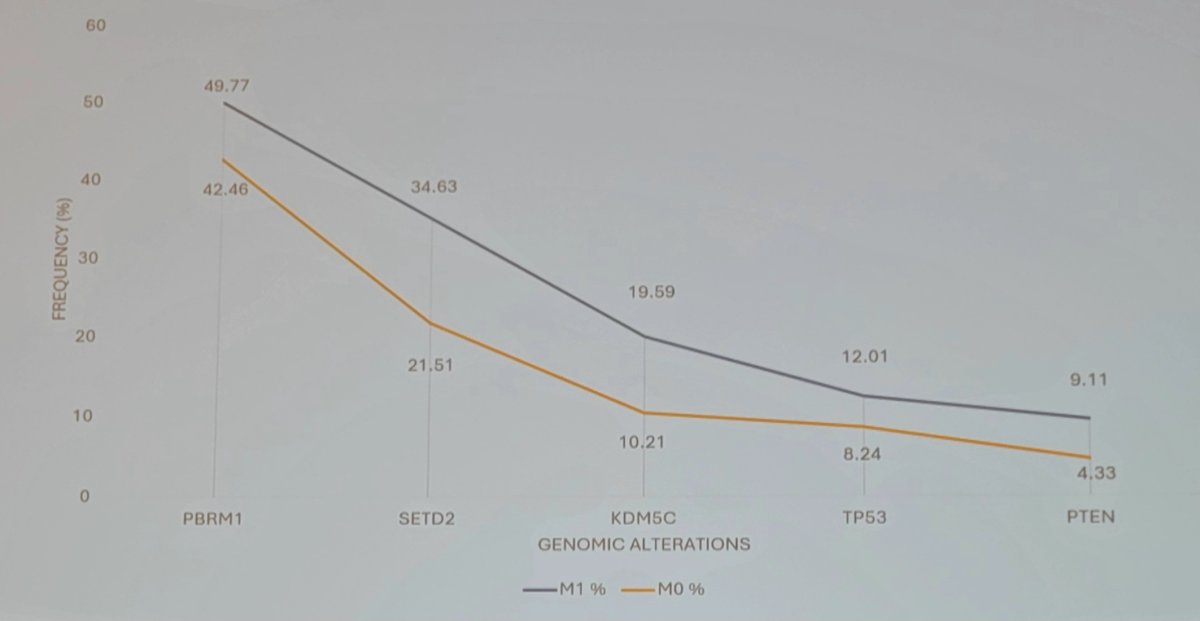
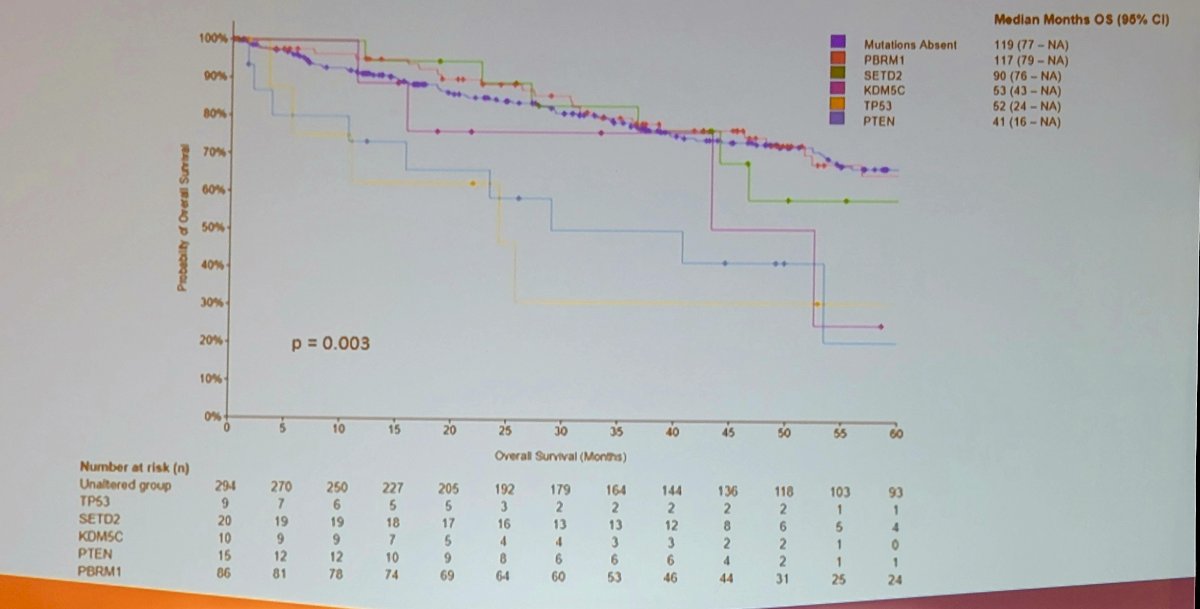
VHL mutations, although highly prevalent, showed no significant difference between M1 (77.7%) and M0 (76.4%, p = 0.63). Genetic alterations were associated with worse overall survival (p = 0.003):
Co-occurrence analyses revealed significant relationships between mutations in PBRM1 and SETD2, PBRM1 and VHL, SETD2 and VHL, PBRM1 and TP53, and SETD2 and TP53 (p < 0.001). Additionally, TP53 mutations were mutually exclusive with VHL mutations (p < 0.001), suggesting distinct genetic pathways in tumor development:

The results for synthetic lethality interactions are highlighted as follows:

Reynier Rodriguez Rosales concluded his presentation by discussing a GENIE database analysis identifying key mutations linked to metastasis in clear cell renal cell carcinoma with the following take-home points:
- M1 disease is associated with characteristic genetic alterations, and these genetic alterations influence survival
- This study identified patterns of co-occurrence and mutual exclusivity in M1 disease
- These novel findings enhance our understanding of immune biology and genetic aspects of clear cell renal cell carcinoma
Presented by: Reynier Rodriguez Rosales, University of Florida-Jacksonville, Jacksonville, FL
Written by: Zachary Klaassen, MD, MSc – Urologic Oncologist, Associate Professor of Urology, Georgia Cancer Center, Wellstar MCG Health, @zklaassen_md on Twitter during the American Urological Association (SESAUA) 2025 Annual Meeting, Nashville, TN, Wed, Mar 12 – Sat, Mar 15, 2025.