

(UroToday.com) The 2025 SESAUA annual meeting featured a bladder cancer session and a presentation by Arjun Venkatesh discussing the association of somatic gene mutations in urothelial cancer based on location in the bladder. Although the size, grade and stage of bladder cancer have proven prognostic significance, the clinical significance of location is less clear. Plausibly, tumors in the lateral wall near the ureteral orifices may have a different etiology and clinical behavior compared to urothelial cancers at the dome. At the 2025 SESAUA, the investigators reported the results of an exploratory analysis of differences in somatic genetic mutations based on location of the tumor in the bladder to gain additional insights into the differences in etiology.
From the American Association for Cancer Research Project Genomics Evidence Neoplasia Information Exchange registry, a total of 2,980 patients with bladder urothelial carcinoma were identified. Patients were assessed to ensure no missing data and having at least 5 patients in each ICD cohort. Mutation frequencies were compared using Chi-square tests, focusing on the 423 genes with a mutation frequency greater than 5%.
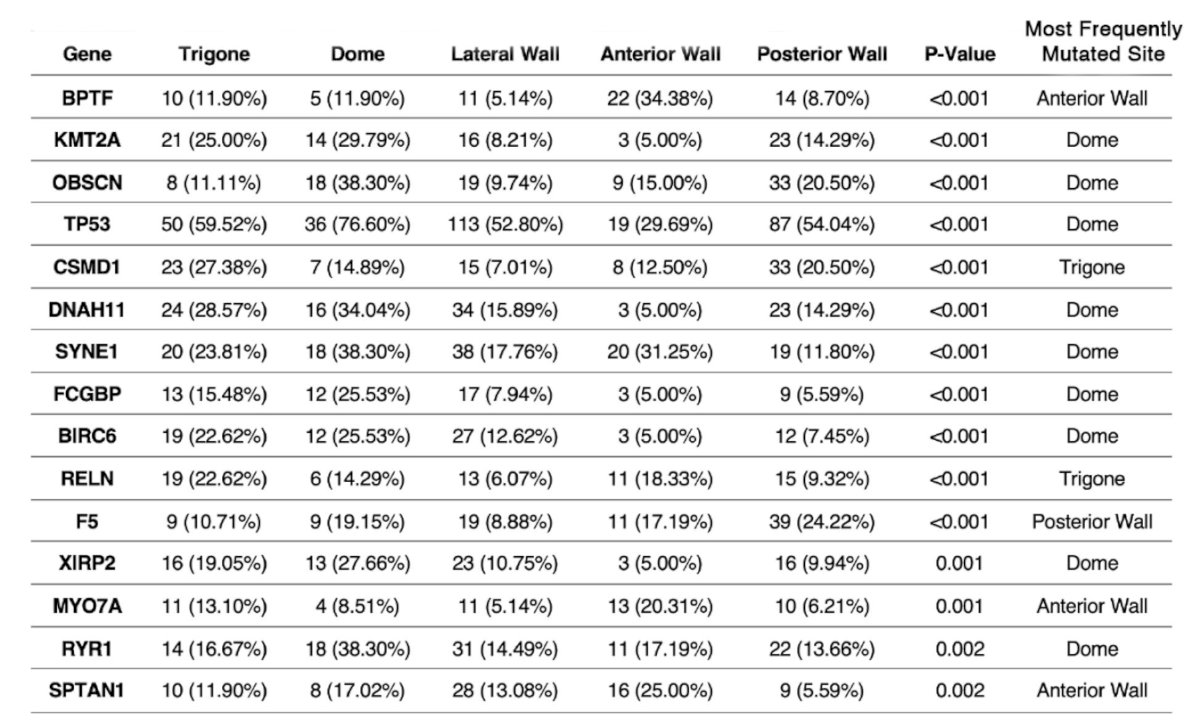
A total of 570 patients were identified within ICD cohorts for trigone, dome, lateral, anterior, and posterior wall cancers. Of the total 14,154 genes, 423 (3%) genes were mutated in more than 5% of the cohort. The pairwise comparison revealed 35 genes with significant mutational differences between tumor locations. Of these, 10 genes were significantly more frequently mutated in the anterior wall, 14 in the dome, 4 in the posterior wall, and 7 in the trigone. The top 15 most significant genes and their associated location in the bladder are listed in the table:
Arjun Venkatesh concluded his presentation by discussing the association of somatic gene mutations in urothelial cancer based on location in the bladder with the following take-home points:
- This study identified distinct genomic alterations based on tumor location in the bladder
- Additional studies are warranted to understand the biological and clinical significance of these novel findings, which could guide more personalized therapeutic approaches in bladder cancer
Written by: Zachary Klaassen, MD, MSc – Urologic Oncologist, Associate Professor of Urology, Georgia Cancer Center, Wellstar MCG Health, @zklaassen_md on Twitter during the American Urological Association (SESAUA) 2025 Annual Meeting, Nashville, TN, Wed, Mar 12 – Sat, Mar 15, 2025.