

(UroToday.com) The 2025 SESAUA annual meeting featured a bladder cancer session and a presentation by Dr. Alon Weizer discussing long-term outcomes of primary chemoablation of low-grade upper tract urothelial carcinoma with UGN-101, a mitomycin reversal thermal gel.
Low-grade upper tract urothelial carcinoma can be treated with endoscopically guided ablation; however, relapse is common, requiring lifelong surveillance that is associated with complications. Mitomycin is a chemotherapy agent that destroys tumor cells via inhibition of DNA synthesis. In the phase 3, single arm pivotal OLYMPUS trial UGN-101, a reverse thermal gel containing mitomycin (4 mg/mL) used as primary treatment for low-grade upper tract urothelial carcinoma, resulted in clinically significant disease eradication:1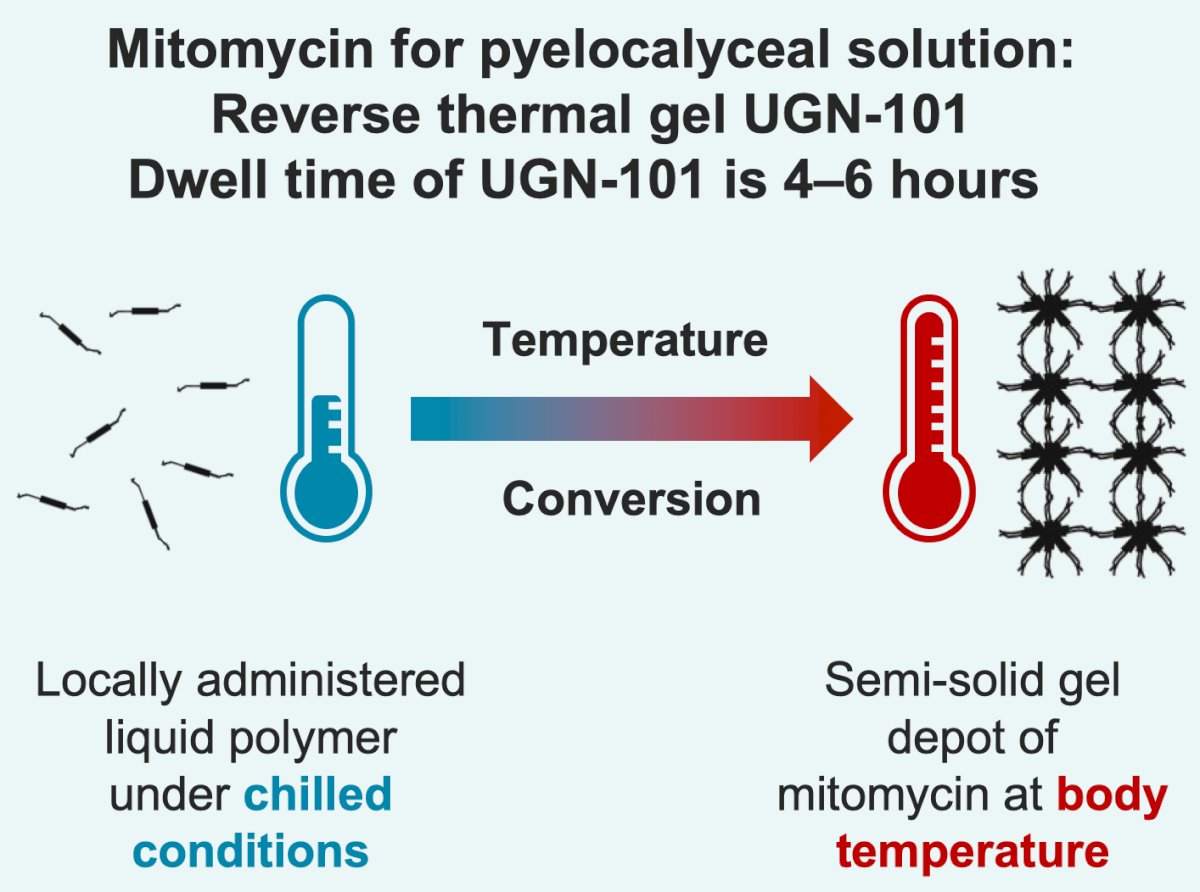
At SESAUA 2025, Dr. Weizer and colleagues reported data from a non-interventional study (BL007) to follow the long-term outcomes of patients who achieved complete response following treatment with UGN-101 in the phase 3 OLYMPUS trial.
Patients who participated in the OLYMPUS trial and achieved a complete response after 6 weekly doses of UGN-101 were followed up to 12 months after initial complete response. Those with complete response at study completion were eligible for long-term follow-up in BL007. Outcomes included duration of response and disease recurrence or progression. There was no protocol-specified intervention or treatment, and there were no protocol-specified visits or evaluations. Supervising physicians provided semiannual updates on patients’ disease status: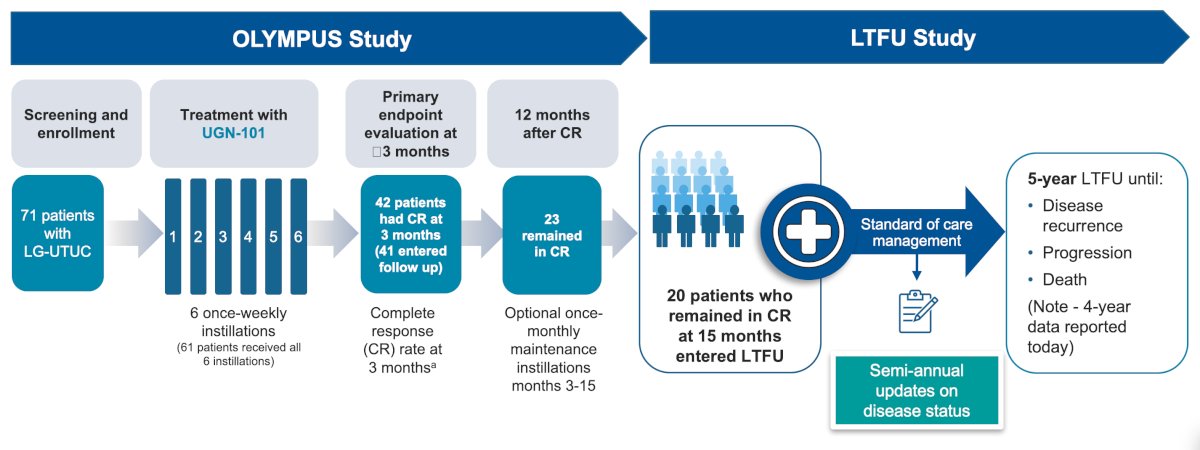
The 71 patients were mainly male (68%), white (87%) and had a median age of 71 years: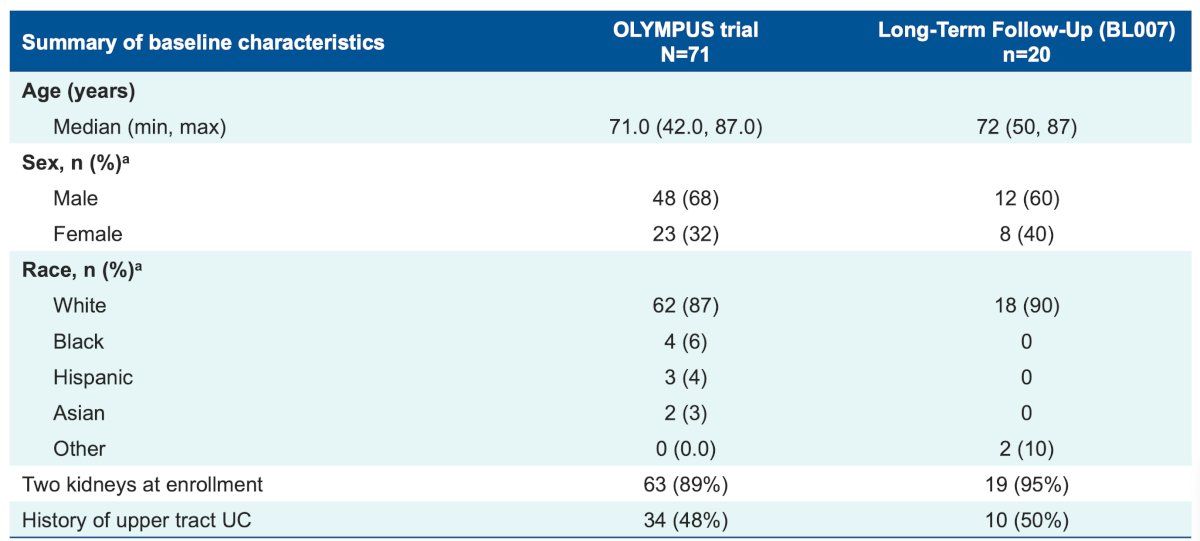
At 3 months, patients were assessed for response and those in complete response, defined as visual confirmation and negative wash urine cytology as well as for-cause biopsy in the ipsilateral pyelocalyceal system, could enter follow up and receive once monthly maintenance instillations of UGN-101. Overall, 42 patients achieved a complete response, and 41 entered follow-up (1 withdrew). At the 2025 SESAUA annual meeting, Dr. Weizer presented the data from the long term follow up which was an optional extension study. Of the 23 patients who maintained a complete response at the end of the 12-month post-complete response follow-up in OLYMPUS period, 20 entered the long term follow up study. Of the 41 patients with complete response in OLYMPUS (below: dark blue lines), 16 (39%) had documented events: 10 (24.4%) had urothelial carcinoma tumor recurrence and 6 (14.6%) patients died (not treatment-related). Of the 20 patients that entered long-term follow-up (below: light blue), 75% of patients had no evidence of recurrence at the last follow-up visit: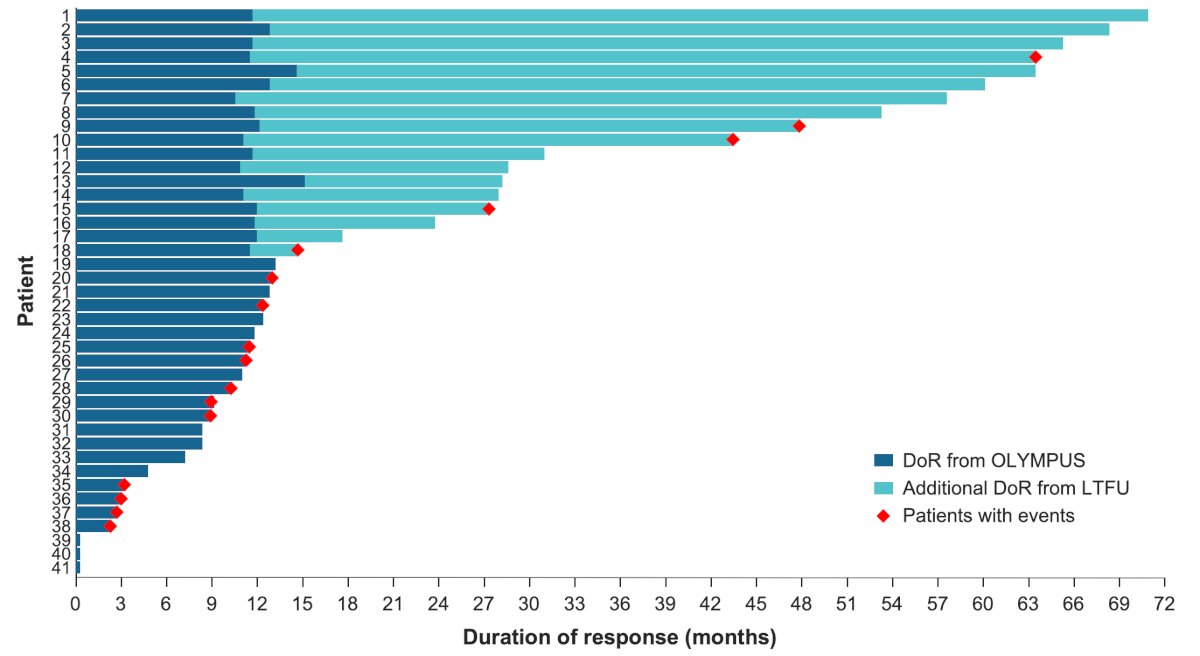
Among the 41 patients followed up after initial complete response, the median follow-up was 28.1 months (95% CI 13.1, 57.5), and the median duration of response was 47.8 months (95% CI 13.0–NE). Of the 20 patients in the long term follow-up study, the median follow up was 53.3 months (95% CI 27.9, 65.3), and the median duration of response was not estimable (95% CI 43.5, NE) due to the low event rate: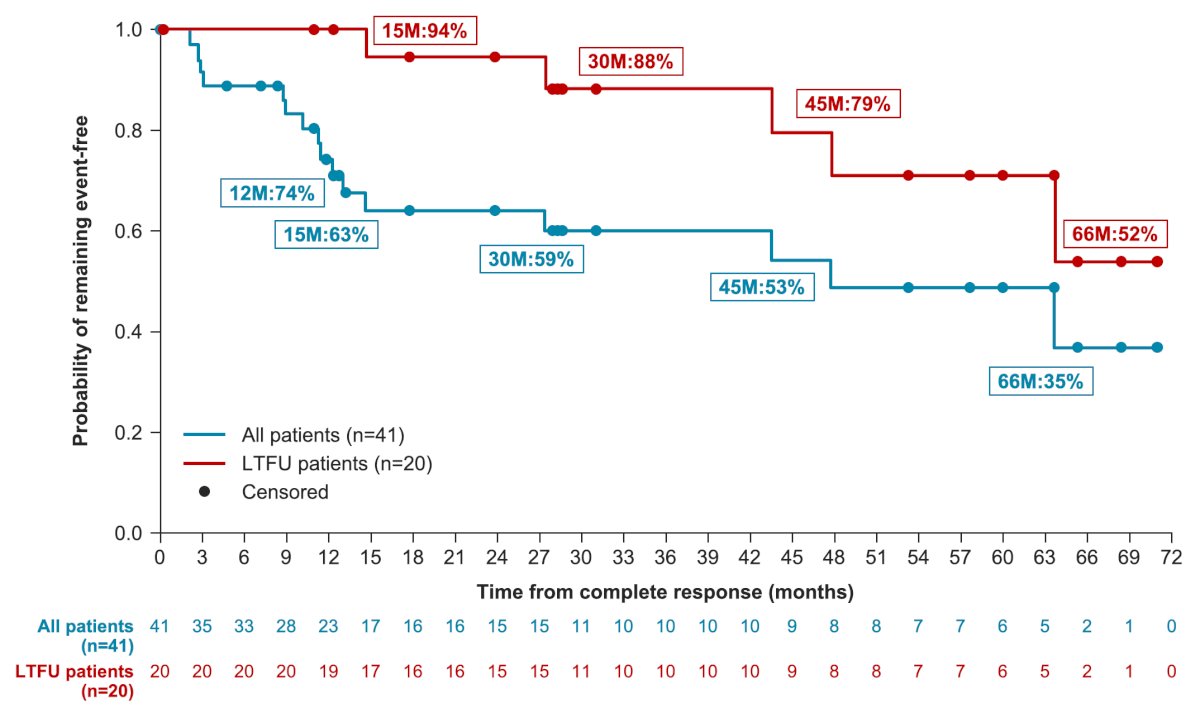
The most common side effects were typically mild or moderate in severity, with the most frequent adverse event being ureteric stenosis (44%). In the long term follow-up study, 2 of the 20 patients had urothelial carcinoma tumor recurrence, and 3 died (2 with unknown reasons and 1 septic shock from E. coli bacteremia and acute hypoxemic respiratory failure). None of these deaths were related to study treatment. There were no reported progressions to high-grade disease, and 2 of the 20 patients underwent radical nephroureterectomy: 1 patient due to ureteral stricture without evidence of upper tract urothelial carcinoma at the time of surgery and 1 patients due to a nonfunctioning kidney.
Dr. Weizer concluded his presentation discussing long-term outcomes of primary chemoablation of low-grade upper tract urothelial carcinoma with UGN-101 with the following take-home points:
- Patients with low-grade upper tract urothelial carcinoma receiving primary treatment with 6 once-weekly pyelocalyceal doses of UGN-101 in the OLYMPUS trial who then entered the long-term follow-up study experienced an extended recurrence free survival
- The median duration of response of all patients achieving a complete response in OLYMPUS was 47.8 months by Kaplan-Meier estimate, with a medium duration of follow-up of 28.1 months
- In the subset of patients entering the long term follow-up study, the median duration of response was not estimable due to the low event rate over the median duration of follow-up of 53.3 months
- Limitations of this study include the small number of patients that entered the long term follow-up, and that no safety or quality of life data were collected
- The ongoing uTRACT registry (NCT05874921) is collecting real-world data from patients that received UGN-101 after FDA approval to further inform the use of UGN-101 in upper tract urothelial carcinoma patients
Presented by: Alon Weizer, MD, Department of Urology, Division of Columbia University at Mount Sinai Medical Center, Miami Beach, FL
Written by: Zachary Klaassen, MD, MSc – Urologic Oncologist, Associate Professor of Urology, Georgia Cancer Center, Wellstar MCG Health, @zklaassen_md on Twitter during the Southeastern Section of the American Urological Association (SESAUA) 2025 Annual Meeting, Nashville, TN, Wed, Mar 12 – Sat, Mar 15, 2025.
References: