

(UroToday.com) The 2025 South Central AUA annual meeting included a session on kidney cancer, featuring a presentation from Dr. Kennedy Kuykendall discussing predictors of upstaging to pT3 in cT1 patients undergoing nephrectomy for renal cell carcinoma (RCC). While patients with surgically treated cT1 kidney cancer generally have favorable prognoses, upstaging to pT3 due to segmental vein, renal sinus, or perirenal fat invasion can significantly impact oncologic outcomes. The predictors and implications of upstaging remain unclear, making it crucial to identify preoperative factors that may guide surgical decision-making. Understanding these factors can help surgeons determine whether radical nephrectomy is preferable to partial nephrectomy or if wider margins in partial nephrectomy should be considered, ultimately aiming to improve recurrence-free survival and overall survival. The goal of this study was to evaluate oncological outcomes following nephrectomy for cT1 kidney cancer patients upstaged to pT3, and to identify predictors of upstaging by comparing cT1pT3 to cT1pT1 patients:
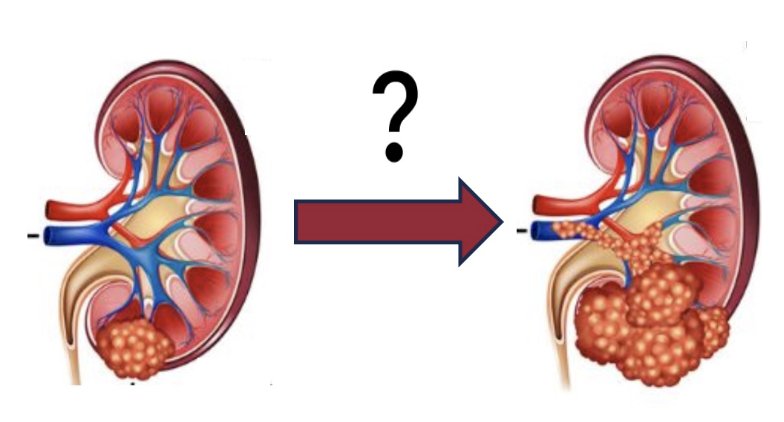
Of 456 patients who underwent nephrectomy between 2018-2025 at University of Arkansas Medical Sciences, the investigators analyzed 24 patients with cT1 tumors upstaged to pT3 (5.3%) based on pathology findings. Oncological outcomes and key clinical, radiological, and pathological variables were compared to those of cT1pT1 patients from a large multi-center study.1
The baseline characteristics of the two cohorts are as follows:
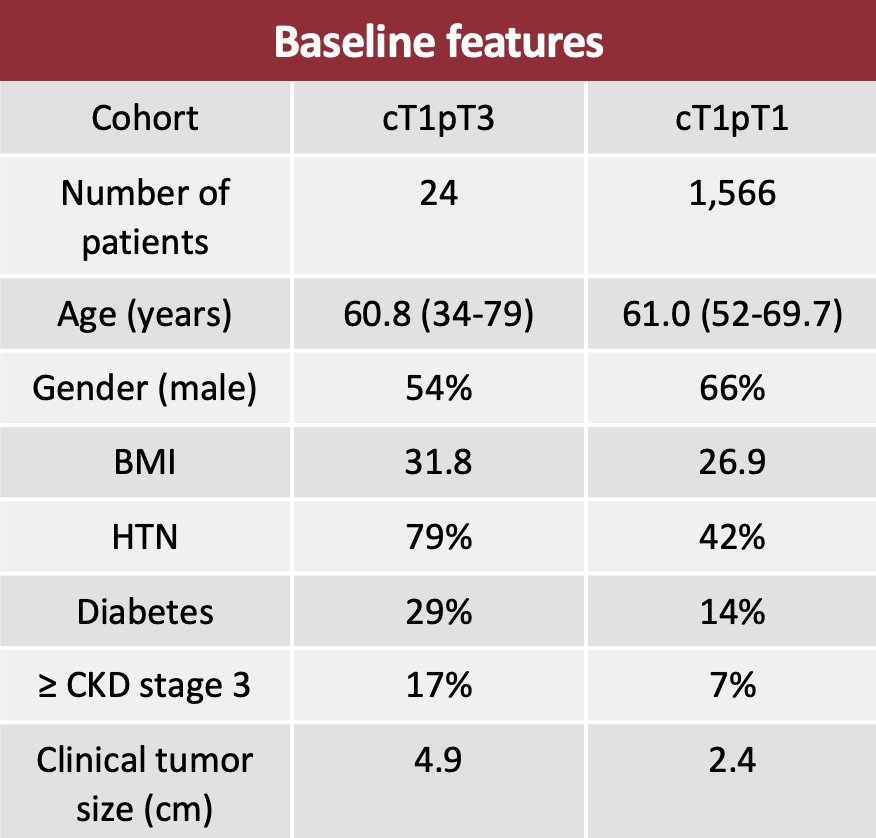
The majority of patients (83%) underwent radical nephrectomy. Upstaged patients had larger tumors (4.9 cm versus 2.4 cm) and higher R.E.N.A.L. scores (8 versus 6), indicating greater anatomical complexity. Specifically, endophytic tumors (25% versus 12%) and hilar tumors (37.5% versus 10%) were more common in upstaged cases. Pathologically, these patients had larger tumor sizes (5.0 cm versus 2.5 cm), a higher incidence of high-grade tumors (WHO/ISUP ≥3) (62.5% versus 17%), and more sarcomatoid differentiation (4.2% versus 1%). Upstaging was attributed to perirenal fat invasion in 42% of patients, renal sinus invasion in 45% of patients, and segmental vein invasion in 54% of patients. All patients had negative margins, but 4 of 5 patients with recurrence had distant metastases. Upstaged patients had significantly worse 2-year recurrence-free survival (48% versus 99%) and a mean overall survival of 3.3 years.
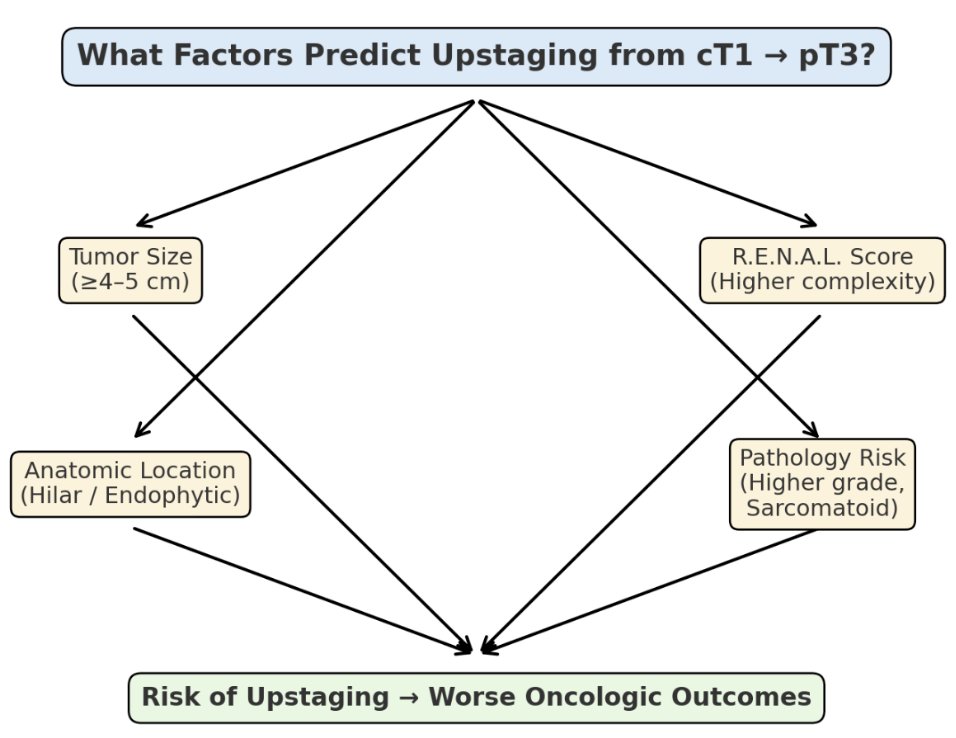
Dr. Kuykendall concluded this presentation discussing predictors of upstaging to pT3 in cT1 patients undergoing nephrectomy for RCC with the following take home points:
- These findings emphasize the importance of pre-operative imaging and risk assessment
- Tumor size, R.E.N.A.L. score, and anatomical characteristics (hilar or endophytic location) should be carefully evaluated, as they may suggest a higher risk of upstaging
- These findings align with multi-center studies, suggesting that patients with high-risk features may warrant closer postoperative surveillance and counseling on higher risk of progression
- Further analysis is needed to predict factors or upstaging and refine treatment strategies
Presented by: Kennedy Kuykendall, MD, University of Arkansas Medical Sciences, Little Rock, AR
Written by: Zachary Klaassen, MD, MSc – Urologic Oncologist, Associate Professor of Urology, Georgia Cancer Center, Wellstar MCG Health, @zklaassen_md on Twitter during the 2025 South Central American Urological Association (AUA) Annual Meeting, Orlando, FL, Wed, Sept 10 – Sat, Sept 13, 2025.
References: