

(UroToday.com) The 2025 South Central AUA annual meeting included a session on bladder cancer, featuring a presentation from Dr. Janet Kukreja discussing a pilot study of a web-based urinary diversion decision aid. Bladder cancer is the 6th most common cancer overall and the 4th most common cancer in men.
Many of those with bladder cancer will require bladder removal (radical cystectomy) and urinary diversion, a decision with important lifestyle implications. Prior to 2000, ~20% of patients received a continent urinary diversion, whereas post-2000, only ~10% of patients received a continent urinary diversion. These results are likely multifactorial, including anatomy, surgeon preference, and only one decision aid that exists for urinary diversion. When considering the type of urinary diversion, urologists heavily consider age, recovery, outcomes, surgical risks, and comorbidities, whereas patients heavily consider lifestyle, appearance, and maintenance. Patients want to, and should, be involved in the urinary diversion decision-making process.
This was a pilot study of the first decision aid that presents all three urinary diversion options. The decision aid website was developed with the input of clinicians and patients to assist in the decision-making process by outlining the pros and cons of each surgical option, as well as the quality of life considerations for each. The decision aid was then piloted with a sample of eligible urinary diversion patients to assess feasibility and acceptability.
A sample of 21 patients eligible for urinary diversion surgery was recruited for this study. Participants reviewed the decision aid website and completed a baseline survey assessing their knowledge, preparation for the decision, decisional conflict, and satisfaction with the decision aid. Post-operative surveys were administered at one month (n = 16) and four months (n = 15) after urinary diversion surgery and included measures of their satisfaction with their surgical decision and the decision aid.
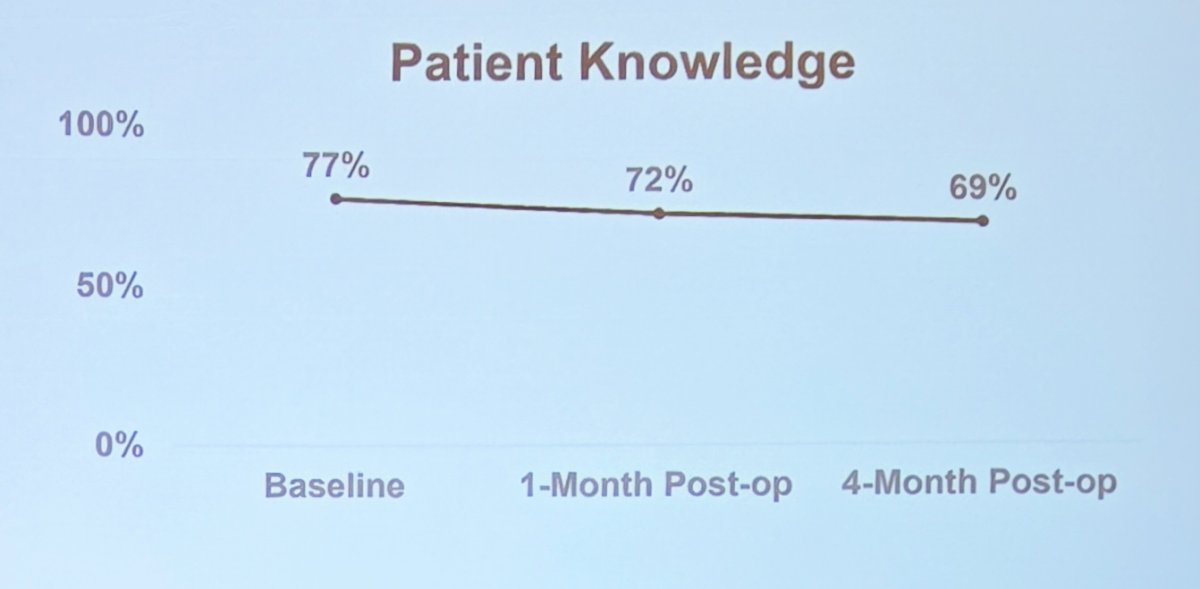
The study sample was predominantly male (91%), with a mean age of 70 years. Pre-operatively, 62% (n = 13) preferred a neobladder, 33% (n = 7) preferred an ileal conduit, and 5% (n = 1) were unsure; no participants preferred the Indiana pouch. All participants (100%) who made a surgical decision at baseline maintained their choice when reporting at one month. Knowledge scores were highest immediately after reviewing the decision aid (77% correct) and decreased slightly from one month (72%) to four months (69%):
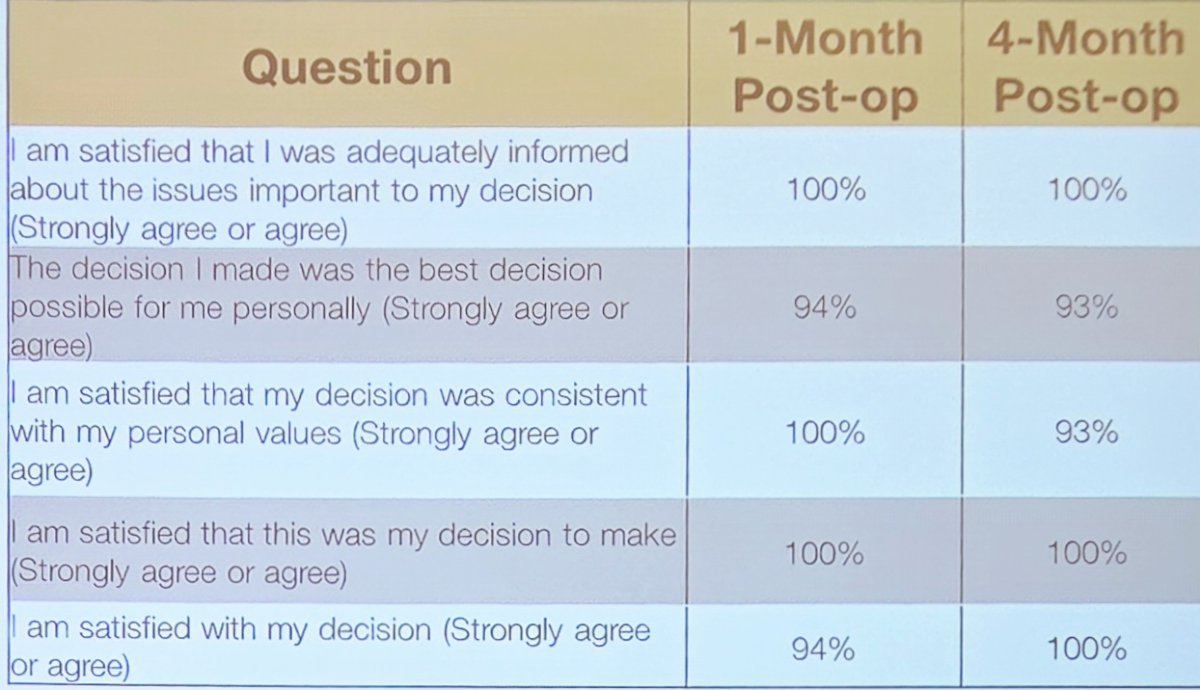
Post-operatively, most participants reported high levels of satisfaction with their decision. Finally, at four months, when asked about the utility of the decision aid, 93% indicated that the decision aid was helpful in conversations with their surgeon, 100% would recommend it to a friend, and 93% were satisfied with the decision aid overall:
Dr. Kukreja concluded her presentation discussing a pilot study of a web-based urinary diversion decision aid with the following take-home points:
- This pilot study demonstrates the feasibility and acceptability of the decision aid for patients undergoing urinary diversion
- Participants reported high levels of satisfaction with their decision post-operatively
- These findings indicate that this tool could be valuable for future patients making the urinary diversion decision
- Future research will evaluate this tool with a larger sample to refine and improve it for broader dissemination
Presented by: Janet Kukreja, MD, Associate Professor of Urology, University of Colorado, Denver, CO
Written by: Zachary Klaassen, MD, MSc – Urologic Oncologist, Associate Professor of Urology, Georgia Cancer Center, Wellstar MCG Health, @zklaassen_md on Twitter during the 2025 South Central American Urological Association (AUA) Annual Meeting, Orlando, FL, Wed, Sept 10 – Sat, Sept 13, 2025.