

(UroToday.com) The 2025 South Central AUA annual meeting included a session on bladder cancer, featuring a presentation from Dr. Renil Titus discussing the association between prior pelvic radiotherapy and surgical outcomes of radical cystectomy for bladder cancer. Patients undergoing radical cystectomy (open and robotic) for bladder cancer may have previously received pelvic radiotherapy (pelvic radiation for any cancer, any time prior to radical cystectomy), which is both a risk factor for bladder cancer and associated with increased risk of intra-operative and postoperative complications. This study sought to quantify this risk at the population level and to assess rates of granular, cystectomy-specific, and general surgical outcomes of patients undergoing radical cystectomy with a history of definitive pelvic radiotherapy for a pelvic malignancy using the American College of Surgeons National Surgical Quality Improvement Program (ACS-NSQIP) Targeted Cystectomy database.
Dr. Titus and colleagues conducted a retrospective cohort study using the ACS-NSQIP targeted cystectomy dataset of patients 18-90 years old who underwent radical cystectomy for bladder cancer from 2019-2022. The primary outcomes included rates of cystectomy-specific outcomes potentially related to pelvic radiotherapy (ie. rectal injury) and 30-day major postoperative outcomes:
- Mortality
- Reoperation
- Cardiovascular events
- Readmission rates
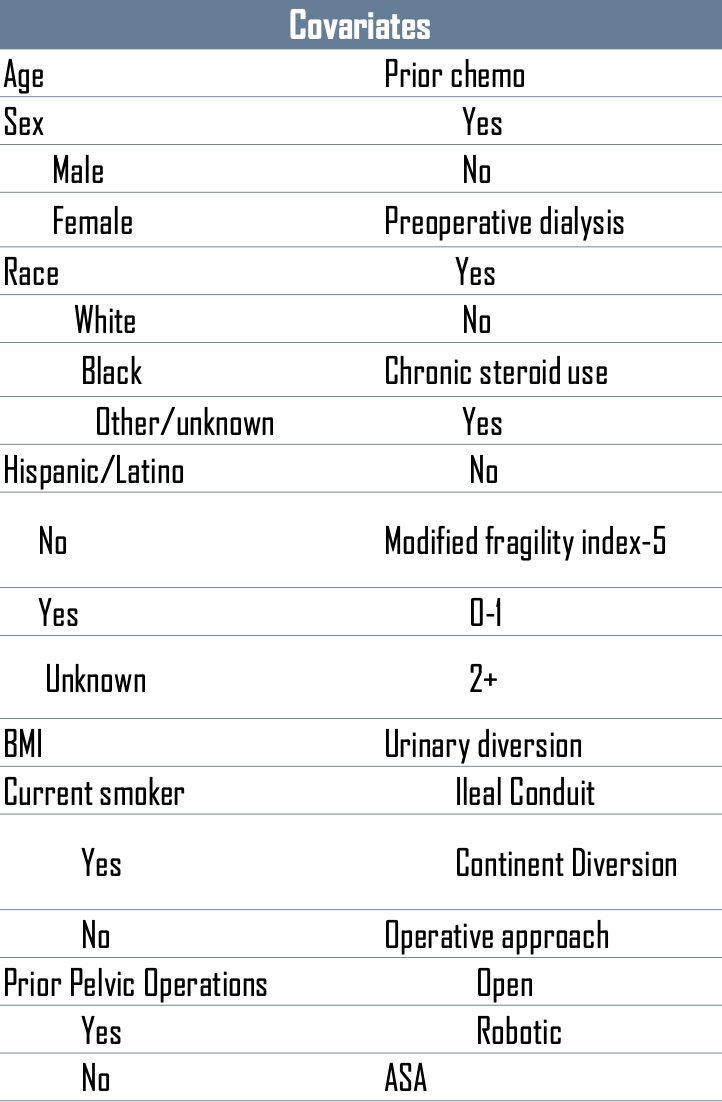
Secondary outcomes included general surgical complications such as rates of sepsis, surgical-site infections, length of hospital stay, and surgery duration. The investigators balanced for potential confounders by using propensity score matching with a 1:5 ratio between pelvic radiotherapy and no-pelvic radiotherapy groups with a caliper of 0.009. The covariates were as follows:
The association between pelvic radiotherapy and complications was assessed using conditional logistic or linear regression models.
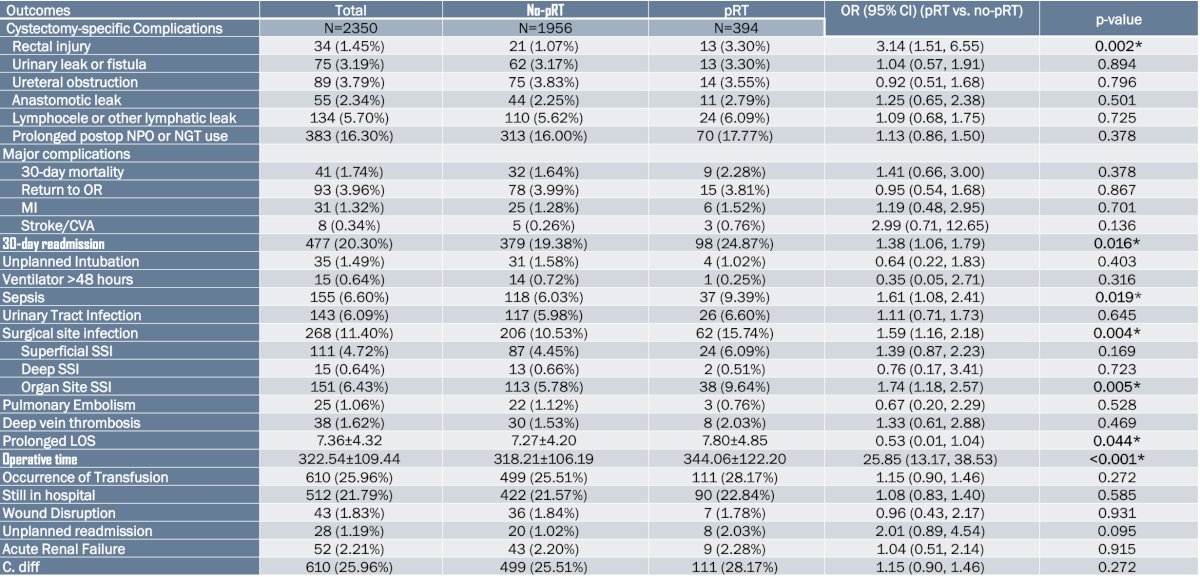
This study identified 5,058 patients, of whom 403 (7.97%) had pelvic radiotherapy prior to radical cystectomy. After propensity score matching, the analytical cohort consisted of 1,956 radical cystectomy patients and 394 radical cystectomy + pelvic radiotherapy patients. Patients with prior pelvic radiotherapy were associated with significantly higher odds of rectal injury (OR 3.14, 95% CI 1.51-6.55). There was no association between pelvic radiotherapy and the risk of urinary leak or fistula, ureteral obstruction, anastomotic leak, and lymphoceles. Patients with prior pelvic radiotherapy were also found to be at increased risk for 30-day re-admission following radical cystectomy (OR 1.38, 95% CI 1.06-1.79), but not mortality, re-operation, or cardiovascular events. Additionally, receipt of pelvic radiotherapy was associated with infection complications, including sepsis (OR 1.61, 95% CI 1.08-2.41), surgical-site infection (OR 1.59, 95% CI 1.16, 2.18), organ-site infection (OR 1.74, 95% CI 1.18-2.57):
Dr. Titus concluded his presentation discussing the association between prior pelvic radiotherapy and surgical outcomes of radical cystectomy for bladder cancer with the following take home points:
- In a contemporary real-world, multi-center cohort, patients undergoing radical cystectomy after pelvic radiotherapy were found to have 3-fold higher odds of rectal injury, 1.4-fold increased odds of readmission, and multiple infection complications
- These data provide a framework to assist in patient counseling and optimizing selection
Presented by: Renil Titus, Houston Methodist Hospital, Houston, TX
Written by: Zachary Klaassen, MD, MSc – Urologic Oncologist, Associate Professor of Urology, Georgia Cancer Center, Wellstar MCG Health, @zklaassen_md on Twitter during the 2025 South Central American Urological Association (AUA) Annual Meeting, Orlando, FL, Wed, Sept 10 – Sat, Sept 13, 2025.