

(UroToday.com) The 2025 ESMO annual meeting featured a testis cancer session and a presentation by Dr. Hege Sagstuen Haugnes discussing post-diagnosis paternity in testicular cancer survivors. Apart from treatment, knowledge is limited about factors that impact post-testicular cancer paternity in testicular cancer survivors diagnosed during the “platinum-era” of chemotherapy. The objective of this study, presented at ESMO 2025 was to assess the probability of the first post-diagnosis childbirth among testicular cancer survivors.
This study explored the incidence of a first post-testicular cancer childbirth in 1,062 testicular cancer survivors (diagnosed 1980-1994) and in 10,620 age-matched controls, based on data from the Medical Birth Registry in Norway, regardless of patient preference. The observation time ranged from the diagnosis date +1 year (“index date”) to the date of the first post-testicular cancer birth or study end (2023). In testicular cancer survivors, the following variables were analyzed using Cox regression:
- Age at diagnosis: <30 versus ≥ 30 years
- Number of pre-testicular cancer childbirths: 0 versus 1 versus ≥2
- Histology: seminoma versus non-seminoma
- Treatment type: local (RPLND, surveillance, or radiotherapy) versus systemic (platinum-based chemotherapy with or without RPLND)
- Diagnosis year: <1988 vs ≥1988
In controls, only the corresponding age at diagnosis and the number of pre-testicular cancer childbirths were analyzed.
The demographics of 1,062 testicular cancer survivors and 10,620 controls are highlighted below:
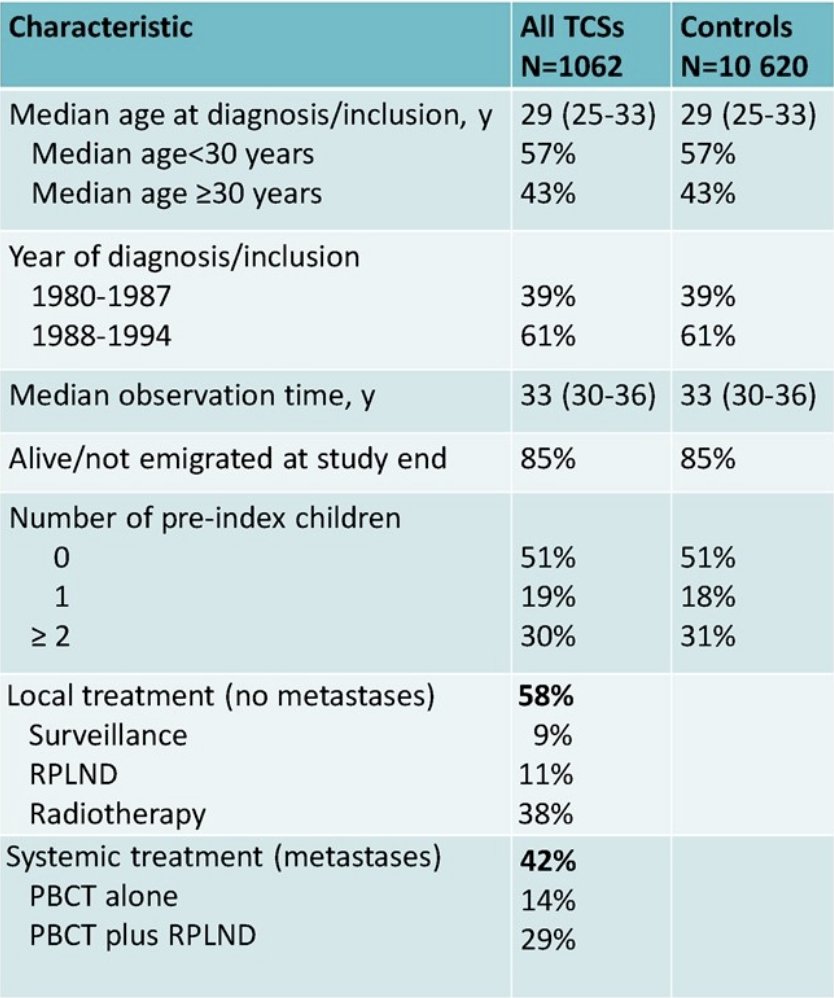
Pre-index date childlessness was more frequent among non-seminoma than seminoma testicular cancer survivors (56% versus 45%, p < 0.001). Systemic treatment was applied five times more frequently in non-seminoma than in seminoma testicular cancer survivors (66% versus 12%) and had been combined with RPLND in 43% (n = 256) of survivors.
Thirty years after the index date, 45% of the testicular cancer survivors and 55% of the controls (p < 0.001) had fathered a first post-testicular cancer child:
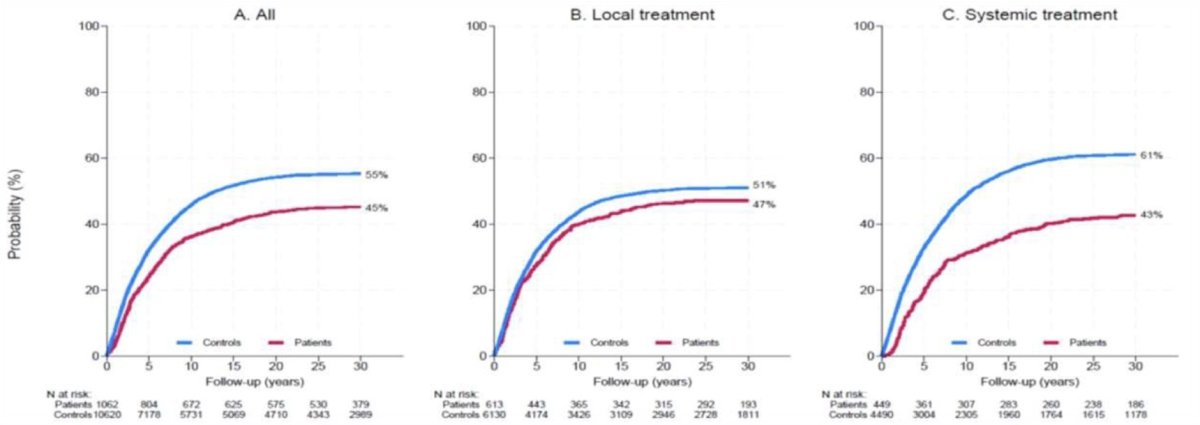
The greatest reduction of post-index paternity was observed if platinum-based chemotherapy was combined with RPLND (p<0.001). At study end, childlessness was significantly more common in testicular cancer survivors than in controls (23% versus 17%, p < 0.001). The absolute difference in post-index paternity between testicular cancer survivors and controls decreased from 15% before 1988, to 6% after 1988 (47% versus 53%):

Of testicular cancer survivors aged <30 years at diagnosis, 60% fathered a post-index child, compared to 73% of the controls (p<0.001). Testicular cancer survivors aged ≥30 years had considerably decreased probability of post-index paternity compared with men aged <30 years (HR 0.41, 95% CI 0.32–0.52):
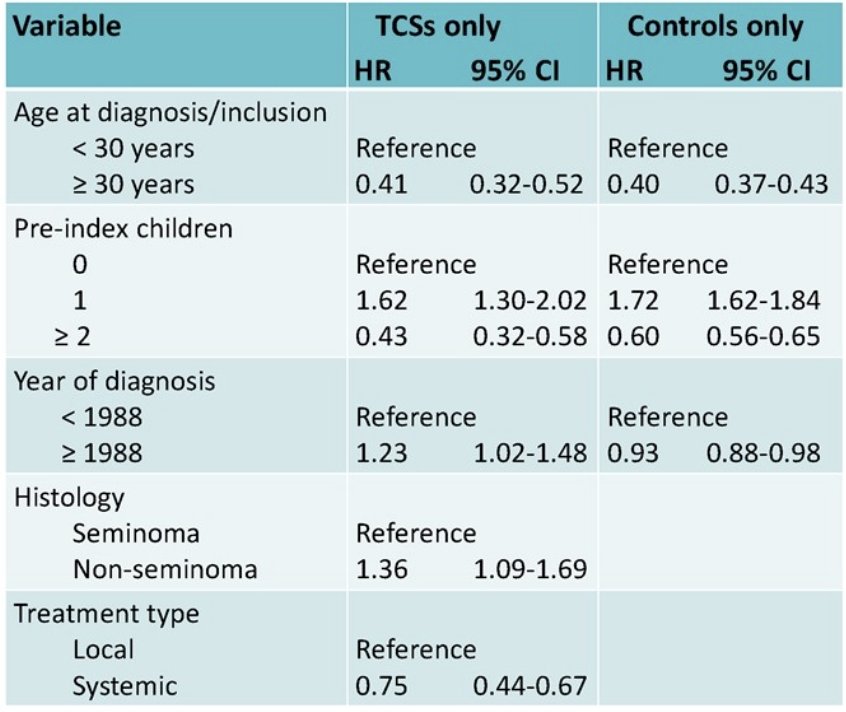
Compared to pre-index childless study participants, fatherhood of one child before the index date increased the probability of post-index paternity in testicular cancer survivors (HR 1.62; 95% CI 1.30–2.02) and in the controls (HR 1.72; 95% CI 1.62–1.84).
Dr. Haugnes concluded her presentation discussing post-diagnosis paternity in testicular cancer survivors with the following take-home points:
- 45% of 1,062 testicular cancer survivors fathered >=1 post-testicular cancer children within 30 years after testicular cancer diagnosis, compared to 55% of controls
- Treatment intensity and demographic factors (age at diagnosis, number of pre-testicular cancer children) were associated with the likelihood of post-testicular cancer fatherhood
- The difference in paternity rate between testicular cancer survivors and controls decreased after 1988
Presented by: Hege Sagstuen Haugnes, MD, PhD, Professor, University Hospital of North Norway, Tromso, Norway
Written by: Zachary Klaassen, MD, MSc – Urologic Oncologist, Associate Professor of Urology, Georgia Cancer Center, Wellstar MCG Health, @zklaassen_md on Twitter during the 2025 European Society of Medical Oncology (ESMO) Annual Meeting, Berlin, Germany, Fri, Oct 17 – Tues, Oct 21, 2025.