

(UroToday.com) The 2025 European Society of Medical Oncology (ESMO) Annual Congress, held in Berlin, Germany, was host to the session Mini oral session: GU tumours, prostate, penile and testis. Dr. Srikala S. Sridhar presented the LBA37 - A phase 2 study of Avelumab in Locally Advanced or Metastatic Penile Cancer Patients Unfit for Platinum-based chemotherapy or progressed on or after Platinum-based Chemotherapy (ALPACA).
Dr. Sridhar opened by emphasizing that ALPACA was an investigator-initiated, multicenter, single-arm phase II trial designed to evaluate the efficacy and tolerability of the PD-L1 inhibitor avelumab in patients with penile cancer who were refractory to or unfit for platinum-based chemotherapy. She highlighted that the study took over seven years to complete, facing numerous challenges along the way, including the COVID-19 pandemic but despite these obstacles, the team successfully completed the trial, marking a significant achievement in a rare and understudied disease setting.
Penile cancer is a rare but aggressive malignancy, with approximately 38,000 new cases diagnosed annually worldwide, most commonly in regions such as Latin America, Africa, and India. Up to half of all cases are associated with human papillomavirus (HPV), and between 30–60% demonstrate PD-L1 expression.1
For patients with metastatic disease, the prognosis remains poor, with a median survival of less than one year. Platinum-based chemotherapy provides only modest benefit, with an objective response rate of about 30%, a median progression-free survival of around three months, and limited tolerability. Moreover, there are no established second-line treatment options, underscoring a substantial unmet clinical need. Immune checkpoint inhibitors, which have shown efficacy in other HPV-related malignancies and are generally well tolerated, represent a promising therapeutic avenue in this setting.
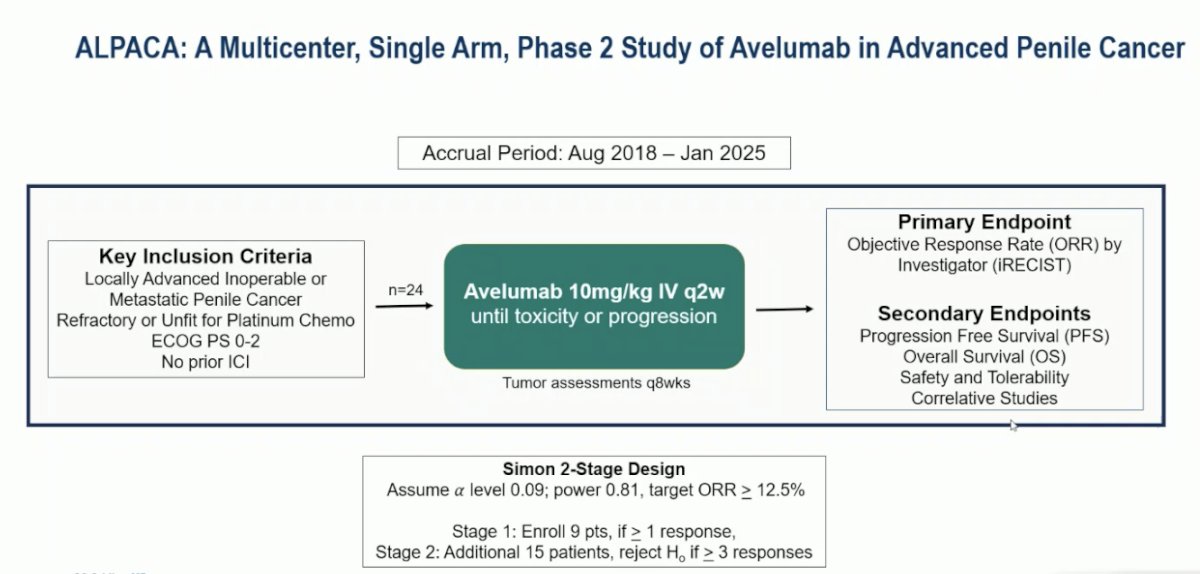
The ALPACA trial enrolled patients with locally advanced, inoperable, or metastatic penile cancer who were either refractory to or unfit for platinum-based chemotherapy. Eligible participants had an ECOG performance status of 0–2 and no prior exposure to immune checkpoint inhibitors. All patients received avelumab at a dose of 10 mg/kg administered intravenously every two weeks until disease progression or unacceptable toxicity. The primary endpoint was objective response rate (ORR) as assessed by RECIST criteria. A total of 25 patients were recruited, of whom 23 were evaluable for efficacy, with two excluded from analysis.
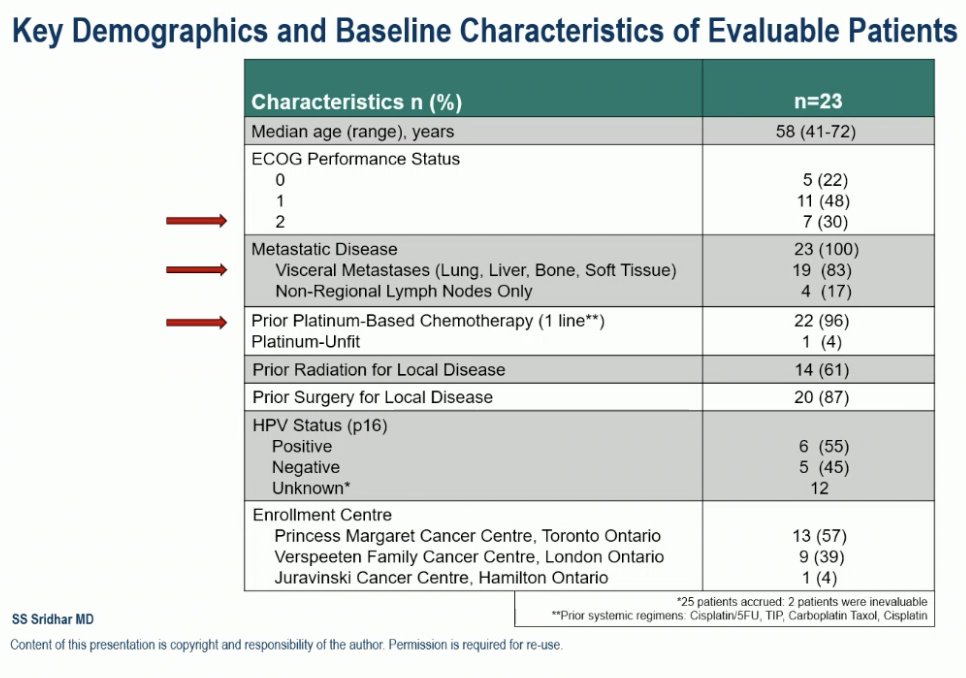
Notably, this was a fairly unwell patient population: 83% had visceral metastases, 4% were platinum-unfit, and 96% had previously received platinum-based chemotherapy, underscoring the advanced and heavily pretreated nature of this cohort. Key demographic and baseline characteristics are shown below.
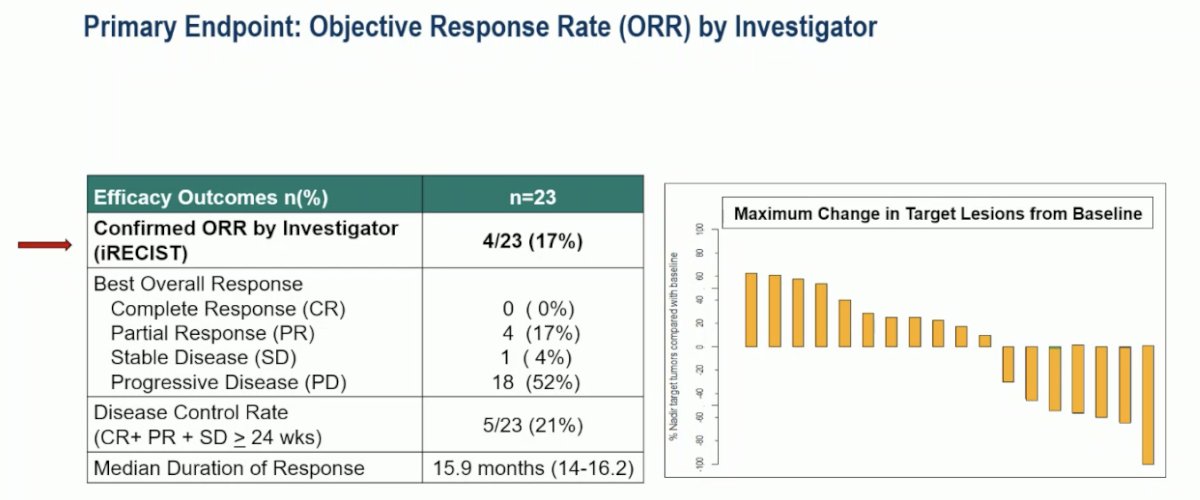
The confirmed objective response rate (ORR) was 17%, with 4 patients (17%) achieving a partial response and one patient (4%) achieving stable disease. The disease control rate (CR + PR + SD ≥ 24 weeks) was 21%. Importantly, the median duration of response reached 15.9 months, suggesting that although responses were infrequent, they were durable among responders.
At a median follow-up of 15 months, patients received a median of three cycles of treatment, with three patients (13%) remaining on therapy at the time of data cutoff. The median PFS was 1.7 months (95% CI 1.5–1.8), and the median OS was 3.9 months (95% CI 2.6–9.9). Most patients (83%) discontinued treatment due to disease progression or death. Correlative analyses revealed no clear association between HPV status and outcomes, although a high neutrophil-to-lymphocyte ratio appeared to predict worse outcomes.

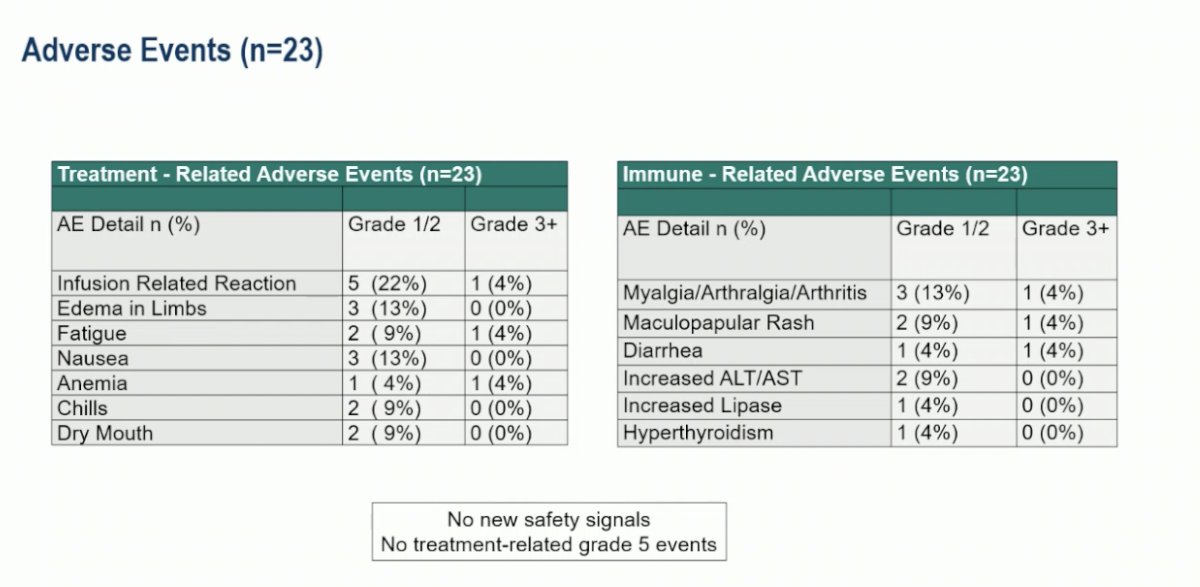
Treatment-related adverse events were generally manageable. The most common events included infusion-related reactions (22%), fatigue (13%), and nausea (13%), with only a few grade ≥3 events (4% each for infusion reactions, fatigue, and anemia). Immune-related adverse events were infrequent and mostly grade 1–2, with myalgia/arthralgia and rash being the most common (13%). Importantly, there were no new safety signals or treatment-related grade 5 events reported.
Dr. Sridhar concluded her presentation with the following key insights from the ALPACA trial:
- In patients with advanced penile cancer refractory to platinum-based chemotherapy, avelumab was well-tolerated and achieved an ORR of 17% with a median duration of response of approximately 15 months, suggesting a small subset of patients may benefit. However, biomarkers are urgently needed to better identify these responders and refine patient selection.
- Despite this, both PFS and OS remained low, indicating that the data are not transformative.
- Future research should explore whether these agents could be more effective in earlier disease settings or when combined with novel therapeutic strategies.
- Ultimately, large-scale collaborations, innovative trial designs, and increased funding will be critical to advance drug development and improve outcomes for patients with rare tumors such as penile cancer.
Presented by: Srikala S. Sridhar, MD, MSc, FRCPC, Princess Margaret Cancer Center, University Health Network, Toronto, ON.
Written by: Julian Chavarriaga, MD – Urologic Oncologist at Cancer Treatment and Research Center (CTIC) via Society of Urologic Oncology (SUO) Fellow at The University of Toronto. @chavarriagaj on Twitter during the 2025 European Society of Medical Oncology (ESMO) Annual Congress held in Berlin, Germany, between October 17th and 21st.
Related content: Phase 2 ALPACA Trial Evaluates Avelumab in Advanced Penile Cancer - Srikala Sridhar
Reference:
- Muneer A, Bandini M, Compérat E, De Meerleer G, Fizazi K, Gietema J, Gillessen S, Kirkham A, Sangar V, Alifrangis C, Powles T; ESMO Guidelines Committee. Electronic address: . Penile cancer: ESMO-EURACAN Clinical Practice Guideline for diagnosis, treatment and follow-up. ESMO Open. 2024 Jul;9(7):103481. doi: 10.1016/j.esmoop.2024.103481. Epub 2024 Jul 11. PMID: 39089768; PMCID: PMC11360427.