

(UroToday.com) The 2025 ESMO annual meeting featured a prostate cancer session and a presentation by Dr. Philippe Barthelemy discussing retreatment with 177Lu-PSMA-617 in metastatic castration-resistant prostate cancer (mCRPC) patients treated under the French early access program.
177Lu-PSMA-617 is a radiopharmaceutical with binding affinity to PSMA, expressed in 90% of mCRPC. The VISION study showed a benefit of 5.3 months of progression free survival and 4 months of overall survival with 177Lu-PSMA-617 versus standard of care.1 However, most patients eventually progress, leading to more research to answer the question: Can extended cycles or retreatment maintain safety and efficacy?
Subsequent studies have shown that retreatment with 177Lu-PSMA-617 preserves efficacy, with PSA declines ≥50% observed in 37–64% of patients. Importantly, toxicity remains manageable, without significant increase in severe adverse events. These findings suggest that 177Lu-PSMA-617 retreatment is a safe and effective therapeutic strategy for patients who have progressed. This work is a descriptive analysis comparing the characteristics, safety, and efficacy of 177Lu-PSMA-617 in patients retreated beyond 6 cycles with 177Lu-PSMA-617. While previous studies have been conducted on limited patient cohorts, this analysis involves the largest global cohort to date.
Patients with mCRPC, positive on 68Ga-PSMA-11 PET, previously treated with ≥1 chemotherapy and ≥1 androgen receptor pathway inhibitor, were eligible for treatment and retreatment with 177Lu-PSMA-617. Treatment consisted of up to 6 cycles (7.4 GBq) every 6 weeks during initial treatment and retreatment:

Patient characteristics, efficacy, and safety data were systematically collected during follow-up visits.
By April 29, 2025, 134 patients had received a second schedule, including 4 who had subsequently initiated a third schedule. Of the 46 centers in France, 23 (50%) have retreated patients, with the majority being experienced centers, and the median number of retreated patients per center being 4 (range: 1-15). Patient characteristics are described in the following table:
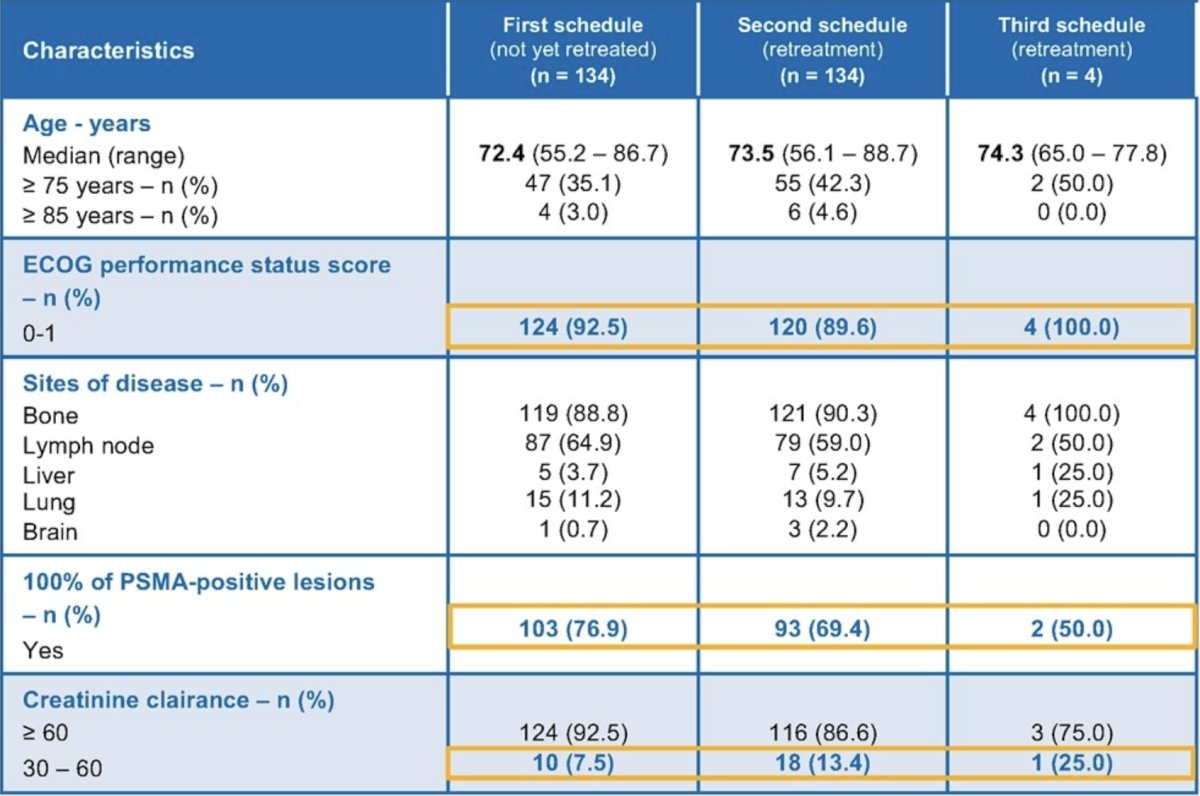
Some differences were observed at the initiation of the various treatment schedules within the retreated patients. Fewer of them had 100% PSMA positive lesions, and ECOG status <= 1. Increasing number of patients were presenting with renal impairment, which suggests a decline in patient condition at the start of the second schedule, compared to the first schedule. Anterior treatments have been compared in the 3 populations, with the following results:
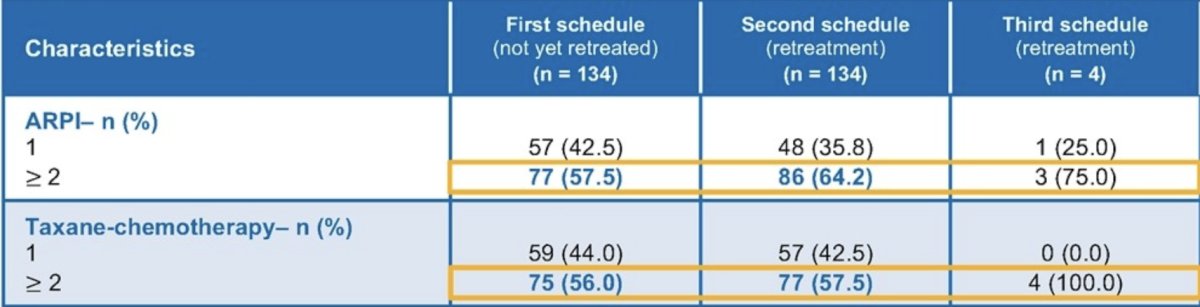
In the initial treatment schedule, the 134 retreated patients were more likely to have received concomitant androgen receptor pathway inhibitors (compared to non-retreated patients). However, fewer patients received a concomitant androgen receptor pathway inhibitor during their second schedule (retreatment) than during their first schedule:

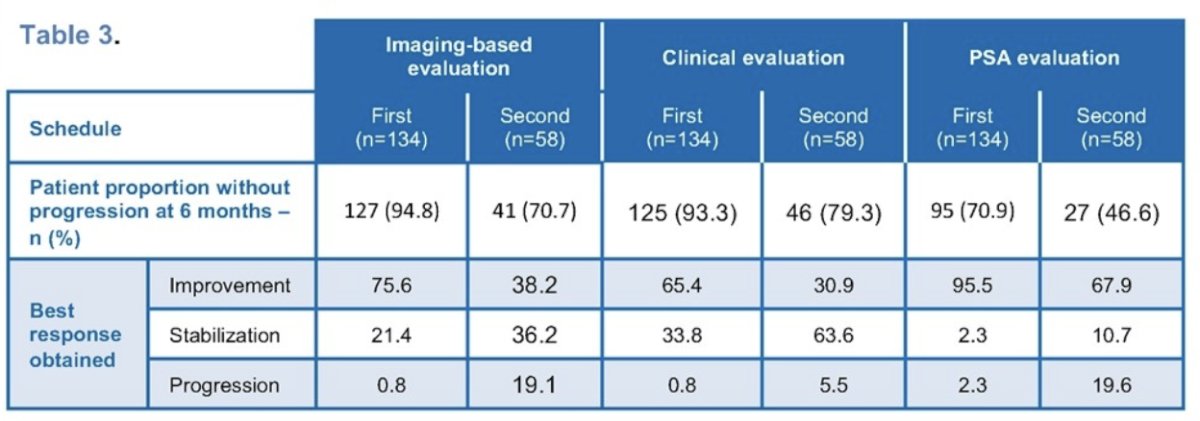
During the first schedule, patients received a median of 6 (range: 1-6) administrations of 177Lu-PSMA-617 and 3 (range: 1-6) during their second schedule. The patient who received the highest number of cycles received 13 cycles with a total activity of 92.02 GBq administered. With 8 months of follow-up, most patients showed disease stabilization during the second schedule, in addition to a PSA decrease during the second schedule:
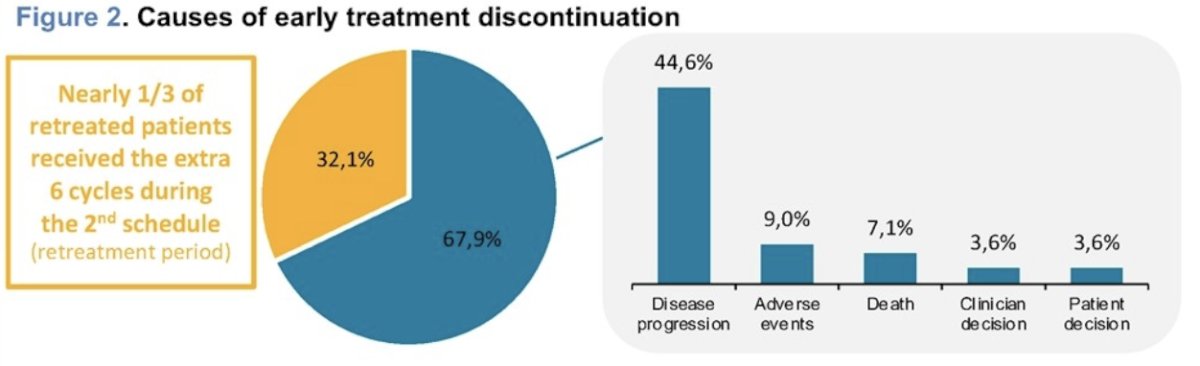
From the general population, 56 patients received a second schedule and completed an end of treatment form. The other 78 patients were still being monitored at the end of the Extended Access Program. Among them, 1/3 received the planned 6 cycles, and the cause of discontinuation was most commonly disease progression (44.6%):
In the first schedule, 15/134 patients were affected by at least 1 related adverse event, including 8 patients experiencing hematotoxicities (11/25 adverse events), and 2 patients experiencing renal disorders (2/25 adverse events). In the second schedule, only 3/134 patients were affected by at least one related adverse event (total of 5 adverse events), with all of these adverse events being hematotoxicities. In the 4 patients who initiated a 3rd schedule, no adverse events have been reported to date.
Dr. Barthelemy concluded his presentation discussing retreatment with 177Lu-PSMA-617 in mCRPC patients treated under the French early access program with the following take home points:
- An Early Access Program has been granted to 177Lu-PSMA-617 in France, for patients with progressive mCRPC expressing PSMA, previously treated with ≥1 taxane chemotherapy and ≥1 ARPI. This retrospective analysis focuses on patients retreated beyond 6 cycles
- As of April 29, 2025, 134 patients had received a second schedule, including 4 who had subsequently initiated a third schedule
- Minor patient characteristics differences were observed between their first and second schedule of treatment
- During the second schedule, retreated patients received less frequently a concomitant treatment and more specifically concomitant ARPI than during the first
- Most retreated patients experienced clinical improvement and PSA decrease during the second schedule follow-up
- No new signal of adverse events occurred during the retreatment period
Presented by: Philippe Barthelemy, MD, University Hospital Strasbourg, Strasbourg, France
Written by: Zachary Klaassen, MD, MSc – Urologic Oncologist, Associate Professor of Urology, Georgia Cancer Center, Wellstar MCG Health, @zklaassen_md on Twitter during the 2025 European Society of Medical Oncology (ESMO) Annual Meeting, Berlin, Germany, Fri, Oct 17 – Tues, Oct 21, 2025.
References:
- Sartor O, de Bono J, Chi KN et al. Lutetium-177-PSMA-617 for Metastatic Castration-Resistant Prostate Cancer. N Engl J Med. 2021 Sep 16;385(12):1091-1103.