

(UroToday.com) The 2025 ESMO annual meeting featured a prostate cancer session and a presentation by Dr. Lucia Fratino discussing drug–drug interactions in older patients treated with abiraterone or enzalutamide for advanced prostate cancer. Older patients with metastatic castration-resistant prostate cancer (mCRPC) are frequently prescribed abiraterone or enzalutamide as first-line androgen receptor pathway inhibitors. Polypharmacy is common in this population, raising the risk of drug–drug interactions, which may compromise treatment adherence and patient safety. The MeetURO ADHERE study, a prospective Italian observational study, investigated adherence to androgen receptor pathway inhibitors in patients aged over 70 years, identifying concomitant medication use as a key factor influencing adherence.
All concomitant medications recorded in ADHERE were analyzed for potential drug–drug interactions with abiraterone or enzalutamide using the Lexicomp® database. Drug–drug interactions were classified by risk rating:
- A: no known interaction
- B: no action needed
- C: monitor therapy
- D: consider therapy modification
- X: avoid combination
Drug-drug interactions were also assessed by severity (major, moderate, minor). Data were collected from February 2019 to September 2021.
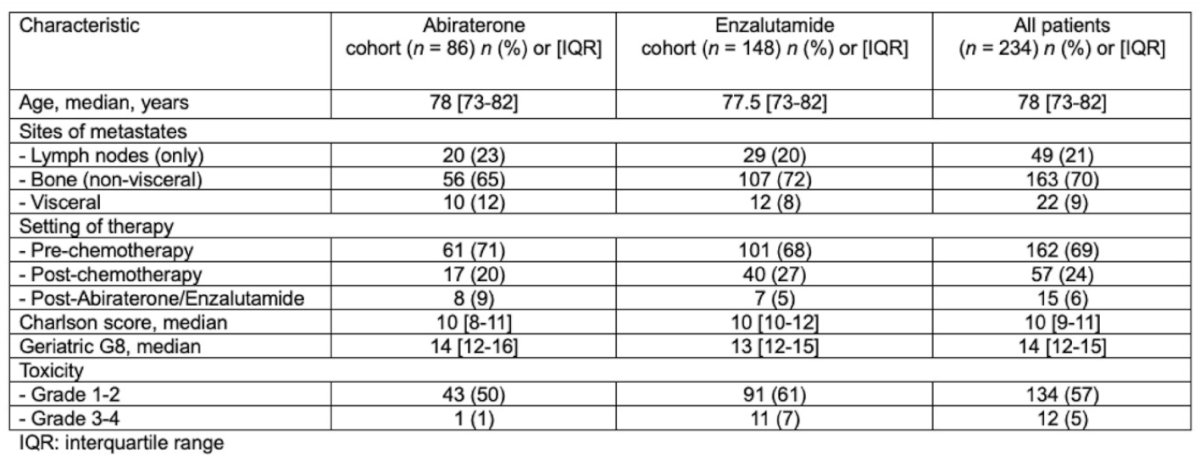
A total of 234 patients (median age 78 years) were enrolled, with the following characteristics
The prevalence and severity of potential drug–drug interactions are summarized below:
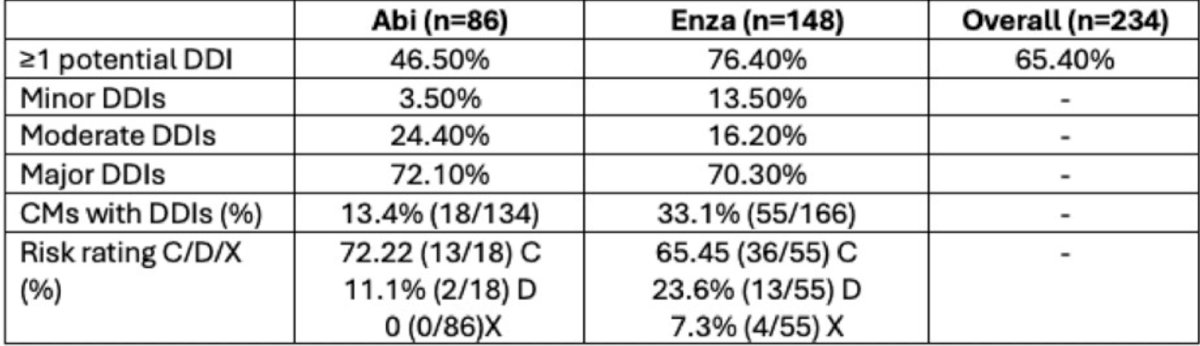
In the abiraterone group, the most frequent concomitant medications with potential drug–drug interactions were atorvastatin (n = 14), tamsulosin (n = 10), and codeine (n = 6). In the enzalutamide group, atorvastatin (n = 32), bisoprolol (n = 30), and amlodipine (n = 19) were most commonly implicated. The majority of drug–drug interactions were classified as major, particularly in the context of polypharmacy. Notably, 76.4% of patients on enzalutamide and 46.5% on abiraterone had at least one potential drug–drug interaction.
Dr. Fratino concluded this presentation discussing drug–drug interactions in older patients treated with abiraterone or enzalutamide for advanced prostate cancer with the following take home points:
- This real-world analysis highlights a high prevalence of potential drug–drug interactions in older patients with mCRPC treated with abiraterone or enzalutamide, especially among those with significant polypharmacy
- These findings underscore the importance of systematic medication review and drug–drug interaction screening to optimize safety and adherence in this frail population
Presented by: Lucia Fratino, Centro di Riferimento Oncologico di Aviano IRCCS, Aviano, Italy
Written by: Zachary Klaassen, MD, MSc – Urologic Oncologist, Associate Professor of Urology, Georgia Cancer Center, Wellstar MCG Health, @zklaassen_md on Twitter during the 2025 European Society for Medical Oncology (ESMO) Annual Congress, Berlin, Germany, October 17–21, 2025