

(UroToday.com) The 2025 European Society for Medical Oncology (ESMO) Annual Congress held in Berlin, Germany was host to a prostate cancer poster session. Dr. Deepak Kilari, presented an analysis of the impact of androgen deprivation therapy (ADT) on KLK2 mRNA expression and immunologic correlates across prostate cancer disease states.
The KLK2 gene is an androgen related gene, which encodes human kallikrein (hK2), a member of the kallikrein-related peptidases family. The KLK2 gene is located on chromosome 19q13.4, in close proximity to other kallikrein genes, including KLK3, which encodes prostate-specific antigen (PSA). The KLK2 protein shares 80% amino acid homology with PSA, suggesting a common evolutionary origin and coordinated regulation of these proteases.
KLK2 protein is overexpressed in prostate cancer tissue compared to benign prostate tissue and has been associated with stage and grade. It exits in both secreted and membrane-associated forms, with the latter being a potential therapeutic target for prostate cancer, which has been demonstrated in preclinical and early clinical studies.
These findings collectively underscore the need to better characterize the molecular profile of high and low KLK2 expressing tumors to establish its value as a prognostic and potentially predictive marker.
NextGen sequencing of DNA (592-gene/whole exome) and RNA (whole transcriptome) was performed for prostate cancer patient specimens (n=7,078) through Caris Life Sciences (Phoenix, AZ). From this, adenocarcinoma histology (n=7,020) was used exclusively for this analysis except for Figure 1 and Table 1.

KLK2-High/Low expression were defined as percentile of RNA transcripts per million (TPM):
- Q1: < 25th (Low)
- Q2: 25th – 50th
- Q3: 50th – 75th
- Q4: ≥75th (High)
Castrate resistant prostate cancer (CRPC) and hormone sensitive PC (HSPC) were defined based on ADT duration prior to tissue collection – HSPC < 3 and CRPC ≥ 3 months of ADT start with or without an ARPI.
Among HSPC tumors, the study investigators evaluated KLK2 expression in treatment-naïve specimens and those collected within 3 months of ADT with or without an ARPI. Tumor Mutation Burden (TMB), deficient mismatch repair/microsatellite instability (dMMR/MSI-H), and programed death ligand 1 (PD-L1) immunohistochemistry (IC, Ventana SP124) were evaluated. Immune cell fractions were inferred using quanTIseq.
Kaplan-Meier estimates for real-world overall survival (OS) were calculated from time of diagnosis to last contact or death. Time on Treatment (TOT) was calculated from the time of treatment initiation to time of treatment discontinuation for any cause.
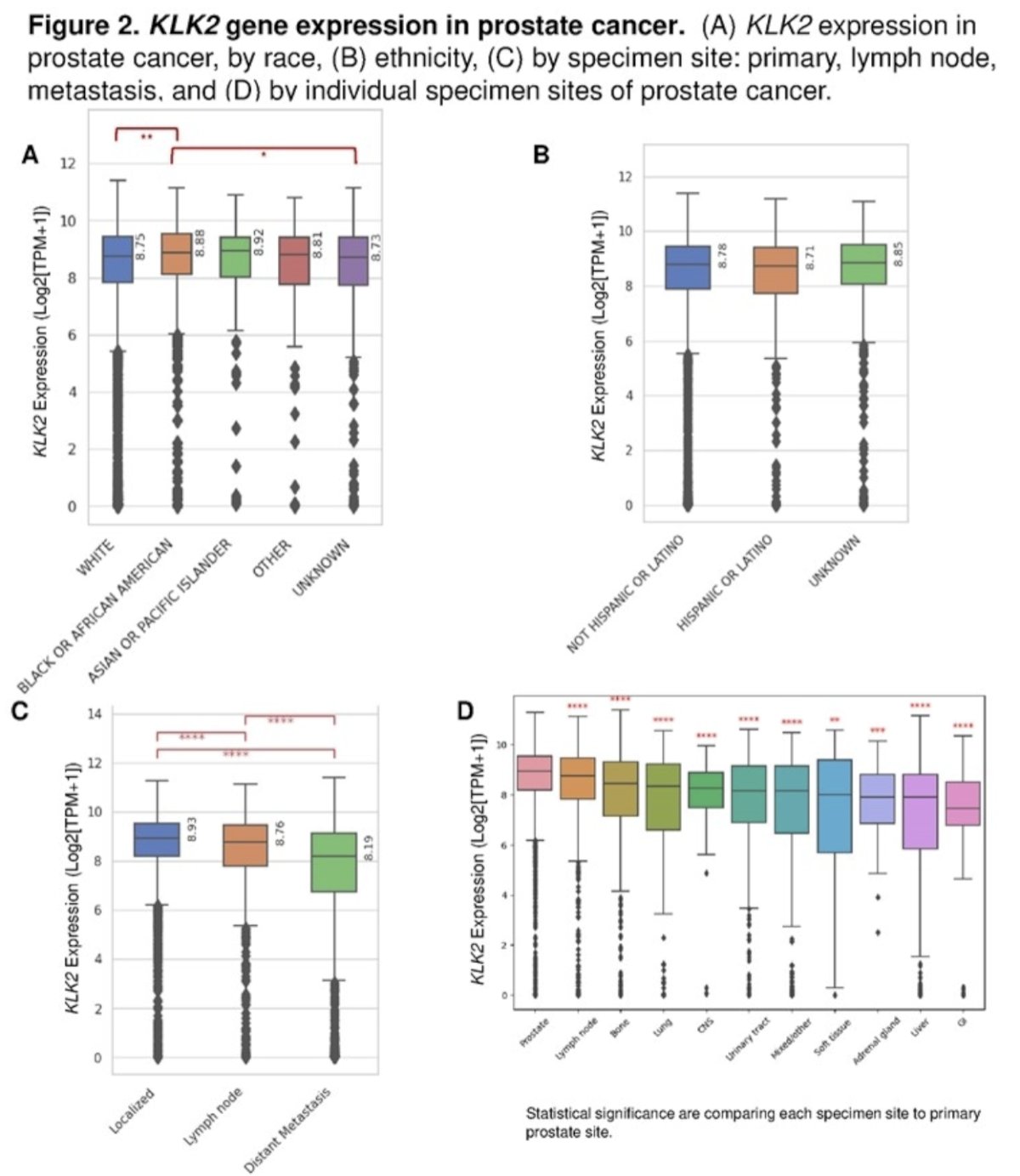
KLK2 gene expression by race, ethnicity, and specimen site is summarized below. Significantly higher KLK2 expression is observed in black or African American patients, and lower expression in white patients. KLK2 expression was highest in the prostate compared to lymph node and metastatic sites.
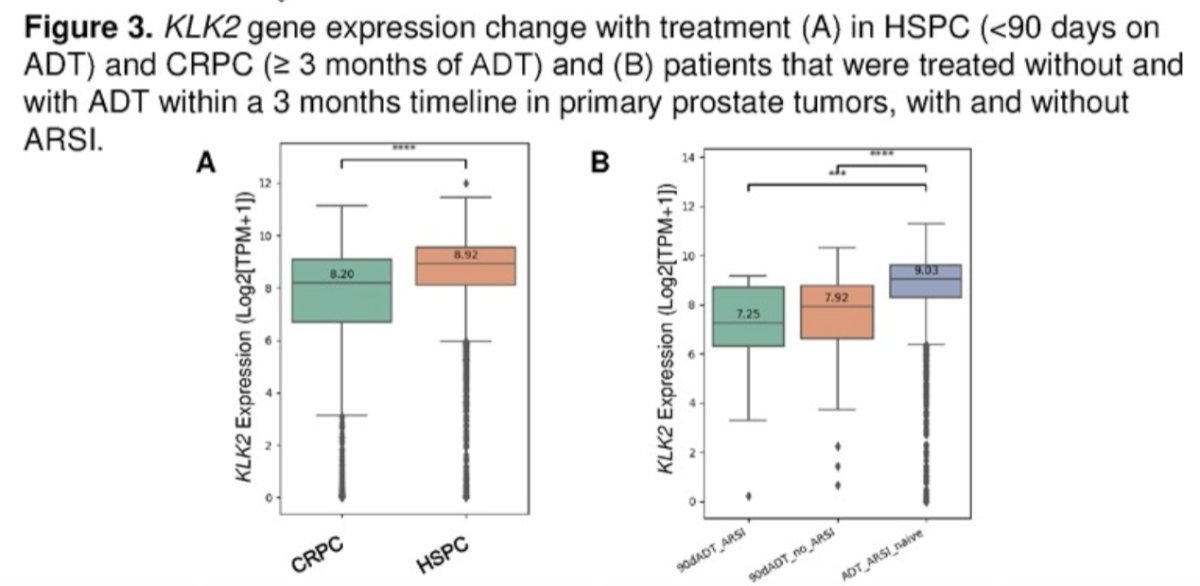
KLK2 expression was higher in HSPC, compared to CRPC. KLK2 expression persisted but was significantly progressively lower in patients treated with ADT + ARPI or ADT alone, compared to patients who were treatment naïve in the HSPC setting.
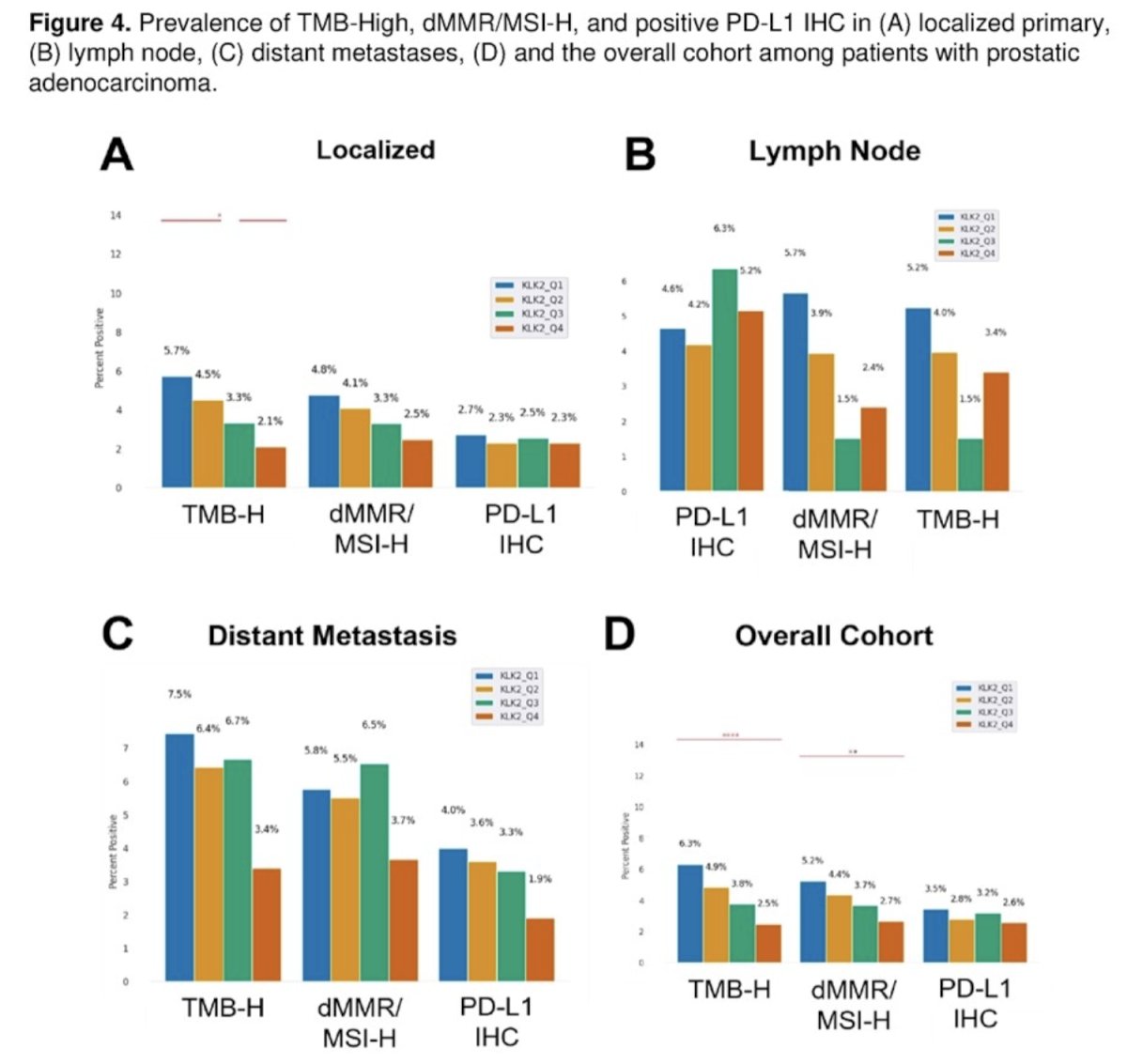
In the overall cohort, high KLK2 expression was associated with a lower prevalence of TMB-H tumors and dMMR/MSH-H tumors.
High KLK2 expression is associated with a distinct tumor microenvironment characterized by enrichment of B-cells, M2 macrophages, neutrophils, and NK cells, with reduced infiltration of effector T-cell populations.

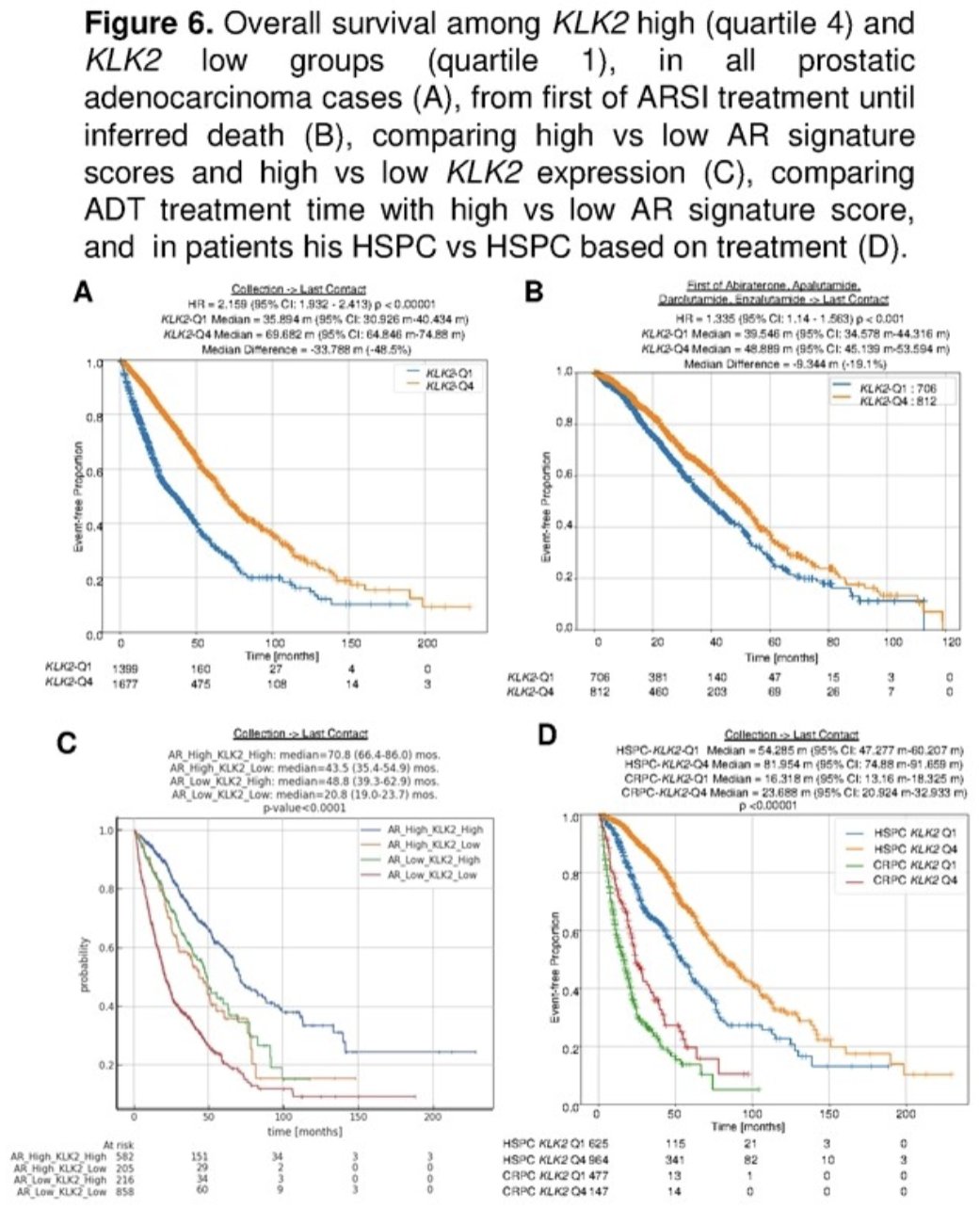
Patients with high KLK2 expression had better outcomes compared to those with low KLK2 expression and this trend was observed with ARPI treatment.
Dr. McKay concluded as follows:
- This is the largest analysis to date of KLK2-related genomic/transcriptomic features and survival outcomes in prostate cancer.
- Significantly higher KLK2 expression is observed in black or African American patients, and lower expression in white patients.
- KLK2 expression was highest in the prostate compared to lymph node and metastatic sites.
- KLK2 expression was higher in HSPC compared to CRPC.
- KLK2 expression persisted but was significantly progressively lower in patients treated with ADT + ARPI or ADT alone, compared to patients who were treatment naïve in the HSPC setting.
- In the overall cohort, high KLK2 expression was associated with a lower prevalence of TMB-H tumors and dMMR/MSH-H tumors.
- High KLK2 expression is associated with a distinct tumor microenvironment characterized by enrichment of B-cells, M2 macrophages, neutrophils, and NK cells, with reduced infiltration of effector T-cell populations.
- Patients with high KLK2 expression had better outcomes compared to those with low KLK2 expression and this trend was observed with ARPI treatment.
Presented by: Deepak Kilari, MD, Associate Professor, Medical College of Wisconsin, Froedtert & the Medical College of Wisconsin Clinical Cancer Center, Milwaukee, WI
Written by: Rashid K. Sayyid, MD, MSc, Assistant Professor, Urologic Oncologist, Department of Urology at The University of Arizona and Banner University Medical Center – Tucson, AZ, @rksayyid on X during the 2025 European Society for Medical Oncology (ESMO) Annual Congress, Berlin, Germany, October 17–21, 2025