

(UroToday.com) The 2025 European Society of Medical Oncology (ESMO) Annual Congress held in Berlin, Germany, was host to the Poster presentation session. Zeynep Irem Ozay presented the poster Comparative Effectiveness of Direct Androgen Receptor Inhibitors (ARIs) versus Abiraterone (Androgen Synthesis Inhibitor) in Real-World Patients (pts) in the US with Metastatic Hormone-Sensitive Prostate Cancer (mHSPC).
Dr. Ozay began by noting that direct androgen receptor inhibitors (ARIs) such as apalutamide and enzalutamide, along with the androgen synthesis inhibitor abiraterone, are established first-line treatment options for patients with metastatic hormone-sensitive prostate cancer (mHSPC). However, these agents have not been directly compared in clinical trials. The presented analysis aimed to evaluate the comparative effectiveness of ARIs versus abiraterone in this setting.
This retrospective study utilized the nationwide Flatiron Health electronic health record-derived database to evaluate real-world outcomes among patients with mHSPC. Eligible patients had initiated treatment with a single-agent ARI (apalutamide or enzalutamide) or abiraterone within three months before or up to six months after mHSPC diagnosis, while those previously treated with docetaxel were excluded. The primary endpoint was overall survival, measured from the time of mHSPC diagnosis.
To account for baseline differences, propensity score weighting was applied using logistic regression incorporating clinical and demographic variables, including age, diagnosis year, race/ethnicity, practice type, insurance, de novo status, Gleason score ≥8, ECOG ≥2, PSA levels, diabetes, and chronic heart failure. A multivariable Cox proportional hazards model was used by the investigators on the weighted cohort.
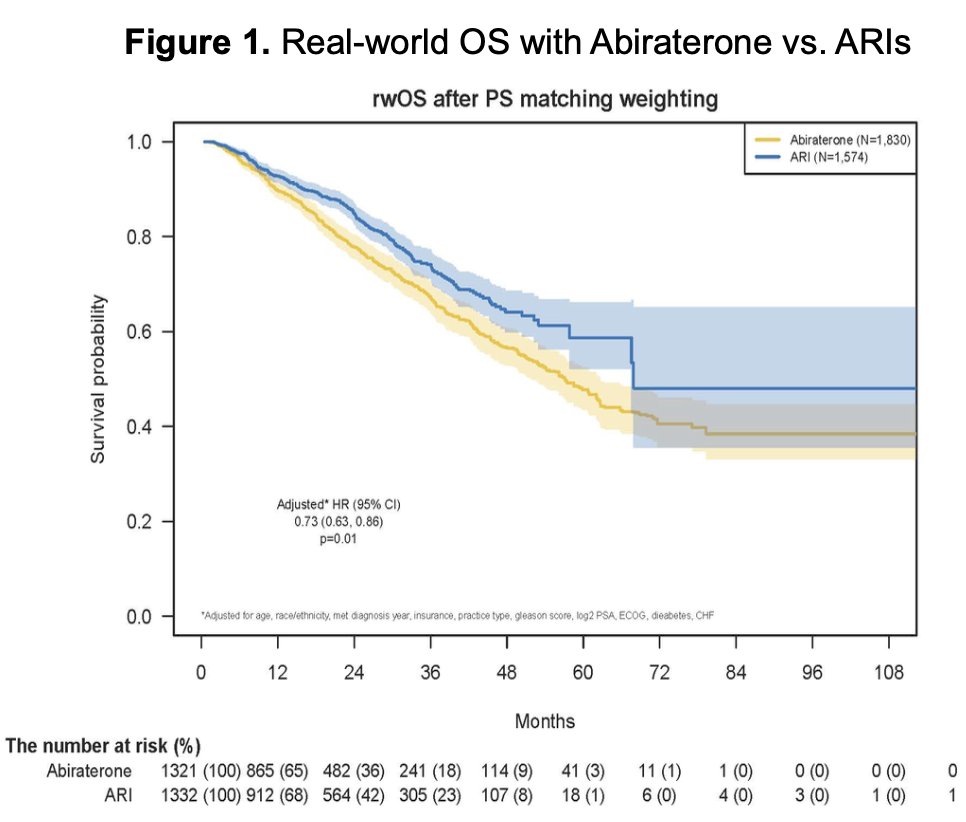
Dr. Ozay noted that among 24,105 patients diagnosed with metastatic prostate cancer in the Flatiron database, 14,084 had available treatment information. Of these, 3,404 patients met the inclusion criteria for the analysis, having initiated treatment with either a single-agent ARI (apalutamide or enzalutamide) or abiraterone within three months before or up to six months after an mHSPC diagnosis. Overall, 1,830 patients received abiraterone, while 1,574 were treated with an ARI.
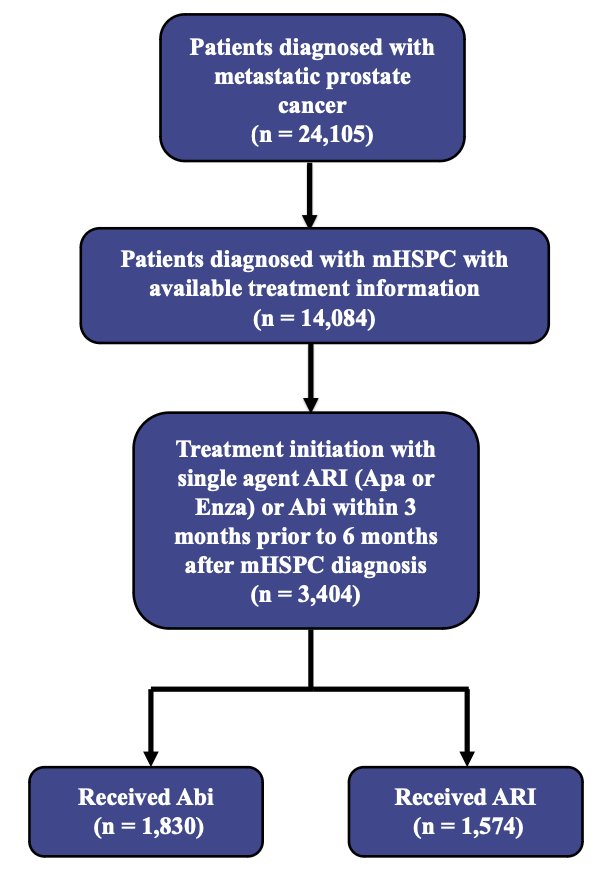
Baseline characteristics were generally well balanced between treatment groups. The median age was 72 years for patients receiving abiraterone and 74 years for those on an ARI. Most were White non-Hispanic (62% and 56%, respectively) and treated in community settings. Over 70% in both cohorts had Gleason ≥8 disease, and about 60% presented with de novo metastatic cancer and comparable ECOG performance status and comorbidity profiles across groups as illustrated in the table below.
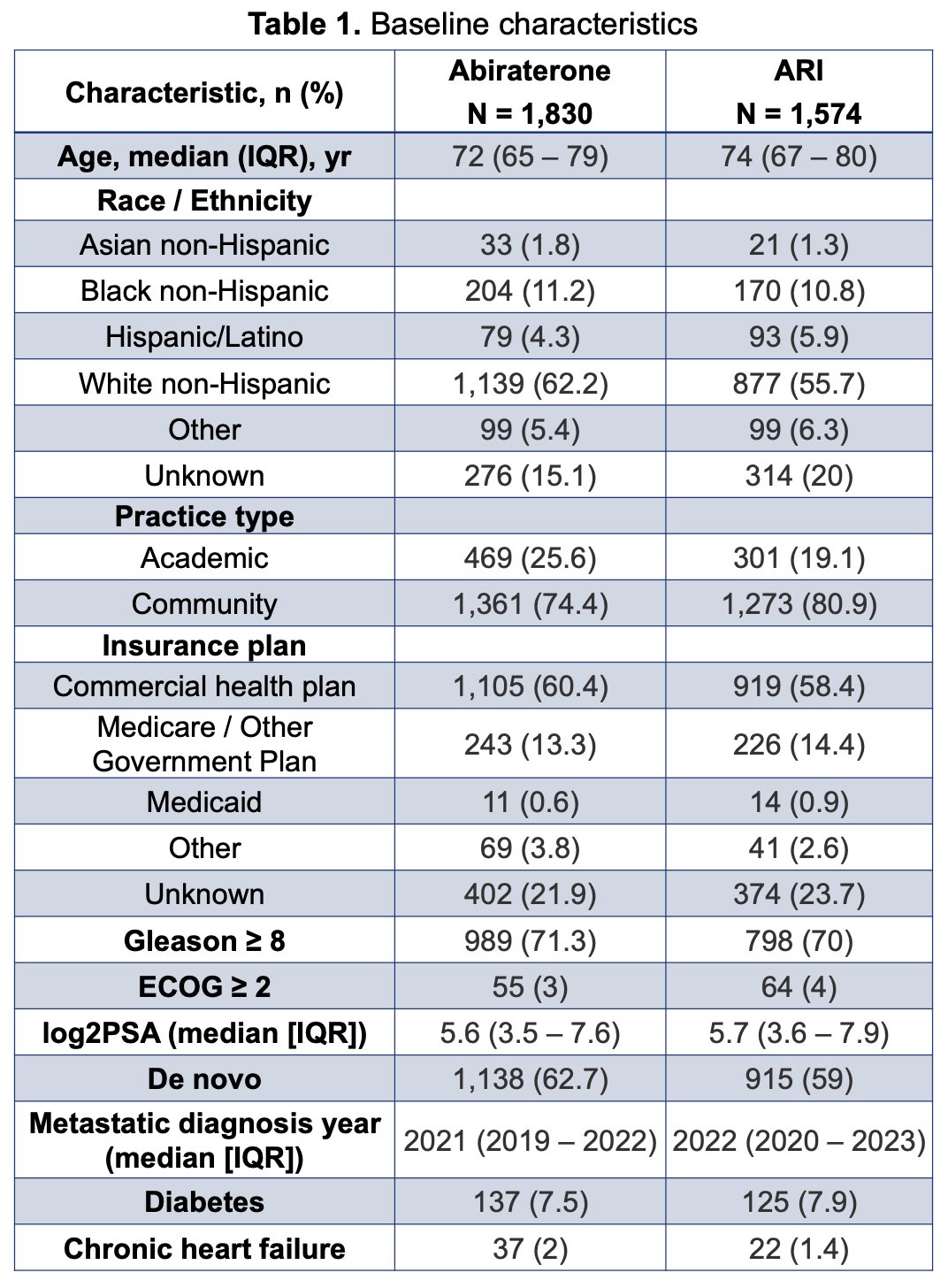
Notably, patients treated with ARIs experienced significantly longer overall survival compared to those receiving abiraterone. The median OS was 67.9 months (95% CI 67.5–not reached) for ARIs versus 57.1 months (95% CI 51.9–62.7) for abiraterone, corresponding to a hazard ratio of 0.73 (95% CI 0.63–0.86).
Dr Ozay concluded their presentation with the following key takeaways:
- In this large real-world analysis, ARIs were associated with significantly improved overall survival compared to abiraterone in patients with mHSPC.
- These findings may help guide treatment selection, inform clinical decision-making, and support patient counseling.
- Limitations include the retrospective nature of the study and the use of real-world data.
Presented by: Zeynep Irem Ozay, Postdoctoral Research Fellow · Huntsman Cancer Institute, Salt Lake City, United States of America.
Written by: Julian Chavarriaga, MD – Urologic Oncologist at Cancer Treatment and Research Center (CTIC) via Society of Urologic Oncology (SUO) Fellow at The University of Toronto. @chavarriagaj on Twitter during the 2025 European Society for Medical Oncology (ESMO) Annual Congress, Berlin, Germany, October 17–21, 2025