

(UroToday.com) The 2025 ESMO annual meeting featured a prostate cancer session and a presentation by Dr. Guilhem Roubaud discussing a biomarker analysis from the Phase II PT-112 monotherapy study in late-line metastatic castration-resistant prostate cancer (mCRPC). PT-112, an inhibitor of ribosome biogenesis, induces robust signals of immune activation and was evaluated as monotherapy in a 111 patient phase 2 study in late-line mCRPC (median 4 prior lines of therapy), where it demonstrated good tolerability and showed multiple efficacy signals with encouraging overall survival:

Evidence of immune activation, including T-cell clonal expansions and T-cell fraction increases, was also observed. This report, presented at ESMO 2025, details a biomarker analysis to explore baseline profiles and on-treatment dynamics with PT-112.
Blood samples were collected pre- and on-treatment (multiple time points), and CD45- CK+ CTCs, ALP, LDH, and ctDNA (fraction, mutations, and copy number variations) were assessed. Hazard ratios for survival were calculated via Cox proportional hazards regression.
Baseline CTCs, ALP, LDH, and ctDNA fraction were elevated and were significant prognostic factors for overall survival:

CTC reductions to 0.0 CTCs/mL (CTC0) and declines of ≥10% of ALP and LDH were seen in 31%, 53% and 39% of patients, respectively:


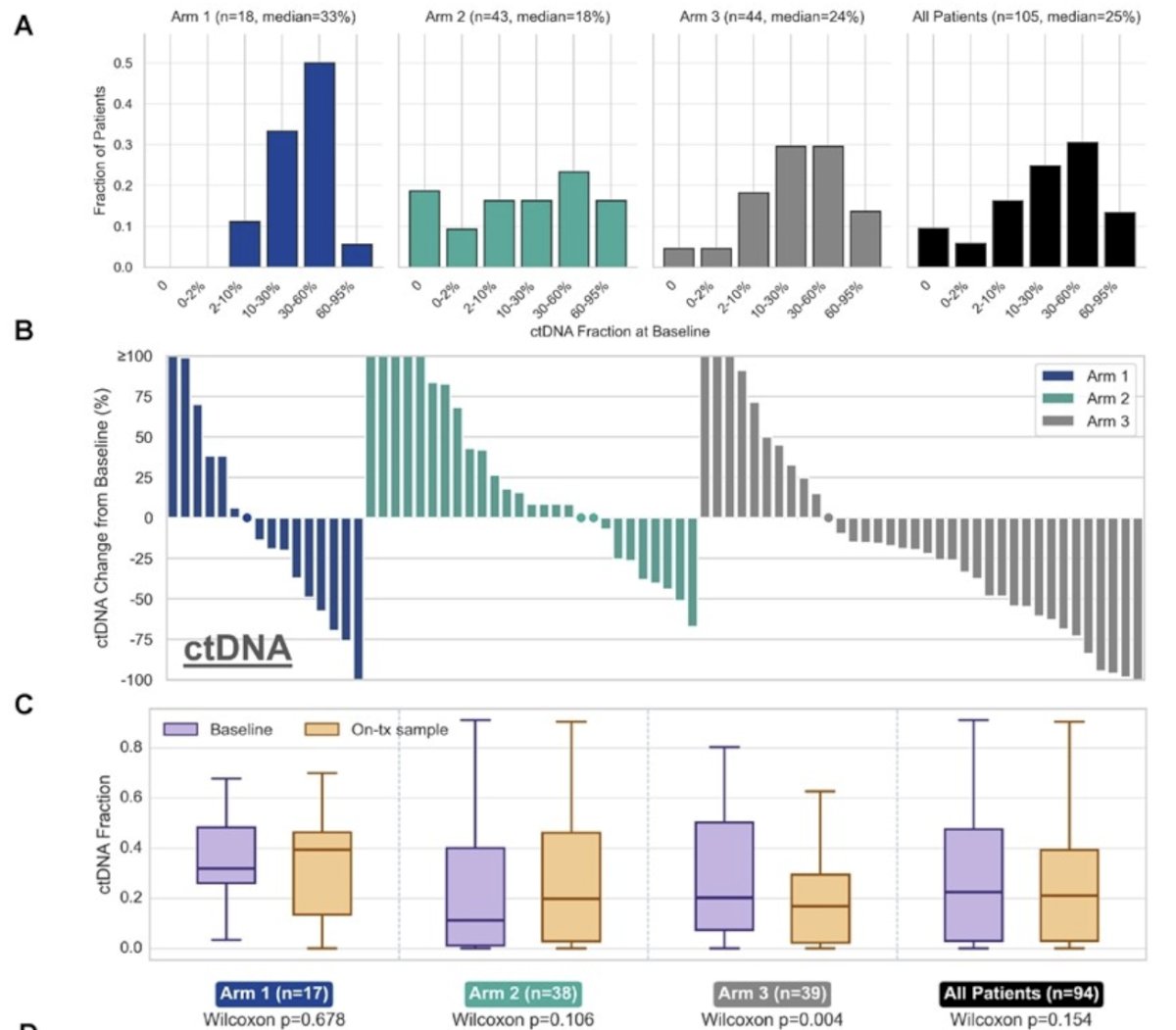
Quantitative measurement of ctDNA fraction showed 8/36 patients (22%) experienced relative ctDNA reductions of >25%:
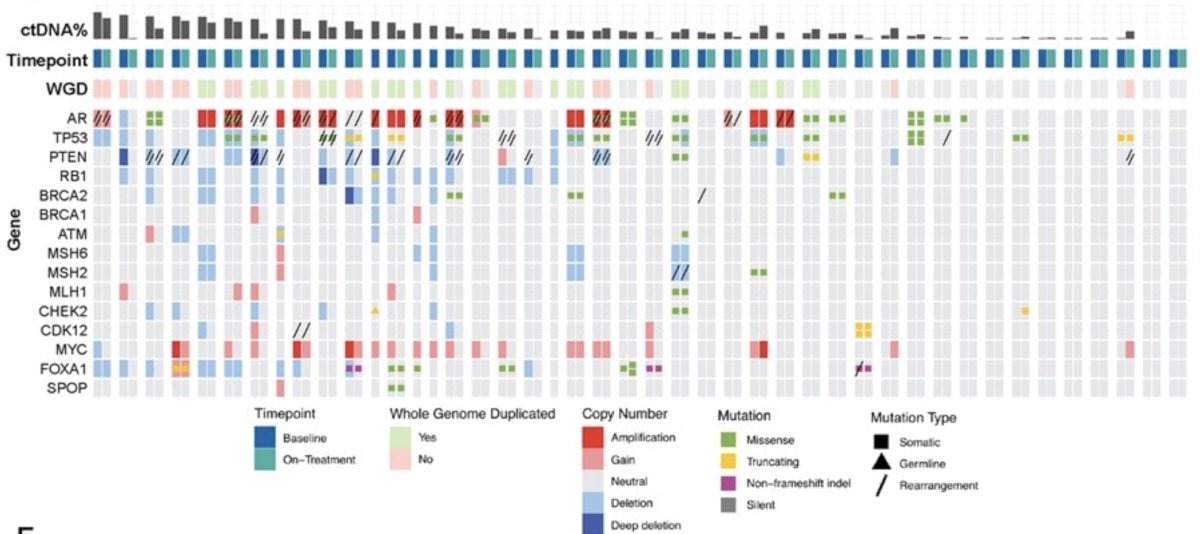
Monoallelic and biallelic copy number alterations were frequent and included amplifications in mCRPC drivers, ie. AR (54%) and MYC (24%), and loss of tumor suppressor genes, ie. RB1 (45%), TP53 (32%), and PTEN (30%):
Dr. Roubaud concluded this presentation discussing a biomarker analysis from the Phase II PT-112 monotherapy study in late-line mCRPC with the following take home points:
- High baseline biomarker values, especially ctDNA fraction, reflect extensive disease burden and poor prognosis at study entry. The presence of genomic alterations also highlights a heterogeneous and aggressive disease
- Baseline CTCs, ALP, LDH, and ctDNA fraction were prognostic for overall survival, with each showing statistically significant on-treatment reductions
- PSA was not a significant prognostic baseline feature. This is plausible in late-line mCRPC, where AR signaling is often no longer the key driver of the disease, and neuroendocrine features often emerge
- Taken together, these data support clinical benefit of PT-112 in aggressive, heterogeneous mCRPC and nominate ctDNA, CTCs, ALP, and LDH as practical prognostic and treatment monitoring biomarkers in future studies
Presented by: Guilhem Roubaud, Institut Bergonié, Bordeaux, France
Written by: Zachary Klaassen, MD, MSc – Urologic Oncologist, Associate Professor of Urology, Georgia Cancer Center, Wellstar MCG Health, @zklaassen_md on Twitter during the 2025 European Society for Medical Oncology (ESMO) Annual Congress, Berlin, Germany, October 17–21, 2025
Rellated content: Biomarker Data from Phase II PT-112 Trial in Heavily Pretreated mCRPC - Alan Bryce