

(UroToday.com)The 2025 ESMO annual meeting featured a prostate cancer session and a presentation by Dr. Pedro Barata discussing survival outcomes in metastatic prostate cancer. Prostate cancer remains the second leading cause of cancer death in men in the United States, and survival of prostate cancer is known to vary significantly by stage at diagnosis. Over the last 15 years, several life-prolonging therapies have been approved for the treatment of metastatic prostate cancer:
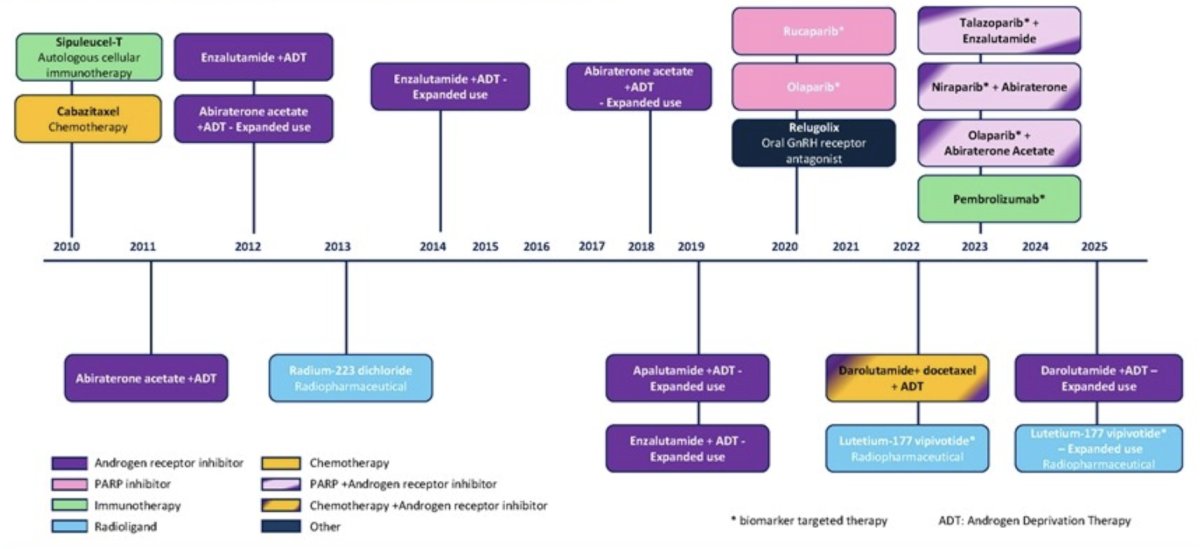
However, the impact of these novel therapies on patient outcomes in the real world is unknown. The objective of this study was to assess survival outcomes and related predictors in patients diagnosed with distant-stage (metastatic) prostate cancer.
For this study, data were obtained from the Surveillance, Epidemiology, and End Results (SEER), which covers approximately 48% of the US population (22 geographic areas). Men diagnosed with metastatic prostate cancer (ICD-10: C61.9) between 2010 and 2021 were included, with a date of last follow-up of December 2021. Overall survival and cancer-specific survival were estimated from metastatic prostate cancer diagnosis using Kaplan-Meier methods. The median survival and 5-year survival rates were reported, and predictors of survival were assessed using Cox proportional hazards modeling.
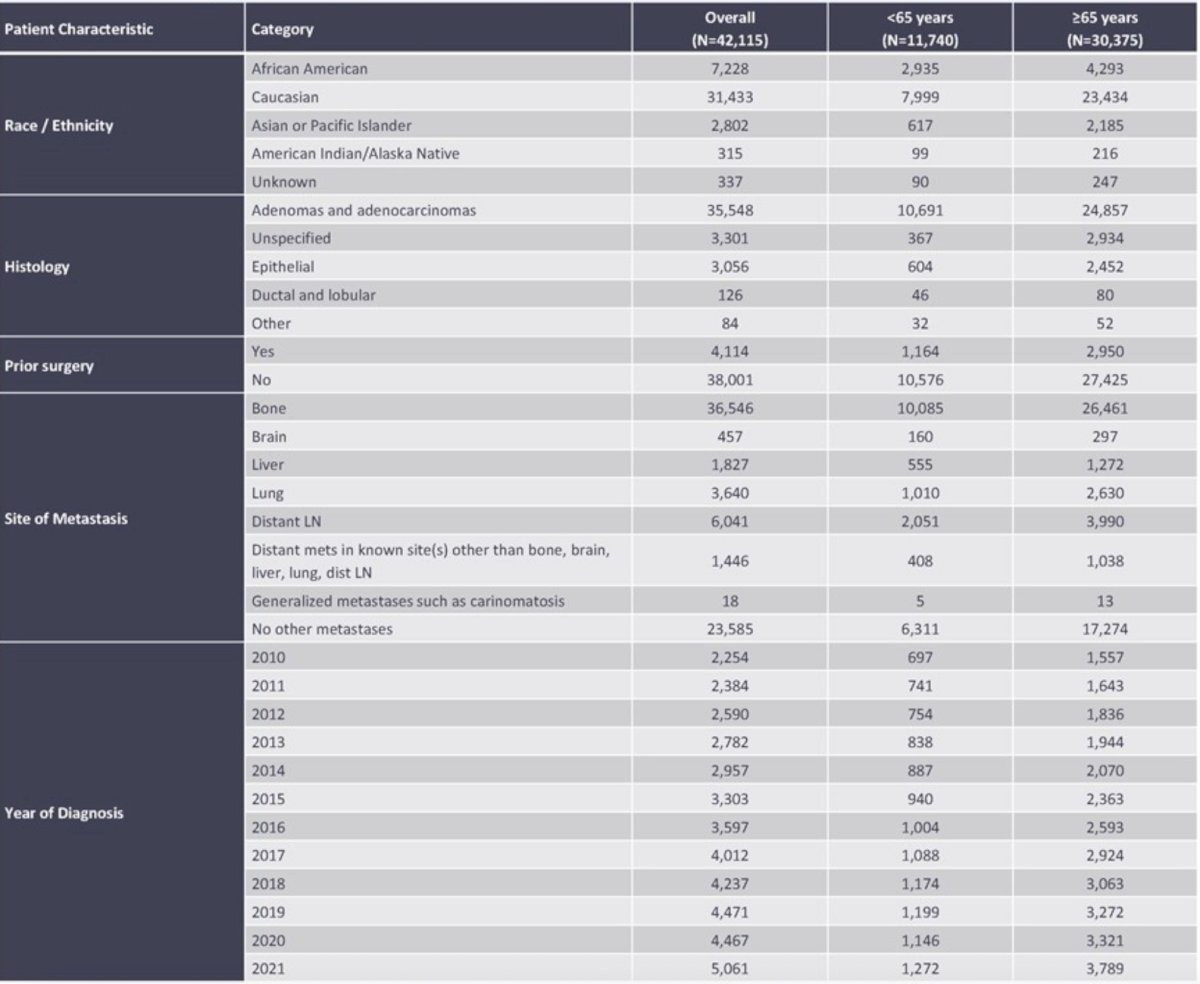
The cohort included 42,115 patients with metastatic prostate cancer, 53% of whom were diagnosed in 2017 or later. The majority (72%) were aged ≥65 years, with a mean age of 71, and adenocarcinoma was the most common histologic subtype (84%):
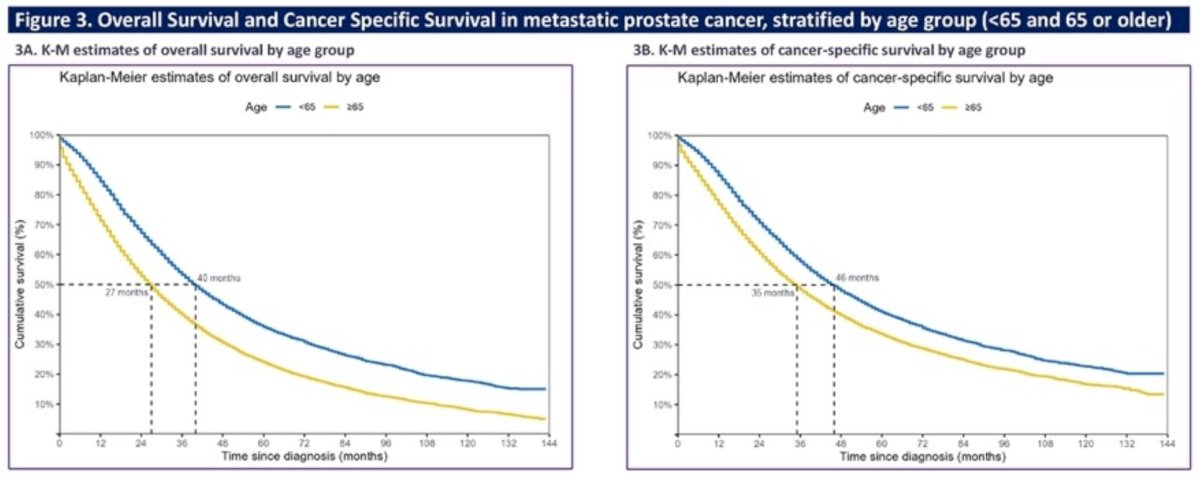
The median overall survival was 30 months, with a 5-year overall survival rate of 27%. The median cancer-specific survival was 38 months, with a 5-year cancer-specific survival rate of 36%:
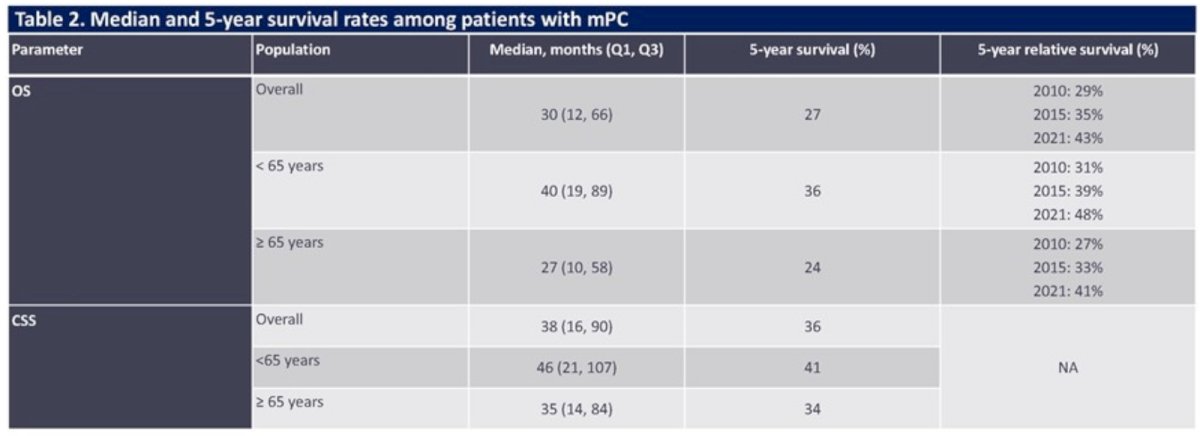
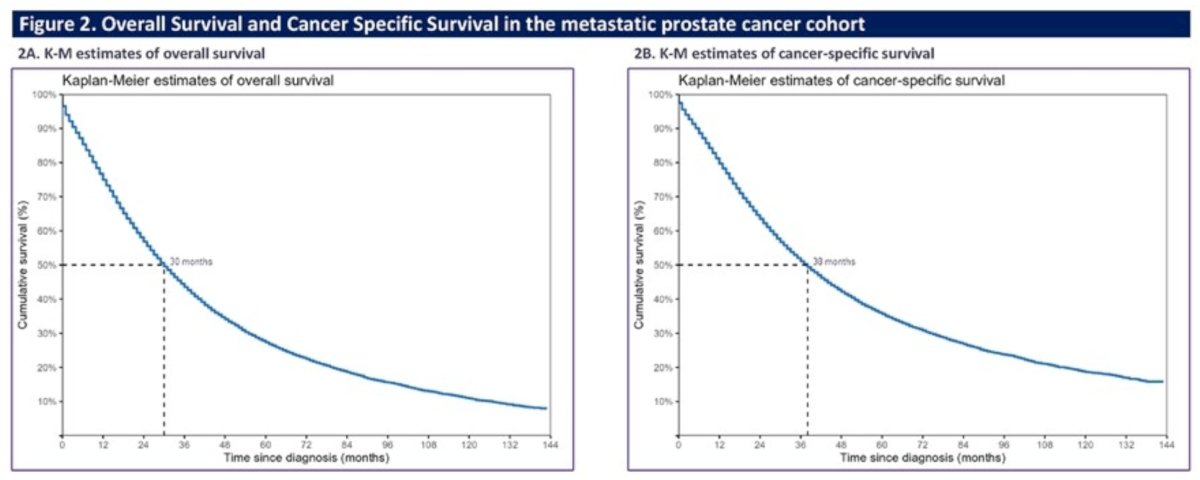
Among patients aged ≥65, the median overall survival and cancer-specific survival were 27 and 35 months, respectively, with 5-year survival rates of 24% and 34%:
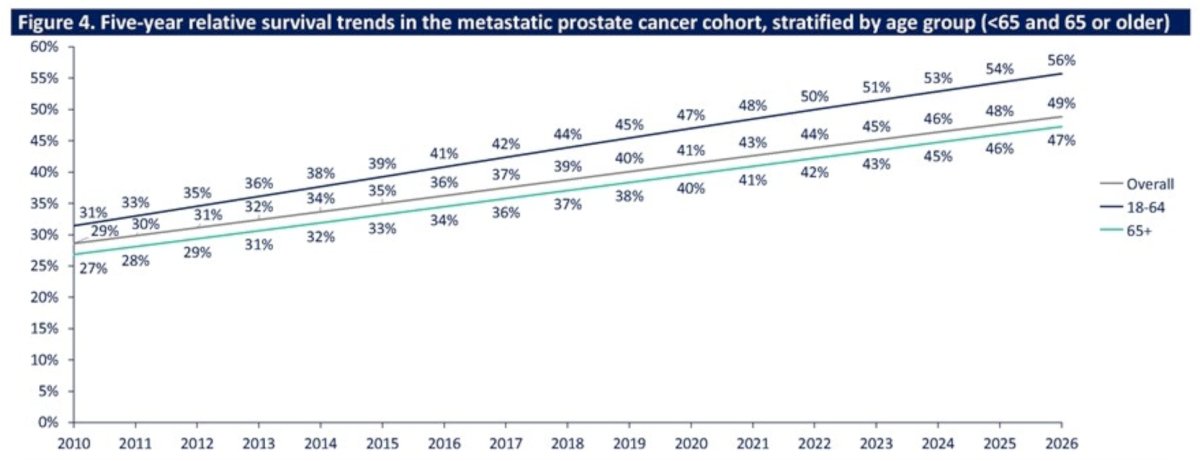
Five-year relative survival improved from 29% in 2010, compared to 35% in 2015 and 43% in 2021:
Significant predictors of overall survival and cancer-specific survival included age, race, histology, and absence of prior surgery (p < 0.05):

Limitations of the current trial include (i) detailed information on treatment and related dosing is not available in SEER, and (ii) observed survival trends might not reflect recently approved treatments in non-metastatic prostate cancer, which could eventually impact treatment choice and hence survival outcomes in metastatic prostate cancer.
Dr. Barata concluded his presentation discussing survival outcomes in metastatic prostate cancer with the following take-home points:
- Survival outcomes for patients with metastatic prostate cancer have improved over the past decade, coinciding with the introduction of novel targeted therapies in clinical practice
- Continued development of novel therapies, particularly those designed for patient subgroups with poorer prognoses, will be key to achieving further improvements in survival outcomes
Presented by: Pedro C. Barata, MD, MSc, FACP, Miggo Family Chair in Cancer Research, Co-Leader Genitourinary (GU) Disease Team, Director of GU Medical Oncology Research Program, University Hospitals Seidman Cancer Center, Associate Professor of Medicine, Case Western Reserve University, Case Comprehensive Cancer Center, Cleveland, OH
Written by: Zachary Klaassen, MD, MSc – Urologic Oncologist, Associate Professor of Urology, Georgia Cancer Center, Wellstar MCG Health, @zklaassen_md on Twitter during the 2025 European Society of Medical Oncology (ESMO) Annual Meeting, Berlin, Germany, Fri, Oct 17 – Tues, Oct 21, 2025.
Related content: A SEER Database Analysis of Real-World Survival Trends in Metastatic Prostate Cancer - Pedro Barata