

(UroToday.com) The 2025 ESMO annual meeting featured a prostate cancer session and a presentation by Dr. Giorgia Bortolus discussing real-world experience with radium-223 in metastatic castration-resistant prostate cancer (mCRPC). Prostate cancer is one of the leading causes of cancer-related morbidity and mortality in men. A significant proportion of patients progress to CRPC, often accompanied by bone metastases, which significantly impact quality of life and are associated with poor prognosis.
Radium-223, an alpha-emitting radiopharmaceutical, is approved for the treatment of osteoblastic bone metastases in mCRPC based on the ALSYMPCA trial.1 While clinical trials have demonstrated their impact on overall survival and skeletal events, real-world data remain scarce. This study, presented at ESMO 2025, reported a single-center experience with radium-223, focusing on overall survival and subsequent therapeutic strategies in mCRPC patients with bone progression.
This was a retrospective analysis of bone mCRPC patients treated with radium-223 from 2017 to 2024. Eligibility was based on clinical staging (18F-choline PET-CT, bone scintigraphy) and bone marrow function. Radium-223 was administered every 4 weeks for a total of six cycles, and restaging was performed two months post-treatment. Overall survival was calculated from the first cycle of radium-223 to the last follow-up or death, using the Kaplan–Meier method.
A total of 87 mCRPC patients were included in the analysis (median age 77 years, range 54-87), and 74% of patients were >70 years of age. Overall, 60.9% of patients completed all six cycles of radium-223. Prior to radium-223, 54% had received ≥2 therapy lines, with 49.4% exposed to docetaxel and 5.7% also to cabazitaxel:
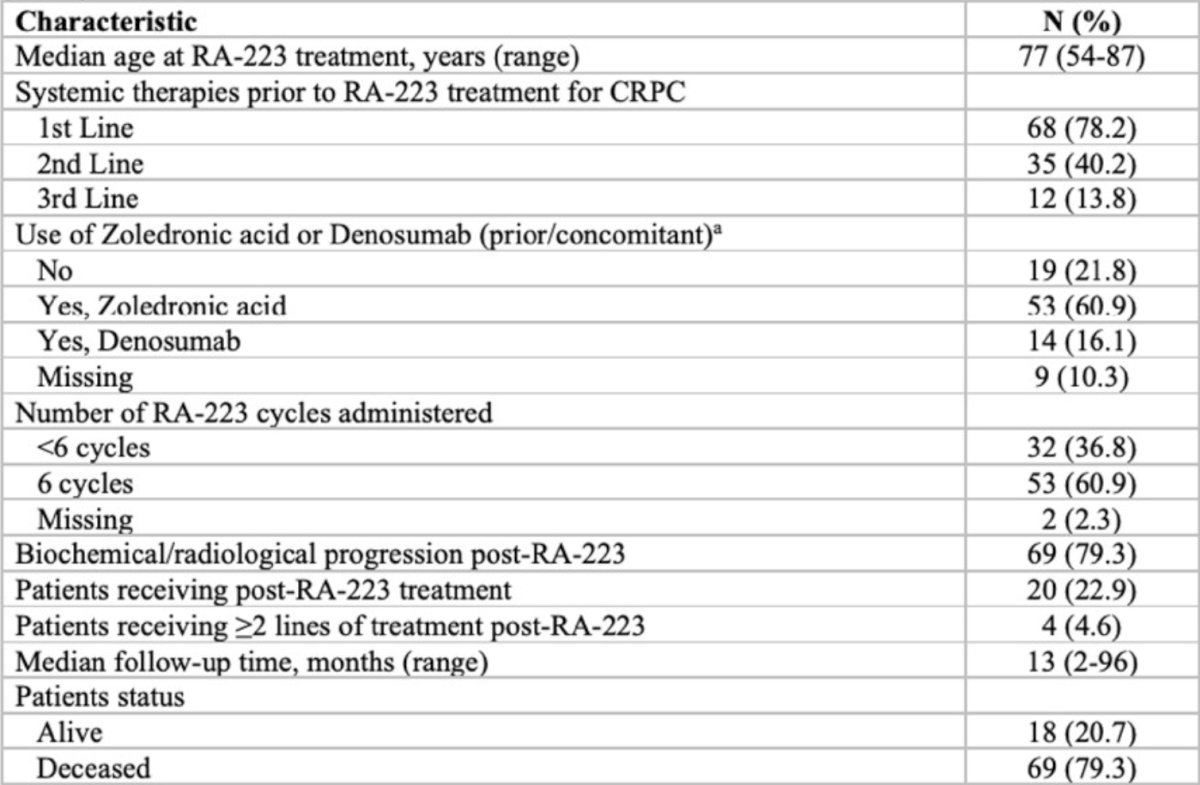
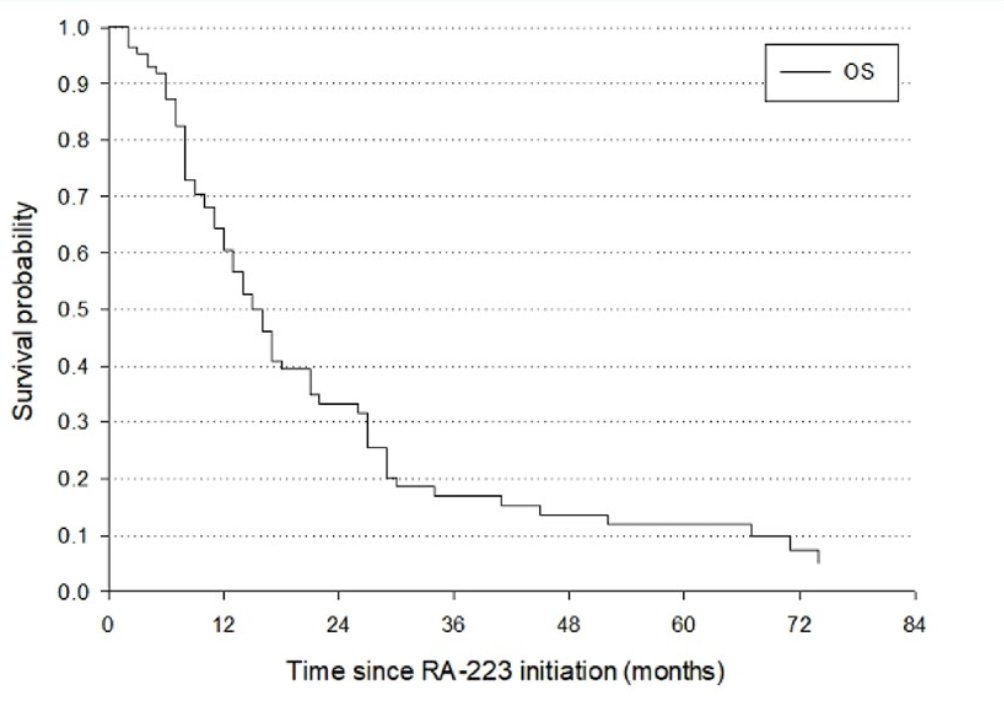
Hematologic toxicity was the most frequent adverse event (72.2%), with > grade 2 toxicity observed in 22.2% of cases (grade 3 - 16.7%; grade 4 - 5.5%). Following radium-223, 23% of patients received further treatment, with 40% continuing with taxanes. At a median follow-up of 13 months (range 2-96), the median progression-free survival was 7.5 months, and the median overall survival was 16 months, with 1- and 2-year overall survival rates of 60.5% and 33.3%, respectively:
Dr. Bortolus concluded this presentation discussing real-world experience with radium-223 in mCRPC with the following take-home points:
- Radium-223 is a feasible and well-tolerated therapeutic option for patients with bone progression from mCRPC, including elderly patients
- The possibility of further treatments following radium-223 is of great interest and warrants further investigation to better understand its exact placement within the therapeutic sequence for mCRPC management
Presented by: Giorgia Bortolus, IRCCS Centro di Riferimento Oncologico, Aviano, Italy
Written by: Zachary Klaassen, MD, MSc – Urologic Oncologist, Associate Professor of Urology, Georgia Cancer Center, Wellstar MCG Health, @zklaassen_md on Twitter during the 2025 European Society of Medical Oncology (ESMO) Annual Meeting, Berlin, Germany, Fri, Oct 17 – Tues, Oct 21, 2025.
Reference:
- Parker C, Nilsson S, Heinrich D, et al. Alpha emitter radium-223 and survival in metastatic prostate cancer. N Engl J Med 2013;369(3):213-223.