

(UroToday.com) The 2025 European Society of Medical Oncology (ESMO) Annual Congress, held in Berlin, Germany, was host to the Poster presentation session. Dr. Neeraj Agarwal presented the poster Real-world Overall Survival (OS) in US-Based Patients with Metastatic Hormone-Sensitive Prostate Cancer (mHSPC).
Dr. Agarwal began by emphasizing that in metastatic hormone-sensitive prostate cancer (mHSPC), level 1 evidence supports combination therapy using androgen deprivation therapy (ADT) plus an androgen receptor pathway inhibitor (ARPI), with or without docetaxel, as multiple phase 3 trials have demonstrated a significant overall survival benefit. Despite this, real-world data reveal that uptake of ADT-based combination regimens remains limited in both the United States and globally.
This retrospective study utilized patient-level data from the nationwide Flatiron Health electronic health record-derived, de-identified database. The analysis included patients diagnosed with mHSPC between 2015 and 2021. Overall survival (OS) was measured from the time of diagnosis to death and censored at last known contact or loss to follow-up. Median OS, along with 1-, 2-, and 3-year survival rates, was evaluated by year of diagnosis, de novo versus non–de novo status, race, and ethnicity.
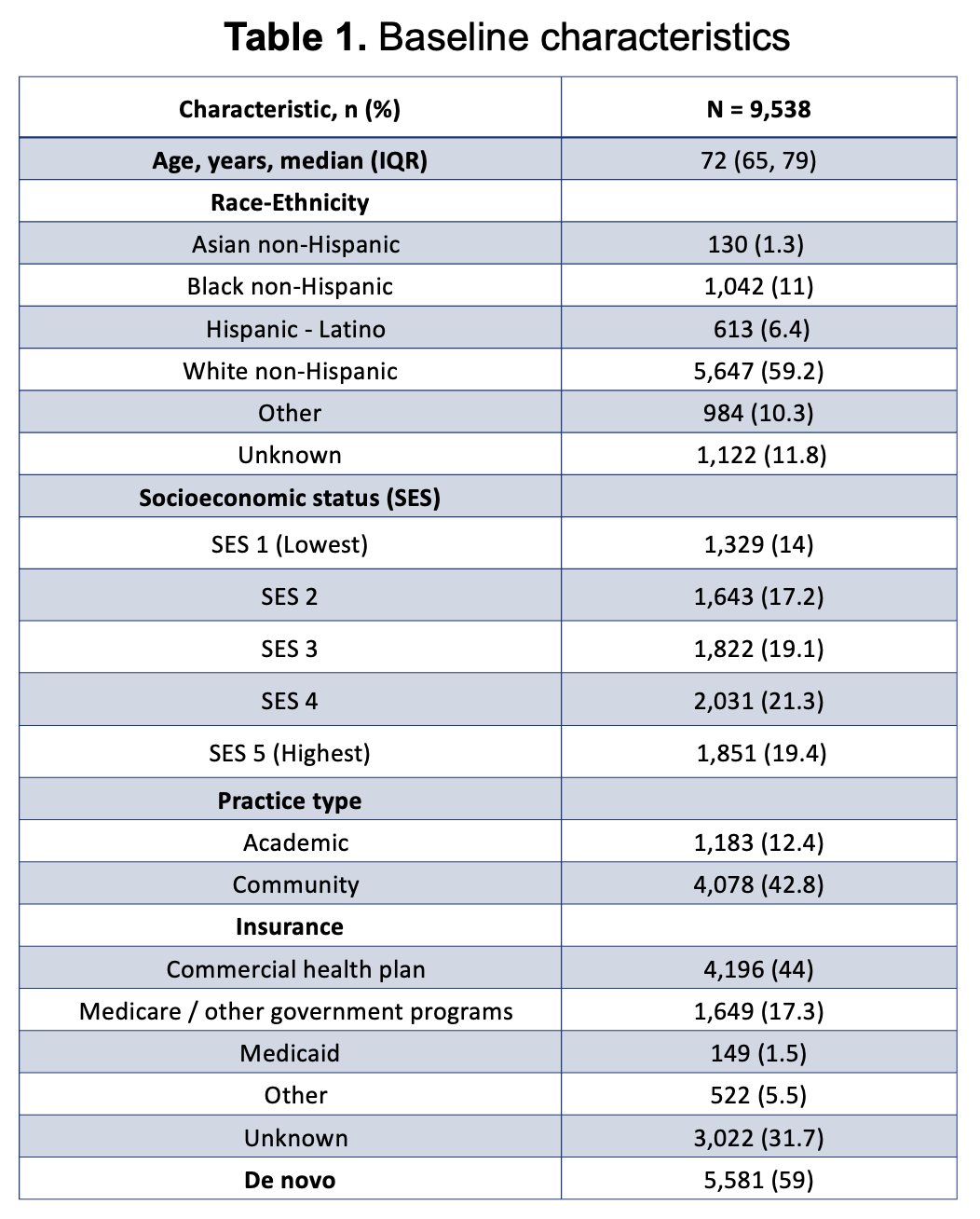
Dr. Agarwal highlighted that a total of 9,538 patients with mHSPC were eligible and included in the analysis. The median age was 72 years, and most patients were White non-Hispanic (59%), followed by Black non-Hispanic (11%) and Hispanic-Latino (6%). Fifty-nine percent presented with de novo metastatic disease. The majority received care in community practices, and nearly half were covered by commercial insurance. Socioeconomic status was broadly distributed across all quintiles as shown in the table below.
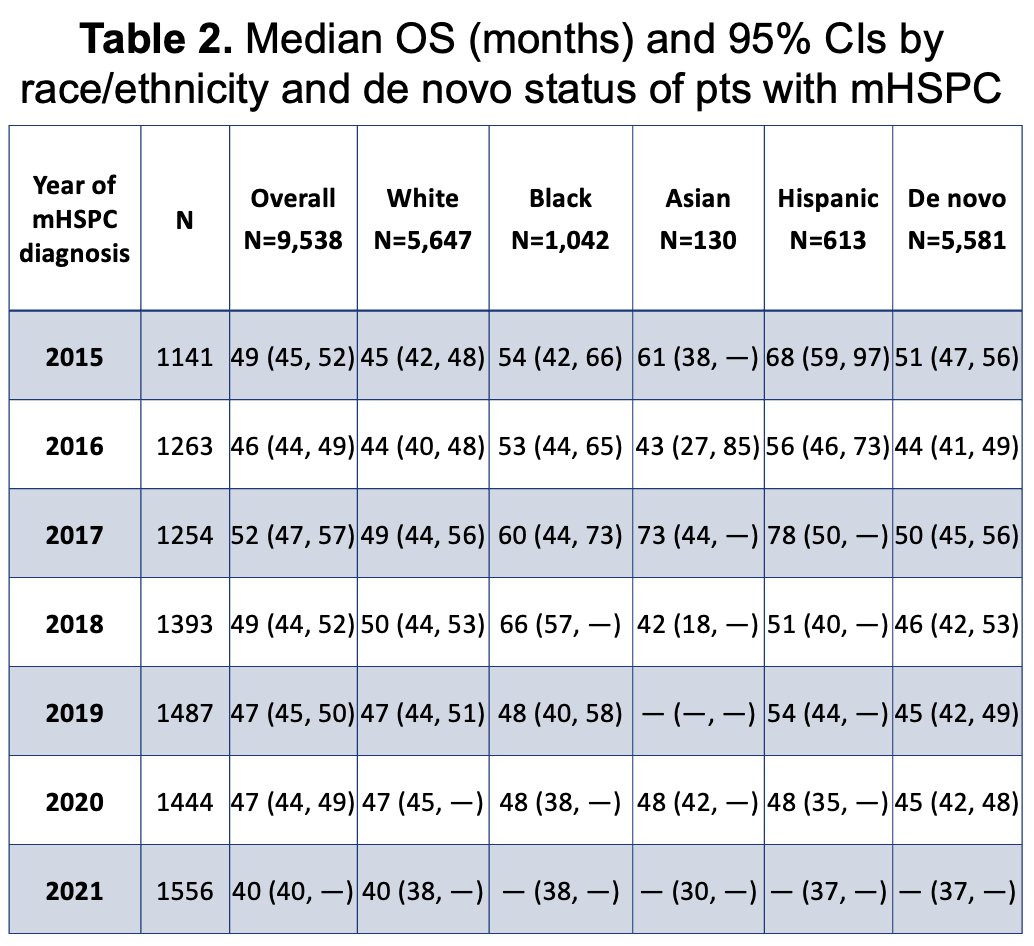
Median overall survival (OS) across the cohort ranged from 40 to 52 months between 2015 and 2021. Survival outcomes varied modestly by race and ethnicity, with Black patients showing slightly longer median OS compared to White patients in most years (60 months vs 49 months in 2017). Hispanic and Asian patients demonstrated variable outcomes, likely reflecting smaller sample sizes. Among patients with de novo mHSPC, median OS ranged from 37 to 56 months over the study period.
Across all years from 2015 to 2021, 3-year survival rates among patients with mHSPC remained relatively stable, ranging from 56% to 63% for White patients and 53% to 70% for Black patients. Hispanic patients consistently showed favorable outcomes, with 3-year survival rates between 58% and 79%. Asian patients demonstrated more variable rates due to smaller sample sizes. Survival by disease presentation was similar between de novo and non–de novo mHSPC, averaging around 60% across the study period.
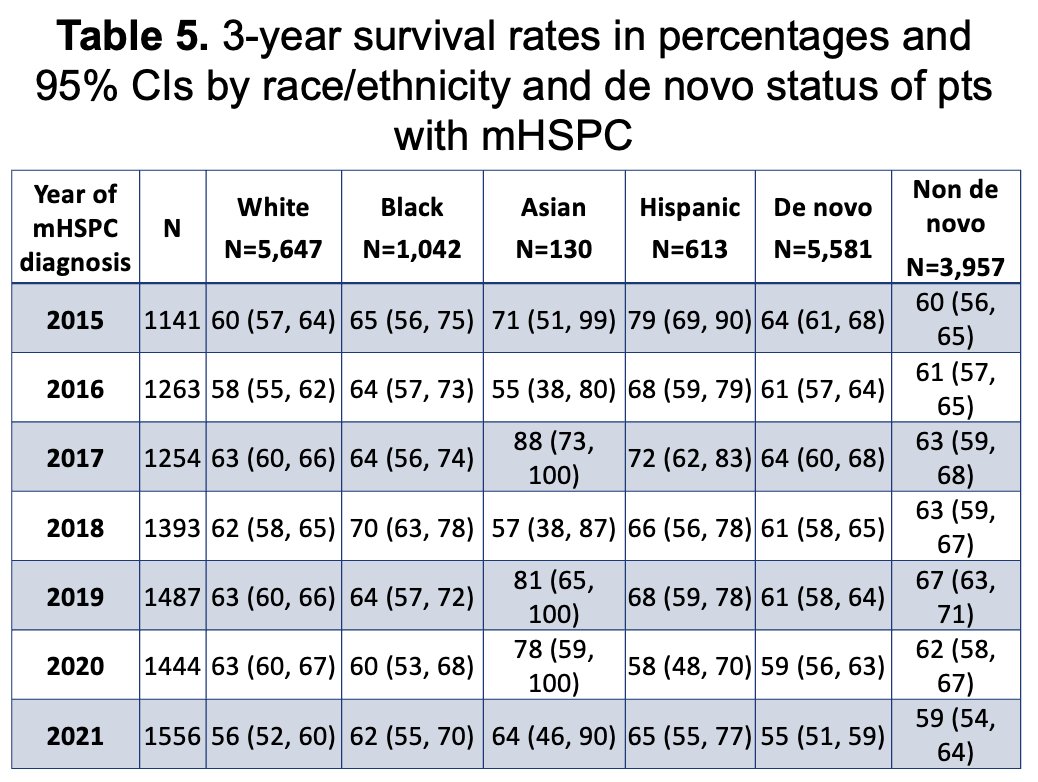
Dr. Agarwal concluded that in one of the largest real-world survival analyses in the mHSPC setting, there was no significant improvement in 3-year overall survival over the past decade. He emphasized that these findings highlight the gap between clinical trial evidence and real-world practice, reinforcing the importance of translating level 1 evidence into routine care to improve outcomes. This, he noted, has important implications for patient counseling, clinical implementation, and health policy.
Presented by: Neeraj Agarwal, MD, FASCO, Huntsman Cancer Institute (NCI-CCC), University of Utah, Salt Lake City, Utah, United States.
Written by: Julian Chavarriaga, MD – Urologic Oncologist at Cancer Treatment and Research Center (CTIC) via Society of Urologic Oncology (SUO) Fellow at The University of Toronto. @chavarriagaj on Twitter during the 2025 European Society for Medical Oncology (ESMO) Annual Congress, Berlin, Germany, October 17–21, 2025