

(UroToday.com) The 2025 ESMO annual meeting featured a prostate cancer session and a presentation by Dr. Rana R. McKay discussing a real-world study assessing bone fractures and prior abiraterone use in men treated with radium-223 and enzalutamide combination for metastatic castration-resistant prostate cancer (mCRPC). The skeleton is the most common metastatic site in men with prostate cancer, and bone metastasis is associated with an increased risk of bone fracture. Radium-223 is the only targeted alpha therapy approved for the treatment of mCRPC with bone metastases and showed improved overall survival and fewer adverse events versus placebo.1
PEACE-III trial demonstrated that enzalutamide + radium-223 showed improved clinical outcomes over enzalutamide.2 Furthermore, bone health agents led to a decline in bone fractures in mCRPC. However, data on fracture risk with prior abiraterone use were limited because few trial participants had previous exposure to abiraterone in PEACE-III. Therefore, this study examined the association between prior abiraterone use and bone fractures among men treated with enzalutamide + radium-223 combination.
This was a retrospective cohort study of men treated with enzalutamide + radium-223 with and without prior exposure to abiraterone following ADT, identified using the Komodo Health US insurance claims database from January 1, 2016, to December 31, 2022. The enzalutamide + radium-223 combination therapy was defined as enzalutamide use within 30 days of initial radium-223 use (index date) following mCRPC. The cohort was restricted to men with ≥ 12 months pre- (baseline) and ≥ 6 months post-index continuous insurance coverage:

Logistic regression was used to examine the association between prior abiraterone and bone fracture, adjusting for baseline age, race, bone health agent use, and fracture.
Of 171 patients (77% receiving layered therapy), 54 (32%) had a prior exposure to abiraterone (16% for mCRPC). Most men were white (47%), with bone-only metastases (94%), bone health agent use (72%), opioid use (83%), and a minor proportion with prior fracture (6%):

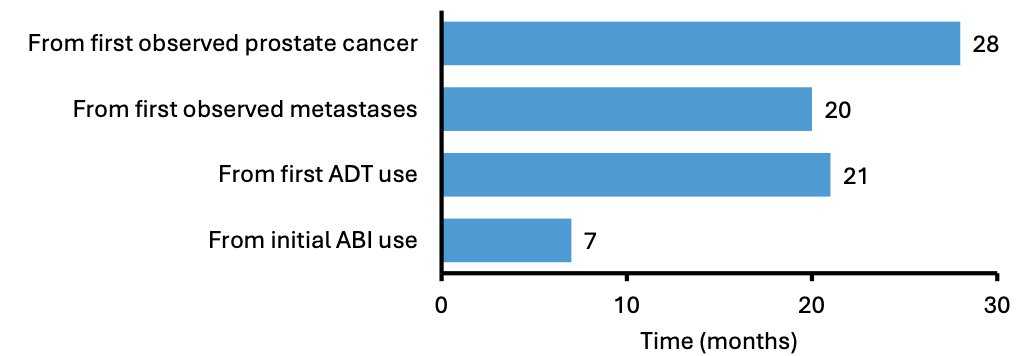
The mean time from first observed prostate cancer, metastases, and ADT use to the index date was 28, 20, and 21 months, respectively. The mean time from initial abiraterone use to the index date was 7 months:
Over a median follow-up of 15 months, 15% of the cohort developed fractures, with no difference in fracture rates by prior exposure to abiraterone (both 15%). Men with prior bone health agent use had a lower fracture rate compared to those without prior bone health agent (11% versus 27%). A lower proportion (10%) had bone fractures with both prior bone health agent and abiraterone use:

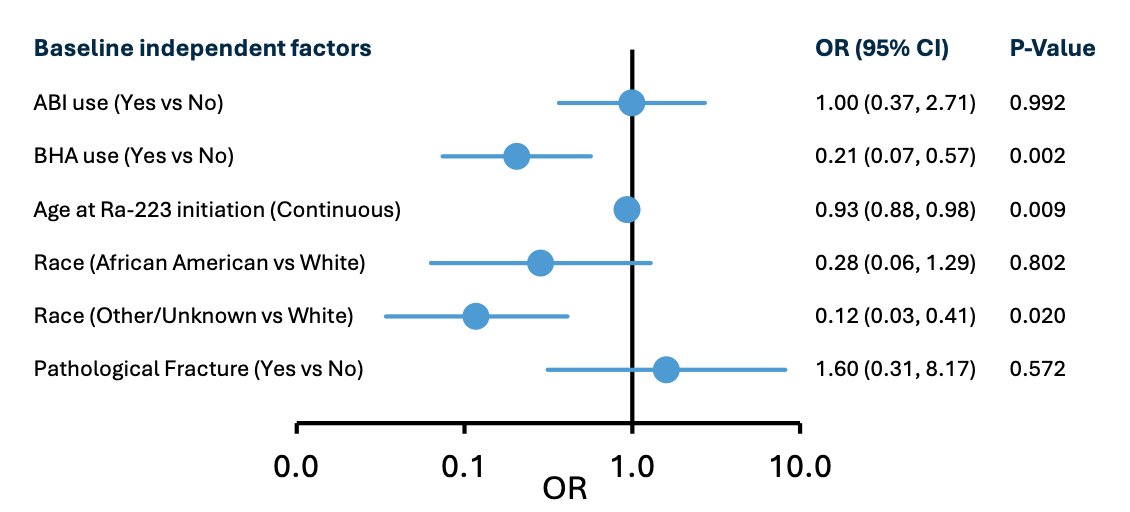
In multivariable regression, prior abiraterone use was not associated with bone fracture (OR 1.00, 95% CI 0.37, 2.71); whereas, prior bone health agent use was associated with significantly lower odds of bone fractures (OR 0.21, 95% CI 0.07, 0.57):
During follow-up, 40% of patients died, and median real world overall survival was 29.7 months (95% CI 23.6-44.0). The mean real world overall survival was numerically lower in the prior abiraterone subgroup (23.0 months (95% CI 15.8 – not reached) compared with the no prior abiraterone subgroup (34.8 months, 95% CI 25.9 – not reached). Of note, abiraterone was commonly utilized as a first line treatment in mCRPC in the prior abiraterone subgroup (n = 28 of 54), with a mean treatment duration of 7 months prior to the index date.
Dr. McKay concluded her presentation discussing a real-world study assessing bone fractures and prior abiraterone use in men treated with radium-223 and enzalutamide combination for mCRPC with the following take home points:
- In this real-world cohort, most patients treated with the combination of radium-223 and enzalutamide received prior bone health agent, consistent with clinical guidelines
- There was no difference in bone fracture risk by prior abiraterone use among men initiated on the combination of radium-223 and enzalutamide
- Findings from this study complement existing clinical evidence on the protective effects of bone health agents in reducing the incidence of bone fractures and further confirm its applicability to the abiraterone pre-treated population
- Study limitations include limited cohort size and the ability to capture patient history from prostate cancer onset, including exposure time of ADT alone or in combination with abiraterone
Presented by: Rana R. McKay, MD, UCSD, La Jolla, CA
Written by: Zachary Klaassen, MD, MSc – Urologic Oncologist, Associate Professor of Urology, Georgia Cancer Center, Wellstar MCG Health, @zklaassen_md on Twitter during the 2025 European Society for Medical Oncology (ESMO) Annual Congress, Berlin, Germany, October 17–21, 2025
References:
- Parker C, Nilsson S, Heinrich D, et al. Alpha emitter radium-223 and survival in metastatic prostate cancer. N Engl J Med 2013;369(3):213-223.
- Tombal B, Choudhury A, Saad F, et al. Enzalutamide plus radium-223 in metastatic castration-resistant prostate cancer: results of the EORTC 1333/PEACE-3 trial. Ann Oncol. 2025 Sep;36(9):1058-1067.