

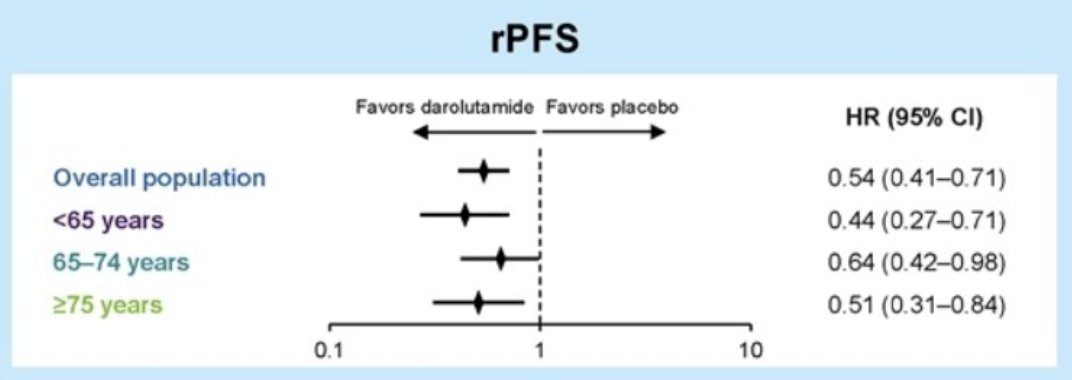
(UroToday.com) The 2025 ESMO annual meeting featured a prostate cancer session and a presentation by Dr. Fred Saad discussing post hoc analyses from ARANOTE assessing darolutamide efficacy, quality of life, and safety outcomes by age subgroup. In patients with metastatic hormone-sensitive prostate cancer (mHSPC) in the ARANOTE trial,1 darolutamide + ADT significantly improved radiological progression free survival versus placebo + ADT (HR 0.54, 95% CI 0.41–0.71; p < 0.0001), with a favorable safety profile. Approximately 60% of patients with prostate cancer are older than 65 years of age, and 20% are older than 75 years; rates of metastatic prostate cancer are also higher among patients 75-84 years of age. Older patients are typically managing other comorbidities (median of 2-6), experience more polypharmacy, and can have worse cancer specific mortality than younger patients. ARANOTE included patients with a wide range of ages (43–93 years), and as such, at ESMO 2025, Dr. Saad and colleagues assessed outcomes in subgroups based on age.
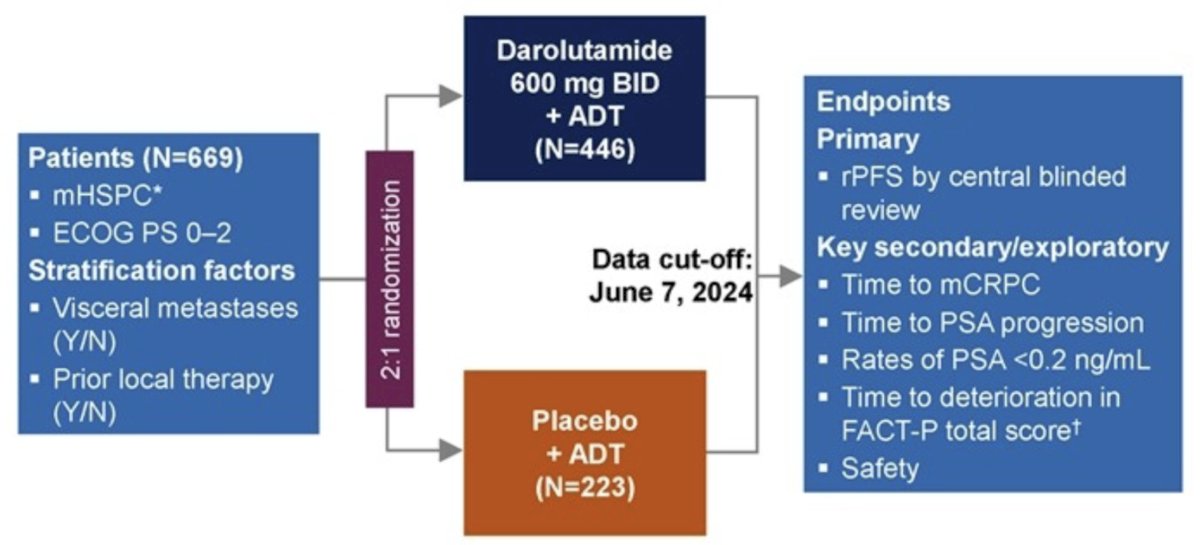
Patients in ARANOTE were randomized 2:1 to darolutamide 600 mg orally twice daily or placebo, both with ADT. Radiological progression free survival, time to deterioration in FACT-P total score, time to metastatic castration resistant prostate cancer (mCRPC), PSA outcomes, and treatment emergent adverse events were assessed post hoc by age <65 years, 65–74 years, and ≥75 years:
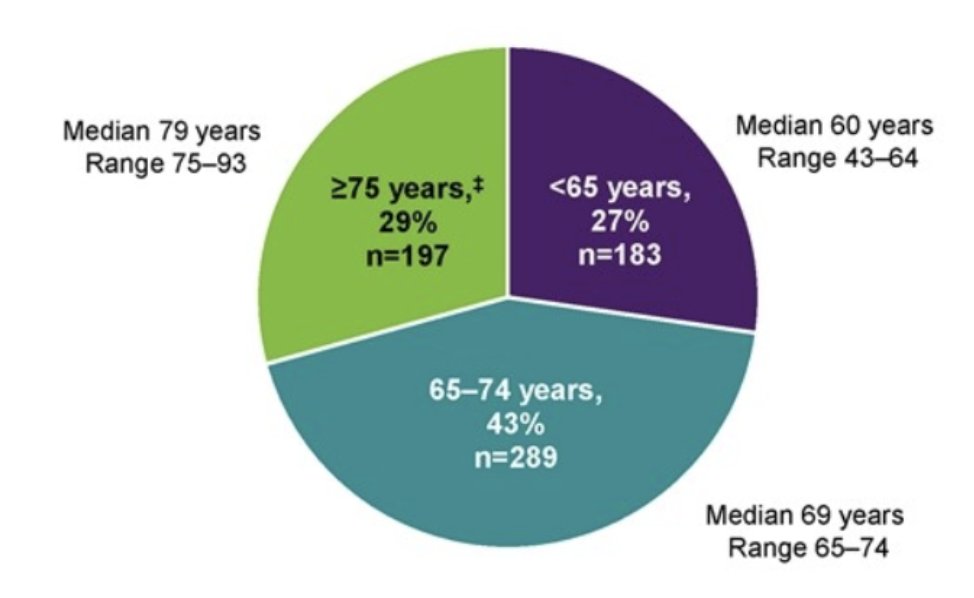
The median age of the 669 enrolled patients was 70 years, with 27% aged <65 years, 43% aged 65–74 years, and 29% aged ≥75 years (including 4% ≥85 years):
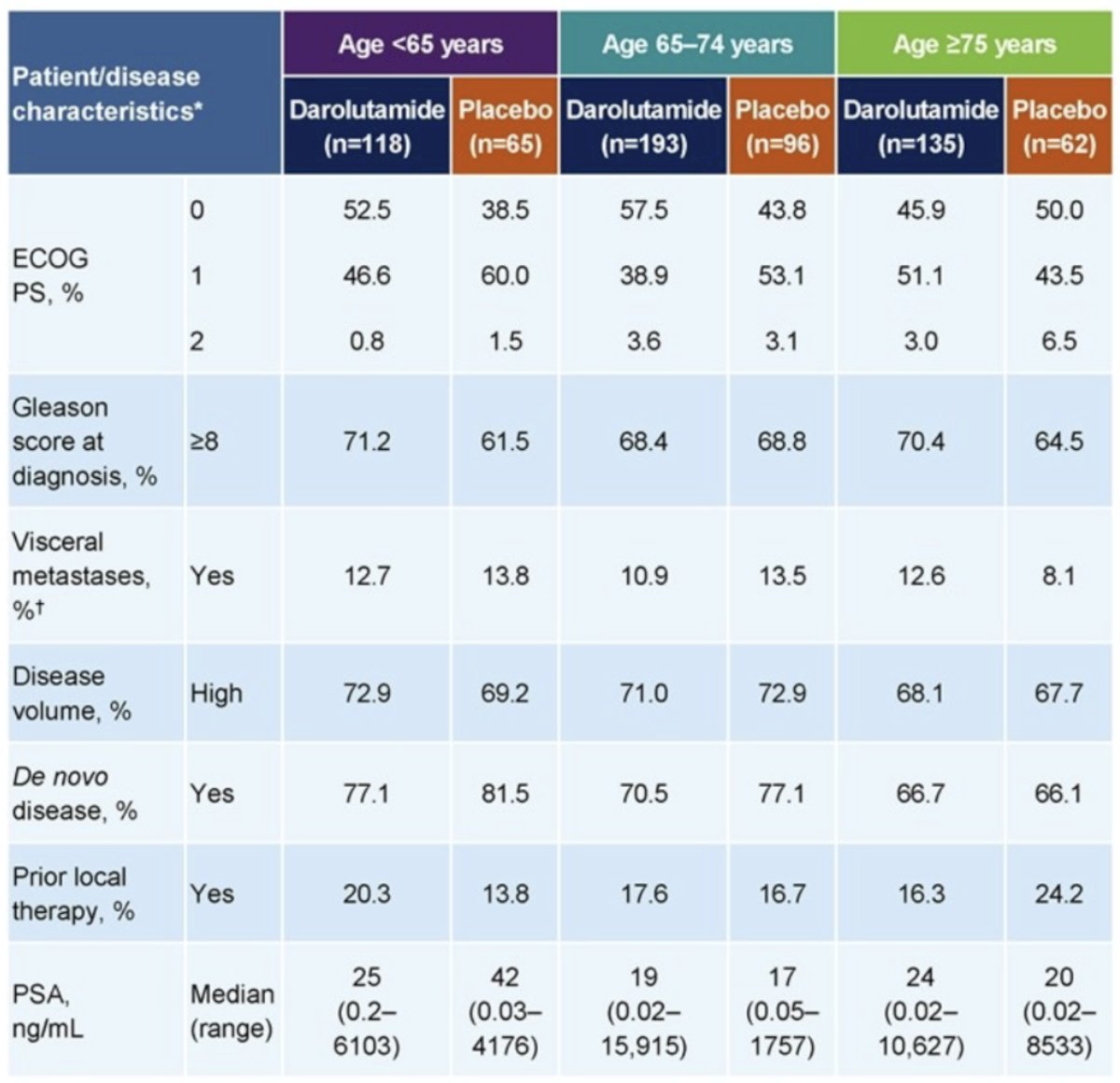
Baseline characteristics were generally similar in all age subgroups:
The significant radiological progression free survival benefit of darolutamide over placebo in the overall population was consistently achieved across all age subgroups:
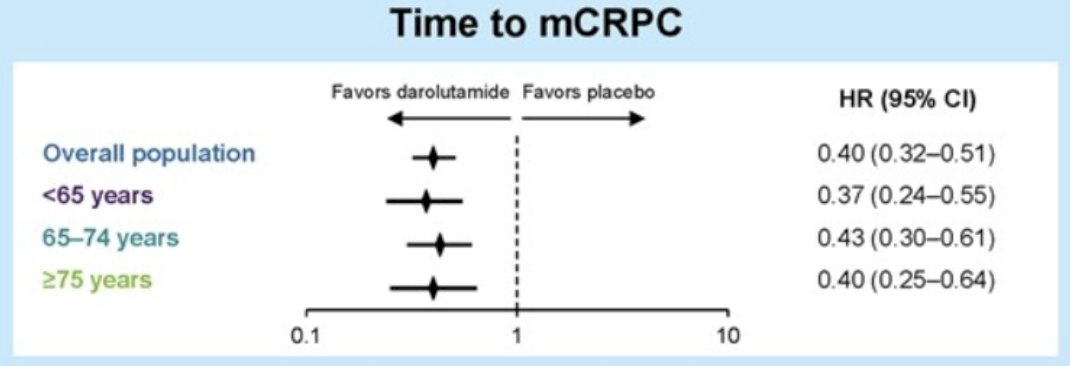
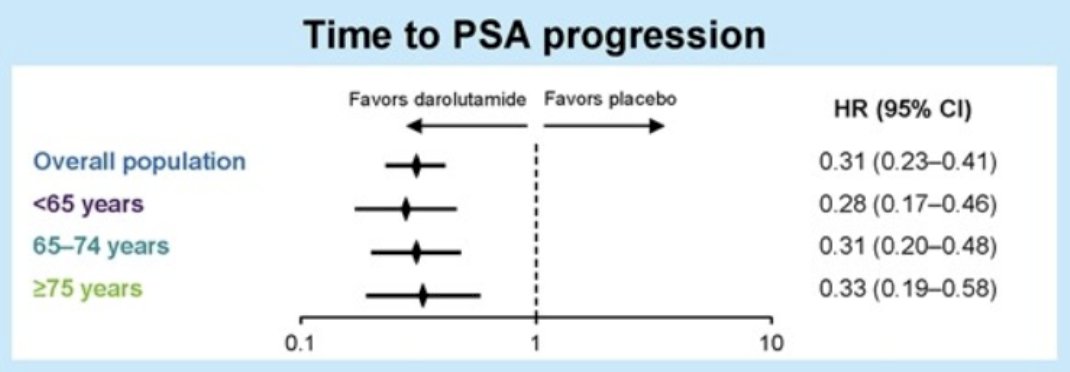
Time to mCRPC and time to PSA progression also strongly favored darolutamide versus placebo across all ages:
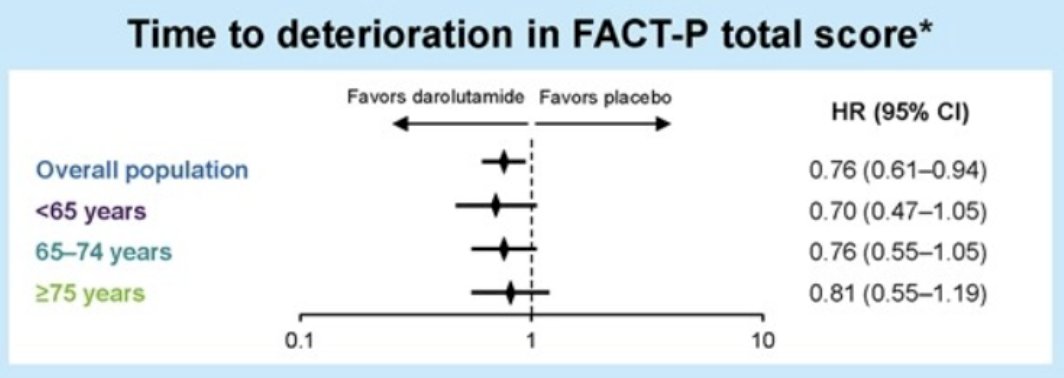
Deterioration in overall well being (FACT-P total score) was delayed with darolutamide versus placebo, with consistent trends across all age subgroups:
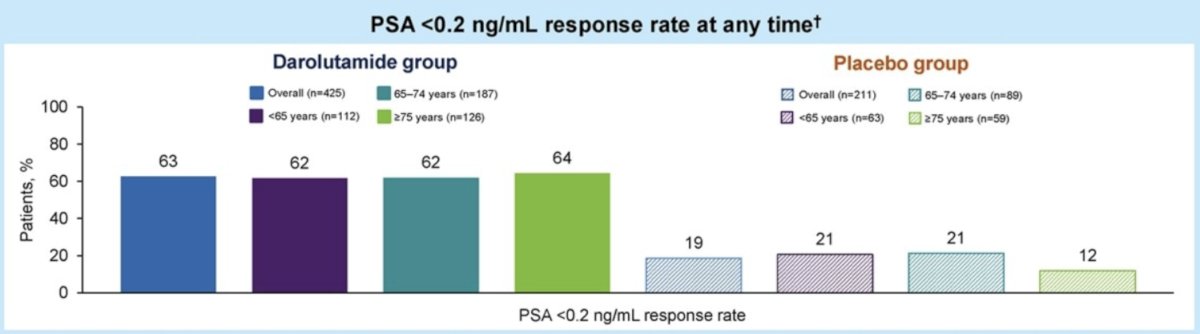
Almost two thirds of patients in the darolutamide group with baseline PSA >= 0.2 ng/mL reached PSA < 0.2 ng/mL at any time during the study, with consistent findings across all ages:
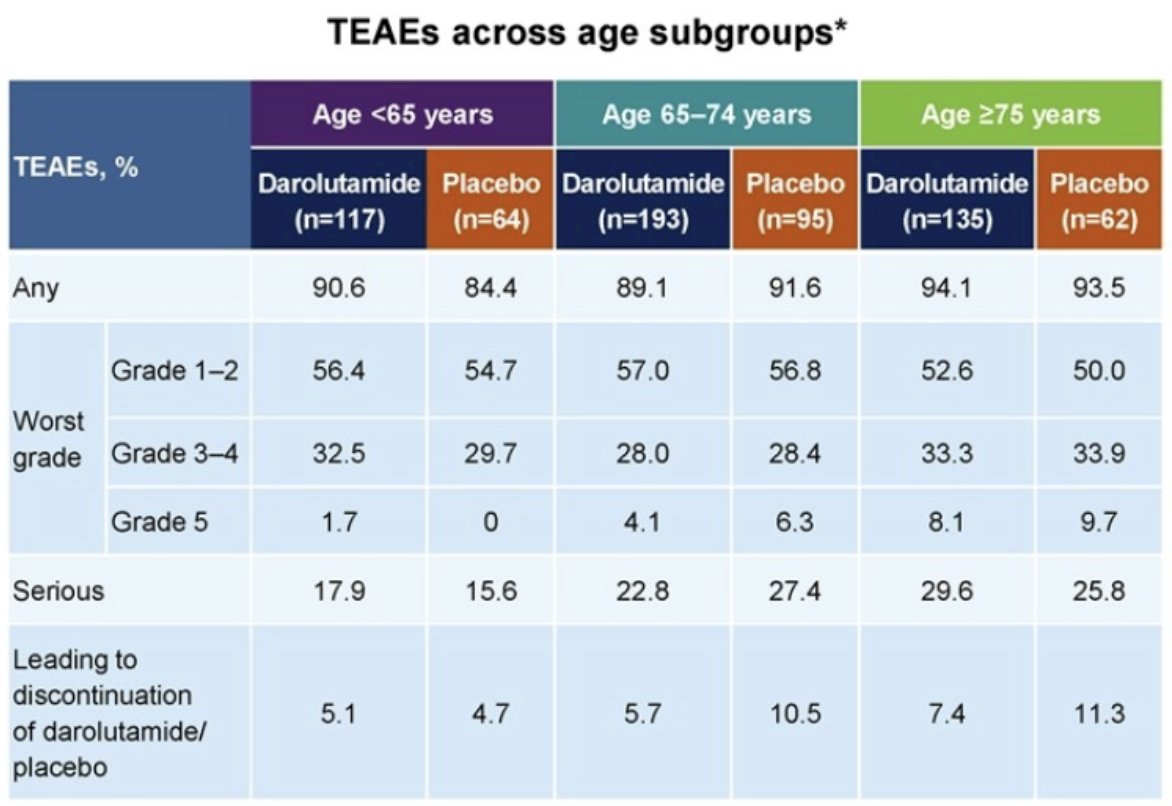
The incidence and severity of treatment emergent adverse events increased slightly with age, as expected, but with similar frequencies between darolutamide and placebo within each age subgroup. Discontinuation rates due to treatment emergent adverse events were 5–7% in darolutamide age subgroups versus 5–11% in placebo age subgroups:
Dr. Saad concluded his presentation discussing post hoc analyses from ARANOTE assessing darolutamide efficacy, quality of life, and safety outcomes by age subgroup with the following take home points:
- In patients with mHSPC, darolutamide consistently showed high efficacy, a similar incidence of treatment emergent adverse events to placebo, with similar or numerically lower treatment discontinuation rates due to adverse events, and a positive impact on health related quality of life across all age subgroups
- Notably, there were clinically meaningful improvements in overall well-being in all age groups, including in younger patients
- These results from the ARANOTE trial support the use of darolutamide + ADT in all patients with mHSPC, regardless of age
Presented by: Fred Saad, MD, FRCS, University of Montreal Health Center, Montreal, Canada
Written by: Zachary Klaassen, MD, MSc – Urologic Oncologist, Associate Professor of Urology, Georgia Cancer Center, Wellstar MCG Health, @zklaassen_md on Twitter during the 2025 European Society of Medical Oncology (ESMO) Annual Congress held in Berlin, Germany, between September 17th and 21st.
References: